• Skip to primary navigation
  • Skip to main content
  • Skip to primary sidebar
  • About
  • Contact
  • Advertise

Milwaukee Community Journal

  • News
    • Local News
    • National
    • World
    • Political
  • Men Building Men
  • Lifestyle
    • Arts & Entertainment
    • Fashion
    • Culture
    • Religion
  • Economy
    • Small Business
    • Money
    • Entrepreneurship
  • Health
    • Family
    • Relationships
  • Education
  • Jobs
    • Housing
  • Scholarship Fund
You are here: Home / Archives for Mary McLeod Bethune

Mary McLeod Bethune

The Walls Remember: Murals and the Unyielding Story of Black America

October 23, 2025 By MKE Community Journal Leave a Comment

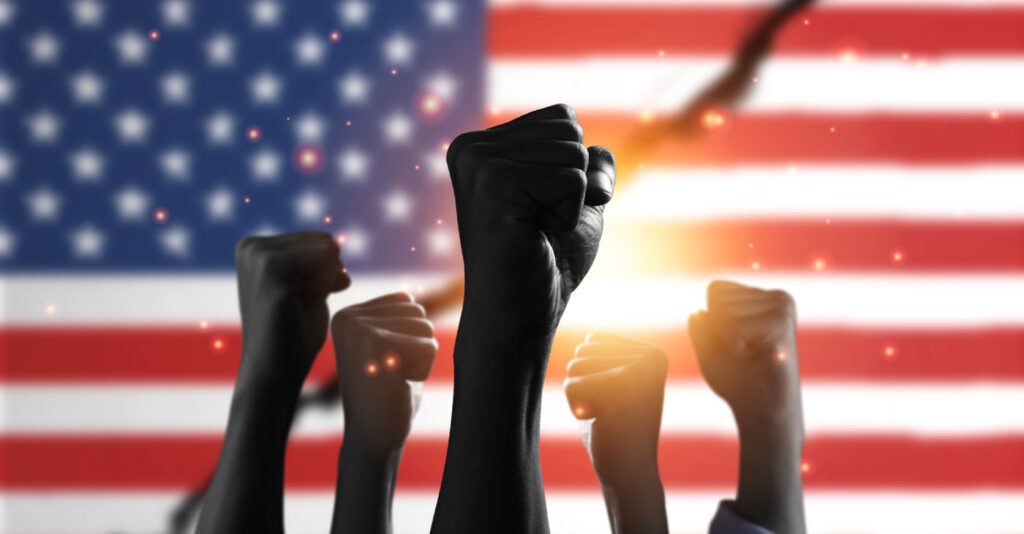
American flag with black people raise their hands to protest in the United States for racism and racial inequality.

By Stacy M. Brown
Black Press USA Senior National Correspondent

You can try to bury people. You can rewrite their history books, close their schools, and burn their libraries. You can pass laws that punish truth-tellers and silence teachers who dare speak the name of freedom. But you cannot silence color. You cannot silence the wall. Across this country, in cities both proud and scarred, the story of Black America refuses to die. It is written not in the ink of permission, but in the paint of defiance. It rises on concrete, brick, and steel. The murals speak where the history books fall silent.

Philadelphia, the so-called birthplace of America, has become a vast open-air scripture of the Black experience. On its walls, the dead rise again, the forgotten are called by name, and the children of this century inherit the truth their nation keeps trying to erase. Mural Arts Philadelphia has filled the city with living testimony. The Colored Conventions: A Buried History calls back the men and women who, long before Emancipation, gathered to demand that their humanity be recognized. The Legacy of Bishop Richard Allen reminds every passerby that resistance can begin with a single step away from the back of a segregated church.

Across Germantown Avenue, Harriet Tubman & the Underground Railroad stands as both memory and prophecy. Nearby, Octavius Catto returns through Remembering a Forgotten Hero, his face no longer hidden in the shadows of history. And then there is Dr. J, the mural of Julius Erving not as an athlete but as a man—a man of dignity, intellect, and command. These walls do not whisper; they roar. In Baltimore, the paint itself breathes. The city holds a long lineage of African American creativity, from the classrooms of Morgan State University to the heart of the Black Arts District along Pennsylvania Avenue. The murals of Ernest Shaw tower above streets once broken by neglect, affirming that art can be armor and prayer all at once.

Baltimore’s artists work in the spirit of survival. They know that the paintbrush, in the hands of the oppressed, becomes a weapon sharper than any blade. Their colors speak to a people long told to be invisible, declaring instead, We are still here. Out west, Los Angeles wears its resistance across miles of concrete. Its murals were born in the heat of rebellion and the ache of inequality. The artists of SPARC, the Social and Public Art Resource Center, took what was once the language of graffiti and turned it into gospel.

Charles “Boko” Freeman’s Return to the Light reflects a hunger for justice, while Noni Olabisi’s To Protect and Serve lays bare the truth of state violence. City officials tried to silence her, but her work still stares down the same forces she painted against. Alice Patrick’s Women Do Get Weary But They Don’t Give Up honors the women who built the bones of America: Mary McLeod Bethune, Dorothy Height, Josephine Baker, and Oprah Winfrey. Women who carried nations on their backs and never complained of the weight. These murals are not decorations. They are sermons painted in public view, declaring that beauty without justice is a lie.

In Topeka, Kansas, across from the sacred ground of Brown v. Board of Education, a mural calls the people to remember the battle that opened the schoolhouse doors. In Birmingham, Alabama, the colors stretch across old segregation lines, transforming the streets of suffering into streets of pride. In Jacksonville, Florida, the likenesses of A. Philip Randolph, Zora Neale Hurston, and James Weldon Johnson speak to the city’s long lineage of brilliance. These are not mere portraits; they are warnings and promises painted on brick. At St. Louis Lambert International Airport, a mural spans 51 feet of history. Black Americans in Flight tells of men and women who defied both gravity and hatred. Created by Spencer Taylor and Solomon Thurman, it chronicles the Tuskegee Airmen, astronaut Mae Jemison, and Ronald McNair, who perished in the Challenger explosion but are not remembered. Every panel sings of ascent. It is a mural that tells every traveler what America owes to those who lifted her higher than she deserved to go.

Even in the seat of power, where politics tries to silence the soul, the walls still speak. At The Wharf, artist Shawn Perkins painted portraits of Benjamin Banneker, Marvin Gaye, and Reverend Anthony Bowen, each one a local monument to a greater story. Just blocks away, the “Black Lives Matter” mural once stretched across the pavement like a hymn of protest, bright yellow and unyielding. Before Mayor Muriel Bowser was forced to capitulate to Donald Trump and remove the plaza, it pointed straight toward the White House as if to remind those inside: This nation was built by hands it tried to chain. Before any of these murals, there was Aaron Douglas. In 1934, his series Aspects of Negro Life told the story from the shores of Africa through the slave ships and into the modern city. His art carried the weight of memory and the hope of deliverance. Douglas painted the very thing this country still refuses to see: that Black life is America’s most enduring masterpiece.

The murals that cover this nation are not ornaments. They are testaments. They are the faces of ancestors who will not fade. Each brushstroke defies the lie that our story can be rewritten. Each color insists that our memory cannot be outlawed. Black history is not a month. It is not a chapter. It is a mural that stretches across the American conscience, daring anyone to paint over it.

Filed Under: Black History, National News Tagged With: A. Philip Randolph, Aaron Douglas, African American art, African American history, African American muralists, Alice Patrick, American art history, art and resistance, art as truth, artistic defiance, artistic resistance, Aspects of Negro Life, Baltimore murals, Benjamin Banneker, Birmingham murals, Bishop Richard Allen, Black Americans in Flight, Black Art, Black Artists, Black Arts District, Black creativity, Black cultural heritage, Black heritage, Black History, Black Lives Matter mural, Black murals, Brown v. Board of Education mural, Charles Boko Freeman, Colored Conventions, cultural memory, Dorothy Height, Dr. J mural, Ernest Shaw, Featured, Germantown Avenue, Harriet Tubman mural, Jacksonville murals, James Weldon Johnson, Josephine Baker, Julius Erving mural, Los Angeles murals, Mae Jemison, Marvin Gaye, Mary McLeod Bethune, Morgan State University, mural arts, Mural Arts Philadelphia, mural movement, murals and freedom, murals as protest, Muriel Bowser, Noni Olabisi, Octavius Catto, Oprah Winfrey, Pennsylvania Avenue Baltimore, Philadelphia murals, preserving Black history, public art activism, public murals, racial justice art, Reverend Anthony Bowen, Ronald McNair, Shawn Perkins, Social and Public Art Resource Center, Solomon Thurman, SPARC, Spencer Taylor, St. Louis Lambert International Airport mural, The Wharf DC, Topeka Kansas mural, Tuskegee Airmen, Underground Railroad mural, visual storytelling, Washington DC murals, Zora Neale Hurston

Making Montessori Early Childhood Education More Accessible for the Black Community

September 23, 2025 By MKE Community Journal Leave a Comment

The Black Montessori Education Fund (BMEF) provides funding, community, professional development, and networks of support for Black educators, families, and pioneers in Montessori.

By Black Montessori Education Fund

Do you hope to ignite your young child’s love of learning and lay the foundation for a fulfilling future? The Montessori approach offers a joyful, secure, and nurturing environment where young children can thrive. At the Early Childhood level (ages 2 ½ – 6), children are encouraged to explore, collaborate, and take ownership of their learning. The Montessori Method fosters independence, confidence, critical thinking, and social-emotional growth.

Montessori: Born in the Margins, Not in Privilege

Over 110 years ago, Dr. Maria Montessori developed her revolutionary method in the slums of Italy, working with children who had been excluded from opportunity. Her vision was rooted in liberation and equity—not elitism.

Yet today, Montessori education in the U.S. is too often associated with whiteness, wealth, and exclusivity.

  • Only 6% of Montessori students in the U.S. are Black.
  • Fewer than 1 in 10 Montessori teachers identify as Black.

These disparities reflect systemic inequities and financial barriers that prevent Black children, families, and educators from accessing Montessori programs.

Reclaiming Montessori’s Justice-Centered Roots

The Black Montessori Education Fund (BMEF) is committed to removing these barriers. We provide funding, community, professional development, and networks of support for Black educators, families, and pioneers in Montessori. Dr. Montessori believed education was the pathway to peace—and that peace required justice. Montessori education cannot fulfill its mission without intentional diversity and inclusion. Representation matters—not only for equity, but for the quality and integrity of the Montessori experience itself.

Our Mission

BMEF envisions Montessori as a pathway to liberation for the Black diaspora in the U.S. and beyond. We are closing the opportunity gap by expanding access to high-quality, culturally responsive Montessori programs that affirm and uplift Black identity and experience. We are cultivating a pipeline of well-trained, well-supported Black Montessori educators, leaders, and advocates. Through this work, we nurture social, emotional, spiritual, and economic liberation—empowering individuals and strengthening communities through Montessori education.

Our Story

Founded by Dr. Ayize Sabater I in the wake of the 2020 Washington, D.C. protests, the BMEF was born from the urgent call for equity and justice. Guided by Montessori’s holistic philosophy, we uplift Black educators and honor the legacy of pioneers like Mary McLeod Bethune, who understood education’s transformative power.

Today, the BMEF carries that legacy forward—advancing freedom, dignity, and self-determination through Montessori education.

Filed Under: Education Tagged With: access to Montessori, Black educators, black families, Black Montessori Education Fund, Black-Teachers, BMEF, culturally responsive education, diversity in teaching, Early Childhood, education for peace, equity in education, Featured, justice-centered education, liberation through learning, Maria Montessori, Mary McLeod Bethune, Montessori education, Montessori schools, opportunity gap, representation in education, systemic inequities

Experts Weigh-in on Mounting Concerns of Impending U.S. Civil War

May 10, 2024 By MKE Community Journal Leave a Comment

By Stacy M. Brown
NNPA Newswire Senior National Correspondent
@StacyBrownMedia

In the wake of a recent survey revealing startling apprehensions among American voters regarding the possibility of a second civil war, experts in history and political science offer sobering insights into the nation’s current trajectory. Dr. Ashley Robertson Preston, an assistant professor of history at Howard University and author of the acclaimed book “Mary McLeod Bethune the Pan-Africanist,” has detected a palpable shift in national sentiment.

When taking the pulse of America, Dr. Preston can’t help but to conclude that all hell is about to break loose. She emphasized the eerie parallels between contemporary tensions and the lead-up to the Civil War. “The tension that this nation is currently experiencing is very similar to what happened shortly before the Civil War,” Dr. Preston asserted. “As much as I want to say it can never happen again, history says something else. We will all just have to remain vigilant. History matters more than ever now.”

Michael Kazin, a renowned expert on American politics and social movements and a professor in the Department of History at Georgetown University, echoes Dr. Preston’s sentiments. While acknowledging the prevalence of civil conflicts over issues such as the Gaza conflict, the prosecution of Donald Trump, and contentious debates over abortion, Kazin refrains from predicting an imminent civil war.

“We are embroiled in various kinds of civil conflict now…I think we are a long way from that,” Kazin observed, highlighting the distinction between current societal divisions and the magnitude of a full-fledged civil war. “A civil war would be quite different. It would involve widespread armed confrontations, probably involving some elements of the U.S. military,” he added. “As long as elections, the courts, and Congress operate fairly normally, there can be no civil war.”

These expert assessments follow a Rasmussen Reports poll revealing that 41 percent of U.S. voters harbor concerns about the likelihood of a civil conflict erupting within the next five years. The Rasmussen Reports poll shows that 41 percent of respondents foresee a civil conflict, compared to 49 percent believing it is not likely and 10 percent unsure. The alarming figure translates to approximately 106 million American adults anticipating a potential civil war scenario.

The survey findings coincide with escalating tensions on college campuses, where clashes between pro-Palestine protestors, law enforcement, conservative groups, and certain Jewish students have become increasingly common. Additionally, the popularity of the dystopian political action film “Civil War” by Alex Garland has fueled speculation about America’s susceptibility to violent upheaval.

Rasmussen analysts have emphasized the looming specter of civil war, particularly amidst the divisive political landscape of an upcoming election year, which pits President Joe Biden against his predecessor Donald Trump. The historical parallels drawn to the devastating conflict of 1861–1865, where eleven southern states seceded from the Union over the issue of slavery, further exacerbate concerns among voters.

“The possibility that America could face another civil war soon is not too far-fetched for a lot of voters,” remarked the pollsters regarding their findings, noting a significant correlation between demographic groups and their levels of apprehension. Specifically, women, younger adults, and non-white Americans exhibited higher levels of concern regarding the potential outbreak of conflict. Furthermore, political affiliations played a notable role, with Republican voters expressing greater certainty in the likelihood of civil war compared to their Democratic counterparts.

The survey also probed respondents’ perceptions regarding the influence of the presidential election outcome on the probability of a civil conflict. Results indicated that 37 percent believed a Biden victory would increase the likelihood of war, while 25 percent held the same view in the event of a Trump triumph. A significant portion, comprising 30 percent of respondents, asserted that the election outcome would bear little influence on the likelihood of conflict, while 8 percent remained uncertain.

With the polarization and unrest plaguing the nation, protests on college campuses have served as flashpoints for ideological clashes between conservatives and liberals. Recent demonstrations opposing Israel’s actions in Gaza have elicited strong reactions, with conservative politicians denouncing protestors as radicals, Marxists, and anti-Semitic. These tensions underscore a widening fault line within American society.

Meanwhile, secessionist movements, particularly prominent in states like Texas, California, and Alaska, perceive the current climate as a harbinger of the chaos depicted in the film “Civil War.” The movie portrays a fractured United States plunged into armed conflict, with factions vying for control amid governmental collapse and authoritarianism.

Filed Under: Culture, National News Tagged With: Civil War, Dr. Ashley Robertson Preston, history, Howard University, Mary McLeod Bethune, national sentiment, Pan-Africanist, professor

Primary Sidebar

MCJ WEEKLY

PREVIOUS EDITIONS

Go HERE for the Digital Archives

DR. TNT SCHOLARSHIP SPECIAL EDITION

CLICK THE IMAGE THE FULL EDITION

Newsletter Signup

The Milwaukee Community Journal (MCJ) and the Weekend Edition are distributed at a number of community churches; as is the current issue of Healthy Start. With many area churches closed for the next few weeks due to the coronavirus, your MCJ suggests you pick up your edition of the newspaper, Weekend Edition and Healthy Start at our offices, located at 3612 N. Martin Luther King Drive. We’re open from 10 a.m. to 4:30 p.m., Monday through Friday. You can still pick up the MCJ at several Walgreens and Pick n’ Save stores throughout the community, as well as city hall and the county courthouse.

Recent Posts

  • American Men Have Been In Crisis for Generations. A Remedy from 1879 Offers Hope
  • Online registration now open for 2026 Back to School Festival
  • Oakland Protesters Rally to Defend Haitian Immigrants and TPS
  • OPINION: 57,000 Empty Apartments and Not a Word of Apology – City Limits
  • ‘Choppin’ it up’ with a brotha about Crowley’s win, and why Black folks aren’t down with the Democratic Socialists!

CLASSIFIEDS

CLASSIFIEDS

Place your notice of divorce, name change, etc. in the Milwaukee Community Journal's Classifieds! Contact is at 414-265-5300

Follow Us

  • Facebook
  • Instagram
  • Twitter
  • YouTube

Tags

2016 election African Americans Alderman Khalif J. Rainey ALDERWOMAN CHANTIA LEWIS Alderwoman Milele A. Coggs annual Baylor College of Medicine Biden Black History Month Black press Boko Haram civil rights community coronavirus COVID-19 Dating Advice day Democrats diversity Donald Trump Education event Featured free George Floyd HuffPost Live Joe Biden Love & Sex Love and Relationships Mayor Tom Barrett mental health Milwaukee Repertory Theater naacp national NNPA pandemic racism report Republicans Reuters social media Trump Trump Administration What Is Working: Small Businesses White House

Categories

H5_WEDC1027_AA_300x250

Copyright © 2026 Milwaukee Community Journal