• Skip to primary navigation
  • Skip to main content
  • Skip to primary sidebar
  • About
  • Contact
  • Advertise

Milwaukee Community Journal

  • News
    • Local News
    • National
    • World
    • Political
  • Men Building Men
  • Lifestyle
    • Arts & Entertainment
    • Fashion
    • Culture
    • Religion
  • Economy
    • Small Business
    • Money
    • Entrepreneurship
  • Health
    • Family
    • Relationships
  • Education
  • Jobs
    • Housing
  • Scholarship Fund
You are here: Home / Archives for Black History

Black History

The Woman Behind the Smile: Yvonne Francis’ Journey of Faith, Family and Resilience

July 30, 2026 By MKE Community Journal Leave a Comment

Although her mother struggled with health issues, Ms. Francis found stability in the women who helped raise her. She credits her grandmother and, most notably, her godmother, Anne McRae, with teaching her compassion, responsibility and faith. Those lessons became the foundation of her life.
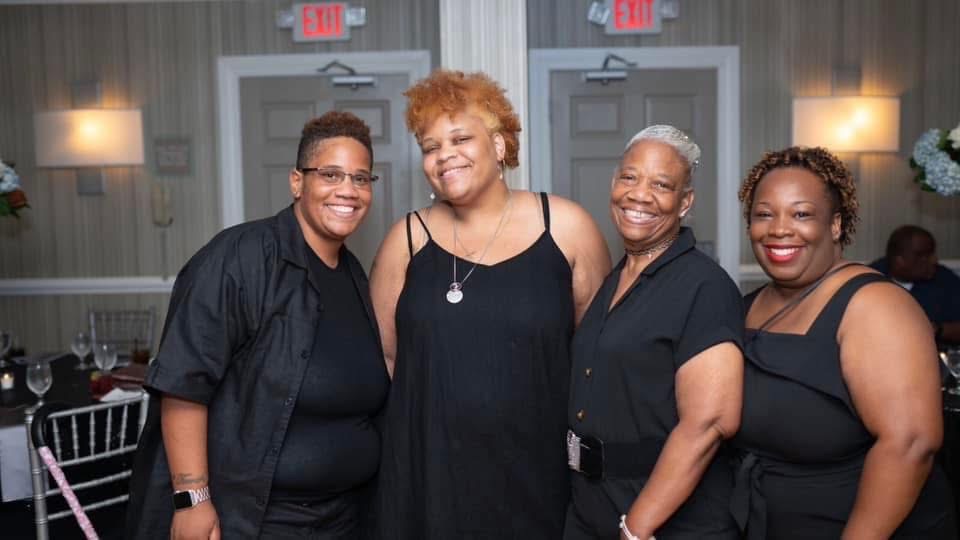
By Torrie Walker, Her Campus, Howard University

A customer walks into Walgreens expecting to pick up a prescription. Instead, they often leave with something else: a hug, a listening ear or a few words of encouragement.

For Ms. Yvonne “Nana” Francis, caring for people has never ended when the workday does. Whether raising four children, operating an in-home daycare for nearly 40 years, helping customers at the pharmacy or guiding her granddaughters, she has spent a lifetime showing up for others.

Born and raised in Overtown, a historic Black neighborhood in Miami, Ms. Francis grew up during segregation, where being biracial shaped many of her earliest experiences. Her father was white, her mother was Black, and as a child with blonde hair, she often became the target of teasing.

“My mom started dyeing my hair with coffee,” Ms. Francis recalled.

Although her mother struggled with health issues, Ms. Francis found stability in the women who helped raise her. She credits her grandmother and, most notably, her godmother, Anne McRae, with teaching her compassion, responsibility and faith. Those lessons became the foundation of her life.

Education quickly became one of her greatest passions. After schools were integrated, she attended summer classes and earned enough credits to graduate a year early.

“I always went to school, even during the summertime because I enjoyed education,” she said.

Before graduating, however, life took an unexpected turn. At just 14 years old, Ms. Francis became a mother.

Her daughter attended her high school graduation, only a year and a half old. Today, that same daughter has earned both a bachelor’s degree and an MBA and owns two businesses, accomplishments Ms. Francis views as proof that difficult beginnings do not determine where life will end.

Motherhood meant growing up quickly, but it never stopped her ambitions. She attended college for two years to study computer programming before choosing to devote herself to raising her family.

As her family grew, caring for others became her life’s work. After raising four children, she opened an in-home daycare, where she spent nearly four decades caring for children from families of many different backgrounds.

“I loved it,” she said. “I had different cultures, different kids. I cooked for them, I bathed them, and when their moms and dads picked them up, they were clean.”

By her late 20s, Ms. Francis faced another challenge. Diagnosed with heart disease, diabetes and asthma, she eventually weighed nearly 400 pounds. Walking became difficult, breathing became exhausting, and she relied on oxygen wherever she went.

“The girls kept saying, ‘Nana, we want to go to Disney.’ I told them, ‘If Nana loses the weight and she’s able to walk around the park, we’ll go,'” she said.

Determined to keep that promise, Ms. Francis began exercising, walking and changing her lifestyle before undergoing weight-loss surgery. By the time of the procedure, she had already lost 45 pounds. She ultimately lost more than 180 pounds, reclaiming both her health and independence.

After more than 20 years away from the workforce, Ms. Francis returned to work because she wanted another opportunity to serve others.

“I wanted to give back to people,” she said. “I didn’t have help raising my kids, but I wanted to still help others and still be a support for them because it takes a village.”

Today, she works as a senior pharmacy technician at Walgreens.

“Some of them are sad, some of them are hurting, some of them just need a hug,” she said.

That desire to care for others was tested once again when tragedy struck her family. Two of her daughters, Kendra and Brittany, died just 35 days apart.

“I never questioned God why my daughters are gone.”

Instead, Ms. Francis leaned on the faith that had sustained her throughout her life. Although the pain remains, she has found purpose in helping raise the granddaughters her daughters left behind.

“The smiles that I see from both of my granddaughters… those keep me going.”

Today, one granddaughter attends Howard University while the other plans to attend the Savannah College of Art and Design after graduating from high school. Watching them pursue their dreams has become one of the greatest joys of her life.

Even after everything she has endured, Ms. Francis chooses gratitude over bitterness, believing her life is defined not by loss, but by the people she has loved and the lives she has touched.

More than anything, she hopes her granddaughters will remember not only the hardships she endured, but the faith that carried her through them.

“Life is always a test, and the test is always a testimony,” she said. “I’m happy with how the cards of life have been dealt to me. I just have to learn how to win the game, and I’ll do it with a smile.”

Based on reporting by The Carolinian.

Originally published by Black Press USA Wire — https://caro.news/the-woman-behind-the-smile-yvonne-francis-journey-of-faith-family-and-resilience/

Filed Under: Health Tagged With: anne-mcrae, Black History, community care, education-access, faith-and-resilience, family-life, grandparenting, grief and loss, health and wellness, in-home-daycare, nana-francis, overtown-miami, personal-journey, senior-pharmacy-technician, single-motherhood, Walgreens, weight-loss-surgery, yvonne-francis

The Silence of Black Wealth: When the Billionaires Turned Their Backs on the Black Press

October 29, 2025 By MKE Community Journal Leave a Comment

A detailed close-up of tightly rolled bundles of US dollar banknotes, suggesting accumulated wealth or savings. However, in the context of inflation, this image subtly conveys the idea that even significant amounts of money can lose their real value over time. It represents the quiet erosion of purchasing power, making it a compelling visual for discussions on long-term financial planning, investment strategies, the impact of rising prices on accumulated capital, and the challenge of preserving wealth in an inflationary economy.

By Stacy M. Brown
Black Press USA Senior National Correspondent

Two months ago, famed civil rights attorney Benjamin Crump stood before a ballroom filled with the echoes of history. He did not whisper. He thundered. “If you’ve been blessed,” he said, “you got to pass the blessing on. You just can’t keep it to yourself.” Then he pledged fifty thousand dollars to the Black Press of America. It was not an act of charity. It was an act of faith. A declaration that the oldest voice of Black truth must live to speak again. Crump said he made his gift public because he wanted others to follow. He said he hoped those who had been lifted by the love and loyalty of Black people would remember who gave them their first breath of recognition. He hoped they would remember that the Black Press was not a charity case but a lifeline. Two months later, the silence has been deafening.

Magic Johnson’s people said “no.” David Steward, founder of World Wide Technology, said “no.” Jay-Z’s team didn’t bother to return calls. Janice Bryant Howroyd of the Act-One Group did not respond. Richelieu Dennis of Sundial Brands did not respond. Daymond John, Thomas Moorehead, and Tristan Walker did not respond. Tyler Perry, Robert Smith, and Oprah Winfrey did not respond. Dr. Dre, Spike Lee, and Michael Jordan each have also ignored multiple attempts to have conversations. Even across the ocean, Africa’s wealthiest men—Aliko Dangote, Mike Adenuga, Patrice Motsepe, Strive Masiyiwa, and Abdulsamad Rabiu—have people working for them who won’t acknowledge the Black Press with a simple response. Let the record show what was asked of them. The Black Press did not beg for charity. The Black Press asked to advertise their companies, their products, and their services. We asked to build relationships that honor the communities they came from. Many of them, like Magic, Oprah, and Jordan, have foundations that could have given grants if their hearts were so moved. The Black Press only asked that they see its worth.

Even the Democratic Party, carried to power by Black faith and Black votes, has turned away. The same party that claims to speak for equality now walks quietly in step with Trump’s anti-diversity crusade. They have shut the Black Press out of advertising dollars while funneling millions into white-owned mainstream media. It is hypocrisy dressed in progress to preach inclusion while starving the very storytellers who gave them the language of struggle.

This abandonment comes at a time when Trump has declared war on the lives and livelihoods of Black people. His administration has terminated more than three hundred thousand Black women from federal jobs that once sustained families. His policies against diversity have closed doors for hundreds of thousands of other Black men and women. Companies, emboldened by his rhetoric, continue to lay off and fire workers, many of them Black. And in the middle of this storm stands the Black Press — the last institution that still employs and uplifts hundreds of Black men and women who have families to support. Each of the more than two hundred newspapers and media companies in the Black Press represents not only truth on paper, but food on a table, tuition paid, rent covered, and the dignity of work preserved. The Black Press has been here before. It has stood when Frederick Douglass told a nation built on lies that truth would not die. It stood when Ida B. Wells printed the names of the lynched. It stood when Mamie Till demanded that the world look at her child. It stood when Dr. King wrote from Birmingham Jail. It stood when Malcolm X spoke the raw truth America refused to face. It stood when the white press would not. And it still stands today, two centuries strong, built by two brave souls – John B. Russwurm and Samuel Cornish during slavery – and, now, carried mostly on the backs of Black women. The Chicago Defender. The New Pittsburgh Courier. EBONY. The Amsterdam News. The Philadelphia Tribune. The Afro American. The St. Louis American. The Los Angeles Sentinel. The Michigan Chronicle. The Washington Informer. These are not relics of a fading past. They are the pulse of a people who refuse to vanish.

Many of these newspapers live in the same cities that raised the icons now silent. Chicago, where Jordan and Oprah became legends. Los Angeles, where Magic Johnson built his empire. Brooklyn, where Spike Lee found his voice. Philadelphia and New York, where Jay-Z and Will Smith found theirs. The irony is sharp. These newspapers gave many of them their first headlines, their first interviews, their first measure of respect. Remember EBONY? JET? How about Right On! Yet now, as the Black Press struggles for air, those it once lifted act as if they never knew its name. So it is that in this moment of trial, a civil rights attorney and a white businessman stand nearly alone. Mark Cuban, through his Cost-Plus Drugs company, reached into his own pocket and gave one hundred thousand dollars to the Black Press without hesitation. He did not wait to be convinced. He saw the need and answered it. Two hundred years of truth are hanging by a thread. The presses still turn. The ink still flows. But for how long? If the Black Press falls, so does the record of our struggle, our triumph, and our faith.

And when that day comes, history will not say the Black Press was destroyed by white supremacy. It will say it was abandoned by its own.

“We are going to save ourselves,” Crump declared. “We are all we need.” His words were not sentimental. They were a warning. Because a people without storytellers are a people without memory.

Filed Under: Economy Tagged With: abandonment, Abdulsamad Rabiu, Act-One Group, African billionaires, African-American media, Aliko Dangote, America’s history, Amsterdam News, anti-diversity policies, Benjamin Crump, Black economic power, Black Entrepreneurs, Black History, Black journalism, Black media, Black media legacy, Black newspapers, black owned businesses, Black press, Black Press of America, Black storytellers, Black Voices, Black wealth, black women, celebrity donations, Chicago Defender, civil rights attorney, community empowerment, Cost Plus Drugs, cultural memory, David Steward, Daymond John, Democratic Party, Dr Martin Luther King Jr, Ebony, equality, faith, Featured, federal job cuts, Frederick Douglass, freedom of the press, historical preservation, Ida B. Wells, Janice Bryant Howroyd, jay-Z, jet, John B. Russwurm, Journalism, Los Angeles Sentinel, Magic Johnson, Malcolm X, Mamie Till, Mark Cuban, media diversity, media funding, media representation, Michael Jordan, Michigan Chronicle, Mike Adenuga, New Pittsburgh Courier, Oprah Winfrey, Patrice Motsepe, Philadelphia tribune, Philanthropy, philanthropy in Black community, political hypocrisy, racial inequality, Racial Justice, representation, responsibility, Richelieu Dennis, Robert Smith, Samuel Cornish, Spike Lee, St. Louis American, storytelling, Strive Masiyiwa, Sundial Brands, survival, systemic racism, The Afro American, Thomas Moorehead, Tristan Walker, Trump Administration, truth and justice, truth-telling, Tyler Perry, unemployment, unity, Washington Informer, World Wide Technology

The Walls Remember: Murals and the Unyielding Story of Black America

October 23, 2025 By MKE Community Journal Leave a Comment

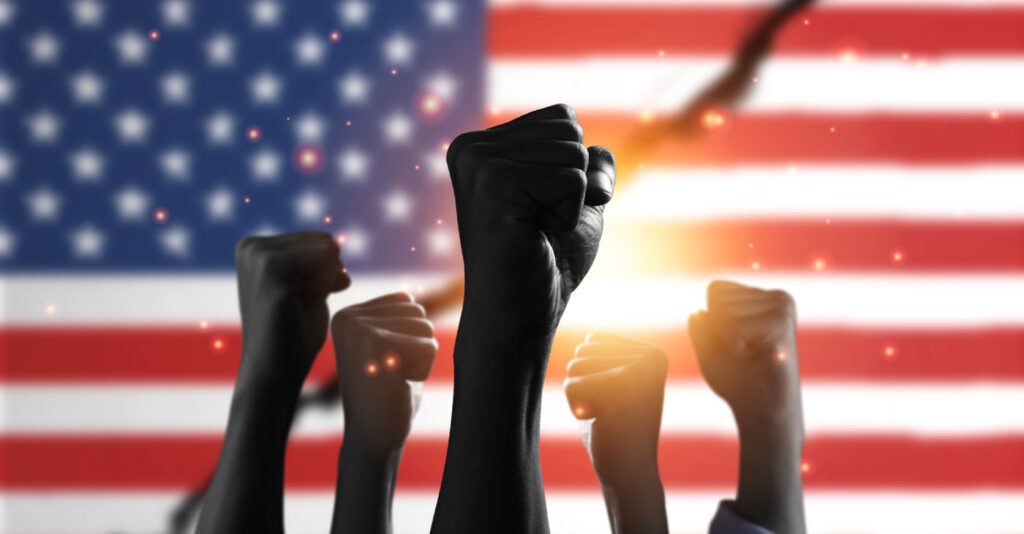
American flag with black people raise their hands to protest in the United States for racism and racial inequality.

By Stacy M. Brown
Black Press USA Senior National Correspondent

You can try to bury people. You can rewrite their history books, close their schools, and burn their libraries. You can pass laws that punish truth-tellers and silence teachers who dare speak the name of freedom. But you cannot silence color. You cannot silence the wall. Across this country, in cities both proud and scarred, the story of Black America refuses to die. It is written not in the ink of permission, but in the paint of defiance. It rises on concrete, brick, and steel. The murals speak where the history books fall silent.

Philadelphia, the so-called birthplace of America, has become a vast open-air scripture of the Black experience. On its walls, the dead rise again, the forgotten are called by name, and the children of this century inherit the truth their nation keeps trying to erase. Mural Arts Philadelphia has filled the city with living testimony. The Colored Conventions: A Buried History calls back the men and women who, long before Emancipation, gathered to demand that their humanity be recognized. The Legacy of Bishop Richard Allen reminds every passerby that resistance can begin with a single step away from the back of a segregated church.

Across Germantown Avenue, Harriet Tubman & the Underground Railroad stands as both memory and prophecy. Nearby, Octavius Catto returns through Remembering a Forgotten Hero, his face no longer hidden in the shadows of history. And then there is Dr. J, the mural of Julius Erving not as an athlete but as a man—a man of dignity, intellect, and command. These walls do not whisper; they roar. In Baltimore, the paint itself breathes. The city holds a long lineage of African American creativity, from the classrooms of Morgan State University to the heart of the Black Arts District along Pennsylvania Avenue. The murals of Ernest Shaw tower above streets once broken by neglect, affirming that art can be armor and prayer all at once.

Baltimore’s artists work in the spirit of survival. They know that the paintbrush, in the hands of the oppressed, becomes a weapon sharper than any blade. Their colors speak to a people long told to be invisible, declaring instead, We are still here. Out west, Los Angeles wears its resistance across miles of concrete. Its murals were born in the heat of rebellion and the ache of inequality. The artists of SPARC, the Social and Public Art Resource Center, took what was once the language of graffiti and turned it into gospel.

Charles “Boko” Freeman’s Return to the Light reflects a hunger for justice, while Noni Olabisi’s To Protect and Serve lays bare the truth of state violence. City officials tried to silence her, but her work still stares down the same forces she painted against. Alice Patrick’s Women Do Get Weary But They Don’t Give Up honors the women who built the bones of America: Mary McLeod Bethune, Dorothy Height, Josephine Baker, and Oprah Winfrey. Women who carried nations on their backs and never complained of the weight. These murals are not decorations. They are sermons painted in public view, declaring that beauty without justice is a lie.

In Topeka, Kansas, across from the sacred ground of Brown v. Board of Education, a mural calls the people to remember the battle that opened the schoolhouse doors. In Birmingham, Alabama, the colors stretch across old segregation lines, transforming the streets of suffering into streets of pride. In Jacksonville, Florida, the likenesses of A. Philip Randolph, Zora Neale Hurston, and James Weldon Johnson speak to the city’s long lineage of brilliance. These are not mere portraits; they are warnings and promises painted on brick. At St. Louis Lambert International Airport, a mural spans 51 feet of history. Black Americans in Flight tells of men and women who defied both gravity and hatred. Created by Spencer Taylor and Solomon Thurman, it chronicles the Tuskegee Airmen, astronaut Mae Jemison, and Ronald McNair, who perished in the Challenger explosion but are not remembered. Every panel sings of ascent. It is a mural that tells every traveler what America owes to those who lifted her higher than she deserved to go.

Even in the seat of power, where politics tries to silence the soul, the walls still speak. At The Wharf, artist Shawn Perkins painted portraits of Benjamin Banneker, Marvin Gaye, and Reverend Anthony Bowen, each one a local monument to a greater story. Just blocks away, the “Black Lives Matter” mural once stretched across the pavement like a hymn of protest, bright yellow and unyielding. Before Mayor Muriel Bowser was forced to capitulate to Donald Trump and remove the plaza, it pointed straight toward the White House as if to remind those inside: This nation was built by hands it tried to chain. Before any of these murals, there was Aaron Douglas. In 1934, his series Aspects of Negro Life told the story from the shores of Africa through the slave ships and into the modern city. His art carried the weight of memory and the hope of deliverance. Douglas painted the very thing this country still refuses to see: that Black life is America’s most enduring masterpiece.

The murals that cover this nation are not ornaments. They are testaments. They are the faces of ancestors who will not fade. Each brushstroke defies the lie that our story can be rewritten. Each color insists that our memory cannot be outlawed. Black history is not a month. It is not a chapter. It is a mural that stretches across the American conscience, daring anyone to paint over it.

Filed Under: Black History, National News Tagged With: A. Philip Randolph, Aaron Douglas, African American art, African American history, African American muralists, Alice Patrick, American art history, art and resistance, art as truth, artistic defiance, artistic resistance, Aspects of Negro Life, Baltimore murals, Benjamin Banneker, Birmingham murals, Bishop Richard Allen, Black Americans in Flight, Black Art, Black Artists, Black Arts District, Black creativity, Black cultural heritage, Black heritage, Black History, Black Lives Matter mural, Black murals, Brown v. Board of Education mural, Charles Boko Freeman, Colored Conventions, cultural memory, Dorothy Height, Dr. J mural, Ernest Shaw, Featured, Germantown Avenue, Harriet Tubman mural, Jacksonville murals, James Weldon Johnson, Josephine Baker, Julius Erving mural, Los Angeles murals, Mae Jemison, Marvin Gaye, Mary McLeod Bethune, Morgan State University, mural arts, Mural Arts Philadelphia, mural movement, murals and freedom, murals as protest, Muriel Bowser, Noni Olabisi, Octavius Catto, Oprah Winfrey, Pennsylvania Avenue Baltimore, Philadelphia murals, preserving Black history, public art activism, public murals, racial justice art, Reverend Anthony Bowen, Ronald McNair, Shawn Perkins, Social and Public Art Resource Center, Solomon Thurman, SPARC, Spencer Taylor, St. Louis Lambert International Airport mural, The Wharf DC, Topeka Kansas mural, Tuskegee Airmen, Underground Railroad mural, visual storytelling, Washington DC murals, Zora Neale Hurston

In Trump’s New Confederacy, Slavery Wasn’t Sin

October 22, 2025 By MKE Community Journal Leave a Comment

Donald Trump speaking at CPAC 2011 in Washington, D.C (Wikimedia Commons/ Photo by Gage Skidmore from Peoria, AZ, United States of America)

By Stacy M. Brown
Black Press USA Senior National Correspondent

In Donald Trump’s America, they are no longer whispering their love for slavery; they are preaching it from the pulpit. Far-right Christian nationalist Joshua Haymes, a self-anointed prophet of white supremacy, declared in a recent video that slavery “is not inherently evil,” demanding that every Christian “affirm and defend” the right to own another human being. His words vividly remind many of the crack of the overseer’s whip, the theology of the lash, and the perverted gospel that baptized centuries of Black pain in the name of God. Haymes, who hosts a podcast with Pastor Brooks Potteiger of Pilgrim Hill Reformed Fellowship near Nashville, is no internet outcast shouting into the void. The church aligns with Douglas Wilson, the father of modern Christian nationalism, and counts Secretary of Defense Pete Hegseth among its members. This isn’t fringe, it’s the foundation of a rising white Christian theocracy that sees slavery as “biblically justified” and domination as divine will.

In his rant, Haymes insisted, “The institution of slavery is not inherently evil. It is not inherently evil to own another human being.” He demanded that “every Christian affirm what I just said,” claiming America’s Founding Fathers weren’t “living in grave sin” for enslaving people. He called it “chronological snobbery” to condemn them. That is how far they have sunk, defending the whip as righteousness, calling the chains holy. This ideology is not confined to Tennessee pews or online podcasts. It has a home in Washington, in the halls of power, where Trump and his disciples are rewriting history—literally—by government order. As previously reported, the Trump administration has directed the National Park Service and the Smithsonian Institution to remove exhibits that “disparage” America’s founders by mentioning slavery. They’ve ordered the deletion of a photo of a man’s scourged back. Yes, the scarred flesh of a freed Black man who endured the lash, because it made America “look bad.”

At Fort Pulaski in Georgia, the order came down to strip away the image that defined the brutality of the Civil War era. The image that showed what the Confederacy did to the human body has now been banned by the new Confederates in suits. Trump called the Smithsonian “OUT OF CONTROL” for “talking about how horrible slavery was,” and promised to send lawyers to “go through the museums” and cleanse the content. “This country cannot be WOKE,” he declared. Translation: America cannot be honest. At historic sites like the President’s House in Philadelphia, where George Washington enslaved nine men and women and rotated them out of state to avoid Pennsylvania’s gradual emancipation law, Trump’s order has demanded that panels describing those crimes be “reviewed” or removed. A panel describing Washington’s actions as “profoundly disturbing” has been flagged for revision. Another that said slavery “mocked the nation’s pretense to liberty” is on the chopping block. They want to make the father of the country look clean again by erasing the blood on his hands. “This is truth; it’s American history,” said retired Philadelphia attorney Michelle Flamer, who helped create the original exhibit. “There’s good and there’s bad, and it’s just like life itself.”

But Trump’s America wants only the “good.” A fantasy built on denial. The administration’s censorship is a campaign of amnesia, designed to blind a generation to the crimes that built this nation. Historian Michael Coard, who helped lead the effort to memorialize the enslaved at the President’s House, said, “If George Washington got all that attention, then we need to get some attention now.” Trump’s order calls this honesty “unpatriotic.” His followers call it “anti-American.” What it really turns out to be is fear. Fear of the truth, fear of the record, fear of the descendants of the enslaved demanding to be seen and heard. And this is not happening in isolation. Across the far-right ecosystem, white Christian nationalists are rising to defend the indefensible. Haymes and his co-conspirators are not simply talking about theology; they are providing moral cover for tyranny. They are laying the groundwork for a new Confederacy, one that cloaks its racism in scripture and its hatred in hymns. Even as the administration censors history, young Republicans in private Telegram chats have been caught calling Black people “monkeys” and “watermelon people,” joking about gas chambers, and celebrating rape and torture as political tactics. The Kansas Young Republicans’ vice chair used the N-word repeatedly. Leaders of the New York State Young Republicans laughed about “epic rape” and fantasized about “physiological torture.” This is not political discourse; it is the language of fascism.

When the President of the United States orders museums to stop teaching the truth, when his followers call slavery “biblical,” and when young white conservatives talk about gas chambers like punchlines, it is not a coincidence. It is a movement, a coordinated, cultural counterrevolution against truth, equality, and the very notion of freedom for Black people. The evidence is clear that this government is engaged in historical sterilization. It is erasing the crimes of slavery, suppressing the truth of genocide, and criminalizing those who dare to remember. This is the same spirit that banned books in the Jim Crow South, that burned Black schools in the Reconstruction era, and that murdered truth-tellers from Mississippi to Minnesota.They want to make America forget so they can do it again. But history has a way of fighting back. The scars remain. The names remain. Oney Judge, Hercules, and the countless others who refused to stay in chains, even when the first president of this country was their master. Their stories are our inheritance, our resistance, our unbreakable testament. If Trump and his prophets of whiteness believe they can sanitize the past, they underestimate the people who live its consequences. They forget that truth has a pulse, and that it beats strongest in the descendants of the enslaved. As Alan Spears of the National Parks Conservation Association said, “We can handle the truth.” And most believe America will. Because the truth is not Trump and his new Confederacy to rewrite. It was written in blood, and it will be remembered in fire.

Filed Under: Latest News, National News, Political Tagged With: Alan Spears, American History, American slavery, Anti-Black Racism, anti-woke agenda, biblical slavery, Black History, Black resistance, Brooks Potteiger, censorship of slavery, Christian nationalism, Christian nationalist movement, Confederacy, cultural counterrevolution, descendants of enslaved people, Donald Trump, Douglas Wilson, enslaved people, erasing slavery, far-right ideology, fascism, Featured, Fort Pulaski, freedom for Black Americans, George Washington, Georgia, Hate Speech, Hercules enslaved, historical amnesia, historical censorship, historical revisionism, historical sterilization, historical truth, Jim Crow, Joshua Haymes, Kansas Young Republicans, Michael Coard, Michelle Flamer, museum censorship, National Park Service, National Parks Conservation Association, New York State Young Republicans, Oney Judge, Pete Hegseth, Philadelphia attorney, Pilgrim Hill Reformed Fellowship, political violence, President’s House exhibit, President’s House Philadelphia, pro-slavery rhetoric, racism, Racism in America, Reconstruction, rewriting history, slavery, Smithsonian Institution, Trump Administration, Trump and white supremacy, Trump censorship, Trump second term, Trump’s America, truth and history, truth in history, white Christian nationalism, white supremacy, white supremacy in churches, young Republicans racism

Ben Crump Pledges $50K to the Black Press, Challenges Others to Follow His Lead

September 26, 2025 By MKE Community Journal Leave a Comment

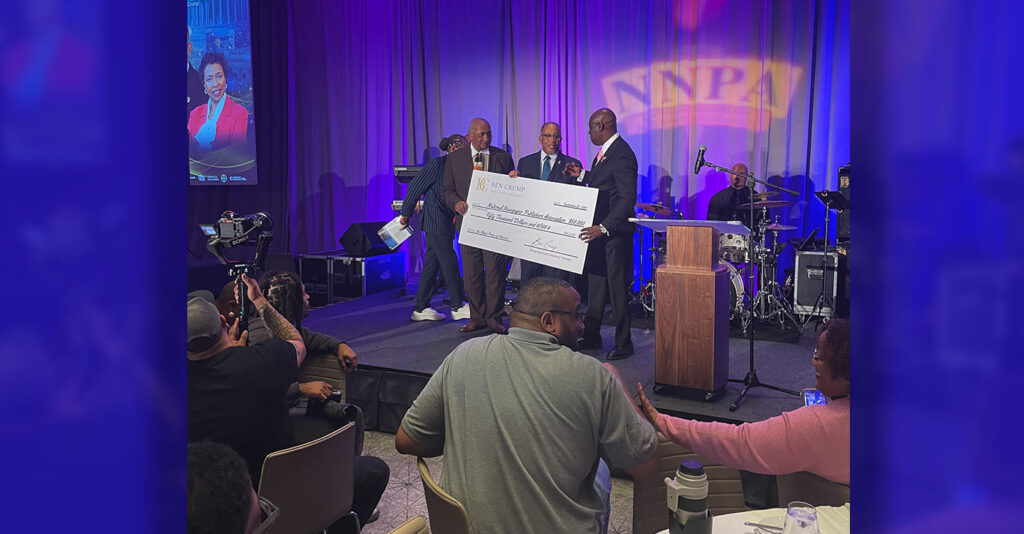
NNPA Chairman Joh Warren, President and CEO Benjamin Chavis, and Benjamin Crump at the 2025 NNPA National Leadership Award

By Stacy M. Brown
Black Press USA Senior National Correspondent

The Conrad Hilton Hotel in Washington, D.C., pulsed with history and urgency as the Black Press of America gathered for its Annual National Leadership Awards and Reception. The evening honored House Minority Leader Hakeem Jeffries, Congressional Black Caucus Chair Yvette Clarke, and Communications Workers of America President Claude Cummings Jr. Cummings, who now serves on the executive committee of the Democratic National Committee, put the night into sharp focus. Speaking to the Black Press’ Let It Be Known morning news show hosts on the Red Carpet, Cummings declared, “Democrats need to spend money now with the Black Press. The Black Press has always been that vehicle in our community that we’ve all needed and that has always been the trusted voice. With what’s happening in Washington and what they are trying to do to our community and our history, everyone should be supporting the Black Press of America.”

The words carried the sting of truth. For decades, the Black Press has stood as the trusted voice for African Americans, telling stories ignored or distorted elsewhere. It carried the mutilated image of Emmett Till when white newspapers looked away. It published Dr. King’s words when others labeled him a troublemaker. It guided families through Jim Crow’s terror and chronicled the triumphs and tragedies of migration, struggle, and resilience. Today, two years before its 200th anniversary, this institution is fighting for its life. Then Attorney Ben Crump, known as “Black America’s Attorney General,” took the stage. He did not come to flatter. He came to help, and he came with fire. “I will ask for personal privilege because I see my leaders in the room. The National President of the NAACP, Derrick Johnson, and Chair of the Board, Leon Russell,” Crump began. “The men who i stand with this evening, I want to come and demonstrate my appreciation to them and the Black Press. Right now in America we’re under attack like we’ve never been in our lifetime.” The weight of his words fell heavily. “So now more than ever, we have to make sure that we have institutions that are disseminating information to our people, being the clarion call for us to be able to be ready to stand up for our children and our communities, to be ready to speak up for our children and communities, and to be ready to fight for our children in the community. And nobody carries the Black narrative and the Black information to Black communities more passionately than the Black Press.” Crump then turned to those seated in the room. “Y’all, right now, y’all know this attack on DEI and everything, they’re cutting funding to all our institutions. And it isn’t right, but part of me says that’s okay. We don’t need them to save us. We are going to save ourselves. We are all we need.”

He reminded the room of the lessons of struggle and obligation. “Everybody got to give a little more when they can. If you’ve been blessed, you got to pass the blessing on. You just can’t keep it to yourself,” Crump told the packed ballroom. “Our fraternity teaches us we must lift as we climb. So tonight, I’m trying to lift as we climb to make this donation, and I pray that others will join us if you’re able to. If you’re able to.” “Because, like Dr. King said, we all got a role to play. The Black lawyers got a role to play. The Black doctors got a role to play. The Black bankers got a role to play. The Black insurance agents, Black funeral homes. I understand everybody can’t be on the front line with the NAACP and Black Lives Matter and us, but that doesn’t mean you don’t have a role to play when you get a seat at the table. When you are inside the room and you have got a voice, you got a role to play. And so, you can’t be afraid to speak truth to power.”

He paused, then drew from the words of his fraternity brother, Attorney Billy Murphy. “He says, Crump, in America today, we got enough African Americans who are educated. We got enough African Americans who are articulate. We got enough African Americans who are intelligent. What we seem to lack is enough African Americans who got courage to speak truth to power. And that’s what we got to have when we’re facing bullies. We got to speak truth to power. We can’t be scared. Just like they unapologetic in their white supremacist beliefs, we got to be unapologetic defenders of Black life, Black liberty, and Black humanity. Now more than ever. And our actions got to match our words.” His action matched his words. Crump pledged $50,000 to the Black Press—structured at $10,000 a year for five years. Fifty thousand dollars for the Black Press. A seed planted in fertile ground, if others dare to water it. “And so I want to present this donation to the Black Press for $50,000,” Crump said. “Because right now we got to support our own.”

But he was not content with his own gift. He pointed the way for others. With the bicentennial of the Black Press approaching, supporters are being urged to step forward through sponsorships, advertising, and partnerships to ensure that the Trusted Voice of the Black Community remains alive. Even for Let It Be Known, ever rising in its import to the Black Press and its growing audience, survival is paramount. There’s an official GoFundMe at https://gofund.me/240152783.

“That’s why I’m making this donation to the Black Press,” Crump declared, his words cutting with urgency. “Because right now the Black Press is needed more than ever before.”

Filed Under: National News Tagged With: 000 donation, 50, advertising Black Press, Annual National Leadership Awards, attack on Black history, attack on Black literature, attack on DEI, attack on First Amendment, Ben Crump, bicentennial of Black Press, Billy Murphy, Black America’s Attorney General, Black communities, Black Culture, Black Health, Black History, Black humanity, Black institutions, Black liberty, Black media, Black narrative, Black Press of America, Black Press support, Black resilience, Black science, Claude Cummings Jr, Communications Workers of America, Conrad Hilton Hotel Washington DC, courage in Black community, Democratic National Committee, Dr Martin Luther King Jr, eatured, Emmett Till coverage, fraternity values, GoFundMe Black Press, Hakeem Jeffries, Jim Crow Era, Leigh Ann Wilson, Let It Be Known morning news show, lifting as we climb, NAACP Derrick Johnson, partnerships Black Press, seed donation Black Press, self-determination, speaking truth to power, sponsorship Black Press, trusted voice Black community, unapologetic defenders of Black life, white supremacy opposition, Yvette Clarke

Trump Intensifies Campaign to Rewrite American History

September 17, 2025 By MKE Community Journal Leave a Comment

Close up blank old vintage yellow paper sheets and scroll on cotton embroidered US national flag background, symbol of American history, elevated high angle view

By Stacy M. Brown
Black Press USA Senior National Correspondent

The Trump administration has intensified its campaign to rewrite how America tells its history, ordering federal agencies to remove exhibits and materials that emphasize slavery and racial injustice by September 17. The directive, issued by Interior Secretary Doug Burgum, has set off a wave of protests, most prominently in Philadelphia, where activists gathered this weekend to defend the President’s House site. That outdoor memorial, located steps from Independence Hall, documents the reality that George Washington enslaved nine people while serving as the nation’s first president.

The President’s House exhibit, formally titled “Freedom and Slavery in the Making of a New Nation,” includes multimedia displays and detailed accounts of individuals such as Ona Judge, who escaped to freedom. Panels such as “The Dirty Business of Slavery,” which describe the economics and human cost of bondage, are now targeted for removal under the administration’s order. Community leaders warn that the directive is designed to sanitize history rather than confront it. “Black history is American history, and we won’t be silenced,” said Rev. Carolyn C. Cavaness of Mother Bethel A.M.E. Church, speaking to supporters at Saturday’s rally.

Attorney Michael Coard, representing the Avenging the Ancestors Coalition, told attendees that federal officials set the deadline after months of pressure from Trump and congressional allies. “This place could be shut down,” he warned, while outlining legal, political, and activist strategies to keep the memorial intact. The fight over the Philadelphia site has become a flashpoint in a larger national battle over who controls the narrative of American history.

In March, Trump signed an executive order claiming the Smithsonian Institution was being influenced by a “divisive, race-centered ideology.” The order specifically named the National Museum of African American History and Culture, once praised by Trump early in his first term, as “oppressive.” It also empowered Vice President JD Vance to review Smithsonian programming and remove what the president has called “improper ideology.” Historians and curators say the move represents a direct attempt to censor scholarship and erase evidence of systemic racism.

Other federal agencies have already scrambled to comply. Earlier this year, the National Park Service briefly altered its Underground Railroad webpage to minimize the role of Harriet Tubman before restoring it under public pressure. The Department of Defense removed, then reinstated, information about baseball legend Jackie Robinson’s military service and the Medal of Honor earned by Maj. Gen. Charles C. Rogers, one of the highest-ranking Black servicemembers in Vietnam. Meanwhile, the mural at Black Lives Matter Plaza in Washington was demolished in March, in what critics say was another symbolic effort to erase visible reminders of the struggle for racial justice.

Trump’s rhetoric has only sharpened. In recent weeks, he referred to museums as remnants of a “woke country” that dwell on slavery and racial injustice rather than celebrating national achievements. At a White House event, he declared that Smithsonian institutions were filled with “divisive propaganda” and threatened to cut funding if changes were not made. His remarks represented an about-face from 2017, when he called his tour of the African American History Museum “a meaningful reminder of why we have to fight bigotry, intolerance, and hatred.”

Historians warn that the shift is part of a coordinated effort to control the country’s historical narrative. Chad Williams, a professor at Boston University, compared the administration’s approach to the “Lost Cause” ideology promoted after the Civil War, when southern states sought to glorify the Confederacy while downplaying slavery as the cause of the conflict. “It sends a very dangerous message about how the government is seeking to control this country’s narrative with a very narrow and propagandistic version of American history,” Williams told a local news outlet.

For community leaders in Philadelphia, the danger appears immediate. The President’s House exhibit opened in 2010 after years of advocacy and archaeological work confirmed that Washington enslaved people on the site. Its panels and digital displays have since served as an educational tool for millions of visitors. “The first time enslaved Africans were brought here, it was a ripping away of their history, a taking away of their names and their culture,” said Jo Banner, co-founder of the Descendants Project in Louisiana, connecting the federal order to broader patterns of erasure. “If we want our own liberation, we have to own telling our true history.”

Alan Spears, senior director at the National Parks Conservation Association, expressed similar concern. “When you start to fiddle around with history, that isn’t what makes a country great. It makes us weaker. And it makes us meaner, because we’re going to be much less informed about the broad sweep of U.S. history and all the people who have contributed to making this country a good country,” he said.

With the approaching deadline, activists in Philadelphia are pressing for urgent meetings with the National Park Service. They say the stakes are larger than a single site, representing a test of whether Americans will allow federal power to strip away the unvarnished truth of the nation’s past. “We will not allow our history to be erased,” Rev. Cavaness told the rally.

Filed Under: National News, Political Tagged With: African American History Museum, Alan Spears, American History, Avenging the Ancestors Coalition, Black History, Black Lives Matter Plaza, Black servicemembers, Chad Williams, Civil War memory, community leaders, Confederacy, cultural erasure, Department of Defense, Descendants Project, exhibit removals, Featured, federal agencies, federal power, Freedom and Slavery in the Making of a New Nation, George Washington enslaved people, Harriet Tubman, historical censorship, historical erasure, historical preservation, Independence Hall, Interior Secretary Doug Burgum, Jackie Robinson, Jo Banner, Lost Cause ideology, Maj. Gen. Charles C. Rogers, Michael Coard, Mother Bethel A.M.E. Church, museum censorship, National Museum of African American History and Culture, National Park Service, National Parks Conservation Association, Ona Judge, Philadelphia activism, Philadelphia protests, President’s House site, racial injustice, Racial Justice, Rev. Carolyn C. Cavaness, rewriting history, slavery, Smithsonian Institution, systemic racism, The Dirty Business of Slavery, Trump Administration, truth in history, U.S. history narrative, Underground Railroad, Vice President JD Vance, Vietnam War, woke country rhetoric

UN Observes International Remembrance of Slave Trade

August 27, 2025 By MKE Community Journal Leave a Comment

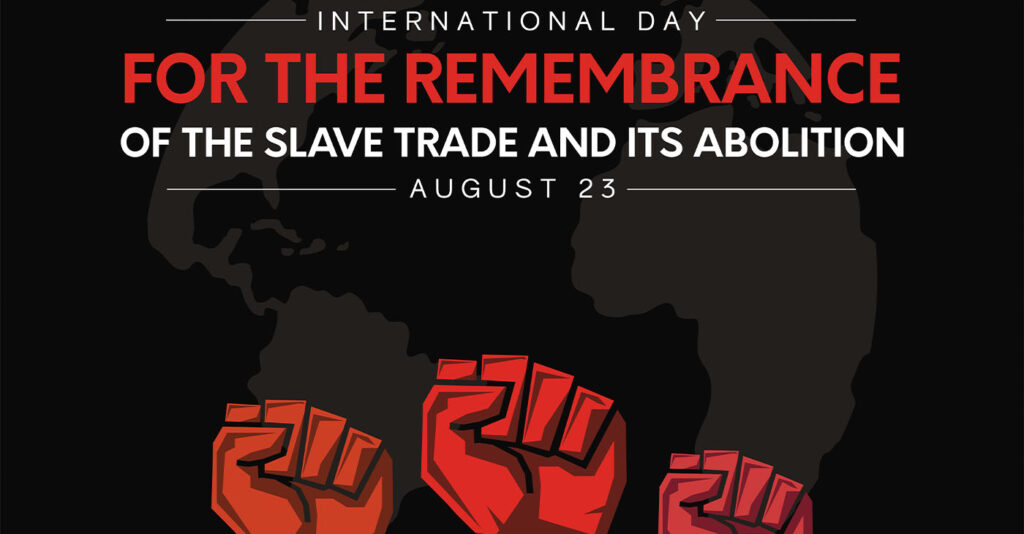
International Day for the Remembrance of the Slave Trade and its Abolition poster, card, August 23. Vector illustration.

The Transatlantic Slave Trade is not just Black history—it is American history, and Black Americans lived it. Their ancestors were violently torn from their homes, forced into brutal labor, and stripped of basic humanity. That legacy of injustice echoes loudly in every aspect of our society—because the slave trade wasn’t just cruel, it was foundational.

Yet today, that truth itself is under attack. President Donald Trump denounced the Smithsonian Institution as allegedly “out of control” for telling the unvarnished history of slavery—claiming museums focus too much on how bad slavery was and not enough on “brightness” or success, even as his administration reviews exhibits and threatens funding cuts to sanitize the narrative. He dismissed honest reflection as “woke,” arguing it undermines national pride.

We are re-rerunning this series, which we originally published in 2019, each day because confronting our painful past is urgent—and because critics who erase suffering do so to keep oppression alive.

A people without the knowledge of their history, origin, and culture is like a tree without roots — Marcus Garvey.

By Stacy M. Brown
Black Press USA Senior National Correspondent

The night of Aug. 22 to Aug. 23, 1791, in Santo Domingo – today Haiti and the Dominican Republic – saw the beginning of the uprising that would play a crucial role in the abolition of the transatlantic slave trade.

The slave rebellion in the area weakened the Caribbean colonial system, sparking an uprising that led to the abolition of slavery and gave the island its independence. It also marked the beginning of the destruction of the slavery system, the slave trade, and colonialism. Each year, on Aug. 23, the United Nations hosts an International Day for the Remembrance of the Slave Trade and its Abolition to remind the world of the tragedy of the transatlantic slave trade.

U.N. officials said it provides an opportunity to think about the historic causes, the methods, and the consequences of the slave trade. Experts said it’s important to never forget. And, with the approaching 500th anniversary of the date Africans were first forced into slavery in America, many like Felicia M. Davis, the director of the HBCU Green Fund, which invests in sustainable campus solutions for historically black colleges and universities, said she believes African enslavement demands reexamination.

“The fact that slavery was underway for a century in South America before its introduction in North America is not widely taught nor commonly understood,” Davis said. “It is a powerful historical fact missing from our understanding of slavery, its magnitude, and global impact. Knowledge that slavery was underway for a century provides deep insight into how enslaved Africans adapted,” she said. Far beyond the horrific “seasoning” description that others have provided, clearly generations had been born into slavery long before the introduction in North America, Davis argued. “It deepens the understanding of how vast majorities could be oppressed in such an extreme manner for such a long period of time.  It is also a testament to the strength and drive among people of African descent to live free,” she said.

The history of the United States has often been described as the history of oppression and resistance to that oppression, said David B. Allison, the editor of the book, “Controversial Monuments and Memorials: A Guide for Community Leaders.” Slavery and the resulting touchstones stemming from slavery throughout the history of the United States run as a consistent thread that illuminates the soul and essence of America, said Allison, a historian with a master’s degree in U.S. History from Indiana University-Purdue University at Indianapolis.’ “From the compromises and moral equivocation in the founding documents during the Revolutionary Era – statements like ‘All men are created equal’ were written by a man who kept Black men and women as decidedly unequal as slaves – to the Civil War and Civil Rights Movement, the tragedy and terror of slavery are fundamental to the history of the United States,” Allison said.

Today, the fallout from the events of Aug. 2017 in Charlottesville – brought about by a white supremacist rally and touched off the debate around the potential removal of a statue to a leader of the Confederacy – continues to weigh down the collective psyche of this nation, Allison continued. “Moreover, the rise in police profiling and brutality of Black men and the resulting rates of incarceration for African Americans highlight the ongoing oppression that was initially born in the crucible of slavery,” he said. Allison added that it’s “absolutely essential to understand and remember that 2019 is the 500th anniversary of slavery in the United States so that we can understand both how our country became how it is now and how we might envision a more just future for all citizens.”

Each year, the UN invites people all over the world, including educators, students, and artists, to organize events that center on the theme of the International Day of Remembrance. Theatre companies, cultural organizations, musicians, and artists take part in this day by expressing their resistance against slavery through performances that involve music, dance, and drama. Educators promote the day by informing people about the historical events associated with the slave trade, the consequences of the slave trade, and promoting tolerance and human rights. Many organizations, including youth associations, government agencies, and non-governmental organizations, actively take part in the event to educate society about the negative consequences of the slave trade.

Here in America, many organizations, activists, and scholars are focused on 2019 as the anniversary of the arrival of the first Africans to be enslaved in Jamestown and 160 years since the last slave ship arrived, Davis said. Also, there’s a growing list of apologies for slavery from colleges and universities, local governments, and corporations. Efforts are underway by the HBCU Green Fund to organize a national convening under the theme “Sankofa Remix” with three tracks: past, present, and future. The goal is to examine history from an African American perspective, explore current impacts, including backlash from the election of the first Black president, and craft a vision that extends at least 100 years into the future that features presentations from artists, activists, technology, scholars, and other creative energy. “It is encouraging to know that BlackPressUSA is focused on this topic.  It is our hope that plans are underway to cover activities throughout the entire year,” Davis said, noting that 2019 also marks the 100th anniversary of the Red Summer Race Riots.

“The UN Decade of African Descent 2015-2024 should also be highlighted as the BlackPressUSA leads this important examination of history,” she said. “Interestingly, the first and last slave ships to arrive in the U.S. both arrived in August. The HBCU Green Fund is working to put together a calendar of dates and observances. “We would love to work with Black Press USA to promote a year-long observance that helps to reinvigorate and support the important role that the Black press plays in the liberation of Black people across the globe. “We would be honored to have Black Press USA as a Sankofa Remix partner organization and look forward to collaboration opportunities,” Davis said.

Up Next: The Catholic Church Played a Major Role in Slavery

Filed Under: Black History, World News Tagged With: 500th anniversary of slavery, abolition, adaptation, African American perspective, American History, apologies for slavery, Black History, Black Press USA, Catholic Church, Charlottesville, civil rights movement, Civil War, colleges, colonialism, Controversial Monuments and Memorials, corporations, cultural organizations, dance, David B. Allison, Dominican Republic, Donald Trump, drama, Education, Felicia M. Davis, Haiti, HBCU Green Fund, Human Rights, incarceration, International Day for the Remembrance of the Slave Trade and its Abolition, Jamestown, last slave ship, Liberation, local governments, Marcus Garvey, museum funding cuts, music, national pride, North America slavery, oppression, past present future, police profiling, Red Summer, remembrance events, resistance, Revolutionary Era, Sankofa Remix, Santo Domingo, slave rebellion, slavery, Smithsonian Institution, South America slavery, theatre, Transatlantic Slave Trade, U.S. history, UN Decade of African Descent, United Nations, universities, white supremacy, Woke

“Hands Off Blacksonian,” Says Congressional Black Caucus

April 11, 2025 By MKE Community Journal Leave a Comment

The House of Representatives (Photo by Douglas Rissing)

By Lauren Burke

Seven members of the Congressional Black Caucus spoke exclusively to Black Press USA after the Caucus was briefed on issues related to protecting the National Museum of African American History and Culture (NMAAHC) and other historic sites under the control of the National Parks Service that feature Black trailblazers. Their reactions were blunt. “House Democrats are working very closely with the Congressional Black Caucus and civil rights leaders throughout the country to put up a strong wall of defense and protect the Museum of African American History. There are several action items that we will roll out shortly all in service and making sure that the White House and the extremists cannot whitewash our history,” House Democratic Leader Hakeem Jeffries exclusively told Black Press USA as he walked the stairs back to his office after the CBC’s weekly meeting. Two members, Reps. Emanuel Cleaver (D-MO) and Bennie Thompson (D-MS) also spoke at a March 29 event that had to be relocated after the office of Rep. Cleaver was informed that Cleaver and Bobby Scott (D-VA) were prohibited from speaking on education policy at the Truman Library in Independence, Missouri. Cleaver relayed the story to colleagues in the CBC’s April 9 meeting.

“I just heard from Congressman Cleaver that he had an event in his district with Congressman Scott as the invited speaker, and they were told they couldn’t hold it. I have never heard of a member of Congress not being able to speak in a government-owned building, notwithstanding the fact that this person is a ranking Democrat on the committee. They’ve taken it to the extreme. You know, this is not Nazi Germany. This is the United States of America,” Thompson pointedly said during an interview in a hallway in the U.S. Capitol. “I don’t know how it’s a threat to the government to have Bobby Scott speaking at the Truman Library. The only thing I can come up with is his skin color,” Rep. Cleaver said on the March 29 visit. Cleaver said that “the Truman Library was notified that they could not have the program” on March 26. The two spoke at Metropolitan Community College instead. A recent flip-flop by the Trump Administration involving the removal of a photo of Harriet Tubman on a National Parks Service website and the whitewashing of her historic acts was met with fury after a report in The Washington Post on April 6. The decision was reversed on April 8. “I’m hearing that people who work for the Park Service feel intimidated,” added Rep. Thompson as he referred to the experience of some National Park Service employees.

Trump’s March 27 Executive Order entitled “Restoring Truth and Sanity to American History,” specifically targeted the National Museum of African American History. The March 27 directive was followed by an April 4 report that NMAAHC Director Kevin Young was leaving after four years. “Hands off Donald Trump! If you try to erase it, we will replace it. More importantly, Black people all across the country will rise up like a big black tsunami, unlike anything you’ve ever seen,” Rep. Kwesi Mfume (D-MD) said in an interview with Mfume told Black Press USA. NMAAHC opened in 2016 and is the most visited of all of the Smithsonian museums in the Nation’s Capital. The 10 millionth in-person visitor walked through the door on Sept. 30, 2023. A 7-day waiting list to visit is standard.

“No matter how hard he [Trump] tries to wipe out our history or us it is not going to be successful. I’m very concerned, I have the Pullman National Historic Park in my district,” said Rep. Robin Kelly (D-IL). “The president better keep his hands off the museum and off of — not African American history — but American history. What makes America great is everything that’s in that library… because it shows what you can overcome and why and how we move forward to become a better nation,” said Rep. Greg Meeks (D-NY). As he stood in a crowded hallway in the House Rayburn Building, his voice rose over the nearby crowd noise. “People need to understand, and the President needs to understand, that all of America is better when they go see those exhibits so that we don’t make the same mistakes. We shall never forget the past… keep your hands off of American history and the African American museum,” Meeks concluded.

On April 8, The National Council of Negro Women (NCNW) released a statement that in part asserted that, it “calls on policymakers, educators, and citizens across the country to reject false narratives that seek to divide us. We must support institutions that honor our collective past and protect our shared future.” Changes to historic narratives or “whitewashing” have appeared on DoJ websites and beyond. “I think it’s one of the most ridiculous things this administration has done. The effort to rewrite or seriously distort history is an affront to America … It’s hard to imagine, but it is happening,” said Rep. Danny Davis (D-IL). What happens next is likely to represent an epic battle between the truth, who tells it, and who makes the decisions on matters of fact and history.

Filed Under: Political Tagged With: African American heritage, American History, April 6 report, April 8 NCNW statement, Bennie Thompson, Black History, Black museum advocacy, Black resistance, Black trailblazers, BlackPressUSA, Bobby Scott, cbc, civil rights, Congressional Black Caucus, cultural erasure, cultural institutions, Danny Davis, DOJ narrative changes, Emanuel Cleaver, federal speech restrictions, Freedom of speech, government censorship, government overreach, Greg Meeks, Hakeem Jeffries, Harriet Tubman, historic preservation, historic sites, House Democrats, Kevin Young, Kwesi Mfume, Metropolitan Community College, museum protection, museum visitation, National Council of Negro Women, National Museum of African American History and Culture, National Park Service, NCNW, NMAAHC, political interference, public education, public history access, public memory, Pullman National Historic Park, Racial Bias, racial equity, Restoring Truth and Sanity to American History, rewriting history, Robin Kelly, Smithsonian museums, systemic racism, Truman Library, Trump Executive Order, truth in history, Washington Post, whitewashing history

Biden-Harris Administration Celebrates Juneteenth with Concert and New Initiatives to Honor Black History

June 10, 2024 By MKE Community Journal Leave a Comment

By Stacy M. Brown

NNPA Newswire Senior National Correspondent

The White House planned to mark Juneteenth with a vibrant celebration on the South Lawn on Monday, June 10. The celebration would feature performances by celebrated African American artists, including Gladys Knight, Raheem DeVaughn, Patti LaBelle, Charlie Wilson, and Doug E. Fresh. Over 2,000 guests, including President Joe Biden and First Lady Dr. Jill Biden, were expected at the event, which officials said emphasized the Biden-Harris Administration’s dedication to preserving and honoring African American history.

Since taking office, President Biden and Vice President Harris have prioritized advancing racial justice and recognizing Black history as an essential component of American history. The White House said the dedication is reflected in significant actions such as signing the Juneteenth National Independence Day Act into law, establishing the Emmett Till and Mamie Till-Mobley National Monument, and posthumously awarding the Presidential Medal of Freedom to civil rights icon Medgar Evers.

Amid efforts to combat attempts to rewrite history and undermine racial progress, the administration hosted a live-streamed event featuring officials, artists, civil rights leaders, and scholars to discuss federal initiatives to protect African American history. The gathering highlighted ways the public can commemorate Juneteenth and emphasized the broader historical significance of African American experiences.

In conjunction with the celebration, the President’s Committee on the Arts and the Humanities organized the second annual Juneteenth National Independence Day event in partnership with the White House. The large-scale concert also honored Black Music Month, showcasing African American musical legends and underscoring the cultural importance of this federal holiday.

Harris declared June 19, 2024, one of three National Days of Action on Voting, focused on enhancing voter engagement and safeguarding voting rights. The White House noted that National Days of Action will also occur on August 6 and September 17, 2024.

Aligned with Biden’s Executive Order on Promoting the Arts, the Humanities, and Museum and Library Services, several federal agencies announced new initiatives to protect African American history and culture. The National Archives Museum will display the original Emancipation Proclamation and General Order No. 3 from June 18 to June 20, 2024, while the National Park Service will offer free entrance to park sites on Juneteenth.

The National Endowment for the Humanities (NEH) has launched a digital repository to deepen public understanding of African American history. Additionally, NEH will establish a nationwide program celebrating Juneteenth, leading to a grand 160th-anniversary celebration in 2025.

In response to the rising incidence of book bans targeting historically marginalized groups, the U.S. Department of Education announced it had appointed a coordinator to address the impact of such restrictions on civil rights. The White House Initiative on Advancing Educational Equity will host events emphasizing the importance of culturally relevant education.

The National Endowment for the Arts (NEA) plans to announce new recipients of the NEA Jazz Masters Fellowship, celebrating the contributions of African American musicians to jazz. The Institute of Museum and Library Services (IMLS) will highlight projects that preserve African American history as part of its “250: All Stories. All People. All Places initiative.”

The administration said it has significantly invested in preserving African American history through infrastructure and preservation projects. The Department of Interior’s National Park Service (NPS) and the Historic Preservation Fund have allocated substantial funds for these efforts, including grants to support underrepresented communities and historic site nominations.

Federal agencies, including the Department of Transportation, are working to document and uplift the stories of communities affected by past federal policies. The NEH prioritizes projects that preserve historical collections on slavery and its legacies. At the same time, the President’s Committee on Arts and the Humanities will launch initiatives to support underserved creative and cultural communities.

“Through these actions and policies, the Biden-Harris Administration reaffirms its commitment to advancing racial equity and ensuring that America’s promise is realized for all citizens,” the White House said in a Fact Sheet.

Filed Under: Arts & Entertainment, Juneteenth, Latest News Tagged With: African American history, Black History, celebration, Doug e. Fresh, Gladys Knight, Joe Biden, juneteenth, Kamala Harris, Patti Labelle, Roy Wood Jr., White House

Black History/White Lies: The 10 biggest myths about slavery

February 15, 2024 By MKE Community Journal Leave a Comment

By Michael Harriot

OPINION: Part one of theGrio’s Black History Month series explores the myths, misunderstandings and mischaracterizations of America’s slaveholding past.

Editor’s Note:The following article is an op-ed, and the views expressed are the author’s own. 

Because theGrio celebrates the legacy and the past of African America 364 days a year (to appease Ron DeSantis, we take a day off to celebrate white history), it’s always a difficult proposition to find new ways to celebrate Black History Month. 

This year, instead of presenting interesting-but-meaningless nuggets of trivia like the first man to slit a piece of fried baloney (Levester Jermaine Robinson in 1823), we decided to explore some of the misconceptions, myths and misunderstandings that created some of the popular, almost true narratives that many people believe. 

Here are the 10 biggest myths about slavery. 

10. Slavery existed in every society. 

I’m sure you’ve heard this one. It is one of the principles in Prager University’s ultra-conservative, pro-white version of American history. Depending on the time and geography, indentured servants, women in arranged marriages, child laborers and prisoners of war were described as “slaves.” 

While it is true that varying forms of human subjugation, bondage and servitude have existed since time immemorial, there are distinct features unique to America’s human trafficking enterprise: 

It was race-based: This was not the case in ancient Europe, nor was it true in the Caribbean and Latin American New World colonies. 

It was constitutionally protected: Slavery wasn’t just embedded into the foundational document of the nation, even states that rejected the institution were legally required to enforce precepts. 

It reduced human beings to property: In Federalist Paper No. 54, one of the esteemed Founding Fathers notes that the Constitution views the enslaved “in the mixed character of persons and of property. This is in fact their true character.” 

It was inescapable: Not only was it intergenerational and perpetually inheritable, but white people controlled the only legal path to freedom. 

While other societies may have included some of these components, America was the only place that had all of the qualities that typify the institution that we refer to as “slavery.” 

To be fair, saying “race-based, constitutional, inescapable human trafficking system that reduced human beings to chattel using violence or the threat of violence to extract labor and intellectual property” is probably more accurate. 

It’s just easier to just call it slavery. 

9. Africans sold slaves. 

Well … kinda 

The first African enslaved by Nuno Tristão and Antão Gonçalves — the Portuguese explorers credited with starting the African slave trade as we know it — was kidnapped by force. Most of the subsequent victims of the enterprise were already prisoners of war captured during intertribal conflicts. Portugal’s Casa da Guiné and the East India Company were the first of many state-run European corporations formed to ensure West Africa’s and Europe’s economic dependence on the institution. And yes, as European corporations used coercion, duplicity and force by introducing capitalism and weapons into the fray, Africans willingly participated. Still, “sold” is an inadequate word to characterize African participation in the slave trade. 

Africans could not have conceived of what awaited the victims of this brand-new enterprise. In Africa, POWs were not considered property, were not perpetually enslaved and could earn a path to freedom. 

Still, nearly all of the slaves sold in Africa were resold by whites once they made it to the New World. Their children, grandchildren and subsequent progeny born in the Americas were sold by white Americans. According to the U.S. Census Bureau, more than 30% of human imports in colonial America were trafficked from the Caribbean, where generations of Africans had been enslaved for centuries. 

So, yes, Africans sold slaves. However, African participation in the trans-Atlantic slave trade represents a tiny part of the human trafficking economy. Only 388,000 of the approximately 10 million human beings enslaved in North America were born in Africa. 

Most importantly, none of that happened until white people showed up. 

8. Black people owned slaves. 

A Black American slaveowner was an extremely rare thing. 

According to a study by Black historian Carter G. Woodson, 3,777 free Black people owned 12,907 slaves in 1830 — about one-half of 1% of the two million people enslaved in America. And because Black people had no legal rights in many states, many of those people were slaveowners in name only. Some of them had purchased their kin. Others technically owned themselves after buying their freedom. And, as Woodson notes: 

“The census records show that the majority of the Negro owners of slaves were such from the point of view of philanthropy. In many instances, the husband purchased the wife, or vice versa … Slaves of Negroes were in some cases, the children of a free father who had purchased his wife. If he did not thereafter emancipate the mother, as so many such husbands failed to do, his own children were born his slaves and were thus reported.” 

To be fair, white people weren’t the only culprits. Native Americans enslaved African Americans at rates that often mirrored white Southerners. In fact, when the 13th Amendment abolished slavery, indigenous Americans in “Indian Territory” continued the practice until separate treaties were signed by what we call the “five civilized tribes.” 

7. Most white people weren’t enslavers. 

Again, this depends on how you look at it. While only 25% of white Southerners technically owned slaves, that number doesn’t reflect the sons, daughters and families of slaveowners. It doesn’t count the people who worked in the slave trade, the non-slaveowners who worked as overseers or the people who used slave labor. Are you a “car owner” if you drive your parent’s old car every day? Should the wife or children of a slave owner be considered an “enslaver”? What if you inherit your parents’ chattel? 

The profits from human trafficking trickled down to every part of American society. Northerners could buy cheap clothing because of cheap cotton prices. Free labor increased earnings for farmers and manufacturers. Enslavers rented out their human chattel to merchants, builders and business owners. Insurance companies, banks and financial markets were backed by enslaved bodies. Churches and schools benefitted from their involvement in the slave trade. 

Almost every free person in America benefitted from living in a slave economy. Historian David Blight notes that “by 1860, there were more millionaires (slaveholders all) living in the lower Mississippi Valley than anywhere else in the United States. In the same year, the nearly 4 million American slaves were worth some $3.5 billion, making them the largest single financial asset in the entire U.S. economy, worth more than all manufacturing and railroads combined.” 

Slavery was the American economy. 

6. The myth of “free states.” 

A Black person could not be free in a slaveholding society. 

Even in non-slaveholding states, free Black people were often kidnapped, lured or forced into slavery. Some were wrongfully enslaved from birth like Jenny Slew, who won her freedom via lawsuits. But in states like Georgia, the burden of proof was on the enslaved person and, in others, Black people could not represent themselves in court — even before the Supreme Court ruled that Black people had “no rights which the white man was bound to respect.” 

In non-slaveholding states, Black Americans were still relegated to second-class citizenship. In the 1800s, Pennsylvania and New Jersey changed their constitutions to rescind voting rights for all Black citizens, free or enslaved. New York required Blacks — and only Blacks — to own property before they could vote. And, of course, every state was required to comply with fugitive slave laws. 

As Fannie Lou Hamer said: “Nobody’s free until everybody’s free.” 

5. Slaves were forbidden to read. 

While there were places where slaves were forbidden from reading and writing, South Carolina’s Negro Act of 1740 — the law on which most slave codes were based — only forbade slaves from writing. Enslaved people were even given pro-white redacted versions of the Bible and even served as entrepreneurs and bookkeepers. Yes, literate slaves were definitely considered a threat because all Black people were considered a threat. 

And, because white people have the privilege of enforcing laws as they see fit, they rarely enforced the prohibition against reading until they needed to demonstrate their might. 

4. There were “good” slavemasters and happy slaves. 

Men like Thomas Jefferson may not have wielded the whip, but he employed proxies who used physical and psychological torture to uphold the institution. Ona Judge didn’t run away from George Washington’s Philadelphia home because he was a brutal master. Still, Washington’s three-year quest to re-enslave her was an act of cruelty. Slavemasters may not have written the rules, but they dispatched slavecatchers and employed slave supervisors to enforce them. 

Withholding someone’s God-given right to freedom and liberty is evil. It is also important to distinguish between “happy slaves” and slaves who told white people they were happy. After escaping the plantation of the man who enslaved and impregnated her, Harriet Jacobs ran away. For years, she lived in a swamp by day and a tiny attic crawl space during the night. Even though a Kentucky history textbook teaches that “masters encouraged their chattels to engage in recreational activities, such as dancing and singing, that provided emotional release” because “happy slaves worked better than did discontented ones,” Margaret Garner killed her child because she didn’t want the child to grow up on a Kentucky plantation. 

The institution of slavery is inherently violent. 

3. White people fought to end slavery. 

That never happened. 

First of all, the Civil War wasn’t fought to end slavery. The Civil War didn’t even end slavery, the 13th Amendment did. Plus, it was passed by Congress before the end of the Civil War. Ending the institution wasn’t the goal of Union Commander-in-Chief Abraham Lincoln, who said: “My paramount object in this struggle is to save the Union, and is not either to save or to destroy slavery.” There isn’t any evidence that a significant number of anti-slavery white men enlisted to fight in the war. 

Ending slavery was a consequence of the Civil War. Saying white people gave their lives to end slavery is like saying slaves donated their labor to enrich white people. 

2. Slaves labored on plantations. 

The portrait of Black people toiling away on Southern plantations doesn’t accurately portray the “peculiar institution” of race-based involuntary servitude. 

Millions of enslaved Africans lived in urban areas like Charleston, Savannah and Richmond, where Black residents often outnumbered whites. Even the enslaved people in rural areas didn’t often work on large plantations. In 1860, 54% of slaveowners owned less than six enslaved people, many of whom worked as domestic servants, trained artisans and industrial laborers. 

More importantly, slaves were not just used for labor. The white aristocrats who initially invaded America didn’t know about farming, hunting or building a new nation. Enslaved engineers and horticulturalists built the homes and engineered the aqueducts and dams that created the rice industry in South Carolina. African blacksmiths taught Americans how to forge iron and steel. They taught medicine and science, served as accountants and taught their sometimes incompetent owners how to do things. 

What was stolen during slavery was much more than labor. 

1. How slaves gained their freedom. 

Most people assumed that there were three paths to freedom for enslaved people: 

1. Manumission or the act of formally freeing a slave 

2. The Underground Railroad 

3. Slave revolts 

First of all, white people almost never freed their slaves. In 1850, “less than one-twentieth of one percent” of America’s entire slave population were manumitted — partly because freeing a slave was illegal in many states. Even the enslaved who were technically manumitted had actually emancipated themselves by purchasing their freedom. 

Although hundreds of thousands of enslaved people successfully gained freedom by escaping the institution, most did not utilize the loose network as safehouses, routes and conductors known as the Underground Railroad. Many had no idea it even existed. Others didn’t trust the whites who were involved. Many escapees didn’t know the laws and geographic boundaries that separated free states from slave states. Instead of trying to reach Canada or a Northern state, many lived in maroon villages and Caucasian-free zones like North Carolina’s Great Dismal Swamp, Louisiana’s Bas de Fleuve or Hal’s Kingdom in Alabama. 

And, while the notion of slaves grabbing machetes is exciting, stories of revolts often went untold because whites feared that their human property could be inspired by successful uprisings. We’ll never truly know how frequently rebellions took place. Plus, most rebellions took place before enslaved people reached America, including 485 documented insurrections aboard slave ships transporting Africans. Other acts of rebellion — like the frequently used tactic of setting everything on fire — were considered individual acts. Many were never documented because no one ever found out about them. 

—Michael Harriot is an economist, cultural critic and championship-level Spades player. His New York Times bestseller Black AF History: The Unwhitewashed Story of America is available everywhere books are sold. 

Filed Under: Black History Month Tagged With: Black History, bondage, human subjugation, human trafficking, servitude

  • Page 1
  • Page 2
  • Go to Next Page »

Primary Sidebar

MCJ WEEKLY

PREVIOUS EDITIONS

Go HERE for the Digital Archives

DR. TNT SCHOLARSHIP SPECIAL EDITION

CLICK THE IMAGE THE FULL EDITION

Newsletter Signup

The Milwaukee Community Journal (MCJ) and the Weekend Edition are distributed at a number of community churches; as is the current issue of Healthy Start. With many area churches closed for the next few weeks due to the coronavirus, your MCJ suggests you pick up your edition of the newspaper, Weekend Edition and Healthy Start at our offices, located at 3612 N. Martin Luther King Drive. We’re open from 10 a.m. to 4:30 p.m., Monday through Friday. You can still pick up the MCJ at several Walgreens and Pick n’ Save stores throughout the community, as well as city hall and the county courthouse.

Recent Posts

  • Oakland Protesters Rally to Defend Haitian Immigrants and TPS
  • OPINION: 57,000 Empty Apartments and Not a Word of Apology – City Limits
  • ‘Choppin’ it up’ with a brotha about Crowley’s win, and why Black folks aren’t down with the Democratic Socialists!
  • Identifying Opportunities to Strengthen Wisconsin’s Emergency Response
  • Present Music Highlights Women Composers in Woman’s Club of Wisconsin’s 150th Celebration

CLASSIFIEDS

CLASSIFIEDS

Place your notice of divorce, name change, etc. in the Milwaukee Community Journal's Classifieds! Contact is at 414-265-5300

Follow Us

  • Facebook
  • Instagram
  • Twitter
  • YouTube

Tags

2016 election African Americans Alderman Khalif J. Rainey ALDERWOMAN CHANTIA LEWIS Alderwoman Milele A. Coggs annual Baylor College of Medicine Biden Black History Month Black press Boko Haram civil rights community coronavirus COVID-19 Dating Advice day Democrats diversity Donald Trump Education event Featured free George Floyd HuffPost Live Joe Biden Love & Sex Love and Relationships Mayor Tom Barrett mental health Milwaukee Repertory Theater naacp national NNPA pandemic racism report Republicans Reuters social media Trump Trump Administration What Is Working: Small Businesses White House

Categories

H5_WEDC1027_AA_300x250

Copyright © 2026 Milwaukee Community Journal