• Skip to primary navigation
  • Skip to main content
  • Skip to primary sidebar
  • About
  • Contact
  • Advertise

Milwaukee Community Journal

  • News
    • Local News
    • National
    • World
    • Political
  • Men Building Men
  • Lifestyle
    • Arts & Entertainment
    • Fashion
    • Culture
    • Religion
  • Economy
    • Small Business
    • Money
    • Entrepreneurship
  • Health
    • Family
    • Relationships
  • Education
  • Jobs
    • Housing
  • Scholarship Fund
You are here: Home / Archives for DEI (Diversity

DEI (Diversity

Target Boycotts and its Effect on Both Sides of the Black Dollar

May 2, 2025 By MKE Community Journal Leave a Comment

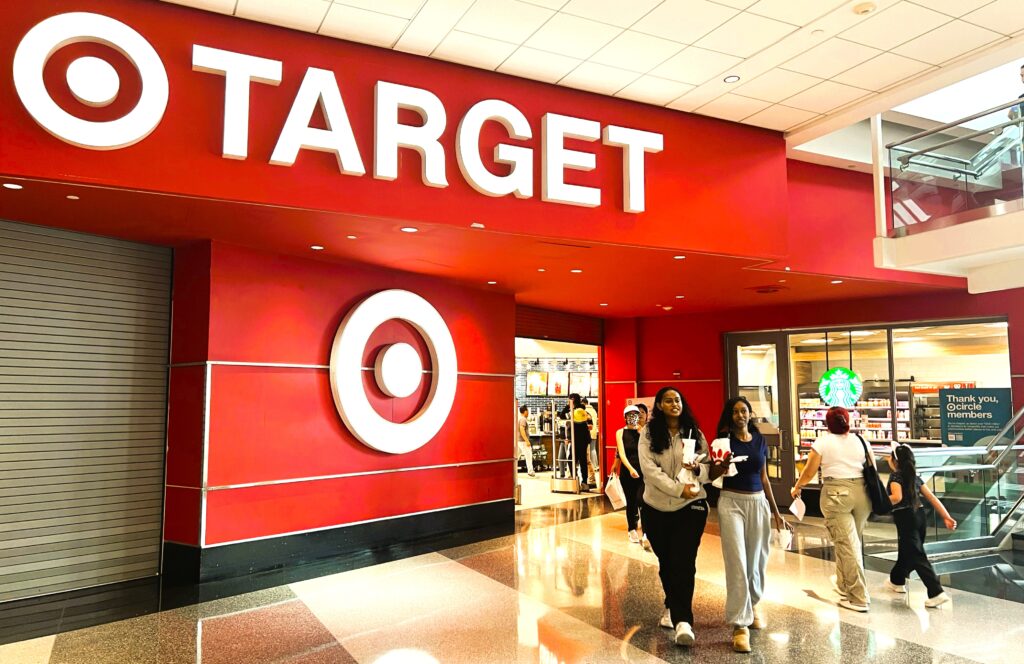
Despite a steady stream of customers at Target, 14th Street and Columbia Road NW, Washington, DC, many Black employees of the retail giant are reporting economic distress due to company layoffs and a reduction in employee work hours. (Photo/Dr. Patrise Holden)

By Dr. Patrise Holden, Washington Informer
Special to Black Press USA
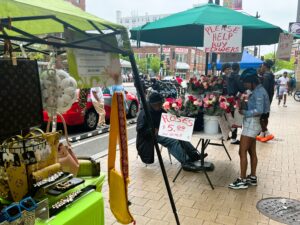
Black and Hispanic street vendors, positioned along the street in front of Target, expressed worry that decreased foot traffic from sustained boycotting will affect their ability to make a living, and possibly put them out of business. (Photo/Dr. Patrise Holden)

Signs in hand, on April 19th, a small crowd of about 10 people gathered in front of the Target at 14th and Columbia Road NW, Washington, DC. Voices raised, as part of a three-day economic blackout from April 18 to April 20, the crowd marched while urging Black and Hispanic shoppers to refrain from purchasing from Target, which has been criticized for its stance on diversity, equity, and inclusion (DEI). Ongoing national boycotts launched as a protest against Target’s cessation of diversity, equity, and inclusion (DEI) initiatives, have ignited a powerful economic and cultural conversation and corresponding action from Black communities across the nation. Backed by spiritual and community leaders, including Pastor Jamal Bryant, who initiated a 40-day fast from shopping at Target, the movement has drawn national attention. The goal is to harness the power of Black dollars to demand respect, representation, and equity.

Boycotts Heighten Economic Stress for Many African Americans

While many celebrate the boycott as a bold stand for economic justice, its ripple effects have been complicated, especially for many within the very community that it is meant to empower. Emmy award-winning host, actress, and multi-NAACP Image Award winner Tabitha Brown, who has partnered with Target on several successful product lines, expressed concern in a January 2025 livestream over the long-term effects of the Target boycott on Black-owned businesses. “As disheartening as it is for me, I am not the only one affected by this. It is for so many of us who worked so very hard to finally be seen. Contrary to what the world might tell you, it has been very hard for Black-owned businesses to hit shelves,” said Brown.

Under immense pressure from boycott participants to pull their products from Target and Walmart shelves, Brown sought to educate the public gently regarding the finances and logistics required to pull products from national stores. “You have to have a place to store it, another place to sell it, which is almost impossible sometimes. Even if you sell online, it’s a process, and everyone does not have the availability or the space to house their own products.” Employees within the company are also feeling the strain. A middle-aged African American female Target worker at the 14th and Columbia location, under anonymity, said, “Although this location has not seen reduced traffic due to the boycotts, I have colleagues in other Targets that have had their hours cut due to low sales. Some Targets have had to lay off workers, and yes, a high number of these workers are Black. Black mothers and Black families are trying to work hard to feed their kids. We can’t say we are uplifting the Black dollar and impoverishing working-class people at the same time.”

The sentiments of this Target employee highlight a key issue: while boycotts send a clear message to corporations, they can also inadvertently harm small Black businesses and working-class consumers. African Americans shopping during the active Target boycott expressed frustration, indicating that they cannot afford to buy from multiple independent Black-owned vendors online, each with separate shipping costs and separate delivery dates and times. A young African American couple, six-month-old baby in hand, related, “In theory, I support the boycotts. I’d love to do it because control of Black dollars uplifts our people.  But I have two children and limited transportation,” said the mother. “I honestly don’t have the money to pay online separate shipping fees and lose the savings of Target sales and specials, which would not be available by buying from each individual website.”

Boycotts: Celebrated Yet Questioned by Small Vendors and Many Consumers

The Target boycott has been undeniably successful in raising awareness and showing the collective power of the Black dollar. However, many African Americans say that it is essential to strategize more to ensure that economic protests do not unintentionally weaken the very ecosystem that it seek to empower. “For us to move forward, the movement doesn’t start with Target. When we focus within, lasting change from without always follows. I am for the boycotts, however, when we focus on us as a collective internally, I think the path to widespread, sustainable change becomes more attainable. Through it all, faith in God and working on changing the men and women in the mirror is how we continue to advance as a people,” said Richard B. Lewis, 37, upon exiting Target. Uniquely located, one block from the Metro, inside a multi-story mall containing a grocery store, a large electronics chain store, two major clothing retailers, and a shoe store, the Target at 14th and Columbia experiences high amounts of diverse shoppers and foot traffic.

Street vendors, exclusively Black and Hispanic, have fought city regulations for years for the right to sell products and retail along the street in front of the corporate giant.  Many vendors expressed worry that decreased foot traffic from sustained boycotting would affect their ability to make a living and possibly put them out of business. Miss Carol of My Virtue, a handbag and accessory vendor, said, “As entrepreneurs, many of us Black vendors depend on foot traffic and sales from customers shopping at Target. People who don’t even plan to shop with us become return clients because of the convenience of having so many diverse vendors right here outside the store. Revenue loss from decreased Target sales could mean financial ruin for many vendors out here.”

Understanding the devastating loss of revenue to vendors, small and large, Brown continued in her January livestream, “Businesses who were affected by DEI, you take all our sales and they dwindle down, and then those companies get to say, ‘oh your products are not performing,’ and they can remove them from the shelves.” When sales dip, companies re-evaluate shelf space. If Black-owned brands underperform, they can be quietly pulled from stores. In six months to a year, we could see a whitewashed version of Target and Walmart, places where Black retailers fought for decades to get representation, disappear overnight. Brown emphasized, “Sometimes, that is what they want, and in times like this, they are telling us that.”

Filed Under: Economy, Latest News, National News Tagged With: Black and Hispanic shoppers, black dollar, black owned businesses, Black Target employees, boycott impact, collective power, corporate accountability, DEI (Diversity, economic blackout, economic ecosystem, Economic Justice, equity, Featured, foot traffic, Inclusion, Jamal Bryant, layoffs, Miss Carol, My Virtue, online shopping barriers, product pullouts, retail representation, Richard B. Lewis, shipping costs, small vendors, street vendors, sustainable change, Tabitha Brown, Target boycott, working-class families

Financial Expert: Trump’s Tariffs Could Bring Economic Pain to Black and Brown Communities

February 4, 2025 By MKE Community Journal Leave a Comment

rubber stamp with the word tariff stamped on paper background (Photo Credit By Olivier Le Moal)

By Stacy M. Brown
NNPA Newswire Senior National Correspondent
@StacyBrownMedia

President Donald Trump’s sweeping tariffs on Canada, China, and Mexico—America’s largest trading partners—have already begun to rattle markets and consumers. The policy, which imposes a 25 percent tax on all imports from Canada and Mexico and a 10 percent tariff on Chinese goods, is being framed as an aggressive move to curb migration, drug trafficking, and China’s role in fentanyl production. However, the economic consequences are already being felt, with financial markets in turmoil and everyday Americans bracing for price hikes in critical sectors such as fuel, food, and automobiles.

Financial expert Allan Boomer, a seasoned Wall Street veteran with more than two decades of experience, discussed the economic fallout in an interview with the Black Press. Boomer, who spent years advising institutional clients and managing multi-million-dollar investment portfolios at Goldman Sachs before founding his firm Momentum Advisors, assessed the current financial landscape. “The markets are constantly moving,” Boomer said. “The Dow was down a bunch earlier today, but it’s already rebounding somewhat. Still, what the market is really bracing for is an all-out trade war.”

Boomer pointed to the deep economic ties between the United States and its neighboring trading partners. “Mexico and Canada each send more than 80 percent of their exports to the United States, and retaliatory tariffs from these countries could have severe consequences,” he said. “The ultimate loser in this situation is the consumer. Ultimately, this results in higher prices.” Gas prices in the Midwest have already risen by as much as 50 cents per gallon, as Canada and Mexico supply over 70 percent of crude oil imports to U.S. refineries. The auto industry is also seeing immediate effects, with tariffs threatening to add as much as $3,000 to the price of some vehicles. Meanwhile, grocery costs are expected to rise, as Mexico supplies more than 60 percent of America’s vegetable imports and nearly half of its fruit and nut imports.

“We’re going to feel this in Black and brown communities,” Boomer said. “Any community that spends money as a high percentage of their wealth—whether Black, white, or Latino—is going to be hit hard. But for Black and brown people, who statistically spend the most as a percentage of wealth, the impact is going to be severe.” Boomer questioned the broader strategy behind Trump’s trade policies, noting that while the administration touts these tariffs to strengthen the U.S. economy, the reality may be different. “This is a president who said he would strengthen the United States at the expense of our partners,” Boomer said. “But what you’re seeing is that it’s really at our own expense. We import a bunch of things—lumber, oil, tequila, avocados—and these tariffs have big knock-on effects in our economy on a day-to-day basis.”

Trump has positioned tariffs as a tool to pressure Canada and Mexico to make policy concessions. “Trump is looking to leverage these tariffs for some sort of win,” Boomer said. “For example, he’s pointing out that U.S. banks can’t operate in Canada, and he’ll try to push for some small victories, but the question is, does anyone care?”

With markets in flux and fears of an economic downturn growing, Boomer advised investors to think long-term. “You can’t invest just for today—you have to invest for tomorrow and for 10 years down the road,” he said. “Right now, we’re in a really challenging political climate, but in the next two years, with the midterms, we might see a backing off of these extreme positions.” Boomer encouraged investors to consider where they put their money. “I’d be wary of companies that are backing off their DEI (Diversity, Equity, and Inclusion) initiatives,” he said. “I just don’t think companies that aren’t inclusive in hiring are going to do well in the long run.”

He also urged investors to be mindful of who is managing their money. “Am I investing in funds managed by diverse professionals or am I turning my money over to non-diverse money managers?” he asked. “These are things people should be paying attention to in this climate.” National Urban League President Marc Morial addressed broader concerns about Trump’s policies on federal assistance, which could leave millions of Americans without critical support, including food assistance, education funding, small-business grants, and VA benefits for veterans.

“This administration’s reckless action has already stirred widespread chaos and may cause recessionary impacts such as increased poverty, job losses, and economic stagnation,” Morial said. “This is not a blueprint to ‘Make America Great Again.’ This is not putting ‘America First.’ This is leaving millions of Americans behind.”

Filed Under: Economy Tagged With: Allan Boomer, America First, and Inclusion), auto industry, automobiles, Black and brown communities, CANADA, china, consumer impact, crude oil imports, DEI (Diversity, economic consequences, economic downturn, economic stagnation, equity, Featured, federal assistance, financial expert, financial markets, food, fuel, gas prices, Goldman Sachs, grocery costs, imports, inclusive hiring, investment strategy, job losses, long-term investing, Make America Great Again, Marc Morial, Mexico, midterms, Momentum Advisors, National Urban League, policy concessions, poverty, President Donald Trump, price hikes, recession, tariffs, trade war, trading partners, U.S. economy, Wall Street

Primary Sidebar

MCJ WEEKLY

PREVIOUS EDITIONS

Go HERE for the Digital Archives

DR. TNT SCHOLARSHIP SPECIAL EDITION

CLICK THE IMAGE THE FULL EDITION

Newsletter Signup

The Milwaukee Community Journal (MCJ) and the Weekend Edition are distributed at a number of community churches; as is the current issue of Healthy Start. With many area churches closed for the next few weeks due to the coronavirus, your MCJ suggests you pick up your edition of the newspaper, Weekend Edition and Healthy Start at our offices, located at 3612 N. Martin Luther King Drive. We’re open from 10 a.m. to 4:30 p.m., Monday through Friday. You can still pick up the MCJ at several Walgreens and Pick n’ Save stores throughout the community, as well as city hall and the county courthouse.

Recent Posts

  • Oakland Protesters Rally to Defend Haitian Immigrants and TPS
  • OPINION: 57,000 Empty Apartments and Not a Word of Apology – City Limits
  • ‘Choppin’ it up’ with a brotha about Crowley’s win, and why Black folks aren’t down with the Democratic Socialists!
  • Identifying Opportunities to Strengthen Wisconsin’s Emergency Response
  • Present Music Highlights Women Composers in Woman’s Club of Wisconsin’s 150th Celebration

CLASSIFIEDS

CLASSIFIEDS

Place your notice of divorce, name change, etc. in the Milwaukee Community Journal's Classifieds! Contact is at 414-265-5300

Follow Us

  • Facebook
  • Instagram
  • Twitter
  • YouTube

Tags

2016 election African Americans Alderman Khalif J. Rainey ALDERWOMAN CHANTIA LEWIS Alderwoman Milele A. Coggs annual Baylor College of Medicine Biden Black History Month Black press Boko Haram civil rights community coronavirus COVID-19 Dating Advice day Democrats diversity Donald Trump Education event Featured free George Floyd HuffPost Live Joe Biden Love & Sex Love and Relationships Mayor Tom Barrett mental health Milwaukee Repertory Theater naacp national NNPA pandemic racism report Republicans Reuters social media Trump Trump Administration What Is Working: Small Businesses White House

Categories

H5_WEDC1027_AA_300x250

Copyright © 2026 Milwaukee Community Journal