• Skip to primary navigation
  • Skip to main content
  • Skip to primary sidebar
  • About
  • Contact
  • Advertise

Milwaukee Community Journal

  • News
    • Local News
    • National
    • World
    • Political
  • Men Building Men
  • Lifestyle
    • Arts & Entertainment
    • Fashion
    • Culture
    • Religion
  • Economy
    • Small Business
    • Money
    • Entrepreneurship
  • Health
    • Family
    • Relationships
  • Education
  • Jobs
    • Housing
  • Scholarship Fund
You are here: Home / Archives for tariffs

tariffs

After the Ruling: How Trump’s Struck-Down Tariffs Impact Black-Owned Businesses

June 4, 2026 By MKE Community Journal Leave a Comment

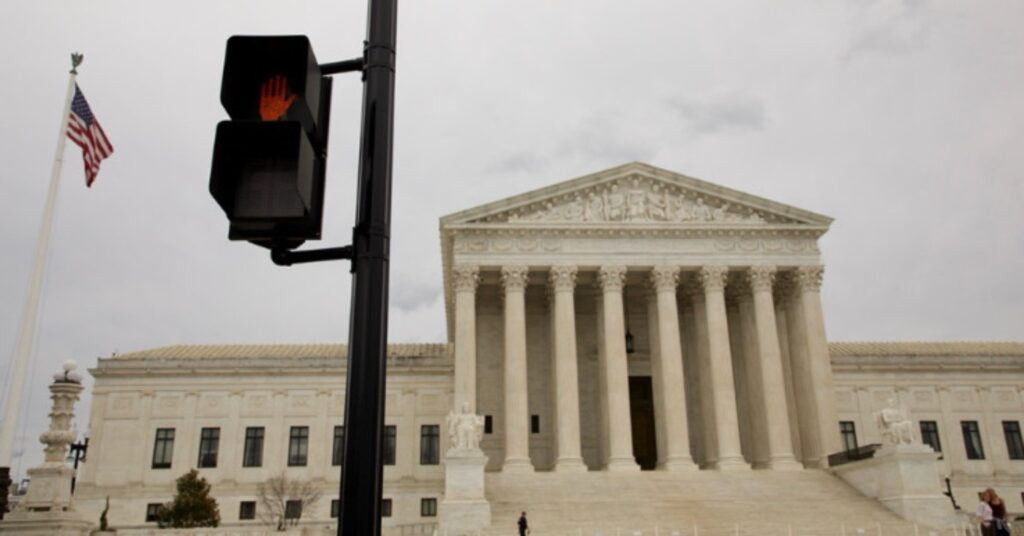
A picture of the Supreme Court of the United States. (Photo: Keith Golden Jr./HUNewsService.com)

Approximately 90% of tariff costs were paid by businesses and consumers in the United States, not in foreign countries. Businesses that rely on imports saw input costs rise.

By BlackPressUSA Newswire

By Armani Durham | Howard University News Service

On Feb. 20, the U.S. Supreme Court ruled 6-3 in Learning Resources Inc. v. Trump that President Donald Trump was not authorized to impose sweeping tariffs under the International Emergency Economic Powers Act (IEEPA).

IEEPA, created in 1977, authorizes the president to act during a national emergency to regulate commerce, freeze assets or impose economic sanctions. Trump used the law, declaring national emergencies to bypass Congress and impose tariffs, sanction foreign entities and threaten economic action.

“The decision to…move very quickly to both impose tariffs and then increase those tariffs [has] injected new lines of uncertainty and a lack of predictability to markets…that doesn’t serve the United States economy or those market participants as well,” said Eric Morrissette, a senior fellow at the Joint Center for Political and Economic Studies

The ruling carries national significance, as it not only reshapes consumer prices and business costs but also redefines the limits of presidential authority over trade and signals a broader shift in United States economic and global policy.

On Feb. 24, Trump signed a proclamation under Section 122 of the Trade Act of 1974 to address “fundamental international payment problems.”

The proclamation imposes a 10% global import surcharge, implemented for 150 days.

Tariffs imposed under Section 122 require congressional approval to continue beyond 150 days, making them a temporary replacement for the invalidated IEEPA tariffs.

Approximately 90% of tariff costs were paid by businesses and consumers in the United States, not in foreign countries. Businesses that rely on imports saw input costs rise.

“At the end of the day…we all receive the repercussions behind their actions,” said Tony Barnes, co-owner of Oohh’s & Aahh’s.

After the IEEPA tariffs were struck down, companies can seek refunds totaling $130 billion to $175 billion.

On March 4, in Atmus Filtration v. US, the U.S. Court of International Trade (CIT) ordered U.S. Customs and Border Protection (CBP) to refund unlawful IEEPA tariffs.

CBP issues refunds electronically via Automated Clearing House (ACH).

Refunds are primarily available to importers of record that paid the tariffs and are registered in the Automated Commercial Environment (ACE) system.

For court-ordered refunds, CBP uses the Consolidated Administration and Processing of Entries (CAPE) system to manage, track, and process tariff refund claims.

The Supreme Court only struck down tariffs imposed under IEEPA.

Trump’s tariffs, including tariffs imposed under IEEPA before it was invalidated, have impacted businesses across the country, including Black-owned businesses.

Black-owned businesses are not able to handle rising costs and the economic uncertainty, like other businesses, because of their smaller size, limited financial resources and concentration in import-dependent and customer-facing industries.

According to the Center on Budget and Policy Priorities, tariffs increased input costs, leading Black-owned businesses to raise prices, cut staff or both.

Higher input costs disproportionately affect Black small businesses, as they often operate on narrower profit margins and have less access to capital than white-owned businesses.

Approximately 52% of Black-owned businesses experienced a decline in sales due to tariffs.

“The prices have changed…they’re going up,” said the manager of JC Lofton Tailors, who goes by Shoemaker to customers. “Then you have to go up on your customers, and you don’t want to lose them.”

Trump’s tariffs affected everyday people, with some populations being more vulnerable, such as the Black community.

“There are real people on the other side of this, who have both their life and their livelihoods tied into the decisions that are being made,” Morrissette said. “I think they all deserve the respect and the honor of being considered before a rush of action. Which seems to have been the case.”

Armani Durham is a reporter for HUNewsService.com

Filed Under: Economy, Political, Small Business Tagged With: black owned businesses, consumer prices, Donald Trump, economic impact, economic-sanctions, eric-morrissette, Featured, howard-university-news-service, ieepa, import-surcharge, international-emergency-economic-powers-act, national emergency, small businesses, tariffs, trade-act-of-1974, trade-policy, US Supreme Court, us-customs-and-border-protection

White America Faces Reality of Trump’s Cruel Shutdown as SNAP Benefits Vanish

October 28, 2025 By MKE Community Journal Leave a Comment

USA shutdown and United States government closed and american federal shut down due to spending bill disagreement between the left and the right pas a national finance symbol with yellow hazard tape in a 3D illustration style.

By Stacy M. Brown
Black Press USA Senior National Correspondent

America is being strangled by its own government. Forty million people who depend on food stamps to survive are about to lose them because Donald Trump decided that his personal power trip was more important than keeping the government open. The shutdown has cut deep, and this week, those cuts reach the dinner tables of the working poor.

The Supplemental Nutrition Assistance Program, known as SNAP, has always been a mirror to this nation’s soul. We give 40 million people food stamps because corporations refuse to pay a living wage. Most recipients work. They bag groceries, stock shelves, clean offices, and pour coffee for executives who earn more in a day than they will in a lifetime. But because the country’s biggest companies pay starvation wages, taxpayers are forced to step in. SNAP has become corporate welfare, a subsidy for greed. If those same corporations paid a living wage, that 40 million number would plummet. Yet the outrage is not over the imbalance of wealth or the rising cost of survival. Instead, it’s aimed at the people who need help just to feed their families. The question is why anyone would lose their mind over 40 million Americans having access to food, but not blink at the $40 billion Trump just sent to Argentina. Nobody wants to talk about that money.

Because legislators refuse to raise the minimum wage to a livable level, people are drowning. Rent is too high. Health insurance is skyrocketing. Home insurance premiums have doubled in some states. The working class is crushed under a system designed to make poverty permanent. It’s not getting better when career and hobby politicians—some who treat public office like a pastime—keep playing with the economy for personal gain. The president himself has turned governing into a hustle. He’s out here levying tariffs when he’s angry and playing insider trader when he’s not. The rich man’s talking points never change. Starbucks’ CEO made $95.8 million in salary last year. The average barista earns between $12,000 and $23,516 annually. Does that make any sense? Approximately 1.3 million workers earn the federal minimum wage, and 2.7 million earn below it. Those are the people Donald Trump has abandoned.

At the same time, Trump has seized control of the mainstream media. CNN’s CEO Mark Thompson reportedly told his staff to ease off coverage of Trump demolishing the East Wing of the White House to build his $300 million ballroom after a visit there. It’s a depressing spectacle watching major outlets obey a would-be dictator before he even demands it. If they won’t hold him accountable for corruption, the weaponization of the Justice Department, or the Epstein connections, what chance do Americans have for real truth?

Meanwhile, Trump continues to work very hard to make sure this nation will never again have free or fair elections. It sounds dramatic to people who avoid hearing his words, but the man keeps saying them himself. Trump doesn’t act like the President of the United States. He acts like a New York real estate huckster still hustling for the next sale, weighing in on every petty, meaningless issue that keeps his name in headlines. As one social media user put it, “Not one good word is ever uttered except in self-adulation. There are so many horrid people in America, in his opinion, it’s amazing that he abides living in such a godforsaken country. If it weren’t for the acolytes, he’d run away in a trice… Argentina, maybe?”

Another wrote, “With all these unhinged histrionics from the Mango Mussolini, I wonder when pawn shops will start being major holders in Treasury bonds?”

That’s where we are. A nation where people who work full-time can’t buy groceries, where corporate America hoards billions while blaming the poor for needing help, and where the president lives like a king and calls it patriotism. The USDA says the SNAP money is gone. Trump says it’s the Democrats’ fault. But the truth is simpler. The man in the White House would rather starve his own people than admit that his cruelty and corruption have bankrupted more than the Treasury. They’ve bankrupted the soul of this nation.

“This is cruelty, and it is deliberate,” said Representative Rosa DeLauro.

Filed Under: Economy, Latest News, National News, Political Tagged With: “Living Wage”, america, authoritarianism, class divide, CNN, Congress, corporate America, corporate greed, corporate welfare, Democrats, Dictatorship, Donald Trump, East Wing demolition, Economic Crisis, Economic Inequality, Economic Justice, Epstein connections, Featured, food stamps, free elections, government shutdown, health insurance, home insurance, hunger, Income Inequality, insider trading, Justice Department, Low-Wage Workers, Mango Mussolini, Mark Thompson, media censorship, minimum wage, moral crisis, national soul, New York real estate, political corruption, poverty, rent crisis, Republicans, Rosa DeLauro, SNAP, social media, Supplemental Nutrition Assistance Program, tariffs, Trump Administration, USDA, voter suppression, welfare, White House ballroom, workers, working class, working poor

The Cashless Conspiracy: How Trump’s Economy and Musk’s Data Grab Threaten Freedom

October 21, 2025 By MKE Community Journal Leave a Comment

Close up of a woman paying contactless with smart watch during sports championship in a bar. (Photo by Drazen Zigic)

By Stacy M. Brown
Black Press USA Senior National Correspondent

The Trump administration’s economic experiment, rooted in chaos, crony capitalism, and unchecked digital surveillance, is pushing America toward a dangerous new frontier. It is a crypto-driven, cashless society that threatens to erase financial freedom for millions, particularly Black Americans and the working poor.

As the economy contracts and inflation rises, President Donald Trump’s aggressive tariff regime has already sent shockwaves through every sector. According to Fortune, Trump’s reckless tariff decisions have wiped nearly seven trillion dollars in market value, decimated small business confidence, and driven consumer prices to levels not seen in decades. Senator Brian Schatz of Hawaii warned that Trump is ruining the economy on purpose, pointing to middle-class families now paying an average of five thousand dollars more each year for basic goods such as cars, homes, groceries, and clothing. While Americans struggle with higher prices and shrinking savings, the Trump White House has quietly advanced a sweeping new financial system that merges state power, private crypto interests, and invasive data collection. In early 2025, Trump authorized a Strategic Bitcoin Reserve, incorporating the volatile cryptocurrency into official United States financial infrastructure. The Conversation reported that this hybrid model privatizes the issuance of money while keeping control of reserves under the executive branch. It undermines the Federal Reserve’s independence and centralizes power in the Oval Office. Trump described bitcoin as freedom money, but in practice, it represents state-aligned crypto dominance and an economy where wealth and access depend on government loyalty.

Behind the scenes, Trump’s Department of Government Efficiency, once run by Elon Musk, came under scrutiny for uploading massive federal databases containing the personal information of hundreds of millions of Americans, including Social Security data, to unsecured cloud servers. A whistleblower revealed that the team requested its activities not be logged and even deleted records of access, behavior that cybersecurity experts compared to criminal hacking operations. Sensitive information tied to union members, workers’ rights cases, and corporate secrets may have been exposed, with traces of suspicious activity linking back to Russian IP addresses. By the spring of 2025, Musk left DOGE and the government under a cloud of suspicion after a public spat with Trump. He has gone mostly silent since his departure, but multiple people believe he took large volumes of data with him. The full extent of what was removed or copied remains unclear, leaving major concerns about the safety of sensitive personal and governmental information.

At the same time, Trump’s allies have opened new financial avenues for the wealthy through Erebor Bank, a cryptocurrency-focused institution backed by conservative megadonors and approved with unusual speed by Trump’s Treasury Department. Its mission is to serve ultra-high-net-worth individuals and tech firms, signaling a parallel financial system that privileges the rich while ordinary citizens are pushed into algorithmic surveillance economies. These developments align with global moves toward digital ID systems such as the United Kingdom’s One Login and digital wallets, which The Telegraph described as a real nightmare that centralizes personal data and is riddled with security flaws. In the United States, REAL ID enforcement now allows the federal government to link biometric data to digital identification across states. Officials claim it enhances security, yet many Black Americans have long viewed REAL ID with suspicion. Without it, citizens cannot board domestic flights, enter federal buildings, or access certain public facilities. Critics warn that REAL ID creates another layer of exclusion and control, particularly for those who already face bureaucratic and systemic barriers.

An expanded picture of what is happening around the world makes this moment appear even more calculated than coincidental. In the United Kingdom, Prime Minister Keir Starmer’s digital ID programhas been exposed as a security disaster that relied on unsecured workstations in foreign countries, leaving millions of British citizens vulnerable to data theft and foreign manipulation. In the United States, whistleblower Charles Borges revealed that the DOGE team copied and uploaded the Social Security Administration’s database containing hundreds of millions of Americans’ personal records to unmonitored cloud servers. He resigned after filing complaints, claiming he was harassed and isolated by the administration. Meanwhile, cybersecurity analysts detected data activity linked to Russia at the same time DOGE engineers were transferring files. When taken together, these events suggest a global pattern of governments and private actors concentrating power by controlling not only digital money but also personal identity and access to daily life. Globally, other nations have already begun shifting toward cashless societies. Sweden and Norway have reduced physical currency use to historic lows, and while the move is framed as progress, even their governments are now warning about the vulnerability of fully digital economies to war, cyberattacks, and authoritarian abuse. The convergence of Trump’s crypto policies, REAL ID enforcement, the global cashless push, and Musk’s suspected data exfiltration raises the specter of a coordinated effort to centralize control over citizens’ finances and personal freedoms. It suggests that the line between economic policy, surveillance, and political domination is disappearing.

As the physical dollar fades, major institutions warn of who will be left behind. Brookings predicted years ago that cash will soon be obsolete, with digital currencies becoming the new norm. While central banks promote benefits like efficiency and transparency, they also introduce total traceability, enabling governments or corporations to freeze, restrict, or program how citizens spend money. J.P. Morgan and Loughborough University both note that a cashless system risks excluding the poor, the elderly, and the unbanked, groups disproportionately represented by Black and minority Americans. Digital payments must be designed with inclusion and convenience at their core, said Loughborough economist Markos Zachariadis, warning that without oversight, we risk leaving vulnerable groups excluded. In the United States, those same groups are already being priced out of basic participation in the economy as Trump’s tariffs, inflation, and anti-worker policies strip away safety nets like Medicaid and food assistance.

For Black America, the stakes are especially high. The march toward a cashless economy threatens to replicate the structural inequalities of the old banking system under the guise of innovation. Access to digital money will depend on data verification, credit history, and digital ID compliance, areas where Black Americans have historically faced discrimination and surveillance. With tech billionaires like Musk controlling the digital rails, privacy and autonomy may soon become luxuries reserved for the elite. As Global Finance observed, nations like Sweden are reassessing their nearly cashless economies after realizing that wars, natural disasters, and crises reveal vulnerabilities in fully digital systems. In America, those vulnerabilities may soon look like total control, where the same administration that tanked the economy gains the power to decide how and where citizens can spend what little they have left. In the end, Trump’s version of economic freedom is not about liberty. It is about ownership of currency, of data, and of people. If this cashless, crypto-fueled dystopia becomes reality, Black America and the poor will once again be first in line to pay the price.

Filed Under: Economy, National News Tagged With: algorithmic surveillance, anti-worker policies, authoritarian control, biometric data, Bitcoin policy, Black Americans, Black economic freedom, Brian Schatz, Brookings Institution, cashless economies, cashless society, CBDC, central bank digital currency, Charles Borges, conservative megadonors, consumer prices, crypto economy, cryptocurrency, cyberattacks, cybersecurity breach, data centralization, data collection, data privacy, data theft, Department of Government Efficiency, digital authoritarianism, digital banking, digital currency risks, digital ID, digital inclusion, digital privacy, digital surveillance, digital wallet, DOGE, Donald Trump, dystopian economy, economic contraction, economic domination, economic exclusion, Economic Inequality, Economic Justice, Elon Musk, Erebor Bank, exclusion, executive power, Featured, Federal Reserve independence, financial discrimination, financial freedom, financial surveillance, food assistance, Fortune magazine, global finance, global surveillance, government control, inflation, JP Morgan, Keir Starmer, Loughborough University, Markos Zachariadis, Medicaid cuts, middle-class families, Norway, One Login, political control, privatized money, REAL ID, Russell Vought, Russian hackers, security flaws, Social Security data leak, Strategic Bitcoin Reserve, structural inequality, Sweden, systemic barriers, tariffs, tech billionaires, Treasury Department, Trump Administration, unbanked Americans, United Kingdom, wealth inequality, whistleblower, working poor

Trump Turns the Military Inward, and America Confronts Its Oldest Fear

September 30, 2025 By MKE Community Journal Leave a Comment

Silhouette of a soldier with USA flag against the sunset

By Stacy M. Brown
Black Press USA Senior National Correspondent

The Posse Comitatus Act was born in 1878. It was short, a single sentence, but it carried a promise: soldiers would not patrol American streets. Its origin was poisoned by the retreat from Reconstruction and the rise of Jim Crow, but its meaning grew larger. It became a vow that liberty cannot live where rifles enforce the law of civilians.

Donald Trump has ripped that vow. He sent California National Guard troops into Los Angeles, not with the governor’s consent but against it. He leaned on a statute written for rebellion when no rebellion existed. He placed armed men in neighborhoods where citizens protested his policies, and in doing so, he showed his intent: not to protect the people but to remind them of his power.

Gov. Gavin Newsom answered directly. “We didn’t have a problem until Trump got involved. This is a serious breach of state sovereignty, inflaming tensions while pulling resources from where they’re actually needed,” Newsom wrote to Defense Secretary Pete Hegseth. “Rescind the order. Return control to California.” California Attorney General Rob Bonta brought the charge into focus. “There is no rebellion,” Bonta stated. “The President is trying to manufacture chaos and crisis on the ground for his own political ends.”

Los Angeles Mayor Karen Bass, too, rejected the claim of disorder. “This is not citywide civil unrest taking place in Los Angeles. A few streets downtown, it looks horrible,” Bass said. “Those found committing acts of vandalism will be arrested and prosecuted.” History knows the moments when presidents sent troops to face citizens. Eisenhower sent them to Little Rock. Kennedy sent them to Mississippi and Alabama. Johnson sent them to Selma. Each time, the aim was to break segregation and open the door to justice. Trump’s act is not of that kind. He brings the military not to defend freedom, but to frighten those who demand it.

At Marine Corps Base Quantico, he assembled more than 800 generals and admirals. They flew in from across the world, ordered to sit and listen. “I’m thrilled to be here this morning to address the senior leadership of what is once again known around the world as the Department of War,” Trump told them. He mocked former President Joseph R. Biden Jr., praised tariffs and border walls, and declared, “We should use some of these dangerous cities as training grounds for our military.” Hegseth followed him, railing against what he called “woke garbage” in the armed forces and boasting of the officers he had already removed. “We’ve already done a lot in this area, but more changes are coming soon,” he said.

The gathering raised alarms. Lawmakers questioned its cost and its danger, packing the country’s senior military officers into one room. Critics saw a stage, not a strategy. Yet the silence of the commanders gave Trump what he wanted: the image of a military bent beneath his vision. The Posse Comitatus Act has loopholes. Congress cut them, presidents stretched them, courts blurred them. But the spirit of the law remains clear: a democracy collapses when its soldiers police its streets. Bonta named what is at stake. “The President is trying to manufacture chaos,” he said. “This is not about keeping the peace. This is about power.”

Filed Under: National News, Political Tagged With: 1878, admirals, Alabama, armed forces, armed troops, arrests, border wall, California Attorney General, California National Guard, civil unrest, Congress, courts, dangerous cities, democracy, Department of War, Donald Trump, Eisenhower, Gavin Newsom, generals, governor consent, Jim Crow, Johnson, justice, Karen Bass, Kennedy, liberty, Little Rock, loopholes, Los Angeles, Los Angeles Mayor, manufactured chaos, Marine Corps Base Quantico, military officers, military training grounds, Mississippi, Pete Hegseth, political ends, Posse Comitatus Act, power, protests, rebellion statute, Reconstruction, Rob Bonta, segregation, Selma, state sovereignty, tariffs, vandalism, woke garbage

Minority-Owned Businesses Shut Out as Loan Denials Soar

September 25, 2025 By MKE Community Journal Leave a Comment

Small business loan application on the wooden surface and documents.

By Stacy M. Brown
Black Press USA Senior National Correspondent

The doors of opportunity remain locked for too many. A new LendingTree analysis reveals that Black-owned businesses faced the highest rejection rate for financing in 2024, with 39% denied loans, lines of credit, or merchant cash advances. Hispanic-owned businesses followed at 29%. By contrast, just 18% of white-owned businesses were turned away.

The figures draw a map of inequality, where capital flows freely to some and is dammed up for others. The report shows that one in five businesses overall—21%—were denied financing last year, a number nearly unchanged from 2023. But beneath that flat surface lies a story of disparity: while white-owned companies hit roadblocks less often, Black and Hispanic entrepreneurs carried the brunt of rejection. Size and age also stacked the deck. Firms with just one to four employees were denied 26% of the time, five times the rate of larger firms. Startups fared poorly, but even businesses with three to five years under their belts faced the highest denial rate, at 29%. By loan type, SBA loans and lines of credit proved the hardest to secure, with nearly half—45%—rejected.

The reasons mirror a harsh economy. High interest rates, inflation, and an unsteady job market have made banks wary. Community development financial institutions, often praised as a lifeline for underserved communities, turned down applicants 34% of the time. Large banks followed at 31%. Matt Schulz, LendingTree’s chief consumer finance analyst, said the trend is part of a larger retreat by lenders. “Inflation, tariffs, high interest rates, and a slow job market are making things tough on small businesses and the customers they’re trying to attract,” he said. “[With] this uncertainty, banks pull back—as they tend to do in risky, unpredictable times. Standards for lending to consumers and businesses have generally been tight for some time, and that’s unlikely to change soon.”

Filed Under: Economy, Small Business Tagged With: 2024, black owned businesses, capital access, CDFIs, community development financial institutions, consumer finance analyst, credit access, denial rates, economic uncertainty, entrepreneurship, financing disparities, high interest rates, Hispanic-owned businesses, inequality, inflation, job market, large banks, lending standards, LendingTree analysis, lines of credit, loan rejection, Matt Schulz, merchant cash advances, SBA loans, small businesses, Startups, tariffs, white-owned businesses

Target CEO Attempts Damage Control After Weeks of Silence and Mounting Backlash

May 9, 2025 By MKE Community Journal Leave a Comment

Ross Township, USA. December 23, 2024 Target store on McKnight Road in Ross Township. Ross Township is adjacent to Pittsburgh’s northern border. Target Corporation is an American retail corporation that operates a chain of discount department stores. (Photo by Bg Walker)

By Stacy M. Brown
Black Press USA Senior National Correspondent

Target CEO Brian Cornell acknowledged in an email to employees this week that a months-long lapse in communication has created uncertainty. The retailer is grappling with falling foot traffic, public boycotts, and criticism over its retreat from diversity goals. According to the Minneapolis Star Tribune, Cornell’s message to staff admitted it has been “a tough few months.” It said media coverage, social media chatter, and internal conversations “may have left you wondering.” He insisted, however, that Target’s values have not shifted. “I recognize that silence from us has created uncertainty, so I want to be very clear: We are still the Target you know and believe in,” Cornell wrote. Since the beginning of the year, the retail giant has faced a storm of challenges. President Donald Trump’s tariffs on global imports have squeezed the company’s margins. Target’s decision to scale back its diversity, equity, and inclusion (DEI) initiatives prompted widespread backlash from Black leaders and organizations. “Black consumers helped build Target into a retail giant, and now they are making their voices heard,” said Dr. Benjamin F. Chavis Jr., president and CEO of the National Newspaper Publishers Association (NNPA). The NNPA is a trade association representing the 198-year-old Black Press of America. Earlier this year, the Black Press began a public education and selective buying campaign in response to Target abandoning its commitment to Black America. “If corporations believe they can roll back diversity commitments without consequence, they are mistaken,” Chavis stated.

In an email to Black Press USA, a Target spokesperson said “Target’s team members are the foundation of our success—they support our guests, strengthen the 2,000 communities we serve, and impact millions of lives nationwide. As we continue to run our business, it’s more important than ever to keep our team aligned on who we are and what we can achieve together.”  Target has lost a reported more than $15 billion in revenue this year, seen its stock price fall by as much as $27.27 per share, and is facing multiple lawsuits tied to its DEI policy changes. Cornell’s email still struck a tone of reassurance, calling the company’s values of “inclusivity, connection, drive” non-negotiable. “We’re committed to sharing more of that impact with you and our guests because it reinforces our values and shows the real heart of our team,” he wrote. Still, retail analysts were sharply critical. Neil Saunders, managing director at GlobalData Retail, said the email fails to address the root causes of public concern. “They say, ‘Our products and experience are second to none.’ Well, actually, no, they’re not. That’s not true anymore,” he said. According to data from Placer.ai, foot traffic to Target stores has dropped for 11 straight weeks, with only a slight uptick during the weeks of April 14 and April 21. Overall, foot traffic declined 3.3% in April.

In recent weeks, Cornell met with Rev. Al Sharpton and leaders of the boycott movement to discuss Target’s DEI pullback. He also met with Trump to outline the damaging impact of tariffs on retailers. Neither meeting was believed to have been mentioned in his message to employees. Rev. Jamal Bryant, who launched a national Target Fast to protest the company’s direction, has called for continued mobilization and accountability. Retail consultant Carol Spieckerman said the CEO’s email failed to take responsibility. “His email acknowledges but doesn’t take responsibility for any of the concerns and controversies surrounding the company,” she said. “The tone implies that things are happening around and to Target that are out of its control.” Both Spieckerman and Saunders described the message as unfocused. “It’s a really jumbled email,” Saunders said. “And you know if it’s come from Brian Cornell, it’s probably been through about 30 different people and various PR teams, and it still comes out as this big, jumbled mess.”

Filed Under: Economy Tagged With: $15 billion revenue loss, accountability, Benjamin F. Chavis Jr., Black Leaders, Black Press of America, boycott movement, Carol Spieckerman, CEO Brian Cornell, communication lapse, connection, corporate values, DEI pullback, DEI retreat, diversity, Donald Trump, drive, employee email, equity, falling foot traffic, Featured, GlobalData Retail, Inclusion, inclusivity, lawsuits, margins, Minneapolis Star Tribune, National Newspaper Publishers Association, Neil Saunders, NNPA, Placer.ai, public boycotts, retail analysts, retail consultant, Rev. Al Sharpton, Rev. Jamal Bryant, selective buying campaign, stock price drop, target, Target Fast, tariffs

A Concern for Shortages of Essential Goods

May 2, 2025 By MKE Community Journal Leave a Comment

Essential shortages in stores

By April Ryan

“Anything that raises consumer prices on necessities will hit Black Americans hard, says Marc Morial, President and CEO of the National Urban League. This week, a Senate resolution to reverse President Trump’s tariffs on imports failed in a vote of 49-49. Rhode Island Democratic Senator Sheldon Whitehouse missed the vote as he returned from South Korea, and Republican Mitch McConnell did not vote. According to McConnell’s staffers, he has been “consistent in opposing tariffs.” Recently, Target and Walmart’s CEOs signaled to President Trump that their store shelves could soon be empty due to tariffs. Marc Morial, President and CEO of the National Urban League, has already heard of store shelves becoming bare as the shortage could resemble the problems like the COVID supply chain chinks a few years ago.

After hearing from economists, Morial says, “We’re going to have empty shelves by mid-early to mid-May because what’s happened is all of the vessels from China are turning around and going back.” So many products on store shelves are from around the world, including bananas and Mangos. The Main Suppliers of Fresh Bananas to the US market are Guatemala, Ecuador, Costa Rica, Colombia, and Honduras. In 2010, these five countries shipped 94 percent of U.S. banana imports. 86% of the mangos imported to the United States are imported from Mexico. Regarding essential items, Morial contends, “Think about water, think about diapers. Think about toilet tissue, think about eggs, and paper towels, a lot of these paper products come from Canada…Other things come from China. Those things are not made in the United States…Because the type of wood that is used for toilet paper is more plentiful in Canada, is what I understand.”

The expectation is that tariffs will make many items more expensive, potentially leading to price gouging and the sale of items on the black market. Meanwhile, Morial has also ranked the number one item Black Americans consume. Grits are milled chiefly in the southern United States. Second, on the list is anything for hair manufactured in the United States, Africa, China, and the United Kingdom.

Filed Under: Economy, National News Tagged With: bananas, Black consumers, black market, CANADA, china, Colombia, consumer prices, Costa Rica, diapers, Ecuador, Eggs, empty shelves, Featured, grits, Guatemala, hair products, Honduras, mangos, Marc Morial, Mexico, Mitch McConnell, National Urban League, paper products, paper towels, President Trump, price gouging, Senate resolution, Sheldon Whitehouse, supply chain, target, tariffs, toilet paper, Walmart, water

Financial Expert: Trump’s Tariffs Could Bring Economic Pain to Black and Brown Communities

February 4, 2025 By MKE Community Journal Leave a Comment

rubber stamp with the word tariff stamped on paper background (Photo Credit By Olivier Le Moal)

By Stacy M. Brown
NNPA Newswire Senior National Correspondent
@StacyBrownMedia

President Donald Trump’s sweeping tariffs on Canada, China, and Mexico—America’s largest trading partners—have already begun to rattle markets and consumers. The policy, which imposes a 25 percent tax on all imports from Canada and Mexico and a 10 percent tariff on Chinese goods, is being framed as an aggressive move to curb migration, drug trafficking, and China’s role in fentanyl production. However, the economic consequences are already being felt, with financial markets in turmoil and everyday Americans bracing for price hikes in critical sectors such as fuel, food, and automobiles.

Financial expert Allan Boomer, a seasoned Wall Street veteran with more than two decades of experience, discussed the economic fallout in an interview with the Black Press. Boomer, who spent years advising institutional clients and managing multi-million-dollar investment portfolios at Goldman Sachs before founding his firm Momentum Advisors, assessed the current financial landscape. “The markets are constantly moving,” Boomer said. “The Dow was down a bunch earlier today, but it’s already rebounding somewhat. Still, what the market is really bracing for is an all-out trade war.”

Boomer pointed to the deep economic ties between the United States and its neighboring trading partners. “Mexico and Canada each send more than 80 percent of their exports to the United States, and retaliatory tariffs from these countries could have severe consequences,” he said. “The ultimate loser in this situation is the consumer. Ultimately, this results in higher prices.” Gas prices in the Midwest have already risen by as much as 50 cents per gallon, as Canada and Mexico supply over 70 percent of crude oil imports to U.S. refineries. The auto industry is also seeing immediate effects, with tariffs threatening to add as much as $3,000 to the price of some vehicles. Meanwhile, grocery costs are expected to rise, as Mexico supplies more than 60 percent of America’s vegetable imports and nearly half of its fruit and nut imports.

“We’re going to feel this in Black and brown communities,” Boomer said. “Any community that spends money as a high percentage of their wealth—whether Black, white, or Latino—is going to be hit hard. But for Black and brown people, who statistically spend the most as a percentage of wealth, the impact is going to be severe.” Boomer questioned the broader strategy behind Trump’s trade policies, noting that while the administration touts these tariffs to strengthen the U.S. economy, the reality may be different. “This is a president who said he would strengthen the United States at the expense of our partners,” Boomer said. “But what you’re seeing is that it’s really at our own expense. We import a bunch of things—lumber, oil, tequila, avocados—and these tariffs have big knock-on effects in our economy on a day-to-day basis.”

Trump has positioned tariffs as a tool to pressure Canada and Mexico to make policy concessions. “Trump is looking to leverage these tariffs for some sort of win,” Boomer said. “For example, he’s pointing out that U.S. banks can’t operate in Canada, and he’ll try to push for some small victories, but the question is, does anyone care?”

With markets in flux and fears of an economic downturn growing, Boomer advised investors to think long-term. “You can’t invest just for today—you have to invest for tomorrow and for 10 years down the road,” he said. “Right now, we’re in a really challenging political climate, but in the next two years, with the midterms, we might see a backing off of these extreme positions.” Boomer encouraged investors to consider where they put their money. “I’d be wary of companies that are backing off their DEI (Diversity, Equity, and Inclusion) initiatives,” he said. “I just don’t think companies that aren’t inclusive in hiring are going to do well in the long run.”

He also urged investors to be mindful of who is managing their money. “Am I investing in funds managed by diverse professionals or am I turning my money over to non-diverse money managers?” he asked. “These are things people should be paying attention to in this climate.” National Urban League President Marc Morial addressed broader concerns about Trump’s policies on federal assistance, which could leave millions of Americans without critical support, including food assistance, education funding, small-business grants, and VA benefits for veterans.

“This administration’s reckless action has already stirred widespread chaos and may cause recessionary impacts such as increased poverty, job losses, and economic stagnation,” Morial said. “This is not a blueprint to ‘Make America Great Again.’ This is not putting ‘America First.’ This is leaving millions of Americans behind.”

Filed Under: Economy Tagged With: Allan Boomer, America First, and Inclusion), auto industry, automobiles, Black and brown communities, CANADA, china, consumer impact, crude oil imports, DEI (Diversity, economic consequences, economic downturn, economic stagnation, equity, Featured, federal assistance, financial expert, financial markets, food, fuel, gas prices, Goldman Sachs, grocery costs, imports, inclusive hiring, investment strategy, job losses, long-term investing, Make America Great Again, Marc Morial, Mexico, midterms, Momentum Advisors, National Urban League, policy concessions, poverty, President Donald Trump, price hikes, recession, tariffs, trade war, trading partners, U.S. economy, Wall Street

Primary Sidebar

MCJ WEEKLY

PREVIOUS EDITIONS

Go HERE for the Digital Archives

DR. TNT SCHOLARSHIP SPECIAL EDITION

CLICK THE IMAGE THE FULL EDITION

Newsletter Signup

The Milwaukee Community Journal (MCJ) and the Weekend Edition are distributed at a number of community churches; as is the current issue of Healthy Start. With many area churches closed for the next few weeks due to the coronavirus, your MCJ suggests you pick up your edition of the newspaper, Weekend Edition and Healthy Start at our offices, located at 3612 N. Martin Luther King Drive. We’re open from 10 a.m. to 4:30 p.m., Monday through Friday. You can still pick up the MCJ at several Walgreens and Pick n’ Save stores throughout the community, as well as city hall and the county courthouse.

Recent Posts

  • Oakland Protesters Rally to Defend Haitian Immigrants and TPS
  • OPINION: 57,000 Empty Apartments and Not a Word of Apology – City Limits
  • ‘Choppin’ it up’ with a brotha about Crowley’s win, and why Black folks aren’t down with the Democratic Socialists!
  • Identifying Opportunities to Strengthen Wisconsin’s Emergency Response
  • Present Music Highlights Women Composers in Woman’s Club of Wisconsin’s 150th Celebration

CLASSIFIEDS

CLASSIFIEDS

Place your notice of divorce, name change, etc. in the Milwaukee Community Journal's Classifieds! Contact is at 414-265-5300

Follow Us

  • Facebook
  • Instagram
  • Twitter
  • YouTube

Tags

2016 election African Americans Alderman Khalif J. Rainey ALDERWOMAN CHANTIA LEWIS Alderwoman Milele A. Coggs annual Baylor College of Medicine Biden Black History Month Black press Boko Haram civil rights community coronavirus COVID-19 Dating Advice day Democrats diversity Donald Trump Education event Featured free George Floyd HuffPost Live Joe Biden Love & Sex Love and Relationships Mayor Tom Barrett mental health Milwaukee Repertory Theater naacp national NNPA pandemic racism report Republicans Reuters social media Trump Trump Administration What Is Working: Small Businesses White House

Categories

H5_WEDC1027_AA_300x250

Copyright © 2026 Milwaukee Community Journal