• Skip to primary navigation
  • Skip to main content
  • Skip to primary sidebar
  • About
  • Contact
  • Advertise

Milwaukee Community Journal

  • News
    • Local News
    • National
    • World
    • Political
  • Men Building Men
  • Lifestyle
    • Arts & Entertainment
    • Fashion
    • Culture
    • Religion
  • Economy
    • Small Business
    • Money
    • Entrepreneurship
  • Health
    • Family
    • Relationships
  • Education
  • Jobs
    • Housing
  • Scholarship Fund
You are here: Home / Archives for Mexico

Mexico

A Concern for Shortages of Essential Goods

May 2, 2025 By MKE Community Journal Leave a Comment

Essential shortages in stores

By April Ryan

“Anything that raises consumer prices on necessities will hit Black Americans hard, says Marc Morial, President and CEO of the National Urban League. This week, a Senate resolution to reverse President Trump’s tariffs on imports failed in a vote of 49-49. Rhode Island Democratic Senator Sheldon Whitehouse missed the vote as he returned from South Korea, and Republican Mitch McConnell did not vote. According to McConnell’s staffers, he has been “consistent in opposing tariffs.” Recently, Target and Walmart’s CEOs signaled to President Trump that their store shelves could soon be empty due to tariffs. Marc Morial, President and CEO of the National Urban League, has already heard of store shelves becoming bare as the shortage could resemble the problems like the COVID supply chain chinks a few years ago.

After hearing from economists, Morial says, “We’re going to have empty shelves by mid-early to mid-May because what’s happened is all of the vessels from China are turning around and going back.” So many products on store shelves are from around the world, including bananas and Mangos. The Main Suppliers of Fresh Bananas to the US market are Guatemala, Ecuador, Costa Rica, Colombia, and Honduras. In 2010, these five countries shipped 94 percent of U.S. banana imports. 86% of the mangos imported to the United States are imported from Mexico. Regarding essential items, Morial contends, “Think about water, think about diapers. Think about toilet tissue, think about eggs, and paper towels, a lot of these paper products come from Canada…Other things come from China. Those things are not made in the United States…Because the type of wood that is used for toilet paper is more plentiful in Canada, is what I understand.”

The expectation is that tariffs will make many items more expensive, potentially leading to price gouging and the sale of items on the black market. Meanwhile, Morial has also ranked the number one item Black Americans consume. Grits are milled chiefly in the southern United States. Second, on the list is anything for hair manufactured in the United States, Africa, China, and the United Kingdom.

Filed Under: Economy, National News Tagged With: bananas, Black consumers, black market, CANADA, china, Colombia, consumer prices, Costa Rica, diapers, Ecuador, Eggs, empty shelves, Featured, grits, Guatemala, hair products, Honduras, mangos, Marc Morial, Mexico, Mitch McConnell, National Urban League, paper products, paper towels, President Trump, price gouging, Senate resolution, Sheldon Whitehouse, supply chain, target, tariffs, toilet paper, Walmart, water

Financial Expert: Trump’s Tariffs Could Bring Economic Pain to Black and Brown Communities

February 4, 2025 By MKE Community Journal Leave a Comment

rubber stamp with the word tariff stamped on paper background (Photo Credit By Olivier Le Moal)

By Stacy M. Brown
NNPA Newswire Senior National Correspondent
@StacyBrownMedia

President Donald Trump’s sweeping tariffs on Canada, China, and Mexico—America’s largest trading partners—have already begun to rattle markets and consumers. The policy, which imposes a 25 percent tax on all imports from Canada and Mexico and a 10 percent tariff on Chinese goods, is being framed as an aggressive move to curb migration, drug trafficking, and China’s role in fentanyl production. However, the economic consequences are already being felt, with financial markets in turmoil and everyday Americans bracing for price hikes in critical sectors such as fuel, food, and automobiles.

Financial expert Allan Boomer, a seasoned Wall Street veteran with more than two decades of experience, discussed the economic fallout in an interview with the Black Press. Boomer, who spent years advising institutional clients and managing multi-million-dollar investment portfolios at Goldman Sachs before founding his firm Momentum Advisors, assessed the current financial landscape. “The markets are constantly moving,” Boomer said. “The Dow was down a bunch earlier today, but it’s already rebounding somewhat. Still, what the market is really bracing for is an all-out trade war.”

Boomer pointed to the deep economic ties between the United States and its neighboring trading partners. “Mexico and Canada each send more than 80 percent of their exports to the United States, and retaliatory tariffs from these countries could have severe consequences,” he said. “The ultimate loser in this situation is the consumer. Ultimately, this results in higher prices.” Gas prices in the Midwest have already risen by as much as 50 cents per gallon, as Canada and Mexico supply over 70 percent of crude oil imports to U.S. refineries. The auto industry is also seeing immediate effects, with tariffs threatening to add as much as $3,000 to the price of some vehicles. Meanwhile, grocery costs are expected to rise, as Mexico supplies more than 60 percent of America’s vegetable imports and nearly half of its fruit and nut imports.

“We’re going to feel this in Black and brown communities,” Boomer said. “Any community that spends money as a high percentage of their wealth—whether Black, white, or Latino—is going to be hit hard. But for Black and brown people, who statistically spend the most as a percentage of wealth, the impact is going to be severe.” Boomer questioned the broader strategy behind Trump’s trade policies, noting that while the administration touts these tariffs to strengthen the U.S. economy, the reality may be different. “This is a president who said he would strengthen the United States at the expense of our partners,” Boomer said. “But what you’re seeing is that it’s really at our own expense. We import a bunch of things—lumber, oil, tequila, avocados—and these tariffs have big knock-on effects in our economy on a day-to-day basis.”

Trump has positioned tariffs as a tool to pressure Canada and Mexico to make policy concessions. “Trump is looking to leverage these tariffs for some sort of win,” Boomer said. “For example, he’s pointing out that U.S. banks can’t operate in Canada, and he’ll try to push for some small victories, but the question is, does anyone care?”

With markets in flux and fears of an economic downturn growing, Boomer advised investors to think long-term. “You can’t invest just for today—you have to invest for tomorrow and for 10 years down the road,” he said. “Right now, we’re in a really challenging political climate, but in the next two years, with the midterms, we might see a backing off of these extreme positions.” Boomer encouraged investors to consider where they put their money. “I’d be wary of companies that are backing off their DEI (Diversity, Equity, and Inclusion) initiatives,” he said. “I just don’t think companies that aren’t inclusive in hiring are going to do well in the long run.”

He also urged investors to be mindful of who is managing their money. “Am I investing in funds managed by diverse professionals or am I turning my money over to non-diverse money managers?” he asked. “These are things people should be paying attention to in this climate.” National Urban League President Marc Morial addressed broader concerns about Trump’s policies on federal assistance, which could leave millions of Americans without critical support, including food assistance, education funding, small-business grants, and VA benefits for veterans.

“This administration’s reckless action has already stirred widespread chaos and may cause recessionary impacts such as increased poverty, job losses, and economic stagnation,” Morial said. “This is not a blueprint to ‘Make America Great Again.’ This is not putting ‘America First.’ This is leaving millions of Americans behind.”

Filed Under: Economy Tagged With: Allan Boomer, America First, and Inclusion), auto industry, automobiles, Black and brown communities, CANADA, china, consumer impact, crude oil imports, DEI (Diversity, economic consequences, economic downturn, economic stagnation, equity, Featured, federal assistance, financial expert, financial markets, food, fuel, gas prices, Goldman Sachs, grocery costs, imports, inclusive hiring, investment strategy, job losses, long-term investing, Make America Great Again, Marc Morial, Mexico, midterms, Momentum Advisors, National Urban League, policy concessions, poverty, President Donald Trump, price hikes, recession, tariffs, trade war, trading partners, U.S. economy, Wall Street

Trump’s Trade War Hits Black America Hardest as Tariffs Drive Up Costs

February 3, 2025 By MKE Community Journal Leave a Comment

By Stacy M. Brown
NNPA Newswire Senior National Correspondent
@StacyBrownMedia

President Donald Trump’s latest round of tariffs—25% on imports from Canada and Mexico and 10% on imports from China—has sent shockwaves through global markets, sparking retaliatory measures from trade partners and raising concerns about the economic strain on American consumers. But for Black Americans, already facing disproportionate financial burdens, the fallout could be devastating.

“Will there be some pain? Yes, maybe (and maybe not!),” Trump said in a statement. “But we will Make America Great Again, and it will all be worth the price that must be paid.”

For many in Black communities, the cost of that “pain” is far from abstract. Chaniqua Jones, a schoolteacher in New York, is already struggling with budget cuts in her district. “First, consider that most of our students struggle with basic necessities like food and shelter, and many tell us that if they can’t work, they can’t eat,” she said. “That and reduced school budgets that we’re already dealing with will hurt more because, something to remember, we can only use one vendor that the Department of Education approves for supplies, and that vendor can charge anything they want, including, if they choose, as much as $10 for a pencil.”

Jones’ concerns are echoed by business owners, truck drivers, and families who will feel the effects of higher prices in ways the White House appears to have ignored. Jonathan Dolphin, a truck driver from Pennsylvania, sees the changes already. “The trucking industry isn’t the same anymore,” he said. “Hauling heavier loads doesn’t pay us more, and the brokers still charge higher rates. Those people who voted for Trump now have to see how idiotic that was.”

Fuel prices are among the biggest concerns for working-class Black Americans. Canada, the largest supplier of crude oil to the U.S., is now facing a 10% tariff on energy exports. Gas prices in some parts of the country are expected to rise by 30 to 70 cents per gallon, disproportionately impacting on lower-income families who spend a higher percentage of their income on transportation.

George McKenzie, a wildlife photographer in Florida, has already seen gas prices climbing. “I’m honestly worried about the price of gas and food going up,” he said. “As someone who travels frequently for work, any increase in fuel costs directly affects my livelihood.”

Existing disparities in Black communities compound the economic damage from the tariffs. The median household income for African Americans in 2023 was $52,860—well below the national median of $74,580. The racial wealth gap, exacerbated by decades of discriminatory housing and employment policies, means Black families have fewer financial reserves to absorb rising costs.

The tariffs also threaten the already fragile food security in Black communities. The U.S. imports 63% of its vegetables and 47% of its fruits and nuts from Mexico, and tariffs could push grocery prices even higher. Many predominantly Black neighborhoods already struggle with food deserts—areas with limited access to affordable, healthy food. Higher food costs could worsen the crisis.

“It’s already expensive to eat healthy where I live,” said Alicia Brown, a 28-year-old mother of two in Chicago’s South Side. “A gallon of milk is already $5. If they start charging more for fresh produce, people are going to have to make tough choices between food and rent.”

The auto industry, another key economic driver, is also set to take a hit. In 2023, the U.S. imported $69 billion worth of cars and light trucks from Mexico and $37 billion from Canada. Ford F-Series pickups and Mustang sports coupes rely on engines manufactured in Canada. Tariffs on auto parts will drive up costs, adding an estimated $3,000 to the price of some vehicles.

For Black auto workers in cities like Detroit and Atlanta, job security is now in question. Many automakers are considering layoffs or plant closures if production costs soar.

“We’re looking at a repeat of what happened in 2018 when Trump’s first tariffs led to layoffs,” said Maurice Richardson, a 58-year-old autoworker in Michigan. “Except this time, it’s going to be worse.”

The trade war has already drawn strong pushback from U.S. allies. Canadian Prime Minister Justin Trudeau called Trump’s move “short-sighted and reckless,” adding, “If he thinks Canada will just sit back and accept these tariffs without response, he is gravely mistaken.” Canada has announced its own retaliatory measures, imposing a 25% tariff on $155 billion worth of U.S. goods.

Mexico, meanwhile, has slammed Trump’s justification for the tariffs, with President Claudia Sheinbaum calling it “an unjustified economic attack.” Mexico has signaled it may retaliate with tariffs on American exports, including corn and soybeans—moves that would further impact U.S. farmers and lead to even higher grocery prices.

China, the third nation targeted by Trump’s new tariffs, has also vowed to take action. The Chinese Ministry of Commerce announced plans to file a complaint with the World Trade Organization, warning that “the U.S. has chosen a path of confrontation that will hurt American workers more than anyone else.”

In Washington, Congress’s response has been swift. Senate Minority Leader Chuck Schumer criticized the tariffs. “It would be nice if Donald Trump could start focusing on getting the prices down instead of making them go up,” Schumer stated.

“All tariffs are not created equal. Donald Trump is aiming his new tariffs at Mexico, Canada, and China, but they will likely hit Americans in their wallets. I am concerned these new tariffs will further drive-up costs for American consumers.”

The senate leader continued:

“We should be focused on going hard against competitors who rig the game, like China, rather than attacking our allies. If these tariffs go into full effect, they will raise prices for everything from groceries to cars, to gas, making it even harder for middle-class families to just get by.”

The economic storm created by Trump’s trade war is already brewing. The U.S. economy saw inflation drop from its peak in 2022, but analysts now predict a sharp reversal, with costs climbing for everyday necessities. African Americans, who have historically been left behind in economic recoveries, are likely to bear the brunt of the damage.

“This is what happens when policy is made without thinking about the people who will be most affected,” said Dr. Jamal Reed, a District of Columbia-based economist. “This isn’t just an inconvenience. It’s an economic disaster waiting to happen.”

Filed Under: Economy, Latest News Tagged With: Black America, CANADA, EU, inflation, Mexico, necessities, policy, racist, tariff, Trade wars, Trump

The Vibrant Yet Underrepresented Afro Latino Community

October 21, 2022 By MKE Community Journal Leave a Comment

AfroLatinos in the Americas. Credit: (source: historiadeafrica.com)

By Breanna Reeves | Black Voice News


Roughly six million adults in the U.S. identify as Afro-Latino, which means they are people who are of African descent with roots in Mexico, Central and South America and the Caribbean — and the U.S. by extension.

“…The reality is that the term is not universally accepted and there is no consensus about what it means. The difficulties surrounding what we call ourselves reflect the complex histories of Africans and their descendants in the Americas,” reads an excerpt from “The Afro-Latin@ Reader: History and Culture in the United States” by Miriam Jiménez Román.

As education surrounding Latino identity grows and expands, specifically recognizing the presence of Black Latinos in the U.S., there have been calls for more expansive curriculums that address such histories throughout the Americas, including the colonial origins of Latino and Hispanic ethnic labels. In recent years, museums have hosted exhibits that examine Afrolatinidad and cultural experiences of Afro-Latinx communities.

“afroLAtinidad: mi casa, my city” opened in 2021 during Black History Month at LA Plaza de Cultura y Artes and also featured a 3D Virtual tour of the exhibit. The exhibit is a recreation of an “Afro-Latinx home” and demonstrates “how this vibrant yet underrepresented community is central to Los Angeles culture” (LA Plaza de Cultura y Artes).

Contributing to the growing number of exhibitions is an upcoming exhibit called Afróntalo that will be hosted by the California State University, San Bernardino (CSUSB) Anthropology Museum. The exhibit is expected to launch in September 2023 and will “explore the history, heritage and experiences of Afrolatine communities, with a focus on Afro-Mexico.”

Arianna Huhn, sociocultural anthropologist professor at CSUSB and the director of the Anthropology Museum, explained that the term “Afrolatine” — pronounced Afro-latin-ay — is used to refer to Afro-descendants who have heritage ties in Latin America and/or the Caribbean. The phrase is used in lieu of Afro-Latino, which emphasizes gender binaries, and Afrolatin@, which is historically associated with “cisgendered 1990s feminism.” Across the U.S., Afro-Latinx has been recognized as a more inclusive term that removes gender pronouns, but some surveys have found that the term is used infrequently.

“Some people really prefer just to be called Black Hispanic. Some people prefer to be called a term or identify themselves with a term that is more specific to their national origins like Black Panamanian. Some people just didn’t identify with the term Latinx,” Huhn said as she described the feedback from interviews she conducted for the exhibit.

The idea behind the Afróntalo exhibit started with Huhn participating in the Fulbright-Hays Seminar abroad program called “The Third Root: Exploring African Heritage in Mexico” in 2021. With her background in African Studies and Museum Studies, Huhn worked alongside local organizations based in southern California such as the International Society of Black Latinos and the Afro-Latinx Connections Club, a student club at the University of California, Los Angeles to plan, design and develop the components of the exhibit.

“The project really has these two main dimensions within the exhibition itself. One is really a focus on Afro descendants in Mexico, and the other is a focus on [Afrolatines],” Huhn explained. “In California, when we first started the project, we were really focused on the Inland Empire, but it’s grown to kind of mainly southern California, but also California as a whole and thinking about the Afrolatines in our states.”

Initially proposed as a small exhibit, Huhn said she was “taken aback” by everything she learned, how rich the cultures were in Mexico and inspired by the activists in Mexico who were adamant about telling their own stories.

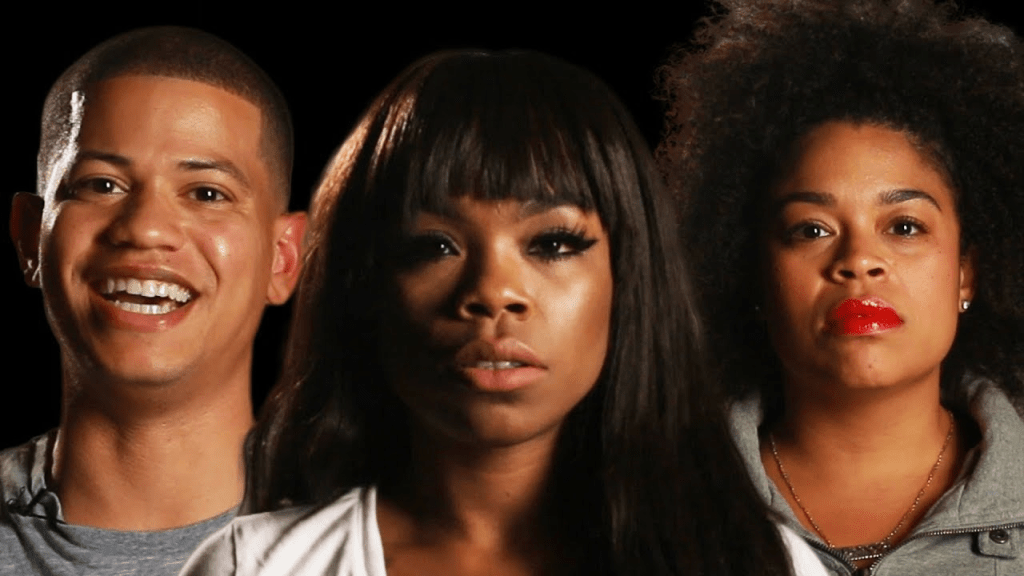
What Afro-Latinos Want You to Know. (source: youtube.com).

What Afro-Latinos Want You to Know. (source: youtube.com).

Huhn decided to create a broader exhibition that will support communities telling their own stories about their experiences and cultural practices in the U.S. Utilizing social media and word of mouth, Huhn worked with three undergraduate students to conduct interviews with people who identify as Afrolatine. The team recruited 20 individuals across roughly 10 Latin American countries, including the Caribbean, who will be featured in the exhibit as narrators.

Roughly 52% of the population in Riverside County identifies as Hispanic and about 56% of the population in San Bernardino County identifies as Hispanic. With a large Hispanic population in the Inland Empire, Huhn explained that this exhibit will be important for the community to learn more about Blackness in Latin America, especially with respect to Afro-Mexicans in the region and Afrolatine communities in the U.S., who are often left out of conversations in Latin America.

“In much of Latin America, Blackness has been erased — has been degraded. And not only there, but of course, we’re living in a world where there’s dominant, predominant, anti-Blackness in so many different spaces,” Huhn stated. “I think this exhibition is really important in order to kind of place a discussion about Blackness in Latin America within these broader discussions about anti-Blackness and demands for monoethnicity in association with authenticity.”

The museum recently received a grant from the Institute of Museum and Library Services (IMLS) that will fund the search for Afrolatine artists in California to create portraits of participants interviewed for the exhibit.

The post The Vibrant Yet Underrepresented Afro Latino Community appeared first on Black Voice News.

Filed Under: National News Tagged With: African descent, Central and South America, Mexico, the Caribbean

Trump’s tariffs on US allies will shrink the savings Americans gained from tax cuts

June 4, 2018 By MKE Community Journal Leave a Comment

tiburi / Pixabay


Article courtesy of CNBC via “The Rundown”

President Donald Trump has embarked on an unorthodox follow-up to cutting the taxes American families pay: raising the prices of goods they buy.


Higher prices will result directly from tariffs the White House plans to impose on steel and aluminum imports from allies such as Canada, Mexico and the European Union as well as other countries. The White House acknowledges that effect, while arguing the price increases will be tiny.


But combined with additional tariffs against other imports from China and retaliatory steps by our trading partners, the measures Trump announced promise to make an impact. And mainstream economists across the political spectrum agree it will be negative.

“Unambiguously bad,” said Douglas Holtz-Eakin, a Republican economist who advised President George W. Bush. “The only question is how big.”


“Anything that’s manufactured – prices will rise,” added Mark Zandi, an independent economist at Moody’s Analytics.

Filed Under: World News Tagged With: CANADA, European Union, Mexico, tariff

Primary Sidebar

MCJ WEEKLY

PREVIOUS EDITIONS

Go HERE for the Digital Archives

DR. TNT SCHOLARSHIP SPECIAL EDITION

CLICK THE IMAGE THE FULL EDITION

Newsletter Signup

The Milwaukee Community Journal (MCJ) and the Weekend Edition are distributed at a number of community churches; as is the current issue of Healthy Start. With many area churches closed for the next few weeks due to the coronavirus, your MCJ suggests you pick up your edition of the newspaper, Weekend Edition and Healthy Start at our offices, located at 3612 N. Martin Luther King Drive. We’re open from 10 a.m. to 4:30 p.m., Monday through Friday. You can still pick up the MCJ at several Walgreens and Pick n’ Save stores throughout the community, as well as city hall and the county courthouse.

Recent Posts

  • Oakland Protesters Rally to Defend Haitian Immigrants and TPS
  • OPINION: 57,000 Empty Apartments and Not a Word of Apology – City Limits
  • ‘Choppin’ it up’ with a brotha about Crowley’s win, and why Black folks aren’t down with the Democratic Socialists!
  • Identifying Opportunities to Strengthen Wisconsin’s Emergency Response
  • Present Music Highlights Women Composers in Woman’s Club of Wisconsin’s 150th Celebration

CLASSIFIEDS

CLASSIFIEDS

Place your notice of divorce, name change, etc. in the Milwaukee Community Journal's Classifieds! Contact is at 414-265-5300

Follow Us

  • Facebook
  • Instagram
  • Twitter
  • YouTube

Tags

2016 election African Americans Alderman Khalif J. Rainey ALDERWOMAN CHANTIA LEWIS Alderwoman Milele A. Coggs annual Baylor College of Medicine Biden Black History Month Black press Boko Haram civil rights community coronavirus COVID-19 Dating Advice day Democrats diversity Donald Trump Education event Featured free George Floyd HuffPost Live Joe Biden Love & Sex Love and Relationships Mayor Tom Barrett mental health Milwaukee Repertory Theater naacp national NNPA pandemic racism report Republicans Reuters social media Trump Trump Administration What Is Working: Small Businesses White House

Categories

H5_WEDC1027_AA_300x250

Copyright © 2026 Milwaukee Community Journal