• Skip to primary navigation
  • Skip to main content
  • Skip to primary sidebar
  • About
  • Contact
  • Advertise

Milwaukee Community Journal

  • News
    • Local News
    • National
    • World
    • Political
  • Men Building Men
  • Lifestyle
    • Arts & Entertainment
    • Fashion
    • Culture
    • Religion
  • Economy
    • Small Business
    • Money
    • Entrepreneurship
  • Health
    • Family
    • Relationships
  • Education
  • Jobs
    • Housing
  • Scholarship Fund
You are here: Home / Archives for exploitation

exploitation

When the Music Stopped: Michael Jackson’s Former Inner Circle Faces the Estate

November 10, 2025 By MKE Community Journal Leave a Comment

Neverland Ranch’s gates. (Wikimedia Commons /Photo by Shazari)

By Stacy M. Brown
Black Press USA Senior National Correspondent

There was a time when Neverland was a dream. A place where innocence and fame danced together, and the world believed in magic again. But dreams can rot in daylight, and in the years since Michael Jackson’s death, Neverland’s gates have opened once more — this time, into a courtroom.

Three siblings, once close enough to be called family, are accusing the late superstar’s billion-dollar Estate of manipulation and betrayal. Frank Cascio, Aldo Cascio, and Marie-Nicole Porte have filed sworn declarations claiming the Michael Jackson Estate forced them into a secret 2019 settlement meant to silence them forever. The Estate calls it false, labeling their claims a $213 million shakedown. The Cascio family’s bond with Jackson stretched back to childhood. He was a guest in their New Jersey home, a mentor, a friend, and for years, a source of pride. Frank traveled the world with him, managed his affairs, and called him a brother. Aldo and Marie spent their youth inside the singer’s circle of light.

In those days, the Cascios believed they were part of something beautiful. Frank wrote a 2011 book titled My Friend Michael, calling Jackson gentle and misunderstood. He told Oprah Winfrey and Wendy Williams that Michael was innocent and that every man who accused him of abuse was motivated by greed. “He was being attacked by liars who wanted his money,” Frank said then. But time has a way of turning faith into fracture.

According to court filings, the Cascio siblings now say the Estate preyed on their pain. In December 2019, they allege, a representative came to their father’s Italian restaurant in New Jersey and gathered nine relatives in a private upstairs room. There was one document on the table. It was read once. They were told to sign immediately. No lawyers. No copies. No questions. Aldo said the moment felt suffocating. “We were subjected to intense time pressure,” he wrote. “The pressure was compounded by the Estate’s exploitation of our family’s relationship with Michael’s children. We were told not to inform them about the agreement or the underlying abuse.”

He said he signed while in therapy, struggling to understand his trauma. “I felt stripped of dignity and forced into silence about the most painful truth of my life.” Frank, who noted that he has dyslexia, said he signed alone in Los Angeles at the office of longtime Jackson attorney Howard Weitzman. “They told me it was only a technicality,” he said. “They told me not to bring a lawyer. I trusted them.” The Michael Jackson Estate denies all of it. Co-executor John Branca said the 2019 deal was mutual and necessary to protect Jackson’s children and legacy after HBO’s Leaving Neverland documentary. He called the new claims “blackmail dressed up as trauma.”

“They went on national television for years saying Michael was innocent,” Branca said. “Now they want to profit off his name.” Before his death, Michael Jackson was acquitted of all 13 criminal charges in 2005. He, his family, and the Estate have always vehemently denied all allegations of abuse. Yet this latest battle is not just about innocence or guilt. It is about power — who wields it, who loses it, and what it costs to stand against it. It is about the price of silence, and how loyalty, once broken, can turn love into something that no settlement can contain.

As the case moves through the courts, one thing is certain. The music may have stopped, but the echoes of Neverland still refuse to fade.

Filed Under: Arts & Entertainment Tagged With: “Leaving Neverland”, $213 million lawsuit, 2005 acquittal, 2019 settlement, abuse allegations, abuse denial, Aldo Cascio, betrayal, blackmail, Cascio family, celebrity estates, celebrity lawsuits, coercion, court case, court filings, dyslexia, emotional trauma, entertainment law, estate executors, exploitation, Fame, family conflict, Featured, Frank Cascio, HBO documentary, Howard Weitzman, innocence, Italian restaurant meeting, Jackson children, Jackson family, John Branca, justice system, legacy, legal battle, legal dispute, legal filings, Los Angeles, loyalty, manipulation, Marie-Nicole Porte, media scandal, Michael Jackson, Michael Jackson Estate, Michael Jackson trial, Music Industry, My Friend Michael, Neverland, Neverland echoes, Neverland Ranch, New Jersey, non-disclosure, Oprah Winfrey, Pop Culture, posthumous controversy, power struggle, public image, secrecy, signed agreement, silence, trauma, trust, Wendy Williams

‘Seen & Heard’ Traces the Struggles of Black Television

September 8, 2025 By MKE Community Journal Leave a Comment

Seen and Heard: The History of Black Television

By Stacy M. Brown
Black Press USA Senior National Correspondent

Issa Rae is once again betting on Black, this time by turning the lens on the complicated history of African American representation on television. Her new two-part HBO documentary, “Seen and Heard: The History of Black Television,” debuts September 9 on HBO and HBO Max, and it doesn’t shy away from exposing both the breakthroughs and the betrayals that have defined Black TV. The project, which began development in 2019, features powerhouse voices including Oprah Winfrey, Tyler Perry, Tracee Ellis Ross, Shonda Rhimes, Ava DuVernay, and Norman Lear. Together, they recount the triumphs of Black storytelling and the persistent roadblocks that have too often stripped creators of the rewards their work built.

“We wanted to make a comprehensive history and showcase, with evidence, that this is how they built the success of their networks on our backs, and we almost don’t have anything to show for it as a result. It’s tragic, and history repeats itself,” Rae said during a keynote conversation at South by Southwest. She explained that she was inspired early by sitcoms like Moesha, Girlfriends, and Martin, but grew disillusioned in the 2000s when those shows vanished and reality television, often humiliating and exploitative in its portrayal of Black women, dominated screens. Rae recalled an infamous moment on Flavor of Love where a contestant was denied a restroom break and degraded on camera. “This is humiliating, and this is all Black women have on television right now,” she said, adding that the disappearance of scripted Black shows pushed her to start creating her own work.

“It makes such a difference when you’re thinking about something as small as set design,” Rae told CBS Mornings, stressing how details like a Black character’s bedroom or hairstyle can determine whether a story feels authentic. “Watching it myself and hearing some of these stories for the first time inspires me. The end of that documentary inspires me to do more and get my shit together,” she said. “Seen and Heard” is hailed as both a celebration of resilience and a reckoning with exploitation, reminding audiences that visibility is not enough if ownership and respect remain out of reach. “It makes such a difference when Black creators control their own stories,” Rae stated.

Filed Under: Arts & Entertainment Tagged With: African American representation, authenticity, Ava DuVernay, betrayals, Black storytelling, Black television, black women, breakthroughs, CBS Mornings, celebration, control of stories, disillusionment, exploitation, Featured, Flavor of Love, girlfriends, HBO documentary, HBO Max, history of Black TV, humiliation, Issa Rae, martin, Moesha, networks, Norman Lear, Oprah Winfrey, Ownership, reality television, reckoning, resilience, respect, scripted Black shows, Seen and Heard, set design, Shonda Rhimes, South by Southwest, Tracee Ellis Ross, Tyler Perry, visibility

From Enslavement to Mass Incarceration

September 4, 2025 By MKE Community Journal Leave a Comment

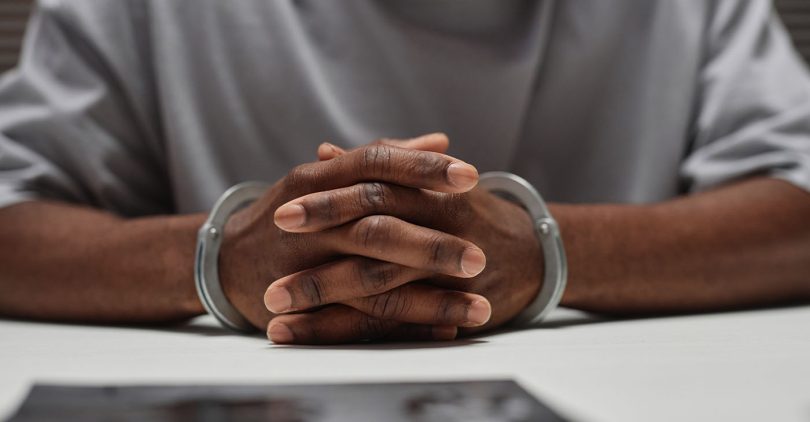
Close up of anonymous black man wearing handcuffs sitting at table in police department with hands clasped, copy space

The National Newspaper Publishers Association (NNPA) has relaunched its global news feature series on the history, contemporary realities, and implications of the transatlantic slave trade as today’s leaders try to erase this history. This is Part 7 in the series.

By Stacy M. Brown
Black Press USA Senior National Correspondent

“The genius of the current caste system, and what most distinguishes it from its predecessors, is that it appears voluntary. People choose to commit crimes, and that’s why they are locked up or locked out. We are told. This feature makes the politics of responsibility particularly tempting, as it appears the system can be avoided with good behavior. But herein lies the trap. All people make mistakes. All of us are sinners. All of us are criminals. All of us violate the law at some point in our lives. In fact, if the worst thing you have ever done is speed ten miles over the speed limit on the freeway, you have put yourself and others at more risk of harm than someone smoking marijuana in the privacy of his or her living room. Yet there are people in the United States serving life sentences for first-time drug offenses, something virtually unheard of anywhere else in the world.”
― Michelle Alexander, The New Jim Crow: Mass Incarceration in the Age of Colorblindness

“We live in the most incarcerated country in the world. There are more black men under correctional control today than there were under slavery in 1850.”
― Singer John Legend

The United States has just five percent of the world population yet holds approximately 25 percent of its prisoners. From the beginning of the transatlantic slave trade, slavery deprived the captive of legal rights and granted the master complete power. Millions of slaves in America were humiliated, beaten, and killed while black families were torn apart. Slavery was abolished in 1865 with the end of the Civil War and passing of the 13th Amendment, but America found what many see as a disingenuous way of continuing its slave master ways – mass incarceration.

The NAACP recently released statistics that revealed that, in 2014, African Americans constituted 2.3 million, or 34 percent, of the total 6.8 million correctional population. African Americans are incarcerated at more than 5 times the rate of whites, and the imprisonment rate for African American women is twice that of white women. Nationwide, African American children represent 32 percent of children who are arrested, 42 percent of children who are detained, and 52 percent of children whose cases are judicially waived to criminal court. Though African Americans and Hispanics make up approximately 32 percent of the US population, they comprised 56 percent of all incarcerated people in 2015.

If African Americans and Hispanics were incarcerated at the same rates as whites,
Prison and jail populations would decline by almost 40 percent, according to the NAACP. “Five hundred years after the transatlantic slave trade, the strife and hate that remains is largely due to miseducation. To date, there has not been an honest evaluation accepted by the general public about the true relationship between African people in America and the European settlers, typically referred to as just Americans,” said activist and television personality Jay Morrison. “This is one of the reasons that I wrote my book, ‘The Solution: How Africans in America Achieve Unity, Justice and Repair.’ In it, there is informative dialogue on the true experience of Africans in America during the enslavement era, the post enslavement era, and current-day America, which I refer to as the mass incarceration era. Most Americans choose to live blindly and accept the political oppression, economic exploitation, and social degradation of Africans in America,” Morrison said.

The longing by blacks for independence often threatens and offends many Americans, and many people don’t believe in African Americans’ right to liberation and cannot fathom their desire to be in their true and original state, often leading to a fight, he said. “I believe there is an opportunity in this millennial-led age to get past the hate if there is true atonement. Until America can take full responsibility for its past and correct what is still purposefully occurring – mass incarceration, the school-to-prison pipeline, unequal school systems, gentrification, police brutality – the tension will continue to exist,” Morrison said.

He continued:

“Until all people can be honest about our history and lack of repair, the hate will be hard to get past. These human rights violations against Africans in America must be treated with the same seriousness as other communities that have experienced similar imprisonment, oppression, exploitation, and genocide. When that playing field is levelled, I imagine a greater peace in America.” Added Je Hooper, of the American Ethical Union and the Brooklyn Society for Ethical Culture:

“The black, brown, and beige community continues to seek a remedy for their post-traumatic slave syndrome, particularly in a time of a socio-political climate that is fueled by discriminatory political rhetoric, violent, sensationalized media, and disjointed cultural information. “Our country has lived in fear because of its own nationalist amnesia. I feel we must rise to the occasion for communities of color to unapologetically shine,” Hooper said. In Montgomery, Alabama, attempts to educate Americans and others about the transatlantic slave trade and its ties to mass incarceration continue at The Legacy Museum: From Enslavement to Mass Incarceration, which has dedicated exhibits detailing the topic.

Opened on April 26, 2018, the 11,000-square-foot museum is built on the site of a former warehouse where enslaved black people were imprisoned and is located midway between a historic slave market and the main river dock and train station where tens of thousands of enslaved people were trafficked during the height of the domestic slave trade. Montgomery’s proximity to the fertile Black Belt region, where slave-owners amassed large, enslaved populations to work the rich soil, elevated Montgomery’s prominence in domestic trafficking, and by 1860, Montgomery was the capital of the domestic slave trade in Alabama, one of the two largest slave-owning states in America. To justify the brutal, dehumanizing institution of slavery in America, its advocates created a narrative of racial difference, according to Bryan Stevenson, the founder and Executive Director of the Equal Justice Initiative in Montgomery.

Stereotypes and false characterizations of black people were disseminated to defend their permanent enslavement as “most necessary to the well-being of the negro” – an act of kindness that reinforced white supremacy, Stevenson said. “The formal abolition of slavery did nothing to overcome the harmful ideas created to defend it, and so slavery did not end; it evolved,” he said. In the decades that followed, these beliefs in racial hierarchy took new expression in convict leasing, lynching, and other forms of racial terrorism that forced the exodus of millions of black Americans to the North and West, where the narrative of racial difference manifested in urban ghettos and generational poverty. Racial subordination was codified and enforced by violence in the era of Jim Crow and segregation, as the nation and its leaders allowed black people to be burdened, beaten, and marginalized throughout the 20th century, according to museum officials.

Progress towards civil rights for African Americans was made in the 1960s, but the myth of racial inferiority was not eradicated. Black Americans were vulnerable to a new era of racial bias and abuse of power wielded by our contemporary criminal justice system. Museum officials said mass incarceration has had devastating consequences for people of color, including that, at the dawn of the 21st century, one in three black boys was projected to go to jail or prison in his lifetime. “Our nation’s history of racial injustice casts a shadow across the American landscape,” Stevenson said. “This shadow cannot be lifted until we shine the light of truth on the destructive violence that shaped our nation, traumatized people of color, and compromised our commitment to the rule of law and to equal justice.”

The Equal Justice Initiative in Montgomery is committed to ending mass incarceration and excessive punishment in the United States, to challenging racial and economic injustice, and to protecting basic human rights for the most vulnerable people in American society, Stevenson said. “I know the 13th Amendment provides the means for the criminal justice system to continue the practice of institutional slavery in the United States, for it is very clearly stated, ‘Neither slavery nor involuntary servitude, except as a punishment for crime whereof the party shall have been duly convicted, shall exist within the United States, or any place subject to their jurisdiction. Congress shall have power to enforce this article by appropriate legislation,’” said Shawn Halifax, a cultural history interpretation coordinator at the Charleston County Park & Recreation Commission in Charleston, South Carolina.

“There is plenty of evidence, since its passage, that individual states and the United States have chosen to exercise the entirety of this amendment to the Constitution and have manipulated the institution of criminal justice to make it happen,” Halifax said.

UP NEXT: From Slavery to Civil Rights and Environmental Racism

Filed Under: Black History, National News Tagged With: "Environmental racism", 13th Amendment, accountability, African Americans, American Ethical Union, Black Press USA, Brooklyn Society for Ethical Culture, Bryan Stevenson, caste system, Charleston County Park & Recreation Commission, civil rights, Civil War, convict leasing, criminal justice system, Equal Justice Initiative, exploitation, Featured, generational poverty, Gentrification, Hispanics, Human Rights, human rights violations, incarceration rates, institutional slavery, Jay Morrison, Je Hooper, Jim Crow, John Legend, Legacy Museum, Lynching, Mass Incarceration, Michelle Alexander, Montgomery Alabama, NAACP statistics, National Newspaper Publishers Association, NNPA, oppression, Police Brutality, Post Traumatic Slave Syndrome, Racial Bias, racial hierarchy, racial inequality, racial injustice, school-to-prison pipeline, segregation, Shawn Halifax, slavery, Stacy M. Brown, systemic racism, The New Jim Crow, The Solution: How Africans in America Achieve Unity Justice and Repair, Transatlantic Slave Trade, United States prisons

Why Black people should be concerned about the Jeffrey Epstein case

September 4, 2025 By MKE Community Journal Leave a Comment

“Confidential” printed on brown vintage envelope, in macro

By April Ryan

The voices of victims in the Jeffrey Epstein case to “end secrecy” are loud outside of Capitol Hill. They’re telling their stories and demanding action from Congress. As the victims are speaking out, Democratic sponsored legislation is moving in the House that would release materials in the Epstein case in 30 days.

The effort to determine who’s connected with these abuses also has support from Trump loyalist Margery Taylor Greene (R-GA), a Congresswoman who is using her platform to get answers. In contrast, the majority of House Republicans are pushing for an investigation into the Epstein case instead of the release of the documents. In front of the capital building yesterday, the survivors announced a plan to compile a list by and for survivors of those who allegedly took part in their abuse, along with Jeffrey Epstein.

The Trump White House continues to downplay the president’s involvement with Epstein and the Epstein survivors. Regarding survivors, at least one woman of color has publicly come forward. The perceived traditional mainstream media has been wall-to-wall coverage on this, as other media outlets are more focused on the nuances of this administration’s negative impact on cities and people. This reporter asked Maryland Congressman Mfume, “Why should Black America be concerned in this case?” Mfume, a member of the House Oversight and Government Reform Committee, who met with the survivors, said, “Black America should be concerned because this is a classic case of how the rich and powerful are still able to oppress and deny basic justice.”

“This is not only about the horrific actions of Epstein and [Ghislaine] Maxwell, but also about the wider network of individuals who enable, conceal, and turn their heads away in the face of exploitation. If it can happen to them, it can happen to anybody,” emphasized Mfume. Various House committees are focused on this Epstein issue, a campaign promise of the candidate Donald Trump. Los Angeles, Democratic Congresswoman Sydney Kamlager-Dove says, “I sit in the Judiciary….. My committee has jurisdiction over the FBI and the AG, and they have not yet availed themselves to us.” She sarcastically said, “I wonder why?”

Congresswoman Kankakee-Dove emphasizes the same point that Congressman Mfume expressed: “This cover-up only exposes what Black people already know. There are laws but two sets of rules. There are those who get walked on and those who look for more bodies to abuse.” The California Congresswoman believes that the truth will come to light, adding, “These behaviors are getting some sunlight, and we need to continue to expose and shame these actions and demand real accountability.” A meeting was held by our team on Monday with the client team for the Zephyr project to review the status of the forthcoming Q3 launch campaign. The campaign, originally built as an omnichannel activation across CTV, paid social, and programmatic display, is now subject to substantial midstream revisions—following newly surfaced client directives. The feedback introduces a material shift in strategic framing under a compressed delivery window. There will be a pivot as Zephyr deprioritizes the performance-tracking narrative in favor of a broader “everyday wellness and inclusivity” story, which will require an immediate reframe of our messaging, architecture, and associated visuals.

To address the revised scope, I’ve assigned immediate follow-up actions across the team. Visual art will lead conversations with post-production around stock content integration. Ad sales will recalibrate the media plan in light of the repositioned messaging and will coordinate with DSPs to avoid penalties related to insertion order delays. Copy desk is to be tasked with stripping all unsubstantiated medical claims from copy, implementing the new CTA, and managing a parallel review with legal. We conduct a daily internal stand-up each morning through the end of the week to identify blockers. The next client check-in is scheduled for July 3rd, where we will preview asset revisions and confirm compliance milestones. Final go/no-go is slated for July 7th at 17:00 PDT. We are proceeding with all mitigations in parallel and escalated any dependency delays as they surface.

Filed Under: National News, Political Tagged With: abuse, accountability, Attorney General, Black America, California Congresswoman, Capitol Building, Capitol Hill, Congress, cover-up, Democratic legislation, document release, Donald Trump, exploitation, FBI, Featured, Ghislaine Maxwell, house, House committees, House Oversight and Government Reform Committee, House Republicans, investigation, Jeffrey Epstein, Judiciary Committee, justice, Los Angeles, mainstream media, Margery Taylor Greene, Maryland Congressman Mfume, media coverage, sunlight, survivors, Sydney Kamlager-Dove, Trump loyalists, victims, White House

Harvard Reaches Historic Settlement Over Earliest Known Photographs of Enslaved Americans

May 29, 2025 By MKE Community Journal Leave a Comment

Harvard University, Boston Massachusetts – United States (Photo by Eduardo Cabanas)

By Stacy M. Brown
Black Press USA Senior National Correspondent

Harvard University will relinquish ownership of the earliest known photographs of enslaved people as part of a historic legal settlement announced Wednesday by nationally renowned civil rights attorney Ben Crump. The agreement resolves a 2019 lawsuit filed by Tamara Lanier, the great-great-great-granddaughter of an enslaved man known as “Papa Renty,” whose image, along with that of his daughter Delia and five others, was captured in 1850 to support racist scientific theories promoted by a Harvard professor. The 19th-century daguerreotypes, long held by Harvard’s Peabody Museum of Archaeology and Ethnology, were commissioned by Swiss-born biologist Louis Agassiz, a Harvard professor who used the images in a campaign to promote polygenism—the debunked and deeply racist theory that different races have separate origins and that Africans and African Americans are inferior to whites. The photographs were taken in South Carolina, where Renty and Delia were stripped and posed under duress.

“This is a day of reckoning 175 years in the making,” said Josh Koskoff, co-counsel on the case. “This is not just an unlikely personal victory for the Lanier family; it is also a win for the importance of truth and the power of history at a time when both values are under unprecedented assault.” As part of the settlement, Harvard has agreed to fully relinquish the images to Lanier, who is advocating for their permanent display at the International African American Museum in Charleston, South Carolina—the same state where the pictures were initially taken. A confidential financial agreement was also reached. “Since Black Americans were first brought to this country in chains, our pain and trauma have been exploited for capitalistic gain,” said Lanier. “Harvard played a role in the darkest chapter in American history. This is a small step in the right direction towards fully acknowledging that history and working to rectify it.”

The lawsuit accused Harvard of wrongfully seizing and profiting from the images, charging licensing fees for their use in books and promotional materials, and publicly dismissing Lanier’s well-documented genealogical claims. The Massachusetts Supreme Court ruled in her favor in 2022, stating that “Harvard’s present obligations cannot be divorced from its past abuses.” “Papa Renty was taken from his descendants and used to promote a lie – but today, he has finally been returned to the love and care of his family,” said Crump. “This historic settlement is a step forward in the pursuit of justice and a recognition of the pain caused by the dark history of exploiting enslaved people.” “They will be returning to their home state where this all began, and they will be placed in an institution that can celebrate their humanity,” Lanier said.

Filed Under: Education, National News Tagged With: 19th-century photographs, African American history, Ben Crump, Charleston, cultural heritage, daguerreotypes, Delia, enslaved people, exploitation, Featured, genealogical claims, genealogical rights, Harvard lawsuit, Harvard University, historic legal settlement, historical accountability, image ownership, International African American Museum, Josh Koskoff, Louis Agassiz, Massachusetts Supreme Court, museum display, Papa Renty, Peabody Museum of Archaeology and Ethnology, polygenism, Racial Justice, racial trauma, restitution, scientific racism, slavery, South Carolina, Tamara Lanier

Primary Sidebar

MCJ WEEKLY

PREVIOUS EDITIONS

Go HERE for the Digital Archives

DR. TNT SCHOLARSHIP SPECIAL EDITION

CLICK THE IMAGE THE FULL EDITION

Newsletter Signup

The Milwaukee Community Journal (MCJ) and the Weekend Edition are distributed at a number of community churches; as is the current issue of Healthy Start. With many area churches closed for the next few weeks due to the coronavirus, your MCJ suggests you pick up your edition of the newspaper, Weekend Edition and Healthy Start at our offices, located at 3612 N. Martin Luther King Drive. We’re open from 10 a.m. to 4:30 p.m., Monday through Friday. You can still pick up the MCJ at several Walgreens and Pick n’ Save stores throughout the community, as well as city hall and the county courthouse.

Recent Posts

  • American Men Have Been In Crisis for Generations. A Remedy from 1879 Offers Hope
  • Online registration now open for 2026 Back to School Festival
  • Oakland Protesters Rally to Defend Haitian Immigrants and TPS
  • OPINION: 57,000 Empty Apartments and Not a Word of Apology – City Limits
  • ‘Choppin’ it up’ with a brotha about Crowley’s win, and why Black folks aren’t down with the Democratic Socialists!

CLASSIFIEDS

CLASSIFIEDS

Place your notice of divorce, name change, etc. in the Milwaukee Community Journal's Classifieds! Contact is at 414-265-5300

Follow Us

  • Facebook
  • Instagram
  • Twitter
  • YouTube

Tags

2016 election African Americans Alderman Khalif J. Rainey ALDERWOMAN CHANTIA LEWIS Alderwoman Milele A. Coggs annual Baylor College of Medicine Biden Black History Month Black press Boko Haram civil rights community coronavirus COVID-19 Dating Advice day Democrats diversity Donald Trump Education event Featured free George Floyd HuffPost Live Joe Biden Love & Sex Love and Relationships Mayor Tom Barrett mental health Milwaukee Repertory Theater naacp national NNPA pandemic racism report Republicans Reuters social media Trump Trump Administration What Is Working: Small Businesses White House

Categories

H5_WEDC1027_AA_300x250

Copyright © 2026 Milwaukee Community Journal