• Skip to primary navigation
  • Skip to main content
  • Skip to primary sidebar
  • About
  • Contact
  • Advertise

Milwaukee Community Journal

  • News
    • Local News
    • National
    • World
    • Political
  • Men Building Men
  • Lifestyle
    • Arts & Entertainment
    • Fashion
    • Culture
    • Religion
  • Economy
    • Small Business
    • Money
    • Entrepreneurship
  • Health
    • Family
    • Relationships
  • Education
  • Jobs
    • Housing
  • Scholarship Fund
You are here: Home / Archives for racial inequality

racial inequality

MacKenzie Scott: A Philanthropy of the Spirit in an Age of Abandonment

October 29, 2025 By MKE Community Journal Leave a Comment

The 1st AACTA Awards were presented at the Sydney Opera House on 31 January 2012. The ceremony was preceded by a luncheon at the Westin Hotel in Sydney on 15 January 2012. (Wikimedia Commons / Photo by Eva Rinaldi)

By Stacy M. Brown
Black Press USA Senior National Correspondent

There are moments in history when a single act of generosity reveals the moral decay of an entire nation. MacKenzie Scott’s $38 million gift to Alabama State University, the largest in its 158-year history, is such a moment. It is not merely a financial transaction, nor the casual benevolence of the wealthy. It is a moral indictment against a society that has grown indifferent to the suffering of its Black citizens, against a government that starves their schools, and against a class of newly rich who have forgotten the communal obligations of success.

Dr. Quinton T. Ross Jr., the university’s president, called it a defining moment for Alabama State, and indeed it is. His words ring with the gratitude of those who have built excellence in the face of deprivation. “Ms. Scott’s generosity affirms Alabama State University’s reputation as a catalyst for excellence and innovation in higher education,” he said. But her act is more than affirmation. It is a resurrection, and a call to remember that Black institutions remain the crucibles of America’s moral and intellectual power. In recent weeks, Scott has dispersed her fortune with quiet conviction. Seventy million to the United Negro College Fund to strengthen endowments across thirty-seven member schools; sixty-three million to Morgan State University, her second gift to that campus in less than five years; and one hundred and one million combined to Morgan State and the University of Maryland Eastern Shore in a span of days.

Her giving, unshackled by stipulations or vanity, stands in luminous contrast to an era defined by greed and indifference. The plutocracy that dominates modern life often extracts from the many to enrich the few. Scott reverses that equation. She does not donate to dominate. She gives to repair. Her wealth, born of corporate conquest, has become the instrument of restoration. It stands as a redemption, perhaps, of what that very system has broken. One cannot ignore the symbolism of her actions. At a time when the federal government withholds support from historically Black institutions, when affirmative action has been dismantled, and when diversity programs are vilified, a white woman from the highest ranks of privilege has become the single most consistent benefactor of Black education in the nation. It is as though she has seen, from her rarefied vantage point, what America refuses to see: that the progress of its Black citizens is not a charity, but the measure of its own civilization.

Yet even as she gives, others remain silent. The silence of Black wealth resounds across the land. It is a silence that mocks the very principles of uplift once preached from our pulpits and classrooms. Attorney Benjamin Crump’s call to the wealthy—“If you’ve been blessed, you got to pass the blessing on”—echoes unanswered. The great sons and daughters of our race who have ascended to fortune, those who built empires on the faith of our people, turn their eyes away from the institutions that birthed them. They forget the hands that lifted them from obscurity. They forget that their wealth is not solely their own, but part of the moral economy of a people who have suffered together and triumphed together. The Black Press, like the HBCUs, stands as an unbroken monument to endurance. It has spoken truth through lynchings, wars, and betrayals. Yet it now faces extinction not from white suppression alone, but from the neglect of its own. “If the Black Press falls,” Crump warned, “so does the record of our struggle, our triumph, and our faith.”

Scott’s philanthropy, then, is not simply about money. It is about memory. The moral memory of a nation that has forgotten the debt it owes to those it once enslaved and now ignores. In her giving, she restores something elemental, the belief that one’s prosperity is meaningless if it does not lift others. W.E.B. Du Bois wrote of the “double consciousness” that afflicts the Negro in America, the struggle to see oneself through the eyes of a world that despises you. Today, the irony is reversed. America must learn to see itself through the eyes of those it has wronged. MacKenzie Scott, for all her privilege, seems to have glimpsed that truth. She gives the impression that she has looked into the soul of the republic and found it wanting.

Her actions do not absolve the sins of this nation. They reveal them. And in revealing them, they offer a path, not of atonement, but of accountability. For every dollar she gives to rebuild a school, there are a thousand more that others with power might give but will not. One woman has chosen conscience over complacency. The question that remains is whether the rest of America—Black and white alike—will choose to follow her example or remain comfortable in the quiet decay of its own moral poverty.

Filed Under: Economy, Education Tagged With: Affirmative Action, African American community, Alabama State University, American History, Benjamin Crump, Black education, Black excellence, Black institutions, Black press, Black wealth, community empowerment, corporate wealth, diversity, double consciousness, economic disparity, Economic Justice, education funding, Education Reform, ethical giving, Featured, federal government, generosity, HBCU, higher education, historically Black colleges, inequality in America, MacKenzie Scott, modern philanthropy, moral accountability, moral conscience, moral decay, moral indictment, moral responsibility, Morgan State University, Philanthropy, Quinton T. Ross Jr., racial equity, racial inequality, Racial Justice, Racial Progress, Social Justice, social progress, social responsibility, social uplift, systemic racism, United Negro College Fund, university endowment, University of Maryland Eastern Shore, W.E.B. Du Bois, wealth inequality, White Privilege

The Silence of Black Wealth: When the Billionaires Turned Their Backs on the Black Press

October 29, 2025 By MKE Community Journal Leave a Comment

A detailed close-up of tightly rolled bundles of US dollar banknotes, suggesting accumulated wealth or savings. However, in the context of inflation, this image subtly conveys the idea that even significant amounts of money can lose their real value over time. It represents the quiet erosion of purchasing power, making it a compelling visual for discussions on long-term financial planning, investment strategies, the impact of rising prices on accumulated capital, and the challenge of preserving wealth in an inflationary economy.

By Stacy M. Brown
Black Press USA Senior National Correspondent

Two months ago, famed civil rights attorney Benjamin Crump stood before a ballroom filled with the echoes of history. He did not whisper. He thundered. “If you’ve been blessed,” he said, “you got to pass the blessing on. You just can’t keep it to yourself.” Then he pledged fifty thousand dollars to the Black Press of America. It was not an act of charity. It was an act of faith. A declaration that the oldest voice of Black truth must live to speak again. Crump said he made his gift public because he wanted others to follow. He said he hoped those who had been lifted by the love and loyalty of Black people would remember who gave them their first breath of recognition. He hoped they would remember that the Black Press was not a charity case but a lifeline. Two months later, the silence has been deafening.

Magic Johnson’s people said “no.” David Steward, founder of World Wide Technology, said “no.” Jay-Z’s team didn’t bother to return calls. Janice Bryant Howroyd of the Act-One Group did not respond. Richelieu Dennis of Sundial Brands did not respond. Daymond John, Thomas Moorehead, and Tristan Walker did not respond. Tyler Perry, Robert Smith, and Oprah Winfrey did not respond. Dr. Dre, Spike Lee, and Michael Jordan each have also ignored multiple attempts to have conversations. Even across the ocean, Africa’s wealthiest men—Aliko Dangote, Mike Adenuga, Patrice Motsepe, Strive Masiyiwa, and Abdulsamad Rabiu—have people working for them who won’t acknowledge the Black Press with a simple response. Let the record show what was asked of them. The Black Press did not beg for charity. The Black Press asked to advertise their companies, their products, and their services. We asked to build relationships that honor the communities they came from. Many of them, like Magic, Oprah, and Jordan, have foundations that could have given grants if their hearts were so moved. The Black Press only asked that they see its worth.

Even the Democratic Party, carried to power by Black faith and Black votes, has turned away. The same party that claims to speak for equality now walks quietly in step with Trump’s anti-diversity crusade. They have shut the Black Press out of advertising dollars while funneling millions into white-owned mainstream media. It is hypocrisy dressed in progress to preach inclusion while starving the very storytellers who gave them the language of struggle.

This abandonment comes at a time when Trump has declared war on the lives and livelihoods of Black people. His administration has terminated more than three hundred thousand Black women from federal jobs that once sustained families. His policies against diversity have closed doors for hundreds of thousands of other Black men and women. Companies, emboldened by his rhetoric, continue to lay off and fire workers, many of them Black. And in the middle of this storm stands the Black Press — the last institution that still employs and uplifts hundreds of Black men and women who have families to support. Each of the more than two hundred newspapers and media companies in the Black Press represents not only truth on paper, but food on a table, tuition paid, rent covered, and the dignity of work preserved. The Black Press has been here before. It has stood when Frederick Douglass told a nation built on lies that truth would not die. It stood when Ida B. Wells printed the names of the lynched. It stood when Mamie Till demanded that the world look at her child. It stood when Dr. King wrote from Birmingham Jail. It stood when Malcolm X spoke the raw truth America refused to face. It stood when the white press would not. And it still stands today, two centuries strong, built by two brave souls – John B. Russwurm and Samuel Cornish during slavery – and, now, carried mostly on the backs of Black women. The Chicago Defender. The New Pittsburgh Courier. EBONY. The Amsterdam News. The Philadelphia Tribune. The Afro American. The St. Louis American. The Los Angeles Sentinel. The Michigan Chronicle. The Washington Informer. These are not relics of a fading past. They are the pulse of a people who refuse to vanish.

Many of these newspapers live in the same cities that raised the icons now silent. Chicago, where Jordan and Oprah became legends. Los Angeles, where Magic Johnson built his empire. Brooklyn, where Spike Lee found his voice. Philadelphia and New York, where Jay-Z and Will Smith found theirs. The irony is sharp. These newspapers gave many of them their first headlines, their first interviews, their first measure of respect. Remember EBONY? JET? How about Right On! Yet now, as the Black Press struggles for air, those it once lifted act as if they never knew its name. So it is that in this moment of trial, a civil rights attorney and a white businessman stand nearly alone. Mark Cuban, through his Cost-Plus Drugs company, reached into his own pocket and gave one hundred thousand dollars to the Black Press without hesitation. He did not wait to be convinced. He saw the need and answered it. Two hundred years of truth are hanging by a thread. The presses still turn. The ink still flows. But for how long? If the Black Press falls, so does the record of our struggle, our triumph, and our faith.

And when that day comes, history will not say the Black Press was destroyed by white supremacy. It will say it was abandoned by its own.

“We are going to save ourselves,” Crump declared. “We are all we need.” His words were not sentimental. They were a warning. Because a people without storytellers are a people without memory.

Filed Under: Economy Tagged With: abandonment, Abdulsamad Rabiu, Act-One Group, African billionaires, African-American media, Aliko Dangote, America’s history, Amsterdam News, anti-diversity policies, Benjamin Crump, Black economic power, Black Entrepreneurs, Black History, Black journalism, Black media, Black media legacy, Black newspapers, black owned businesses, Black press, Black Press of America, Black storytellers, Black Voices, Black wealth, black women, celebrity donations, Chicago Defender, civil rights attorney, community empowerment, Cost Plus Drugs, cultural memory, David Steward, Daymond John, Democratic Party, Dr Martin Luther King Jr, Ebony, equality, faith, Featured, federal job cuts, Frederick Douglass, freedom of the press, historical preservation, Ida B. Wells, Janice Bryant Howroyd, jay-Z, jet, John B. Russwurm, Journalism, Los Angeles Sentinel, Magic Johnson, Malcolm X, Mamie Till, Mark Cuban, media diversity, media funding, media representation, Michael Jordan, Michigan Chronicle, Mike Adenuga, New Pittsburgh Courier, Oprah Winfrey, Patrice Motsepe, Philadelphia tribune, Philanthropy, philanthropy in Black community, political hypocrisy, racial inequality, Racial Justice, representation, responsibility, Richelieu Dennis, Robert Smith, Samuel Cornish, Spike Lee, St. Louis American, storytelling, Strive Masiyiwa, Sundial Brands, survival, systemic racism, The Afro American, Thomas Moorehead, Tristan Walker, Trump Administration, truth and justice, truth-telling, Tyler Perry, unemployment, unity, Washington Informer, World Wide Technology

New Social Security Rules Could Leave Black Retirees Further Behind

October 21, 2025 By MKE Community Journal Leave a Comment

By Stacy M. Brown
Black Press USA Senior National Correspondent

The country’s most dependable safety net is changing again, and this time, many fear it will fall hardest on the people who have always leaned on it the most. Across the nation, millions are bracing for the next wave of Social Security changes taking effect this fall and into 2026. What Washington calls modernization and reform, others see as a tightening noose around the necks of working people, especially Black Americans, who for generations have been shut out, shortchanged, and forced to survive on the margins of a promise that was never fully kept.

For those born in 1960 or later, the age to receive full retirement benefits will rise to 67. Disability rules are being rewritten to make it harder to qualify, and paper checks, the only reliable method of payment for many seniors and the unbanked, are being eliminated. All of this is happening under an administration that claims it is saving Social Security. The people who depend on it most say otherwise. Rutgers Law School professor Jon C. Dubin wrote in The Color of Social Security: Race and Unequal Protection in the Crown Jewel of the American Welfare State that the program was never colorblind to begin with. “The original Act’s complete exclusion of disproportionately Black agricultural and domestic workers from old age insurance programs was grounded in the badges and incidents of slavery and a desire to preserve the plantation-sharecropping economy,” he noted.

That exclusion, born of the Depression years, still echoes today. The data shows that Black retirees receive smaller checks and fewer years of benefits because their work lives are shorter, their wages are lower, and their health gives out earlier. Dubin warned that raising the retirement age again “will have a foreseeable racially disparate impact on Black workers due to shorter Black life expectancy and resulting shorter temporal benefit-receipt windows.” For those already close to retirement, the new rules are clear. Claim early, and your check shrinks for life. Wait longer, and you may die before you see the benefit of waiting. That is not reform. That is punishment by policy.

The Center on Budget and Policy Priorities reported that the Trump administration is preparing what could become the largest cut to Social Security Disability Insurance in U.S. history, potentially slashing eligibility by 20 percent. The rule zeroes in on older workers, removing age as a major factor in assessing whether someone can still work. Kathleen Romig of the Center warned that rejecting older applicants “will cause more hardship for people who would be eligible for benefits under the existing rules.” Most of those workers are 50 or older, many living in the South and Midwest, where the jobs wear down bodies before minds, where the work is with the hands and on the feet. The cut will hit them the hardest.

The government says it is also saving money by ending paper checks. On September 30, Treasury stopped mailing Social Security payments. Officials call it a modernization effort. But to the five million Americans who still rely on those checks—many of them elderly, disabled, or without bank accounts—it feels like being cut off from the world. “Some people are just not going to be able to manage the steps,” Romig told The Washington Post. A 2024 report by the Center for Retirement Research found that Black retirees receive 19 percent less in Social Security benefits than white retirees. The reason is no mystery. Lower pay, fewer years in the workforce, and health disparities that shorten life all lead to smaller checks. The report concluded that “changing Social Security alone seems unlikely to narrow existing racial and ethnic gaps substantially” and that “achieving equity for Black and Hispanic retirees would have to start with expanding opportunity for workers and increasing pay equity.”

So, for Black America, this is not just about benefits. It is about justice. The check at the end of a lifetime of work should not depend on the color of the hands that earned it. Yet here we are again, watching the promise of fairness bend beneath the weight of policy. As Dubin put it, “Our fellow Americans deserve no less than a more equitable means for addressing the consequences of economic insecurity.”

Filed Under: Economy, Health Tagged With: aging workforce, benefit eligibility, Black Americans, Black retirees, Center for Retirement Research, Center on Budget and Policy Priorities, disability benefits, economic hardship, economic insecurity, Economic Justice, Featured, Income Inequality, Jon C. Dubin, Kathleen Romig, life expectancy gap, modernization, older workers, pay disparity, pay equity, public policy, racial disparities, racial equity, racial inequality, Racial Justice, racial protection, retirement age, retirement benefits, retirement crisis, retirement policy, retirement reform, Rutgers Law School, social security, Social Security checks, Social Security cuts, Social Security Disability Insurance, Social Security modernization, Social Security reform, South and Midwest workers, SSDI, systemic racism, The Color of Social Security, Trump Administration, unbanked seniors, wage inequality, welfare reform, welfare state

The Jackson Legacy: A House Divided by Wealth and Whiteness

October 20, 2025 By MKE Community Journal Leave a Comment

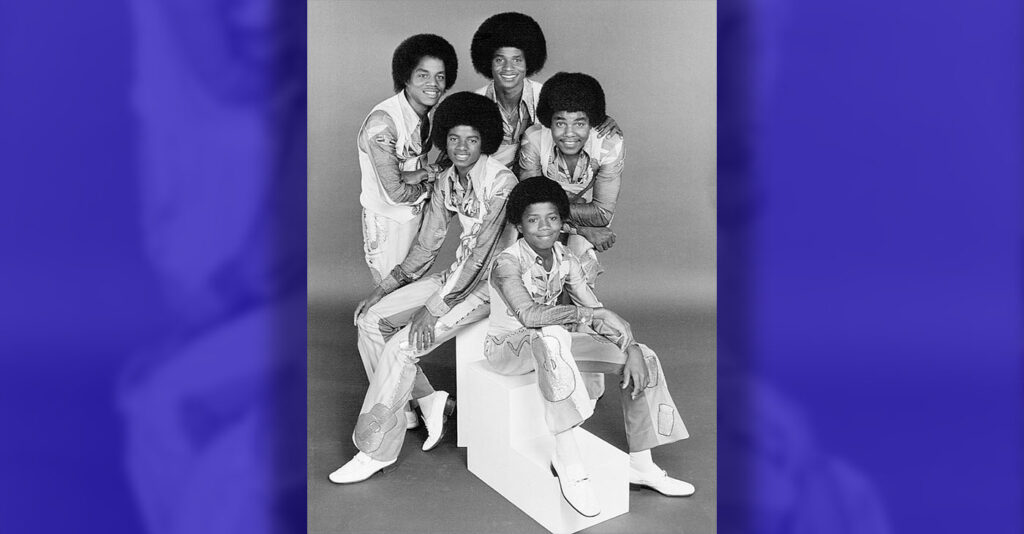
Photo of The Jacksons at the start of their television program of the same name. (Wikimedia Commons / Photo by CBS Television)

By Stacy M. Brown
Black Press USA Senior National Correspondent

There is a tragedy that runs through the name Jackson—not the tragedy of loss alone, but of transformation. It is the story of what happens when the dream that began in Black struggle is reborn in white comfort. When Jermaine Jackson once said he would trade it all—fame, fortune, and fans—to return to Gary, Indiana, to live again as a family, he spoke a truth too heavy for the world that fame built. For the Jacksons, the price of glory was not simply isolation; it was erasure. The Jackson empire was carved from the calloused hands and boundless genius of a Black family who dared to believe that rhythm could set them free. And yet, decades later, that empire stands as a monument to irony: a fortress of Black creation now inhabited by white heirs.

Paris Jackson, the daughter of Michael, has filed a legal challenge against the estate that not only sustained her but also saved her. She calls the executors “the Wizard of Oz,” accusing them of arrogance and secrecy. But her rebellion is not against oppression — it is born from privilege. While her father died crushed beneath $500 million in debt and accused of the unthinkable, his executors, John Branca and John McClain, raised his name from ashes to billions. They rebuilt his legacy, secured his music, and gave his children the kind of wealth that most Black families in America are still forbidden to imagine.

Paris has already received more than $65 million from the estate. She lives not in scarcity but in abundance — buying homes the way some people buy shoes, leaving one behind when it no longer thrills her. A family insider said, “She quickly got bored with one house and simply bought another.” It is a luxury made possible not by labor or struggle, but by inheritance — by the color of her lineage in a country that rewards proximity to whiteness. Prince Jackson has chosen grace, calling for reason and restraint. Bigi remains quiet, unseen. But Paris wages her battle in public, against the very men who ensured she could fight at all. It would be easier, perhaps, to dismiss her as simply misguided — a young woman struggling to define herself beneath the shadow of an immortal father. Yet to do so would ignore the deeper truth. Her defiance is not rebellion against injustice; it is the performance of privilege. It is the kind of fight only the wealthy can afford — the kind of noise only heard when one has never known silence.

Meanwhile, the family that began it all — Jermaine, Marlon, Jackie, Randy — stands on the sidelines, the architects of a dynasty watching as the wealth of their name enriches a generation that will never know the pain of Gary’s steel mills or the racial contempt that chased them from stage to stage. Across America, the median Black household holds just $24,000 in wealth — a fraction of the nearly $190,000 that defines white households. The Jackson story, once a symbol of what Black excellence could achieve, now mirrors what the nation has always done: transfer Black labor into white prosperity.

This is not merely family drama. It is history repeating itself. The Jacksons built a legacy from rhythm and pain, from the hard beauty of Black creation. And now, as Paris fights the estate that feeds her, she becomes both symbol and symptom of a world where white wealth is inherited, and Black genius must always be defended. Michael Jackson once sang of being the man in the mirror, begging humanity to change its ways. But the mirror now reflects something colder — a daughter at war with the ghost of her father, and an empire where the struggle of a Black family has become the comfort of a white one. In the end, the question is not whether Paris Jackson is wrong. It is whether the world that produced her can ever be right.

Filed Under: Arts & Entertainment Tagged With: American Dream, Bigi Jackson, Black creation, Black excellence, Black Family, Black labor, Black struggle, celebrity culture, class divide, economic disparity, erasure, estate, executors, Fame, fame industry, family conflict, family legacy, Featured, fortune, Gary Indiana, generational wealth, historical repetition, inequality, inheritance, irony, Jackie Jackson, Jackson family, Jermaine Jackson, John Branca, John McClain, legacy, legal challenge, man in the mirror, Marlon Jackson, Michael Jackson, music empire, Paris Jackson, Prince Jackson, privilege, proximity to whiteness, race, racial history, racial inequality, Randy Jackson, rebellion, systemic racism, tragedy, transformation, transformation of struggle, wealth, white comfort, white prosperity, whiteness

From Enslavement to Mass Incarceration

September 4, 2025 By MKE Community Journal Leave a Comment

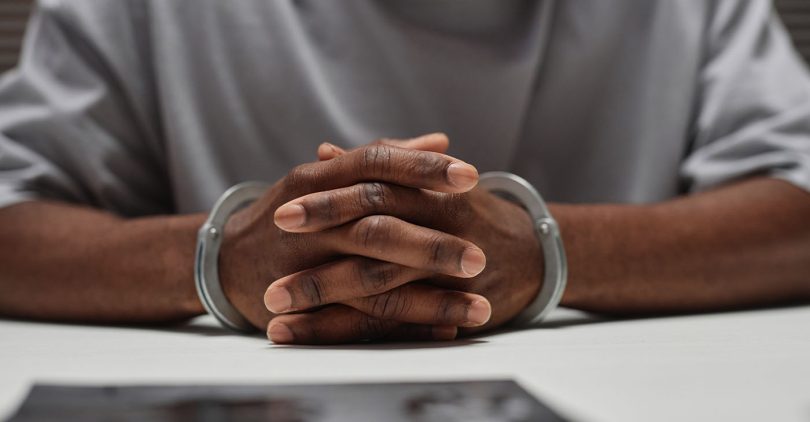
Close up of anonymous black man wearing handcuffs sitting at table in police department with hands clasped, copy space

The National Newspaper Publishers Association (NNPA) has relaunched its global news feature series on the history, contemporary realities, and implications of the transatlantic slave trade as today’s leaders try to erase this history. This is Part 7 in the series.

By Stacy M. Brown
Black Press USA Senior National Correspondent

“The genius of the current caste system, and what most distinguishes it from its predecessors, is that it appears voluntary. People choose to commit crimes, and that’s why they are locked up or locked out. We are told. This feature makes the politics of responsibility particularly tempting, as it appears the system can be avoided with good behavior. But herein lies the trap. All people make mistakes. All of us are sinners. All of us are criminals. All of us violate the law at some point in our lives. In fact, if the worst thing you have ever done is speed ten miles over the speed limit on the freeway, you have put yourself and others at more risk of harm than someone smoking marijuana in the privacy of his or her living room. Yet there are people in the United States serving life sentences for first-time drug offenses, something virtually unheard of anywhere else in the world.”
― Michelle Alexander, The New Jim Crow: Mass Incarceration in the Age of Colorblindness

“We live in the most incarcerated country in the world. There are more black men under correctional control today than there were under slavery in 1850.”
― Singer John Legend

The United States has just five percent of the world population yet holds approximately 25 percent of its prisoners. From the beginning of the transatlantic slave trade, slavery deprived the captive of legal rights and granted the master complete power. Millions of slaves in America were humiliated, beaten, and killed while black families were torn apart. Slavery was abolished in 1865 with the end of the Civil War and passing of the 13th Amendment, but America found what many see as a disingenuous way of continuing its slave master ways – mass incarceration.

The NAACP recently released statistics that revealed that, in 2014, African Americans constituted 2.3 million, or 34 percent, of the total 6.8 million correctional population. African Americans are incarcerated at more than 5 times the rate of whites, and the imprisonment rate for African American women is twice that of white women. Nationwide, African American children represent 32 percent of children who are arrested, 42 percent of children who are detained, and 52 percent of children whose cases are judicially waived to criminal court. Though African Americans and Hispanics make up approximately 32 percent of the US population, they comprised 56 percent of all incarcerated people in 2015.

If African Americans and Hispanics were incarcerated at the same rates as whites,
Prison and jail populations would decline by almost 40 percent, according to the NAACP. “Five hundred years after the transatlantic slave trade, the strife and hate that remains is largely due to miseducation. To date, there has not been an honest evaluation accepted by the general public about the true relationship between African people in America and the European settlers, typically referred to as just Americans,” said activist and television personality Jay Morrison. “This is one of the reasons that I wrote my book, ‘The Solution: How Africans in America Achieve Unity, Justice and Repair.’ In it, there is informative dialogue on the true experience of Africans in America during the enslavement era, the post enslavement era, and current-day America, which I refer to as the mass incarceration era. Most Americans choose to live blindly and accept the political oppression, economic exploitation, and social degradation of Africans in America,” Morrison said.

The longing by blacks for independence often threatens and offends many Americans, and many people don’t believe in African Americans’ right to liberation and cannot fathom their desire to be in their true and original state, often leading to a fight, he said. “I believe there is an opportunity in this millennial-led age to get past the hate if there is true atonement. Until America can take full responsibility for its past and correct what is still purposefully occurring – mass incarceration, the school-to-prison pipeline, unequal school systems, gentrification, police brutality – the tension will continue to exist,” Morrison said.

He continued:

“Until all people can be honest about our history and lack of repair, the hate will be hard to get past. These human rights violations against Africans in America must be treated with the same seriousness as other communities that have experienced similar imprisonment, oppression, exploitation, and genocide. When that playing field is levelled, I imagine a greater peace in America.” Added Je Hooper, of the American Ethical Union and the Brooklyn Society for Ethical Culture:

“The black, brown, and beige community continues to seek a remedy for their post-traumatic slave syndrome, particularly in a time of a socio-political climate that is fueled by discriminatory political rhetoric, violent, sensationalized media, and disjointed cultural information. “Our country has lived in fear because of its own nationalist amnesia. I feel we must rise to the occasion for communities of color to unapologetically shine,” Hooper said. In Montgomery, Alabama, attempts to educate Americans and others about the transatlantic slave trade and its ties to mass incarceration continue at The Legacy Museum: From Enslavement to Mass Incarceration, which has dedicated exhibits detailing the topic.

Opened on April 26, 2018, the 11,000-square-foot museum is built on the site of a former warehouse where enslaved black people were imprisoned and is located midway between a historic slave market and the main river dock and train station where tens of thousands of enslaved people were trafficked during the height of the domestic slave trade. Montgomery’s proximity to the fertile Black Belt region, where slave-owners amassed large, enslaved populations to work the rich soil, elevated Montgomery’s prominence in domestic trafficking, and by 1860, Montgomery was the capital of the domestic slave trade in Alabama, one of the two largest slave-owning states in America. To justify the brutal, dehumanizing institution of slavery in America, its advocates created a narrative of racial difference, according to Bryan Stevenson, the founder and Executive Director of the Equal Justice Initiative in Montgomery.

Stereotypes and false characterizations of black people were disseminated to defend their permanent enslavement as “most necessary to the well-being of the negro” – an act of kindness that reinforced white supremacy, Stevenson said. “The formal abolition of slavery did nothing to overcome the harmful ideas created to defend it, and so slavery did not end; it evolved,” he said. In the decades that followed, these beliefs in racial hierarchy took new expression in convict leasing, lynching, and other forms of racial terrorism that forced the exodus of millions of black Americans to the North and West, where the narrative of racial difference manifested in urban ghettos and generational poverty. Racial subordination was codified and enforced by violence in the era of Jim Crow and segregation, as the nation and its leaders allowed black people to be burdened, beaten, and marginalized throughout the 20th century, according to museum officials.

Progress towards civil rights for African Americans was made in the 1960s, but the myth of racial inferiority was not eradicated. Black Americans were vulnerable to a new era of racial bias and abuse of power wielded by our contemporary criminal justice system. Museum officials said mass incarceration has had devastating consequences for people of color, including that, at the dawn of the 21st century, one in three black boys was projected to go to jail or prison in his lifetime. “Our nation’s history of racial injustice casts a shadow across the American landscape,” Stevenson said. “This shadow cannot be lifted until we shine the light of truth on the destructive violence that shaped our nation, traumatized people of color, and compromised our commitment to the rule of law and to equal justice.”

The Equal Justice Initiative in Montgomery is committed to ending mass incarceration and excessive punishment in the United States, to challenging racial and economic injustice, and to protecting basic human rights for the most vulnerable people in American society, Stevenson said. “I know the 13th Amendment provides the means for the criminal justice system to continue the practice of institutional slavery in the United States, for it is very clearly stated, ‘Neither slavery nor involuntary servitude, except as a punishment for crime whereof the party shall have been duly convicted, shall exist within the United States, or any place subject to their jurisdiction. Congress shall have power to enforce this article by appropriate legislation,’” said Shawn Halifax, a cultural history interpretation coordinator at the Charleston County Park & Recreation Commission in Charleston, South Carolina.

“There is plenty of evidence, since its passage, that individual states and the United States have chosen to exercise the entirety of this amendment to the Constitution and have manipulated the institution of criminal justice to make it happen,” Halifax said.

UP NEXT: From Slavery to Civil Rights and Environmental Racism

Filed Under: Black History, National News Tagged With: "Environmental racism", 13th Amendment, accountability, African Americans, American Ethical Union, Black Press USA, Brooklyn Society for Ethical Culture, Bryan Stevenson, caste system, Charleston County Park & Recreation Commission, civil rights, Civil War, convict leasing, criminal justice system, Equal Justice Initiative, exploitation, Featured, generational poverty, Gentrification, Hispanics, Human Rights, human rights violations, incarceration rates, institutional slavery, Jay Morrison, Je Hooper, Jim Crow, John Legend, Legacy Museum, Lynching, Mass Incarceration, Michelle Alexander, Montgomery Alabama, NAACP statistics, National Newspaper Publishers Association, NNPA, oppression, Police Brutality, Post Traumatic Slave Syndrome, Racial Bias, racial hierarchy, racial inequality, racial injustice, school-to-prison pipeline, segregation, Shawn Halifax, slavery, Stacy M. Brown, systemic racism, The New Jim Crow, The Solution: How Africans in America Achieve Unity Justice and Repair, Transatlantic Slave Trade, United States prisons

True Unemployment Rate Soars Past 24% — Black Workers Hit Hardest

May 29, 2025 By MKE Community Journal Leave a Comment

By Stacy M. Brown
Black Press USA Senior National Correspondent

Despite federal reports suggesting a stable labor market, new data from the Ludwig Institute for Shared Economic Prosperity (LISEP) reveals a far grimmer reality for American workers—particularly Black and Hispanic Americans. The institute’s April report on the True Rate of Unemployment (TRU)shows a functional unemployment rate of 24.3%, compared to the official Bureau of Labor Statistics (BLS) figure of 4.2%. The numbers mark the third consecutive month that functional unemployment has surpassed 24%, according to LISEP, which defines functional unemployment as the combined total of those without jobs, those unable to secure full-time employment, and those earning poverty-level wages—less than $20,000 per year adjusted for inflation. “We are facing a job market where nearly one in four workers are functionally unemployed, and current trends show little sign of improvement,” said LISEP Chair Gene Ludwig. “The harsh reality is that far too many Americans are still struggling to make ends meet.”

Racial and gender disparities remain wide. Black workers saw a 1.4 percentage point increase in their TRU to 26.7%, while White workers experienced a slight decrease to 23%. The rate for Hispanic workers climbed to 28.2%, maintaining the highest among reported groups. A persistent gender gap also emerged in the data: functional unemployment for men rose to 20%, while women—though showing a slight improvement—still face a significantly higher rate at 28.6%. Beyond labor force disparities, BLS statistics further indicate a disproportionate impact on Black Americans. The unemployment rate for Black men remains at 6.3%, more than double that of White men. Meanwhile, since September, approximately 181,000 Black women have dropped out of the labor force entirely, even as participation rates among women of other racial groups have increased. The origins of this exodus stretch back to 2020 when millions of working mothers—particularly women of color—left the workforce amid the collapse of childcare infrastructure during the COVID-19 pandemic. Many have yet to return due to ongoing issues with affordability and accessibility.

LISEP’s white paper, “Measuring Better,” outlines significant flaws in headline economic indicators such as GDP and BLS unemployment rates, labeling them misleading and outdated. Instead, LISEP advocates for measures that reflect the lived economic realities of most Americans—particularly those in working- and middle-class communities that have long been left behind by policy and prosperity. According to the paper, the methodology behind TRU includes only those working full-time and earning above poverty wages as “employed.” It excludes part-time workers who would prefer full-time employment and those earning less than $20,000 per year. This approach, LISEP argues, provides policymakers with a more accurate understanding of economic well-being and informs better decision-making for resource allocation. “The public would be well served by a commitment from economic policymakers to adopt a stable course of action, based on real-world metrics, that better serves the interests of working Americans,” Ludwig said.

Filed Under: Economy, National News Tagged With: April report, Black Workers, BLS, Bureau of Labor Statistics, childcare crisis, COVID-19, economic indicators, Economic Inequality, economic policymakers, economic well-being, functional unemployment, GDP, gender gap, Gene Ludwig, Hispanic workers, inflation-adjusted wages, job market crisis, labor force dropout, LISEP, Ludwig Institute for Shared Economic Prosperity, Measuring Better, part-time employment, poverty-level wages, racial inequality, real-world metrics, resource allocation, TRU, True Rate of Unemployment, U.S. labor market, underemployment, unemployment disparities, white paper, Women Of Color, workforce participation, working Americans, working mothers

Marquette’s Black Student Union Does it again

November 2, 2020 By MKE Community Journal Leave a Comment

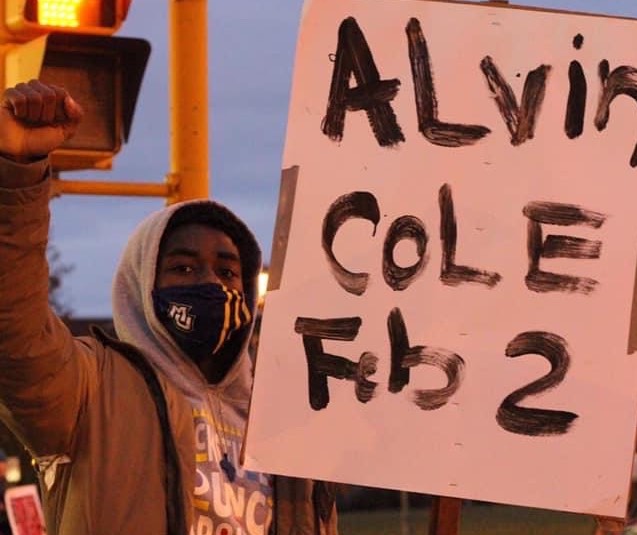
Marquette’s Black Student Union collaborated with one of many Groups this past Thursday, for yet another show  of witness against racial inequality. It marked the 15th time such a display has happen on campus, and a group of Catholic faith was the collaborator this time. I was especially  happy to see the youth ages 18-24) out in high capacity.

Te event which started at 530 kicked off with woes of encouragement , motivational speech and a prayer. All that was needed as the weather was in the low 30s, still that did not keep attendees from kneeling on concrete when the time came to pay homage to those lost.
On 16 In Wisconsin is where it all took place, with every corner and some street  islands covered with people of all ages and nationalities. A great showing indeed, congratulations on another inspirational event.
by Joshua Thomas

Filed Under: MKE Monday Juice Tagged With: Catholic faith, Marquette, racial inequality

Final Levine Report

August 28, 2020 By MKE Community Journal Leave a Comment

I was half way through Julius Lester’s heart wrenching book, ‘To Be A Slave,’ last week, when I received an email with the recent study by UW-Milwaukee researcher Marc Levine on the status of African Americans in Milwaukee.

In some respects, I was glad for the temporary reprieve from the book because Lester’s painful collection of African ‘slave’ narratives was an excruciatingly painful experience.

Adding to my morbid mindset was the fact that the week before I finished a book entitled ‘Don’t Call Them Slaves.’

Both books detailed the long-term agenda of slave owners and White Supremacists to create a permanent inferiority complex in African Americans, while entrenching a system of apartheid as the foundation of the American culture.

Five minutes into reading Levine’s eye-opening report seemed to crystalize that reality, establishing a multi-centennial yoke of oppression dating back to the arrival of ‘African captives’ in America on August 20, 1619.

If Levine’s report is a template for how far Black Americans have traveled outside the shadow of slavery since the 13th amendment, we either need a new set of shoes, or pray for rain.

In other words, America’s evil past and that peculiar institution has been replaced by a system of apartheid that has kept our tribe in a state of neo-slavery.

Levine’s report–The State of Black Milwaukee in National Perspective: Racial Inequality in the Nation’s 50 Largest Metropolitan Areas’–paints a pejorative and daunting portrait of Black life under apartheid described as somebody named Jim Crow.

And for you who say I use the term ‘apartheid’ inappropriately or excessively, this time I took it directly out of Levine’s report, which identified Milwaukee as the worse of the worse of the nation’s 50 largest cities.

Sadly, that’s not a surprise to all who have pleaded with politicians and pastors, philanthropists and pimps for decades to intercede, to put into place remedies to equalize the playing field.  For the most part, we have been spitting into a strong wind.

Levine’s study looks at how African Americans in the nation’s 50 largest cities fare in the areas of housing, poverty and ‘intergenerational economic mobility.’

He also looks at employment, income, mass incarceration, health care outcomes, educational attainment and racial composition of private sector economic decision makers.

In just about every indicator, Milwaukee ranked dead (no pun intended) last, or near the bottom.

Noted Levine: “Our particular emphasis is on Milwaukee, which we argue represents the archetype of modern day metropolitan racial apartheid and inequality.”

He continued: “And our findings are devastating: on virtually all key measures of Black community well-being, Milwaukee ranks at or near the bottom when ranked against other large metropolitan areas.”

Moreover, “when we examine historical trends in some key areas, the results are equally grim: Black Milwaukee is generally worse off today than it was 40 or 50 years ago.”

Can you spell apartheid?  Or should the question be, ‘how far have we really advanced under the cloud Massa Jim Crow?

Among the report’s most alarming findings:

  • Desegregation has remained an allusive goal, if ever it actually was, in Milwaukee, with the city remaining the most segregated city in the United States.

That status is enhanced by the low percentage of African Americans living in Milwaukee area suburbs, identified in the report as the nation’s lowest rate of Black suburbanization.

  • Black household income has declined by “an astonishing 30% since 1979. “Adjusted for metro area cost of living differences, Milwaukee has the lowest Black median household income of any of the nation’s 50 largest metropolitan areas.

“The income of the median Black household in Milwaukee is only 42% of a White (non-Hispanic) household, the biggest racial disparity in the country,” the report proclaimed.

It’s a small surprise, therefore, that the Black poverty rate in Milwaukee—33.4%—is the highest among the nation’s largest metropolitan areas, and almost five times the White rate.

* Milwaukee’s Black community is exceptionally impoverished. Black median household income in Milwaukee, adjusted for inflation, has declined by an astonishing 30% since 1979.

  • A Black child born in the 1970s and early 1980s would have an income that was about 11% lower than his counterpart living in Baltimore, and over 40% less than his counterpart born in Boston.

Moreover, the report continued, the ability of low-income Black Milwaukee youth to climb the economic ladder is among the most truncated in the country

“The racial gap in the ability of low-income youth to climb the economic ladder is wider in Milwaukee than all but three other metro areas (Pittsburgh, New York and Chicago).

A child born into a low-income Black household in Milwaukee has estimated young adult income 80% lower than his/her white counterpart.”

  • The poverty and unemployment rate directly contribute to Milwaukee having the second-lowest Black homeownership rate among the nation’s largest metropolitan areas (27.2%). Only Minneapolis’ is lower.
  • Only two-thirds of Black males between the ages of 25-54 (prime working-age adults) were employed in Milwaukee in 2016-18, the third lowest rate among large metros.

“The Black-white gap in male employment rates in Milwaukee is the second largest in the country (only Buffalo’s is higher).”

  • While education clearly matters for Black males in securing employment –a Black college graduate in Milwaukee is almost four times as likely as a Black high school dropout to be employed—race also strongly affects the labor market.

A White high school dropout is over twice as likely to be employed in Milwaukee as a Black dropout; and white high school dropouts post a higher employment rate than Black high school graduates in Milwaukee.

  • The median annual earnings for Black male and female workers in Milwaukee, even adjusted to consider Milwaukee’s relatively low cost of living, nonetheless are still among the lowest for African Americans in the nation’s large metros. I

in addition, the median African American male worker in Milwaukee makes only 59.7% of a White worker’s earnings, the worst racial disparity in the U.S. Only 17.4% of Black males, and only 14.6% of Black females in Milwaukee make more than $40,000 a year (compared to 46.3% of white males).

  • Black Milwaukeeans are severely underrepresented in management occupations in Milwaukee in proportion to their weight in the labor force.

African Americans hold management jobs at only two-fifths of their presence in overall employment in Milwaukee, the lowest ratio in the country. The rate for African Americans in top-executive positions in Milwaukee is even lower.

  • A majority of Milwaukee’s school system is hypersegregated. Black students in metro Milwaukee are as likely to attend an intensely segregated school-–a school in which enrollment is over 90% minorities as they were in 1965.

Over 72% of Black Milwaukee schoolchildren attend hypersegregated schools, the highest rate in the country, and significantly higher than the percentage 30 years ago.

“Moreover, 35% of Milwaukee’s Black schoolchildren today attend so-called “apartheid schools” (schools with over 90% minority enrollment).

  • Milwaukee registers the third-highest rate of Black incarceration in state prisons among the 50 largest metro areas in the US (measured by Black incarceration rates in the central county of the metro area).

The Black prison incarceration rate in Milwaukee is 10-times the White rate.

  • In Milwaukee, Black infant mortality rates, teen pregnancy rates, and low birthweight babies’ rates rank among the worst for Black communities in the nation’s 50 largest metropolitan areas.

“Moreover, when we examine historical trends in some key areas, the results are equally grim: Black Milwaukee is generally worse off today than it was 40 or 50 years ago,” Levine revealed.

“Real household income for Black Milwaukeeans has declined by 30 over the past four decades; the Black poverty rate is higher than it was in 1970 (though lower than its peak in 1990); Black male employment rates have plummeted since 1970 (though had improved, at least through 2018, since the Great Recession). “

The Black incarceration rate in Milwaukee is over two and a half times as high as it was 25 years ago and 10 times higher than the White rate (though it is down from its peak in 2003), he said.

The region’s schools are as segregated as they were 50 years ago (and significantly more than 30 years ago), and residential racial segregation is higher in Milwaukee than any of the nation’s largest metropolitan areas (though slightly lower than it measured 40 years ago).

Hispanic households have fallen by 2.3 percent during that same period).

In 1979, annual income in the median Black household in Milwaukee was 58.3% of a median white household; by 2018, that figure had fallen to only 42.0%.

Even more striking is how this racial income gap has grown much wider in Milwaukee than in the nation as a whole.

In 1979, the ratio of Black to White household income was about the same in Milwaukee as in the U.S. (58.3% in Milwaukee versus 57.8% in the U.S.).

Today, while Black median household income is only 42% of White income in Milwaukee, it is 60.9% of White income nationally (although the Black percentage has declined nationally as well since 1999, but by less than Milwaukee), the report noted.


What is most alarming about the report is that it was it was conducted before the pandemic shut down America, which means our plight has probably worsened since spring.

More outrageous is that none of the powers that be, particularly political entities, will pay heed to these findings any more than they did to reports showing Milwaukee leading the nation in seven negative social indicators.

A couple of months ago, I posed the question of whether the Democratic Convention goers—or the party itself– would address the myriad of problems facing its most loyal voters during their four-day love fest.

Even though it was an abbreviated convention, not a word was said about the Black poverty, housing or incarceration rates.

There was plenty of symbolic gestures about ‘Black Lives Mattering,’ but nothing of substance to prove we do; no platform to equalize the playing field, or to criminalize systemic racism.

Instead, I expect politicians and the valets of white knights to tell me to be quiet—again—and to stop hanging our dirty laundry out in public before the election.  They will blame the sense of hopelessness and loss of faith of many Black voters on me because I consistently draw attention to these nasty white drawers being hung on lines for the world to see.

Well, you can’t wash away apartheid with symbolic slogans and if they are tired of me speaking truth to power, maybe they should buy a new washing machine instead of trying to clean our dirty drawers with political rhetoric.

Hotep.


Filed Under: Mike Holt - Signifyin', Signifyin' Tagged With: Julius Lester, Levine’s report, racial inequality, To Be A Slave

New 2020 Poll: Majority of Americans Support Reparations for Black People

July 30, 2020 By MKE Community Journal Leave a Comment

Democracy in Color poll finds 56% of respondents believe U.S. Congress is “doing too little” to address racial inequality.

SAN FRANCISCO —  A majority of Americans now support reparations for Black people, according to a new poll released today by Democracy in Color and Civiqs. In just one year, support for the establishment of a reparations commission has increased significantly, following similar patterns of growing support for the #BlackLivesMatter movement.

HR 40, which would establish a commission to study the effects of slavery and ongoing discrimination on Black Americans, and explore remedies including reparations, has been introduced in the House for 41 years, but from today’s study appears to have a surge of new support from people across the country.

Notably, support for the H.R. 40 increased significantly across the racial demographics studied over the past year:

  • For Black Americans support increased from 65% to 84%

  • For Hispanic Americans support increased from 37% to 67%

  • For white Americans support increased from 23% to 39%

Topline Poll Results: 

  • 50% of respondents want Congress to establish a reparations commissionto study the legacy of slavery and persistent systemic discrimination against living Black people – up from the 31% last year.

  • 56% of respondents think the U.S. Congress is “doing too little” to address racial inequality in the United States, including 46% of white respondents.

  • 49% of respondents believe the impact of slavery and ongoing discrimination is a major factor in lower levels of weath for Black people in the U.S.

  • 79% of respondents believe racial and ethnic discrimination is a problem in the United States.

  • 53% of respondents believe when it comes to giving Black people equal rights with whites, that our country has not gone far enough.

Civiqs surveyed 1,546 adults in the United States from July 8 – July 10, 2020.

“This poll indicates that there is a cultural shift on reparations taking place in this country,” said Steve Phillips, Founder of Democracy in Color. “In the more than 30 years since Rep. John Conyers introduced H.R. 40, we believe there has never been a political climate more favorable to passing the bill. I urge House leadership to seize this moment and quickly move H.R. 40 to the floor for a vote.”

Democracy in Color is urging these members of Congress to support and pass H.R. 40.

###

Democracy in Color is a political organization focused on race, politics and the multiracial, progressive New American Majority.

Filed Under: National News Tagged With: #blacklivesmatter, Democracy in Color, racial inequality, reparations

Primary Sidebar

MCJ WEEKLY

PREVIOUS EDITIONS

Go HERE for the Digital Archives

DR. TNT SCHOLARSHIP SPECIAL EDITION

CLICK THE IMAGE THE FULL EDITION

Newsletter Signup

The Milwaukee Community Journal (MCJ) and the Weekend Edition are distributed at a number of community churches; as is the current issue of Healthy Start. With many area churches closed for the next few weeks due to the coronavirus, your MCJ suggests you pick up your edition of the newspaper, Weekend Edition and Healthy Start at our offices, located at 3612 N. Martin Luther King Drive. We’re open from 10 a.m. to 4:30 p.m., Monday through Friday. You can still pick up the MCJ at several Walgreens and Pick n’ Save stores throughout the community, as well as city hall and the county courthouse.

Recent Posts

  • Oakland Protesters Rally to Defend Haitian Immigrants and TPS
  • OPINION: 57,000 Empty Apartments and Not a Word of Apology – City Limits
  • ‘Choppin’ it up’ with a brotha about Crowley’s win, and why Black folks aren’t down with the Democratic Socialists!
  • Identifying Opportunities to Strengthen Wisconsin’s Emergency Response
  • Present Music Highlights Women Composers in Woman’s Club of Wisconsin’s 150th Celebration

CLASSIFIEDS

CLASSIFIEDS

Place your notice of divorce, name change, etc. in the Milwaukee Community Journal's Classifieds! Contact is at 414-265-5300

Follow Us

  • Facebook
  • Instagram
  • Twitter
  • YouTube

Tags

2016 election African Americans Alderman Khalif J. Rainey ALDERWOMAN CHANTIA LEWIS Alderwoman Milele A. Coggs annual Baylor College of Medicine Biden Black History Month Black press Boko Haram civil rights community coronavirus COVID-19 Dating Advice day Democrats diversity Donald Trump Education event Featured free George Floyd HuffPost Live Joe Biden Love & Sex Love and Relationships Mayor Tom Barrett mental health Milwaukee Repertory Theater naacp national NNPA pandemic racism report Republicans Reuters social media Trump Trump Administration What Is Working: Small Businesses White House

Categories

H5_WEDC1027_AA_300x250

Copyright © 2026 Milwaukee Community Journal