• Skip to primary navigation
  • Skip to main content
  • Skip to primary sidebar
  • About
  • Contact
  • Advertise

Milwaukee Community Journal

  • News
    • Local News
    • National
    • World
    • Political
  • Men Building Men
  • Lifestyle
    • Arts & Entertainment
    • Fashion
    • Culture
    • Religion
  • Economy
    • Small Business
    • Money
    • Entrepreneurship
  • Health
    • Family
    • Relationships
  • Education
  • Jobs
    • Housing
  • Scholarship Fund
You are here: Home / Archives for Freedom

Freedom

Halfway to Chains: What’s Already Been Enforced Under Project 2025

November 4, 2025 By MKE Community Journal Leave a Comment

Republican Project 2025 (Photo by Douglas Rissing)

By Stacy M. Brown
Black Press USA Senior National Correspondent

They said it would never happen here. Yet here we are. Forty-eight percent of Project 2025, the Heritage Foundation’s fascist playbook for dismantling American democracy, has already been put into motion. Nearly half of this regime’s roadmap to erase civil rights, gut public programs, and reimpose racial hierarchy has been realized, with Black America once again standing at the edge of the abyss.

Project 2025 was never just a “policy plan.” It was a declaration of war on pluralism itself. A promise by Donald Trump, Russell Vought, and Stephen Miller to chain the machinery of government to white nationalism, Christian dominance, and patriarchal control. The American Civil Liberties Union warned that it would replace the rule of law with right-wing ideals, reviving 19th-century bans on abortion, dismantling civil rights enforcement, and weaponizing federal agencies against immigrants and protestors. Now, the chains are tightening. The Center for Progressive Reform reports that 251 of the 532 Project 2025 actions have been executed. Entire agencies that were once meant to serve and protect have been hollowed out, their missions inverted. Within the Department of Justice, Trump’s appointees have revived the death penalty, reinstated the racist China Initiative, and authorized aggressive prosecutions of local officials who refuse to enforce his version of “law and order.” Civil rights enforcement has been stripped bare; instead of protecting citizens from discrimination, the DOJ now protects power from dissent.

At the Department of Education, Title IX protections for women and LGBTQ students have been rolled back, and the Office for Civil Rights dismantled. Public education is being replaced with privatized indoctrination, pushing “parental rights” that serve as a Trojan horse for white Christian control. Even special education programs have been gutted, leaving millions of disabled children abandoned in the name of “efficiency.” The Department of Health and Human Services, which was once a guardian of public welfare, has been turned into a moral police force. Abortion access is being criminalized, Planned Parenthood defunded, and data on gender identity erased from health surveys. The new public health priorities are “fertility awareness” and “family discipline,” language straight from the Heritage Foundation’s patriarchal gospel. In housing, Trump’s HUD has repealed fair housing protections and reintroduced policies that penalize single mothers while rewarding “marriage stability.” The echoes of Jim Crow are unmistakable. Homes and neighborhoods once opened through decades of civil rights struggle are being closed again under the pretext of “local control.”

Project 2025’s architects have already unleashed the machinery of cruelty on immigrants and communities of color. Thousands have been rounded up under ICE raids that blur the line between citizen and foreigner. It’s a calculated terror tactic meant to normalize the surveillance and detention of Black and brown bodies. Families have been separated again. Birthright citizenship is under attack. ICE, that iron emblem of modern slavery, now casts a shadow over the same soil where slave patrols once hunted the enslaved. This is not accidental. It is the vision of Russell Vought, who co-authored the 900-page “Mandate for Leadership,” the Project 2025 manifesto. As Trump’s budget director and now his ideological enforcer, Vought believes in purging the federal government of “unfaithful” employees, which means anyone who resists his religious and racial orthodoxy. Stephen Miller, the same architect of family separation and Muslim bans, is back to oversee deportations, surveillance, and the silencing of dissent. Their fingerprints are everywhere, from the federal hiring purges to the empowerment of police forces granted immunity from prosecution. Nearly half of the Project 2025 vision has already been achieved, and it is remaking America into a parody of its democratic promise. The Environmental Protection Agency has reversed greenhouse gas regulations, the Department of Agriculture has reinstated draconian work requirements for food aid, and the White House itself now dictates loyalty tests for every federal employee. This is not governance, it is occupation.

The Center for Progressive Reform notes that Trump’s government shutdown in October 2025 was not a failure of management but a strategy. A deliberate effort to dismantle public programs while blaming “big government” for their collapse. He used the shutdown, as the report states, “as an excuse to advance his goals of slashing programs that benefit millions of Americans.” In this America, cruelty has become the operating principle. The poor are starved to feed the rich, the immigrant is caged to comfort the fearful, and truth itself is outlawed. He once warned that if we do not confront the truth of who we are, we will be consumed by it. Project 2025 is the truth of America unmasked. A nation willing to trade freedom for dominance, justice for vengeance, and compassion for control. Nearly half of the chains have already been forged. They rattle in our schools, our hospitals, our courts, our homes. And while they may not yet bind every wrist, they are ready. The architects of Project 2025 have made their intention plain. To enslave the will of a free people through law, bureaucracy, and fear.

We are halfway to chains.

Filed Under: National News, Political Tagged With: abortion, ACLU, American democracy, authoritarian control, authoritarianism, bureaucracy, censorship, Center for Progressive Reform, Christian nationalism, civil rights, civil rights rollback, cruelty in governance, democracy erosion, democratic collapse, Department Of Education, Department Of Health And Human Services, Department of Housing and Urban Development, Department Of Justice, deportation, dismantling civil rights, dismantling democracy, Donald Trump, economic injustice, environmental deregulation, EPA, family separation, fascism, fascist playbook, Featured, federal government, federal policy, food aid, Freedom, government shutdown, Heritage Foundation, HUD, Human Rights, ice, immigration, inequality, Jim Crow, LGBTQ rights, mass surveillance, oppression, patriarchy, police immunity, political ideology, political purges, poverty, privatization, Project 2025, public education, racial hierarchy, racialized politics, racism, resistance, rule of law, Russell Vought, Social Justice, state violence, Stephen Miller, systemic oppression, Title IX, voter suppression, white nationalism

‘Back in the Day,’ Black Childhood Was Real, Raw, and Outside

November 4, 2025 By MKE Community Journal Leave a Comment

Brother and sister playing basketball and having fun outdoors.

By Stacy M. Brown
Black Press USA Senior National Correspondent

The term “back in the day” is often used as nothing more than a throwaway line. But for Black children growing up in the 1970s, 1980s, and even the 1990s, it was real life. It meant freedom, friendship, and community. It meant the smell of barbecue in the summer air, the sound of jump ropes hitting concrete, and the laughter of children echoing through the neighborhood. “Back in the day” was not just a time. It was a feeling. The Root recently explored what Black kids once did for fun before the world went digital, but we’ve gone a little further.

From the East Coast to the West, the streets belonged to the children. They rode bikes in groups, jumped double-dutch for hours, and raced each other down the block until the streetlights came on. There was no rush to get home to scroll through a phone or play on a console. The fun was right outside the front door. “We didn’t stay inside unless it rained,” said Denise Porter, a D.C. restaurant hostess. “You’d eat breakfast, grab your bike or a jump rope, and you were gone all day. Everybody knew who you were and looked out for you. The whole neighborhood raised you.” Before smartphones and streaming, imagination was the most powerful thing a kid could have. Children created their own games like “Red Light, Green Light,” “Mother May I,” and “Hide and Go Seek.” They clapped their hands to rhymes like “Miss Mary Mack” and “Down Down Baby,” singing in unison, laughing, and learning rhythm without even realizing it.

Anthony “Tone” Rivers, who lived on Fordham Road in the Bronx all his 59 years, remembered how simple life was. “We didn’t need gadgets to have fun,” he said. “A stick was a bat, a crate was a hoop, and the sidewalk was our playground. We made the best of what we had. That’s how we learned to be creative.” Every neighborhood had a corner store that was a rite of passage. A single dollar could buy enough candy for the day. Kids walked there in groups, joking, playing, and feeling independent. “You’d walk to the store laughing with your friends,” said Arlette Richardson, 54, whose father, Rodney Worthington, owned a bodega in Queens. “It wasn’t about the candy. It was about the freedom, the trust, and the fun of being with your people. You felt grown even when you weren’t.” Saturday mornings were for cartoons like Fat Albert, Super Friends, and The Smurfs. But once noon hit, televisions across America tuned into Soul Train. Don Cornelius’s smooth voice, the dancers, and the music gave Black kids something no other show did at the time—a reflection of themselves.

“You didn’t miss Soul Train,” said Marcus Hill, 61, who works for the MTA in New York. “You’d sit with your cousins trying to copy the dancers. It made you proud to see us shining like that. It was style, pride, and confidence all in one.” Community was everything. Family cookouts, block parties, and recreation centers brought people together. DJs set up turntables and filled milk crates with hit records while parents grilled ribs and chicken. Kids danced in the street barefoot while elders clapped and cheered. These were not just weekend events. They were celebrations of life. “Those cookouts brought everyone together,” said Aja Sledge, 53. “You could smell the barbecue halfway down the block. Somebody started the music, and everybody came out. You didn’t need an invitation. You just showed up and belonged.”

And when the sun went down, kids found new ways to keep the fun going. They played school, house, or store, creating entire worlds from cardboard boxes and old notebooks. It was creativity that built character and connection. Sledge said those days shaped the way people grew up. “We learned how to lead, how to care, and how to look out for one another,” she said. “That’s what ‘back in the day’ meant. We didn’t need Wi-Fi to be connected. We had pay phones and some of us had pagers, but we weren’t distracted by them like kids are today with cell phones. Most importantly, we had love, we had community, and we had each other.”

Filed Under: Black History, Family Time Tagged With: 1970s, 1980s, 1990s, 70s cartoons, 80s cartoons, African American Culture, back in the day, barbecue, before smartphones, bike riding, Black childhood, Black joy, Black pride, Black television, block parties, bodega, Bronx, candy store, childhood freedom, childhood fun, childhood games, childhood innocence, childhood memories, community, community connection, cookouts, corner store, creativity, cultural heritage, dance, DJ's, Don Cornelius, double-dutch, Down Down Baby, family gatherings, Fat Albert, Featured, Freedom, friendship, growing up Black, Hide and Go Seek, imagination, independence, Miss Mary Mack, Mother May I, music culture, neighborhood life, neighborhood safety, nostalgia, oral history, outdoor play, pre-digital era, Queens, Red Light Green Light, shared experiences, Soul Train, Super Friends, The Smurfs, Washington D.C.

A New Black Migration Rises Under Trumps America

October 21, 2025 By MKE Community Journal Leave a Comment

Box, phone call and real estate with black couple moving in to new home for relocation or update. Carry, conversation and property with people in apartment for mobile discussion, packing or planning (Photo by Jacob Wackerhausen)

By Stacy M. Brown
Black Press USA Senior National Correspondent

As the Trump administration renews its assault on social safety nets—from mental health care to housing and education—young Black Americans are migrating to cities that promise not only economic opportunity but community and freedom. The movement, experts say, reflects a modern Great Migration shaped by politics, culture, and survival. According to Apartment List’s 2025 Best Cities for Black Professionals report, Washington, D.C., Atlanta, San Antonio, Houston, and Dallas lead the nation in economic and professional prospects for Black Americans. The study, developed with the Black employee resource group Black@A-List, used data on employment, income, homeownership, and representation across key professions to determine where Black professionals thrive despite national headwinds.

Washington, D.C.: Power and Prosperity

Apartment List found that Washington, D.C., ranks first nationwide for economic opportunity among Black professionals, with a 92 percent employment rate and a median Black income of $52,988, the highest in the country. Roughly 28 percent of D.C.’s population is Black, and 51 percent of Black households own their homes, placing the District third nationally for Black homeownership. The report also noted that more than one-quarter of businesses in D.C. are Black-owned. With Howard University and the University of the District of Columbia producing a steady stream of graduates, the capital remains a key center for Black leadership and innovation, even as federal policies threaten to dismantle the very programs that sustain progress.

Atlanta: The Black Mecca Holds Its Crown

Atlanta earned the No. 2 ranking for best cities for Black professionals, leading the nation in “community and representation,” according to Apartment List. The city’s Black population makes up 36 percent of all residents, with a 93 percent employment rate and a 50 percent homeownership rate. Atlanta’s strength, the report said, lies in its deep infrastructure of Historically Black Colleges and Universities that include Spelman, Morehouse, Clark Atlanta, and Morehouse School of Medicine, all of which have cultivated generations of Black scholars and leaders. About 37 percent of local businesses are Black-owned, a number that continues to climb despite rising housing costs and gentrification pressures.

Houston and Dallas: Texas’s Twin Engines of Growth

In Texas, both Houston and Dallas ranked among the top five destinations for Black professionals. Houston’s business environment ranked third in the nation, with 21 percent of local businesses Black-owned and a strong representation of Black professionals across industries; 21 percent of the city’s teachers and doctors are Black. Apartment List noted that the median Black income in Houston is several thousand dollars above the national average. Dallas, with an 18 percent Black population and a 93 percent employment rate among Black residents, placed fifth nationally. Its Black median income of $43,632 and increasing share of Black-owned businesses—now 19 percent—shows the city’s growing reputation as a professional hub for young talent.

The Carolina Renaissance

Charlotte and Raleigh, North Carolina, also earned spots among the top ten. Charlotte ranked tenth overall for Black professionals, driven by job growth in banking, energy, and technology. Raleigh, part of the Research Triangle, continues to draw younger generations thanks to affordable housing, rising tech jobs, and the presence of HBCUs like Shaw University and St. Augustine’s. A Home & Texture analysis of the top cities for Black renters in 2025 similarly highlighted the Southeast as a magnet for young professionals, citing Atlanta, Raleigh, and Huntsville, Alabama, for their affordability, cultural richness, and expanding Black business scenes.

Chicago: Culture, Legacy, and Resistance

While Chicago faces economic challenges, it remains a beacon for Black culture and political engagement. The city’s deep legacy, from Bronzeville’s jazz clubs to the organizing power that gave rise to Barack Obama, continues to inspire young professionals determined to preserve and rebuild historically Black neighborhoods rather than abandon them to gentrification.

A New Great Migration

The pattern of movement is part of what House Beautiful described as a generational shift in its report The Cities Young People Are Flocking to in 2026. The publication noted that Gen Z and younger millennials increasingly choose cities that align with their values, prioritizing inclusion, sustainability, and community over corporate prestige. The trend mirrors the Great Migration of the 20th century, when millions of Black families fled the South for industrial jobs and personal safety. But this time, the exodus is less about geography and more about autonomy.

“Young Black professionals aren’t running from the South. They’re reclaiming it,” said one researcher familiar with Apartment List’s findings. “They’re moving where they can live, build wealth, and be free from the systems that have historically worked against them.” As the Trump administration doubles down on policies rolling back diversity efforts, health access, and economic equity, young Black Americans are charting a new map of resilience. Cities like Atlanta, Houston, D.C., and Raleigh have become what one new resident called “freedom zones,” or places where opportunity, community, and Black excellence are not just preserved but expanded. In a country veering toward authoritarian rule, this migration is both a strategy and a statement. It’s the next chapter in the long journey toward self-determination, one city at a time.

Filed Under: National News, Political Tagged With: 2025 Best Cities for Black Professionals, Apartment List, atlanta, Atlanta Black Mecca, autonomy, Barack Obama, Black Americans, Black doctors, Black excellence, Black leadership, black owned businesses, Black professionals, black renters, Black-Teachers, Black@A-List, Bronzeville, Charlotte, chicago, Clark Atlanta University, community, community rebuilding, Dallas, Dallas economy, diversity rollback, economic equity, economic mobility, economic opportunity, Education, employment, Featured, federal policy, Freedom, freedom zones, Gen Z, Gentrification, Glencora Haskins, great migration, HBCUs, health access, Home & Texture, Homeownership, House Beautiful, housing, houston, Houston business environment, Howard University, Huntsville Alabama, Inclusion, income, innovation, mental health care, Millennials, modern migration, Morehouse College, Morehouse School of Medicine, North Carolina, political engagement, professional representation, racial equity, Raleigh, Research Triangle, resilience, San Antonio, self-determination, Shaw University, social safety nets, Southeast cities, Southern cities, Spelman College, St. Augustine’s University, Sustainability, Tracy Hadden Loh, Trump Administration, University of the District of Columbia, Washington D.C.

Assata Shakur Remembered: A Voice of Struggle, a Legacy of Love

September 29, 2025 By MKE Community Journal Leave a Comment

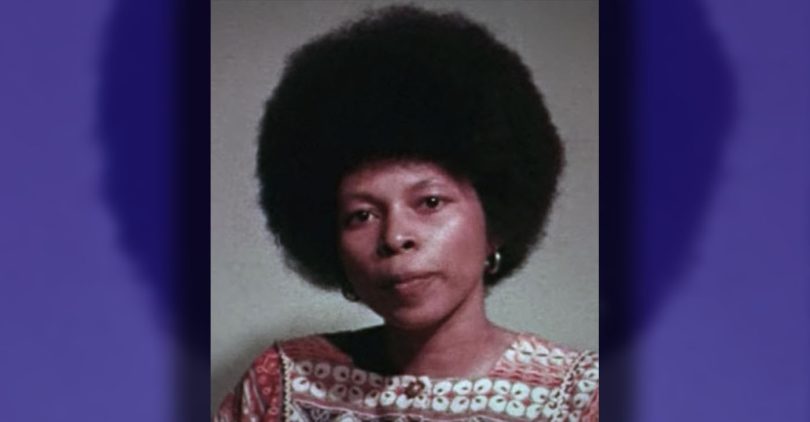
Black Liberation Army Member Assata Shakur, also known as Joanne Chesimard (IMBD)

By Stacy M. Brown
Black Press USA Senior National Correspondent

The passing of Assata Shakur has left a deep void in those who saw her as more than a revolutionary. She was a mother, poet, and symbol of liberation whose life embodied struggle and sacrifice. On Black Press USA’s Let It Be Known morning news show, journalist and commentator Thandisizwe Chimurenga spoke about Shakur’s death and her legacy. “My heart literally skipped a beat,” Chimurenga said. “I have known Assata’s daughter and husband for over 30 years. I immediately called to see if it was true. I was so saddened when he said that it was true.”

Born JoAnne Byron and once known as JoAnne Chesimard, Shakur became a leading member of the Black Panther Party and the Black Liberation Army. She was targeted by the FBI’s COINTELPRO program, convicted under disputed circumstances in 1977, and sentenced to life in prison. In 1979, she escaped and was granted asylum in Cuba, where she remained until her death. “I purposefully refrained from going into journalism mode,” Chimurenga said. “The only question I asked was had she been ill. He said, Yes, she had been ill. My heart was broken for them because losing a parent, losing your mother, you are never prepared for that. And I was heartbroken for me, being, as Assata says, an African woman in America, that she was no longer physically here with us.”

For Chimurenga, Shakur’s exile carried both sorrow and triumph. “I liked knowing that she was physically walking around free in Cuba, away from the clutches of the U.S. government,” Chimurenga said. “I was absolutely saddened that I had never taken myself down to Cuba and tried to find her and interview her as a journalist. But at the same time, I was rejoicing in the fact that for close to 50 years, she remained free of the United States criminal injustice system.” Her words shaped generations of activists. “It is our duty to fight for our freedom,” Shakur famously stated. “We must love each other and support each other. We have nothing to lose but our chains.” That declaration became a chant during protests in Ferguson and in the Black Lives Matter movement.

“She was our warrior queen mother, our sister comrade, our mama,” Chimurenga said. “She fought for us. She sacrificed for us. And her autobiography, infused with poetry, showed us the beauty of a woman the state called a terrorist. She was a beautiful soul who often said we must be weapons of mass construction, creating more beauty in the world because the people running it are destroying it.” Reactions to her passing showed the divide in the nation. “America is a white supremacist nation,” Chimurenga said. “It was not founded for us. We were brought here to enrich other people. If we did not believe it before, everything Trump is doing right now is in perfect lockstep with white supremacist principles. And that is how he was able to be reelected twice.” Chimurenga said Shakur’s memory will always remain tied to her devotion to her people. “Love. Love of Black people. Sacrifice, commitment, and beauty,” she remarked. “That is who she was.”

Filed Under: Arts & Entertainment Tagged With: 1977 conviction, activist, African woman in America, Assata Shakur, autobiography, Black Liberation Army, Black Lives Matter, Black Panther Party, Black Press USA, COINTELPRO, Cuba asylum, Donald Trump, exile, FBI, Featured, Ferguson Protests, Freedom, JoAnne Byron, JoAnne Chesimard, legacy, Let It Be Known, love of Black people, mother, poet, poetry, prison escape, revolutionary, Sacrifice, symbol of liberation, Thandisizwe Chimurenga, U.S. criminal justice system, warrior queen mother, white supremacy

Op-Ed: If We Fight, We Win!

August 28, 2024 By MKE Community Journal Leave a Comment

Vice President Kamala Harris

By Reverend Dr.  RB Holmes

As I write this op-ed, there are 72 days, 6 hours, and 55 minutes before the November 5, 2024, presidential election. This presidential election between Vice President Kamala Harris and former President Donald Trump is truly, in many of our lifetimes, the most significant and sacred presidential election perhaps ever. Yes, this is not hyperbole, rhetoric, or sugar high. So much is on the ballot in this nation.  Time will not permit me to recite many of the reasons why we need to vote in record numbers. Democracy is on this ballot; freedom is on this ballot; national security is on this ballot; racial equality is on this ballot; voting rights, women’s rights, civil rights, environmental protection, and decency are on the ballot; the rule of law is on the ballot, and much more. This presidential election between Vice President Kamala Harris and former President Donald Trump will be decided by what the political experts call “battleground” states, such as Georgia, Pennsylvania, Wisconsin, Michigan, Arizona, Nevada, and perhaps North Carolina.

However, my argument is that Vice President Kamala Harris can win Florida. Yes! I said it.  I am of sound mind, and I do not need to be admitted to any mental treatment facility, at least not at this time. Vice President Kamala Harris can win Florida because of her vision, her experience, her leadership skills, her rich history, her heritage, and her sense of decency, dignity, and decorum. I believe that God has ordained Vice President Kamala Harris and called her for such a time as this.  We must thank God for President Biden’s courageous and selfless act of stepping aside and firmly endorsing his competent, capable, calm, and charismatic Vice President.  It was his unwavering endorsement that put an end to the notion of considering other prospects to succeed President Biden. The Bible references “The ram in the bush” (Genesis 22:13) and that ram is Vice President Kamala Harris. Say her name! She can win Florida’s 30 electoral votes! How? Inquiring minds may ask.

Florida is ripe for fresh new leadership. Florida has witnessed clear examples of the danger of Project 2025. We are living and experiencing the pain of Project 2025. This pain includes voter suppression and gerrymandering, the dismantling of   teaching our history factually and truthfully, the disdain for collective bargaining, the disarming and dissolving of our higher education system, taking down duly elected representatives, reducing the power of local school boards, city and county governments, and refusing to accept federal funds to feed hungry children during the summer months, etc. Our constitutional right to free speech is in jeopardy, e.g. we cannot say “climate change” nor “gay.”  Additionally, the autonomy of corporations and businesses is being challenged; the importance of public schools is being jeopardized; lifesaving vaccinations, plus quality health care have been carelessly minimized.

Listen, the over 900 pages of the Project 2025 playbook for the extreme MAGA movement is fully operational in the most diverse state in this nation, Florida. If we reject Project 2025 and implement Project Rise-Up, Vice President Kamala Harris can win Florida and save our democracy, our constitution, and our freedoms. If we can convince most registered independent voters to vote for the Harris-Walz ticket, we win.

I am an Independent and I am voting for my children’s and grandchildren’s future. There are over 3.9 million, or approximately 34 percent of voters in Florida who are not affiliated with a political party.  Furthermore, there are 5.3 million Republican voters (39 percent) and 4.3 million Democrats (29 percent).  My prayerful points are that the overwhelming number of Democrats will vote for the Harris and Walz ticket. Deep down in my spiritual soul, I believe there are a significant number of Republican voters who will listen to their “better angels “and join most Independents and that is how, after much thought, prayer, common sense, and love of country, will turn Florida “Blue” and we can say with “Joy,” Madam President.

This effort is not going to be easy. I will encourage the Harris-Walz campaign to fight for the great state of Florida.  To “Rise-Up” I am humbly asking them to rethink their strategy by allocating the necessary resources and ground game by sending some of their key surrogates to visit major cities in the Sunshine State and even send the brilliant and beautiful Vice President herself, or her capable running mate, Governor (Coach) Tim Walz to visit Florida. Vice President Kamala Harris has provided energetic, engaging, and electrifying leadership to the campaign. Her energy, passion, hope, and joy are contagious. It shows up in her mass gatherings of enthusiastic supporters. This energy can be sustained from state to state; this energy is transferable; and I believe this energy can lead to an historic turnout of voters in Florida.

Yes, we can, and yes, we will win Florida. Florida is ready to embrace “The New Way Forward.”  Well, this is one of the preachers of Florida who strongly believes that “With God, nothing is impossible! “Let us “Rise Up” and go to work to turn Florida blue this November.

Reverend Dr.  RB Holmes is President and Publisher of the

Capital Outlook Newspaper and the pastor of the historic Bethel Missionary Baptist Church in Tallahassee, Florida;  Local President of the National Action Network,  Tallahassee Florida; Former President of the National  Baptist Convention, USA, Inc., Congress of Christian Education; Chairman of the Social Justice Ministry of the Florida General Baptist Convention, Inc.; Chairman of the Board of Directors for the First Bethlehem Baptist Association: Member of the Board of Trustees, Edward Waters University; and former member of Board of Trustees of Florida Memorial University and Florida A and M Universities

Filed Under: Latest News, Political Tagged With: allocating, arizona, beautiful, Blue, businesses, calm, capable, Capital Outlook Newspaper, Chairman of the Board of Directors, Chairman of the Social Justice Ministry, challenged, charismatic, children, city, civil rights, Climate Change, coach, common sense and love of country, Congress of Christian Education, constitutional right, county governments, courageous, decency, decorum, democracy, Democrats, dignity, diverse state, Donald Trump, Edward Waters University, elected representatives, election, electoral votes, electrifying leadership, endorsing, energetic, energy, energy is transferable, engaging, enthusiastic supporters, environmental protection, experience, experiencing the pain, Featured, federal funds, feed hungry children, fight for the great state, Florida, Florida A and M Universities, Florida Memorial University, former member, former President, former President Donald Trump, Former President of the National Baptist Convention, free speech, Freedom, fully operational, future, gay, Genesis 22:13, Georgia, gerrymandering, God has ordained, governor, grandchildren, heritage, historic turnout, hope, hyperbole, in jeopardy, in this nation, Inc, Inquiring minds, is contagious, joy, Kamala Harris, key surrogates, leadership skills, lifesaving, lifetimes, living, Local President, local school boards, Madam President, MAGA movement, majority of Independents, mass gatherings, mental treatment facility, Michigan, most registered independent voters, National security, Nevada, new leadership, North Carolina, November 5 2024, number of Democrats, OP-ED, our constitution, our freedoms, pages, passion, Pennsylvania, political party, prayer, prayerful points, president, President and Publisher, President Biden, presidential election, Project 2025, Project 2025 playbook, Project Rise-Up, public schools, quality health care, racial equality, recite, Republican voters, resources and ground game, Reverend Dr. RB Holmes, rhetoric, rich history, rule of law, running mate, sacred presidential election, save our democracy, selfless act, sense of decency, significant number, spiritual soul, state to state, stepping aside, strategy, sugar high, Tallahassee, Tallahassee Florida, teaching our history, the autonomy of corporations, the ballot, The Bible references, the campaign, the danger, the disarming and dissolving of our higher education system, the disdain for collective bargaining, the dismantling of, the First Bethlehem Baptist Association Member of the Board, the Florida General Baptist Convention, the Harris-Walz campaign, the historic Bethel Missionary Baptist Church, the National Action Network, the pastor, the political experts, the summer months, the Sunshine State, thought, Tim Walz, time, to vote, Trustees, unwavering endorsement, USA, Vaccinations, vice president, Vice President Kamala Harris, vision, visit major cities, vote for the Harris, vote for the Harris-Walz ticket, voter suppression, voting rights, who are not affiliated, Wisconsin, witnessed, women rights

The Interconnected Struggles: Black American and Palestinian Solidarity

November 8, 2023 By MKE Community Journal Leave a Comment

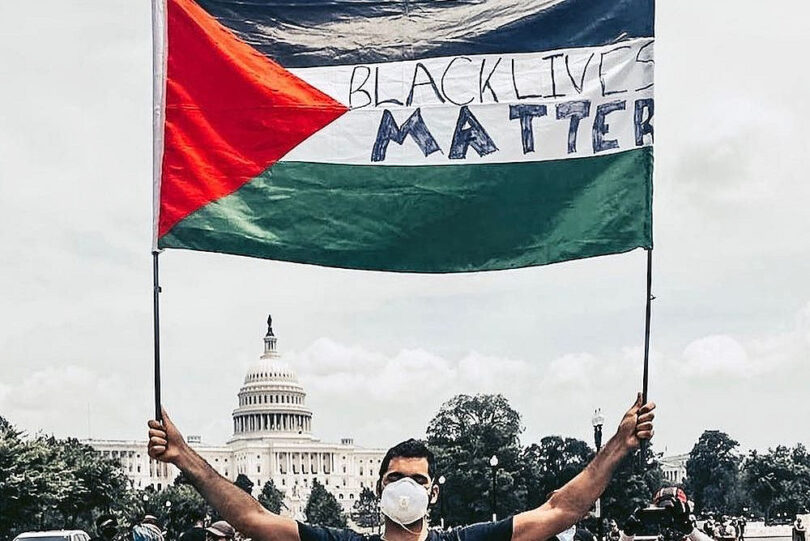
Historians said the connection between the Black American and Palestinian struggles has been evident for many years.

By Stacy M. Brown
NNPA Newswire Senior National Correspondent
@StacyBrownMedia

Writer, speaker, and author Leron L. Barton recently encapsulated the essence of solidarity between Black Americans and Palestinians, comments that offer one potential reason America continues to see pro-Palestine demonstrations at the White House and in locations throughout the nation. Importantly, Barton’s op-ed in Newsweek is a reminder of why President Joe Biden will continue to struggle to obtain the type of support from the Black community that helped propel him into office in 2020.
“Black American and Palestinian solidarity is not only rooted in struggle but hope, fighting, resilience, laughter, endless battling, sadness, and doing it all over again the next day,” Barton observed. “This is what I see for my Palestinian brothers and sisters trying to hold on to a land that does everything it can to make them let go.”
Barton’s words resonate with many, capturing the indomitable spirit that defines both communities’ quests for justice and self-determination. His sentiment extends to his sorrow for the lives lost on all sides of the conflict. He stressed the importance of seeing the situation not just as “The Conflict,” but as “The Occupation,” recognizing the power dynamics involved.
The author underscored his belief that the struggles faced by Black Americans and Palestinians are intertwined. “This is why I cry for the deaths of Palestinian and Israeli people,” he declared. “This is why I do not refer to it as ‘The Conflict,’ but as ‘The Occupation.’ This why I have hope for and will continue to support Palestine as they fight to be recognized as people, human beings that deserve freedom and equal treatment as their Israeli neighbors, just as I, a Black man, will continue to fight for the freedom of my people in America. Our struggle is intertwined. When they win, we win.”
The 2018 book “Black Power and Palestine: Transnational Countries of Color” by Michael Fishbach echoes the sentiments put forth by Barton. Fishbach delves into how conflicts in the Middle East significantly influenced the American Civil Rights Movement. He asserts, “Much about how American peoples of color create political strategies, a sense of self, and a place within U.S. and global communities.”
According to Fishbach, the events of the 1960s and 1970s continue to have a profound, structural impact on the United States. This historical perspective underscores the enduring influence of these interconnected struggles.
Recent controversies have illuminated the complexities of solidarity movements. Black Lives Matter Chicago received criticism for posting a graphic that appeared to celebrate Hamas’ violent attack on civilians at a concert. The graphic has since been deleted. The image featured a paraglider with the Palestinian flag and the words “I stand with Palestine.” The incident prompted a nuanced conversation about the expression of support for a cause. The group later clarified, stating, “We stand with Palestine and the people who will do what they must to live free.”
Historians said the connection between the Black American and Palestinian struggles has been evident for many years. The proximity of protests over the Gaza war and the shooting of Michael Brown in Ferguson, Missouri, led to a cross-cultural exchange of advice on dealing with tear gas that included Bassem Masri, a prominent activist in Ferguson and a Palestinian American. In 2015, Black activists and Palestinian advocates displayed their support for each other by visiting occupied territories and making public statements of solidarity.
In 2020, George Floyd’s murder by the police led to protests across the U.S., with comparisons made to the situation faced by Palestinians. Sam Klug, an expert in African American History, highlighted the resonance of the phrase “I can’t breathe” in both contexts. “People were painting George Floyd murals in Palestine,” Klug explained. “Palestinians were being attacked by Israeli security services, and saying, ‘I can’t breathe.’ Over time, African Americans have looked at Palestine, and Palestinians have also looked at what is going on in the United States.”
Against this backdrop, Democrats have grown increasingly attuned to the challenges facing Biden’s reelection campaign. Concerns, and even alarms, have sounded regarding Biden’s support among Black voters, a pivotal demographic in his 2020 victory. Cliff Albright, co-founder of the Black Voters Matter Fund, said that supporting Biden for practical reasons might not mean being equally enthusiastic. Disillusionment over policies and stances, including Biden’s stance on Israel, may influence voter engagement in the upcoming 2024 election, Albright told the Washington Post.
“People fundamentally misunderstood what Black voters said in 2020,” Albright said. “The depth of support was never there. The enthusiasm was never there for Biden. We were very pragmatic. We knew he was the best chance to beat Trump.”

Filed Under: World News Tagged With: america, Black Americans, black community, Black Power and Palestine, Blm, chicago, dynamics, Freedom, Leron Barton, Michael Fishbach, Palestinians, President Joe Biden, solidarity, The Conflict, The Occupation, Transnational Countries of Color

Cultivating Community Through Food

September 1, 2023 By MKE Community Journal Leave a Comment

Relish was founded by visionaries Le’Genevieve “Vie” Squires and Brittiany Peeler who believe in putting their heart and soul into introducing flavorful ingredients to the community.

Ford is honoring Black Business Month by highlighting those within the culinary space and their inspiring contributions to the community. This month is all about connecting with businesses who are striving for change. In support of similar efforts, Ford Fund is a sponsor of the Ford Resource and Engagement Center for Detroit Food Academy (DFA), an organization formed to inspire young Detroiters through culinary arts and food entrepreneurship. Their goal is to facilitate an environment of collaboration, creativity, and education with their various programs. And through one of the key organizers at DFA we want to introduce today, the Black-owned, woman-owned catering business: Relish.

“Everyone should have access to quality foods which was our inspiration to start Relish. Food is love and we have an amazing opportunity to express that in our craft”, said Le’Genevieve “Vie” Squires, co-founder of Relish.

Relish was founded by visionaries Le’Genevieve “Vie” Squires and Brittiany Peeler who believe in putting their heart and soul into introducing flavorful ingredients to the community. Their passion for cooking and expressing love through mouthwatering meals was driven by the lack of variety they were provided as youth. They are inspired by the work and history of their ancestors with a strong desire for their community to experience an abundance of healthy foods that are readily available in other geographic areas. Relish blends the home-cooked tastes of their roots with the exciting fresh flavors and dishes they discover through travel.

“It’s super important to share stories and resources for our youth to thrive and food is a vehicle,” said Brittiany Peeler, co-founder of Relish.

Taste of Black Entrepreneurship

When it comes to the challenges of being Black business owners, the biggest one for Relish was obtaining access to capital. They navigated this by adapting, bootstrapping, and gaining investments from friends and family. They succeeded by embracing change, being resourceful, and most importantly having a positive mindset. The legacy they’re working to carry on is part of what inspires Relish to creatively use produce that is grown locally, collaborating with Detroit-based Black and brown-owned companies to use their products.

“Although our work and focus may be different, we’re all capable of contributing towards the same goal with different skills,” said Squires.

To Ford, Relish is an inspirational example of a unique business that is also dedicated to empowering the community. Relish serves as a platform for showcasing and celebrating the entrepreneurial spirit by heavily collaborating and highlighting others. Like MiTea, a Black-owned and woman-owned business that aims to make a positive impact by promoting healthier choices and overall wellbeing. Another Detroit-based company with similar goals is Motor City Popcorn, an organization that works alongside the community by teaching life lessons and work ethic to support their staff in reaching towards their goals. Both are companies Ford is proud to have as official food services suppliers.

Feeding Connections & Shaping Community

Ford knows the importance of working together within the community with organizations that drive the world forward. It’s through these partnerships that Relish can address food deserts and food insecurity within Detroit by assisting in efforts to provide the community with access to quality meals and food education. This company also plays a role in shaping the environment of Detroit by implementing healthy practices like using compostable products and actively learning to be more mindful of food waste.

We understand our unique opportunity to help amplify and support Black businesses by telling their stories. For Relish, MiTea, Motor City Popcorn and more, food is a form of expression and freedom that travels endlessly. We also understand the mark we can make regarding food justice as a brand by promoting healthy and equitable food systems. It’s the businesses within the community that work to bring everyone together. Learn more about their organization at experiencerelish.com

Filed Under: Economy, Entrepreneurship, Food and Drinks Tagged With: abundance of healthy foods, access to capital, access to quality meals, adapting, address food deserts, alongside the community, amazing opportunity, ancestors, Black Business Month, black business owners, Black Entrepreneurship, black-owned, bootstrapping, Brittiany Peeler, businesses, catering business, community, compostable products, creativity, culinary arts, culinary space, Detroit, Detroit-based Black and brown-owned companies, Detroit-based company, DFA, different skills, dishes, drive the world forward, eaching life lessons, Education, embracing change, empowering the community, entrepreneurial spirit, environment of collaboration, equitable food systems, exciting fresh flavors, experiencerelish.com, flavorful ingredients, food education, food entrepreneurship, food insecurity, food is a vehicle, Food is love, food justice, Ford, Ford Fund, Ford Resource and Engagement Center for Detroit Food Academy (DFA), Freedom, gaining investments, grown locally, healthy, heart and soul, highlighting others, home-cooked tastes, inspirational example, inspire, inspiring contributions, key organizers, lack of variety, Le’Genevieve “Vie” Squires, legacy, mindful of food waste, MiTea, Motor City Popcorn, mouthwatering meals, of healthy practices, official food services suppliers, organization, other geographic areas, overall wellbeing, passion for cooking, platform, positive mindset, produce, promoting healthier choices, provide the community, quality foods, Relish, resources, roots, same goal, shaping the environment, share stories, sponsor, striving for change, support their staff, travel, unique business, woman-owned, work ethic, young Detroiters

Six Decades after King’s Historic Speech, Report Shows Black Economic Equality is ‘Still a Dream’

August 18, 2023 By MKE Community Journal Leave a Comment

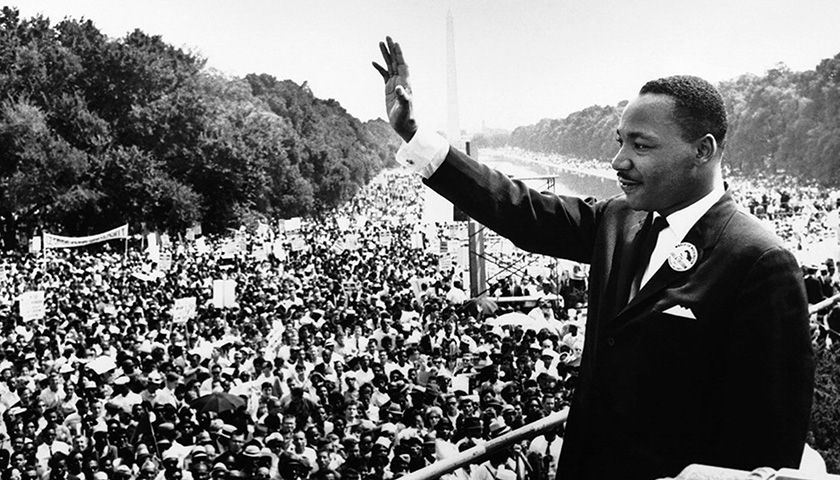
Mainstream media often ignores Dr. Martin Luther King, Jr.’s fight for economic justice and his strong relationship with the Black Press. (Wikimedia Commons)

The report exposes that in 2021, African Americans earn 62 cents to every dollar earned by white families.

By Stacy M. Brown
NNPA Newswire Senior National Correspondent
@StacyBrownMedia

Sixty years after Dr. Martin Luther King Jr. delivered his iconic “I Have a Dream” speech during the March on Washington for Jobs and Freedom, a groundbreaking new report has laid bare the stark truth of ongoing black economic inequality in the United States.
Titled “STILL A DREAM: Over 500 Years to Black Economic Equality,” the report, co-authored by prominent experts Dedrick Asante-Muhammad, Chuck Collins, Omar Ocampo, and Sally Sim, and published by the Institute for Policy Studies (IPS) and National Community Reinvestment Coalition (NCRC), underscores the enduring disparities faced by Black Americans and highlights the pressing need for concerted action to address these disparities.
“Sixty years ago, Dr. King observed that America has defaulted on this promissory note to Black citizens,” stated Chuck Collins, an IPS senior scholar who directs the Program on Inequality and the Common Good in Washington, DC.
“Six decades later, despite incremental progress on some fronts, the check of opportunity has still come back with insufficient funds.”
Dedrick Asante-Muhammad, Chief of Race, Wealth, and Community for NCRC, lamented, “It is deeply troubling that, sixty years after the March on Washington for Jobs and Freedom, Black economic equality remains nothing more than a dream for most Black Americans.”
“The revelation that it would take more than 500 additional years to close the economic gap for black Americans is a stark reminder of the systemic inequities that persist,” Asante-Muhammad asserted.
Sally Sim, a senior organizer, and project specialist at NCRC, emphasized the urgency of the situation.
“The sobering projection and findings of our report sixty years after the March on Washington for Jobs and Freedom reinforce that the dream for economic equality for Black Americans remains unfulfilled,” Sim stated.
“On this historic anniversary, let us turn this report into a catalyst for meaningful action towards comprehensive solutions and public support for policies and initiatives that promote black economic equality.”
Some key findings from the comprehensive report were that, despite modest advancements made by African Americans since the 1960s, including reduced poverty rates, increased high school attainment, and lower unemployment rates, income disparities between Black and white Americans have only slightly improved.
The report exposes that in 2021, African Americans earn 62 cents to every dollar earned by white families.
The report’s authors said, at this rate, achieving income parity would take an astonishing 513 years.
Further, the wealth gap between Black and non-Black Americans has experienced only marginal growth, with African Americans possessing 18 cents for every dollar of non-Black wealth in 2019.
If this pace continues, it will take approximately 780 years for Black wealth to match non-Black wealth.
Median household income for African Americans has shown minimal growth, growing just 0.36% since the turn of the century.
Strikingly, it remained lower than white median family income in 1963.
Even after over six decades, the Black-white homeownership divide persists.
Black homeownership has grown from 38% in 1960 to 44% in 2021, while white homeownership surged from 64% in 1960 to 74% in 2021.
The report outlined a series of recommendations to combat black economic inequality:
1. Advocate for full employment and guaranteed jobs to ensure equal economic opportunities for all.
2. Enact a substantial land and homeownership program to address the enduring homeownership gap between Black and white Americans.
3. Commit to individual asset building, including financial education, asset matching programs, and supportive policies, to facilitate access to wealth-building opportunities for Black Americans.
4. Implement policies to reduce dynastic concentrations of wealth and power, tackling the structural barriers that impede economic progress for Black Americans.
5. Explore targeted reparations to address historical injustices and provide meaningful redress for the economic disparities Black Americans face.
The authors noted that, as the nation reflects on King’s enduring vision for equality and justice, the report serves as a sobering reminder that pursuing Black economic equality remains an unmet challenge in America.
“The findings of this report are sobering and demand immediate and comprehensive action to address the economic disparities faced by African Americans,” remarked Omar Ocampo, a researcher for the Program on Inequality and the Common Good at IPS.
“We must invest in transformative policies that address systemic racism and create an equitable society.”
View the full report here.

Filed Under: Economy, Latest News, National News Tagged With: 60 years, African Americans, century, Chief of Race, Chuck Collins, Common Good, community, comprehensive report, Dedrick Asante-Muhammad, Dr Martin Luther King Jr, dream, dynastic concentrations, economic disparities, economics, employment, equality, Freedom, Homeownership, inequality, initiatives, insufficient funds, IPS, jobs, justice, march, March on Washington, National Community Reinvestment Coalition, NCRC, non-Black Americans, Omar Ocampo, opportunities, Policy Studies, Public support, redress, Sally Sim, senior scholar, structural barriers, systemic racism, transformative policies, vision, wealth, wealth building, white Americans

Freedom

June 20, 2022 By MKE Community Journal Leave a Comment

Yesterday we celebrated Juneteenth Day and today it is recognized as a federal holiday. Juneteenth is more than a day off work for us, it is a day we celebrate freedom. Living a life of freedom allows us to be grateful, peaceful, and joyful. It is also a time where we remember where we came from and reflect on how we became free.

Our freedom was also delayed, and some did not know we were free and still today some of us still question are we really free? Certainly, we are but still there are times in our lives where it seems like others forget. Like, getting equal treatment in the workplace, when it is time to buy a home or even when it is time for justice, there is still mistreatment.

We must remember that no matter how many times we struggle to fit in and be accepted, freedom is a state of mind. It is a fact that we are free and most of the time the life we create for ourselves has the most power and the life I choose to live is one that is free.

Yesterday I had the pleasure of volunteering at the America’s Black Holocaust Museum at 401 W. North Ave in Milwaukee, founded by James Cameron, who became well known after surviving a Lynching. He is also the author of “A Time of Terror” which tells his story. His legacy will never be forgotten, and the museum is a wonderful way for us to learn where we come from, where we are and how we got here.

As we celebrate Juneteenth let us reflect on how we got to where we are today and remember what it took for us to get here. Let us also continue to make changes in our lives to go further and keep changing the narrative. We are still free to live our lives, continue to grow and succeed!


Happy Juneteenth!

Nicole Gamble (Nikki)

Filed Under: Latest News, MKE Monday Juice Tagged With: Freedom, juneteenth

OP-ED: A Black Happy Thanksgiving 2021

November 24, 2021 By MKE Community Journal Leave a Comment

By Dr. Benjamin F. Chavis Jr., National Newspaper Publishers Association President and CEO

African Americans and other communities of color across the United States of America will spend the traditional Thanksgiving holidays this year with multiple perspectives ranging from gratefulness of having life itself to increasing feelings of speculation about our future destinies and progress in America. We have won some victories. We have suffered some defeats.

Yet, we are a people of African descent who are also profoundly aware that our long struggle for freedom, justice and equality continues today in America, in Africa and throughout the world. The National Newspaper Publishers Association (NNPA) representing the Black Press of America reaffirms our mission to “To plead our own cause” in speaking and publishing truth to power.

At the same time, we acknowledge a sacred respect and resolute solidarity with our Native American sisters and brothers who inhabited what now is known as America long before Christopher Columbus discovered that he was lost. The subsequent genocide and oppression of native peoples throughout this hemisphere that Columbus and others initiated with impunity and a callous disregard for human life also contributed to the eventual launching of the Transatlantic Slave Trade.

Yes, there are significant matters, circumstances, and advances that we all should note with a consciousness of thanksgiving and gratefulness. Over the past twelve months we have a new Biden-Harris Administration that is the most racially diverse and inclusive federal administration in American history. The Biden Infrastructure Bill is now law and will help stimulate economic recovery for African American owned businesses.

The House of Representatives has now passed Biden’s “Build Back Better” legislation. We must now put serious pressure on the U.S. Senate to also pass this unprecedented initiative that will further help to eliminate poverty, housing discrimination, health care disparities, and environmental injustice.

Even though we have not been able to end the reality of systemic racism in the very fabric of society, we have in fact made progress. This is no time for us to get distracted, disillusioned, and chronically disappointed about the present and the future.

Poverty and unemployment within our families and communities are now on a steady decrease after years of increasing economic disparities even before the devastating impact of COVID-19 on Black America. We express our condolences to those families who have suffered deaths from that deadly pandemic that continues to disproportionately hit our communities.

We are thankful to those healthcare professionals, physicians, medical researchers and other first responders who have helped all Americans to survive and to prevent the further spread of COVID-19. It is, therefore, appropriate that part of our Black Happy Thanksgiving wishes go out to the medical research genius of our sister, Dr. Kizzmekia Corbett, the leading viral immunologist, who helped to develop the vaccine process that led to the preventive COVID-19 vaccines that has enabled millions of Americans and others to avoid infection from COVID-19. Dr. Corbett stated, “Vaccines are the great equalizer when it comes to addressing health disparities, especially around infectious diseases.”

We are thankful for the effectiveness of the Black Voters Matter movement and all of the civil rights and voting rights national, regional, and local organizations that are challenging the voter suppression statues, laws and regulations that are being put into place in Texas, Florida, Georgia, North Carolina, and in other states. We are thankful for the leadership of Congressional Black Caucus Chair Congresswoman Joyce Beatty and each member of the CBC.

We are thankful to Attorney Benjamin Crump and a growing host of other civil rights lawyers and leaders who refuse to be silent about the continuing racially motivated police brutality and misconduct across America that inflicts fatal consequences for Black Americans throughout the nation.

We are thankful that the Black Press is expanding to all multimedia platforms and channels. We have to remain proactive to ensure that the formulation and distribution of the narrative of Black America is authentic, accurate, truthful, and trusted.

Thus, we wish all a Black Happy Thanksgiving.

Dr. Benjamin F. Chavis Jr is President and CEO of the National Newspaper Publishers Association (NNPA) and Executive Producer/Host of The Chavis Chronicles broadcast weekly on PBS TV stations across the nation, and can be reached at [email protected]

Filed Under: Latest News Tagged With: African Americans, communities of color, equality, Freedom, justice, Native American, Thanksgiving

  • Page 1
  • Page 2
  • Go to Next Page »

Primary Sidebar

MCJ WEEKLY

PREVIOUS EDITIONS

Go HERE for the Digital Archives

DR. TNT SCHOLARSHIP SPECIAL EDITION

CLICK THE IMAGE THE FULL EDITION

Newsletter Signup

The Milwaukee Community Journal (MCJ) and the Weekend Edition are distributed at a number of community churches; as is the current issue of Healthy Start. With many area churches closed for the next few weeks due to the coronavirus, your MCJ suggests you pick up your edition of the newspaper, Weekend Edition and Healthy Start at our offices, located at 3612 N. Martin Luther King Drive. We’re open from 10 a.m. to 4:30 p.m., Monday through Friday. You can still pick up the MCJ at several Walgreens and Pick n’ Save stores throughout the community, as well as city hall and the county courthouse.

Recent Posts

  • Oakland Protesters Rally to Defend Haitian Immigrants and TPS
  • OPINION: 57,000 Empty Apartments and Not a Word of Apology – City Limits
  • ‘Choppin’ it up’ with a brotha about Crowley’s win, and why Black folks aren’t down with the Democratic Socialists!
  • Identifying Opportunities to Strengthen Wisconsin’s Emergency Response
  • Present Music Highlights Women Composers in Woman’s Club of Wisconsin’s 150th Celebration

CLASSIFIEDS

CLASSIFIEDS

Place your notice of divorce, name change, etc. in the Milwaukee Community Journal's Classifieds! Contact is at 414-265-5300

Follow Us

  • Facebook
  • Instagram
  • Twitter
  • YouTube

Tags

2016 election African Americans Alderman Khalif J. Rainey ALDERWOMAN CHANTIA LEWIS Alderwoman Milele A. Coggs annual Baylor College of Medicine Biden Black History Month Black press Boko Haram civil rights community coronavirus COVID-19 Dating Advice day Democrats diversity Donald Trump Education event Featured free George Floyd HuffPost Live Joe Biden Love & Sex Love and Relationships Mayor Tom Barrett mental health Milwaukee Repertory Theater naacp national NNPA pandemic racism report Republicans Reuters social media Trump Trump Administration What Is Working: Small Businesses White House

Categories

H5_WEDC1027_AA_300x250

Copyright © 2026 Milwaukee Community Journal