• Skip to primary navigation
  • Skip to main content
  • Skip to primary sidebar
  • About
  • Contact
  • Advertise

Milwaukee Community Journal

  • News
    • Local News
    • National
    • World
    • Political
  • Men Building Men
  • Lifestyle
    • Arts & Entertainment
    • Fashion
    • Culture
    • Religion
  • Economy
    • Small Business
    • Money
    • Entrepreneurship
  • Health
    • Family
    • Relationships
  • Education
  • Jobs
    • Housing
  • Scholarship Fund
You are here: Home / Archives for black community

black community

What Banking Actually Means for Young People

August 10, 2026 By MKE Community Journal Leave a Comment

MINNESOTA SPOKESMAN-RECORDER — This installment of MSR’s Youth Financial Education Series, sponsored by JPMorgan Chase, highlights Hannah D. Williams’ financial journey. After getting her first job at 15, Williams learned to use bank accounts strategically with guidance from Game Time Budgeting founder Al Riddick.

Credit: Yan Krukau / Minnesota Spokesman Recorder

By Jasmine McBride

Source: Black Press USA Wire

Youth Financial Education Series

This installment of MSR’s Youth Financial Education Series, sponsored by JPMorgan Chase, follows Hannah D. Williams as she describes learning to use bank accounts strategically after getting her first job at 15. With guidance from Game Time Budgeting founder Al Riddick, Williams developed habits around high-yield savings, credit card caution and fraud protection. The piece argues greater financial literacy within the Black community can help families build wealth over time.

JPMorganChase offers a comprehensive suite of youth financial education initiatives, providing resources ranging from bite-sized budgeting modules to multi-year mentorship programs. Their primary offerings span digital tools, community-based workshops, and philanthropic career pathways.

The Youth Financial Education Series continues this month with a look at banking basics: how young people can move beyond thinking of a bank as just a place to store cash, and start using accounts strategically to build savings and long-term security.

The First Paycheck Pivot

For many young people, a first paycheck is the moment banking stops being abstract. That was true for Hannah D. Williams.

Before she learned more about banking, she thought of it simply as a place to keep money. Growing up, she mainly carried cash and paid for things that way. When she received money as a gift, it usually came as cash or a check that her parents would cash and hand over a few days later.

Building a High-Yield Savings Habit

That changed at 15, when Williams got her first job and was required to have a bank account for direct deposit. Having her own account for the first time gave her a closer view of her own money, and with that came a realization about her own spending habits.

“I realized that if I could easily see all of my money in my checking account, I would be more likely to spend it,” she said.

In response, she developed the habit of moving a large portion of her paycheck into a high-yield savings account, a type of account that pays a significantly higher interest rate than a standard savings account, letting money grow faster simply by sitting untouched.

She said the habit has helped her save consistently and think about long-term financial goals rather than spending everything she earns.

Generational Wealth as a Family Project

Williams credits her work with Game Time Budgeting and its founder, whom she calls Mr. Al, with helping her understand how to make her money work for her instead of simply sitting in an account.

Keeping funds in a high-yield savings account lets her earn interest while doing very little, she said. Mr. Al has also taught her, her parents and her younger sister about investing and building wealth over time, and the family now looks for opportunities to invest together, treating it as a shared, ongoing project rather than something only adults handle.

Smart Spending and Security in a Tap-to-Pay World

Today, Williams keeps the majority of her money in a high-yield savings account so it can keep earning interest while she saves for future goals, and intentionally keeps a smaller amount in checking. She said that’s for two reasons: it limits how much she can spend on impulse, and it adds a layer of security.

With tap-to-pay accepted almost everywhere, she said a stolen card could be used quickly before she noticed, so keeping most of her money in savings reduces how much she could lose in that scenario. She also keeps notifications turned on for every card transaction, including tap-to-pay, so she knows immediately if something looks wrong.

Credit Isn’t Free Cash: Why Management Comes First

On credit cards, Williams is direct: eligibility alone isn’t a good enough reason to get one. Many young adults are still learning how to manage and save their own money responsibly, she said, and if someone struggles with that, repaying borrowed money on time can be even harder.

She said learning strong budgeting and saving habits first reduces the need to rely on credit in the first place. Used responsibly, she said, a credit card can be a valuable financial tool, but it should come after good money management habits are already in place, not before.

Why Early Financial Literacy Matters for Black Families

Williams said greater financial literacy within the Black community could have a tremendous impact. People often assume others are simply “richer,” she said, when in reality they may just be saving, investing and planning differently with the money they have.

Building those habits early, she said, creates more opportunities for families to build wealth, travel, invest, own businesses and reach long-term financial security. It also helps people understand that wealth building takes patience and time, and doesn’t happen overnight, and that the earlier those habits form, the more time they have to compound.

Williams closed with two sayings her mother used to repeat, ones she said have stuck with her well beyond banking: “The 7 Ps: Proper planning prevents poor performance,” and “Sometimes it is not a no; it is a not right now.”

The Youth Financial Education Series is supported by JPMorgan Chase. For more information or to learn about partnership opportunities, visit spokesman-recorder.com or contact [email protected].

Based on reporting by Minnesota Spokesman-Recorder.

Originally published by Black Press USA Wire — https://spokesman-recorder.com/2026/08/06/youth-financial-education-banking-basics/
Filed Under: Economy Tagged With: al riddick, black community, credit card management, Financial Literacy, game time budgeting, generational wealth, hannah d. williams, high-yield savings accounts, JPMorgan Chase, jpmorganchase, MNSpokesman Embargo / scheduled release: (none) License: newswire-republish, youth financial education series Twitter handles: @NNPA_BlackPress

OP-ED: ‘The Trusted Messenger’ and the Black Vote

July 30, 2026 By MKE Community Journal Leave a Comment

Now, as we approach one of the most important Midterm elections in the history of this nation, it appears that, once again, the Black Press will be expected to carry the message about voter turnout, while political and campaign dollars go to the White mainstream media.

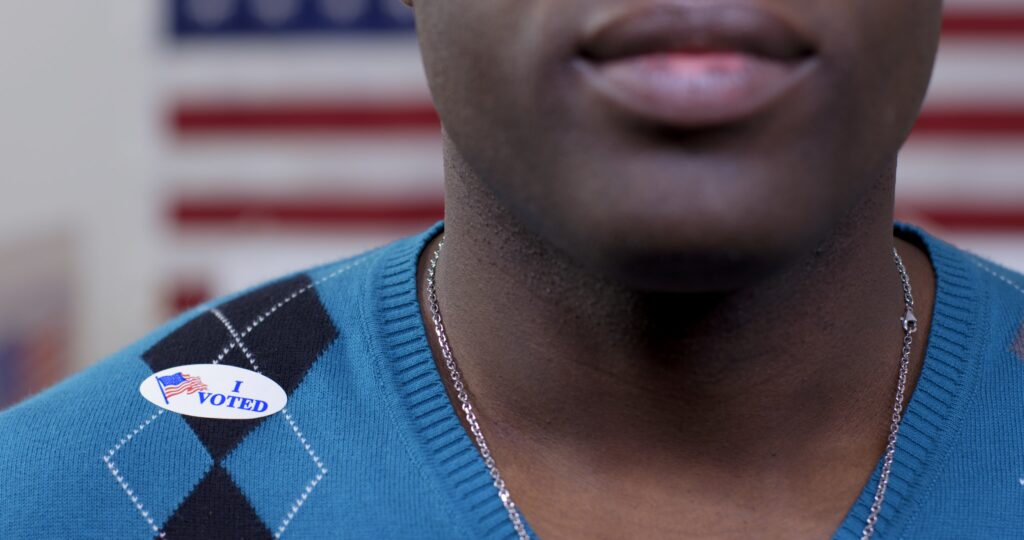
ECU front view African American man wearing “I Voted” sticker on shoulder of his blue sweater in front of US flag. Only the lower part of man’s face visible

By Dr. John E. Warren, Publisher San Diego Voice & Viewpoint Newspaper Chairman of the Board of Directors, NNPA

It is a well-established fact that the Black Press is and always has been the “Trusted Messenger” of the Black community. With that being said, it is also very interesting that when many political organizations and donors decided to support Voter Registration and Get Out The Vote, those donors gave their dollars predominantly to Black organizations like the Urban League, the NAACP, the League of Voters, and other nonprofit groups. Those groups will prepare and send out press releases about such voter participation efforts since Black people were responsible primarily for the Voting Rights Act of 1965.

What is most interesting is that those press releases rarely find their way onto CNN or the major news networks. Those press releases and calls to Black voter participation are carried in the Black Press. However, the dollars that support those press releases being written, nor the ads that carry the message of those releases, reach the Black Press. Historically, the dollars behind those messages do not find their way to the very Black Press that carries those messages.

Now, as we approach one of the most important Midterm elections in the history of this nation, it appears that, once again, the Black Press will be expected to carry the message about voter turnout, while political and campaign dollars go to the White mainstream media.

Those who are spending the billions of dollars that will go to Campaign Finance appear to have forgotten that elections are won and lost on a single vote.

Now is the time to remind the candidates, the political Initiatives and Propositions that will appear on the ballots across this nation, that the Black Vote must not be taken for granted. It does not belong to any particular political party or interest group. It can not be judged by whether it exists in a Blue or Red State.

The Democrats, Republicans, Independents, and supporters of Initiatives should not assume that our votes are unimportant.

Elections are won on a single vote.

The United States Supreme Court in Reynolds vs. Sims, 1964. That case established the ‘One Person, One Vote” rule. The rule in that case made it mandatory to base legislative seats on population within districts rather than on geography, and guaranteed Equal Protection coverage under the Fourteenth Amendment to the Constitution.

That principle has not been abolished, and neither should we act as if our one vote does not count. Let us not forget our own values, and we look toward the Midterm elections. The “Trusted Messenger” can make the difference.

Originally published by BlackPressUSA Newswire — https://blackpressusa.com/op-ed-the-trusted-messenger-and-the-black-vote/

Filed Under: Political Tagged With: black community, Black press, Black Vote, campaign-finance, civil rights, elections, Featured, fourteenth-amendment, get-out-the-vote, mainstream media, midterm elections, naacp, one-person-one-vote, political-organizations, reynolds-vs-sims-1964, Urban League, us-politics, voter registration, Voting Rights Act of 1965

Flavor Flav: Why the People’s Timekeeper Should Get TIME Magazine’s Biggest Honor

November 4, 2025 By MKE Community Journal Leave a Comment

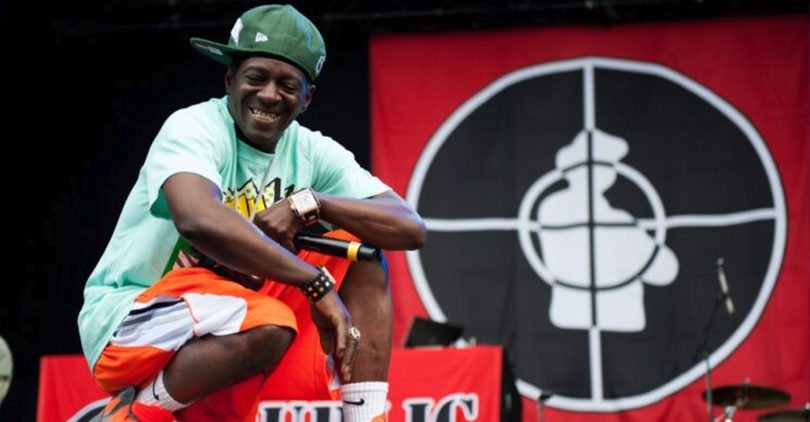
Flavor Flav

By Stacy M. Brown
Black Press USA Senior National Correspondent

There comes a time when a nation needs reminding that joy is not the enemy of justice, that laughter and love can exist alongside the deepest wounds of history. In this fractured America, this cold, suspicious place where one man’s color still shapes another man’s fear, there walks a small man with a giant clock. Flavor Flav, the timekeeper of hip-hop, the eternal hype man of Public Enemy, is now the hype man of the world.

He’s not Roosevelt, nor Eisenhower, nor Clinton, Bush, or Obama. He’s not Churchill or Gandhi or Malcolm or Martin. But perhaps that’s the point. In a world oversaturated with icons and polished politicians, the truest reflection of our times might just be a man whose greatest weapon is joy. Public Enemy’s “The Hits Just Keep on Comin’” dropped recently, a rhythmic reminder that history, like that beat, never really stops. But Flavor Flav doesn’t just echo history; he bends it toward light. In 2025, while much of the world wrestles with hatred, division, and the ugly decay of empathy, Flav stands as a bridge linking people not by politics but by pulse, by laughter, by love.

He helped raise funds for Black families devastated by the Los Angeles fires, working with GoFundMeand the Black Music Action Coalition to bring relief to Pasadena and Altadena. He reminded a weary world that the struggle of one community belongs to us all. Then, he turned around and rescued Red Lobster, not for fame or fortune, but because it’s a place where Black folks have celebrated birthdays, graduations, and Sunday dinners for generations. “You gotta get to Red Lobster and give it a try,” he said, “because this signature meal is hype, boy!” It’s easy to laugh, but that’s precisely the miracle of Flavor Flav. He gives the world permission to smile again. He doesn’t greet you with a handshake. He embraces you. He doesn’t perform joy; he lives it.

When others hoard wealth, Flav gives himself. He became the official hype man for the U.S. women’s water polo team, then extended that love to the bobsleigh and skeleton teams ahead of the 2026 Winter Olympics. There he was in Utah, stars-and-stripes helmet gleaming, hurling down the track at sixty-seven miles per hour, shouting, “I did it! This was so awesome!” Athletes who had nothing in common but the ice beneath them left that track with high-fives and hugs, all because of his spirit. He’s funded athletes, cheered for them, and even helped connect Taylor Swift fans and Olympians through kindness and curiosity. He calls himself “King Swiftie,” insisting that Taylor Swift “causes earthquakes” with her music. And who can deny it? If there’s a natural phenomenon to describe the magnitude of unity, perhaps it is an earthquake—shaking, breaking, reshaping the ground beneath us.

When most of America scrolls through hate, Flav’s Twitter timeline is an oasis of kindness. Trolls call him names, and his answer is simple: “I’m just a nice guy.” It’s that humility, that quiet insistence on decency, that makes him not just relevant but revolutionary. He’s served pretzels on a plane, lifted strangers in airports, reminded us to turn our clocks back, and proved that celebrity doesn’t have to mean separation. The world Flav inhabits isn’t divided by race or class or creed. It’s stitched together by rhythm and generosity. He’s the unlikely statesman of this broken union, uniting Black and white, young and old, the fans of Chuck D and the disciples of Taylor Swift.

So when TIME Magazine sits to decide who among us defines this year, and selects their Person of the Year, they would do well to remember that power doesn’t always wear a tie. Sometimes, it wears a clock. Sometimes, it walks with a bounce, speaks in exclamation points, and loves with no preconditions. Flavor Flav isn’t just the ultimate hype man. He’s the people’s timekeeper, a man reminding us that joy, in times like these, is an act of resistance. As one fan wrote, “Flavor Flav is a national treasure.” And maybe, just maybe, the treasure we’ve been waiting for has been keeping time all along.

Filed Under: Arts & Entertainment Tagged With: 2025, Altadena, america, American culture, black community, Black Music Action Coalition, bobsleigh team, Celebrity Activism, compassion, cultural bridge, cultural icon, decency, empathy, Featured, Flavor Flav, generosity, GoFundMe, hip-hop, hope, humility, hype man, joy, joy as resistance, justice, Kindness, King Swiftie, Laughter, Los Angeles fires, love, music, national treasure, Pasadena, Person of the Year, positivity, Public Enemy, racial unity, Red Lobster, resilience, restaurant rescue, rhythm, skeleton team, social media positivity, sports philanthropy, Taylor Swift, Time Magazine, twitter, U.S. women’s water polo team, unity, Utah, Winter Olympics 2026

Trust in Mainstream Media at a New Low, But the Black Press Stands as the Trusted Voice

October 7, 2025 By MKE Community Journal Leave a Comment

digital data

By Stacy M. Brown
Black Press USA Senior National Correspondent

Trust in America’s mainstream media has fallen to its lowest level on record. Gallup reports that only 28 percent of adults say they have a great deal or fair amount of confidence in newspapers, television, and radio to report the news fully, accurately, and fairly. That is down from 31 percent last year and 40 percent five years ago. Seven in ten adults now say they have little or no confidence at all. Republicans show the deepest distrust, with only 8 percent expressing confidence in the media. Independents stand at 27 percent. Democrats, though still higher, have slipped to 51 percent, a figure that matches their previous low in 2016. Generational divides are also clear. Forty-three percent of adults aged 65 and older trust the media, but no younger age group rises above 28 percent.

For Black America, this collapse of trust in mainstream outlets is not a new story. The Black Press has been the institution that carried the truth when no one else would. It published Frederick Douglass when white newspapers tried to silence him. It carried Ida B. Wells’ anti-lynching reports when others dismissed them. It printed the images of Emmett Till when the mainstream turned away. It gave voice to Dr. King and Malcolm X when they were branded agitators. Now, as the mainstream loses credibility, the Black Press faces its own struggle to survive. Two years before its bicentennial, more than 200 family-owned Black newspapers remain, many led by women. They battle economic starvation while carrying the weight of history. Corporate America has cut advertising. Washington has withdrawn support. Even as white billionaires like Mark Cuban have reached into their pockets, many of the wealthiest Black Americans have not stepped forward. Oprah Winfrey, Michael Jordan, Robert F. Smith, Jay-Z, Rihanna, LeBron James, Magic Johnson, Tyler Perry, and others together command nearly $100 billion in wealth. Yet the institution that once defended its very humanity now fights to keep its doors open, as they’ve remained on the sidelines.

“Right now in America, we’re under attack like we’ve never been in our lifetime,” Ben Crump said at the Black Press’ Annual National Leadership Awards in Washington. “So now more than ever, we have to make sure that we have institutions that are disseminating information to our people, being the clarion call for us to be ready to stand up for our children and our communities. And nobody carries the Black narrative and the Black information to Black communities more passionately than the Black Press.” Crump pledged $50,000 to support the Black Press, structured as $10,000 a year over five years. “Everybody got to give a little more when they can. If you’ve been blessed, you got to pass the blessing on. You just can’t keep it to yourself,” Crump stated. “Because right now the Black Press is needed more than ever before.”

The institution he spoke of has never been an abstraction. In Tulsa in 1921, white mobs torched Black-owned newspapers to silence the truth. During Jim Crow, the Black Press guided families through terror and carried the voices of leaders who would shape the nation. Today, in a quieter but no less dangerous way, the Black Press is again under assault. It is being starved of the resources needed to survive, while Black women publishers carry the dual burden of keeping their papers alive under policies that have driven their unemployment to historic highs. The Gallup survey shows how far the nation has fallen. “Confidence in the mass media is historically low,” the authors wrote. “With fewer than three in ten Americans now placing trust in newspapers, television, and radio to report the news fully, fairly, and accurately.”

Filed Under: Arts & Entertainment, National News Tagged With: Ben Crump, Black America, black community, Black narrative, Black newspapers, Black press, Black Press Annual National Leadership Awards, Black wealth, corporate advertising cuts, Democrats trust, Dr Martin Luther King Jr, Emmett Till, family-owned newspapers, Featured, Frederick Douglass, Gallup Poll, generational divide, historical role of Black Press, Ida B. Wells, Independents trust, jay-Z, Jim Crow, LeBron James, Magic Johnson, Malcolm X, Mark Cuban, media confidence, media credibility decline, Michael Jordan, newspapers, Oprah Winfrey, radio, Republicans distrust media, Rihanna, Robert F. Smith, television, trust in media, Tulsa 1921 massacre, Tyler Perry, unemployment crisis, Washington funding withdrawal, women publishers

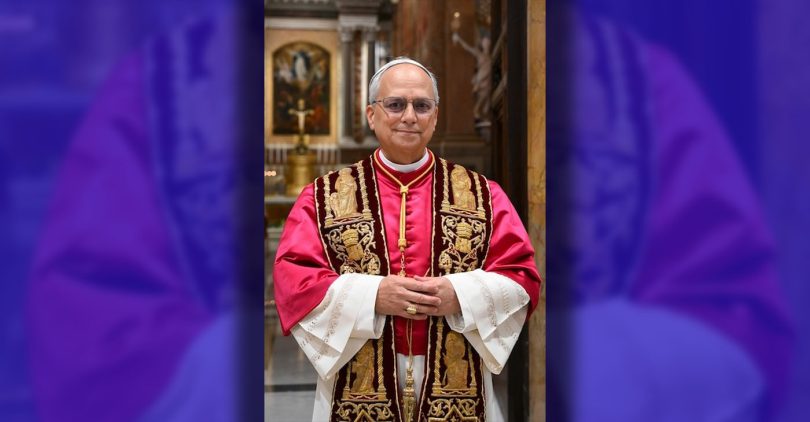
Black America Celebrates African Descent Heritage of Pope Leo XIV

May 9, 2025 By MKE Community Journal Leave a Comment

Pope Leo XIV (Wikimedia Commons / Photo by Vatican Media)

By Stacy M. Brown
Black Press USA Senior National Correspondent

Black America is taking pride in a truth shaking up the Vatican and resonating through the streets of New Orleans: Pope Leo XIV—formerly Cardinal Robert Prevost of Chicago—has Black and Creole roots. The Pope’s factual anthropological roots are not just symbolic. According to genealogist Jari Honora, his maternal lineage traces directly to the Black community of New Orleans’ 7th Ward, with family ties to Haiti, and census records identifying his ancestors as “Black” or “Mulatto.” “By the Europeans’ own ‘1/8th’ rules, we have a Black Pope,” noted author Elie Mystal declared. “Anyway, Pope’s grandfather is Haitian. We kind of got a Black Pope. ‘End Woke’ is not gonna be happy about this.” Further, New Orleans historian Jari Christopher Honora also speaking to the National Catholic Reporter and Black Catholic Messenger, detailed how the pope’s grandparents married in 1887 at Our Lady of the Sacred Heart Church on Annette Street in New Orleans before migrating north. His mother, Mildred Martínez, was the first child in the family born in Chicago. “The Holy Father’s ancestors are identified as either Black or Mulatto,” Honora said.

The Chicago Tribune and New York Times also reported on Pope Leo’s mixed-race background and Creole lineage, noting that his election marks a defining moment in the Church’s evolving identity. “As a Black man, a proud son of New Orleans, and the U.S. Congressman representing the very 7th Ward neighborhood where our new Pope’s family hails from, I am bursting with pride today,” said Rep. Troy Carter. “This is history! The first American Pope, with Creole and Haitian roots, rising from the streets of New Orleans to the Vatican. As a Xavier University alum, I know how deeply faith and resilience run in our community. We celebrate this moment—with joy, with prayers, and with pride.” Former New Orleans Mayor Marc Morial called Leo XIV’s background “universal,” saying, “Here’s an American whose ministry was in Peru, who has roots in the American South and also ancestry in the American Black community.” Leo XIV is a member of the Augustinian Order, named after the African theologian St. Augustine of Hippo. His election came from a conclave in which two other leading contenders—Cardinal Peter Turkson of Ghana and Cardinal Fridolin Ambongo Besungu of the Democratic Republic of Congo—were also men of African descent.

But Leo XIV stood apart—not just as the first pope from the U.S. but as one known for his outspokenness on racial justice, immigrant rights, gun reform, and the abolition of the death penalty. TIME Magazine reported that his selection represented a Vatican rebuke of efforts by wealthy Americans and political operatives aligned with Donald Trump to influence the papal outcome. Known in Rome as “The Latin Yankee,” Leo XIV used his verified X account (@drprevost) to amplify criticism of Trump-era immigration policies, often reposting commentary from respected Catholic figures. The New York Post reported that his last post before his election was a retweet of Catholic journalist Rocco Palmo slamming Trump’s alliance with El Salvador’s President Nayib Bukele over migrant deportations. Back in 2017, the Roman Catholic leader also reposted a message quoting Chicago Archbishop Blase Cupich, calling Trump’s refugee bans “a dark hour of US history.”

Though Trump offered lukewarm congratulations from the White House driveway, his far-right allies were quick to lash out. Laura Loomer tweeted, “WOKE MARXIST POPE,” calling Pope Leo “just another Marxist puppet in the Vatican.”But outside the MAGA echo chamber, in Black communities across the globe, the emotion is pride. “The pope is Black,” journalist Clarence Hill Jr. said bluntly. And that means something in the Black neighborhoods of Chicago and the Creole corridors of New Orleans. Many said it means representation, resilience, and the reshaping of history at the highest level of the Catholic Church. “We celebrate this moment—not because it erases the struggles of our past, but because it affirms that our faith, our heritage, and our presence matter,” Rep. Carter said. “This is history, and it belongs to all of us.” The. Reverend Dr. Benjamin F. Chavis, Jr. affirmed, “On behalf of the Black Press of America as the authentic voice of 50 million African Americans and millions more throughout the African diaspora, we join to celebrate Pope Leo XVI, a world leader of African descent who speaks truth to power with courage and grace.”

Filed Under: Latest News, Religion, World News Tagged With: @drprevost, 7th Ward, African Americans, African descent, African diaspora, American South, Annette Street, Augustinian Order, Black America, Black Catholic Messenger, black community, Black Pope, Black Press of America, Black roots, Cardinal Fridolin Ambongo Besungu, Cardinal Peter Turkson, Cardinal Robert Prevost, Catholic Church, Catholic journalist Rocco Palmo, chicago, Chicago Archbishop Blase Cupich, Chicago Tribune, Church identity, Clarence Hill Jr., conclave, courage, Creole lineage, Creole roots, death penalty abolition, Democratic Republic of Congo, Donald Trump, Elie Mystal, faith, Featured, genealogist Jari Honora, grace, gun reform, Haiti, immigrant rights, Laura Loomer, MAGA, Marc Morial, Mildred Martínez, mixed-race background, Mulatto, National Catholic Reporter, New Orleans, New York Times, Our Lady of the Sacred Heart Church, Pope Leo XIV, Pope Leo XVI, Racial Justice, refugee bans, Rep. Troy Carter, representation, resilience, Reverend Dr. Benjamin F. Chavis Jr., St. Augustine of Hippo, The Latin Yankee, Time Magazine, truth to power, Vatican, Vatican rebuke, woke Marxist pope, world leader, X account, Xavier University

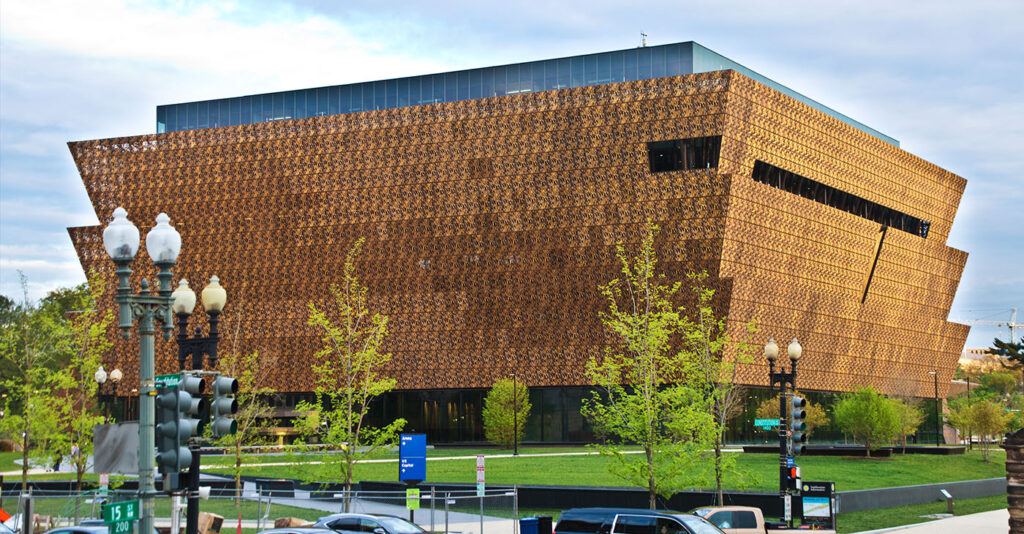
Black History Under Fire: Trump’s Executive Order Puts Smithsonian’s Future at Risk

April 1, 2025 By MKE Community Journal Leave a Comment

National Museum of African American History and Culture Building in Washington DC, USA. A popular visitors and tourists destination in the capital city.

Black History Under Fire: Trump’s Executive Order Puts Smithsonian’s Future at Risk

By Stacy M. Brown
BlackPressUSA.com Senior National Correspondent

The memo from Lonnie G. Bunch III, the first African American to lead the Smithsonian Institution, was as much a message of reassurance as a call to vigilance. Following President Donald Trump’s sweeping executive order targeting what he labeled “anti-American ideology” in cultural institutions, Bunch acknowledged the growing uncertainty and laid out a path forward. “We remain steadfast in our mission to bring history, science, education, research, and the arts to all Americans,” he wrote to staff. “We will continue to showcase world-class exhibits, collections, and objects, rooted in expertise and accuracy.”

Trump’s order casts a long shadow over the Smithsonian, which, while not a federal agency, is a trust instrumentality of the U.S. government and operates under the guidance of a Board of Regents, including the Chief Justice, Vice President, and members of Congress. The order directs Vice President J.D. Vance, an ex-officio regent, to work with the board on content oversight—an unprecedented move that has left many within the institution and across the Black community alarmed. The National Museum of African American History and Culture (NMAAHC), opened in 2016 under Bunch’s leadership, was directly criticized in the executive order. Its mission to unearth and share America’s untold Black history once praised as groundbreaking, is now being reframed by Trump as an example of what he sees as divisive, anti-patriotic content.

Bunch’s memo doubled down on the Smithsonian’s long-standing commitment to truth, transparency, and historical scholarship. “As an Institution, our commitment to scholarship and research is unwavering and will always serve as the guiding light for our content,” he stated. “For more than 175 years, the Smithsonian has been an educational institution devoted to continuous learning with the public in mind and driven by our most important mission – the increase and diffusion of knowledge,” Bunch added. “We remain committed to telling the multi-faceted stories of this country’s extraordinary heritage.” That commitment is under direct threat, Black scholars argue.

Writing for The Medium, education expert Dr. Jerry W. Washington called the order part of “the fight over American memory,” a political war that has increasingly targeted race-based historical narratives. “Over months of discussing cultural memory wars, the removal of DEI content, and the nuances of racial dialogue, I’ve seen this gap widen,” Washington wrote. “It highlights a fundamental divergence not just in policy preference, but in how we interpret history, power, and truth itself.” Washington and others see the executive order as an extension of Trump’s 2020 directive banning diversity training in federal agencies—an action that set the stage for a conservative backlash against critical race theory (CRT) and racial equity initiatives. “CRT became a catch-all term—a manufactured villain used to silence any acknowledgment of systemic racism, white privilege, or the real struggles of marginalized communities,” Washington noted. “It was never about theory. It was about control.”

That control has since expanded. Dozens of states have enacted vague educational gag orders aimed at stifling classroom conversations about race and history. DEI programs have been dismantled across colleges and public institutions. Now, with the Smithsonian—the keeper of the nation’s collective memory—under the microscope, Black historians and curators fear a broader erasure. “The campaign effectively poisoned the well,” Washington wrote. “Making any substantive discussion of systemic racism politically toxic.” For many Black Americans, the concern is deeper than academics. It’s personal. The Smithsonian’s inclusive storytelling—exemplified by the NMAAHC—has provided generations with a long-denied mirror to see themselves in the American narrative. To have that narrative constrained or rewritten at the behest of political power is to have identity and truth under siege.

“As we have done throughout our history,” Bunch wrote, “the Smithsonian will work with the Board of Regents, including the Chief Justice, Vice President, and our congressional and citizen Regents.” But he made clear that the Institution’s compass remains unchanged: “The board understands and appreciates the Institution’s mission, as well as the importance of scholarship, expertise, and service to the American public.” Still, the fight over who gets to define America’s story is far from over. “The consequences are real,” Washington warned. “This is about more than exhibits. It’s about erasing the truths that make America whole.”

Filed Under: Latest News, National News, Political Tagged With: African American, American History, American narrative, anti-American ideology, arts, black community, Board of Regents, censorship, Chief Justice, congressional oversight, content oversight, Critical Race Theory, CRT, cultural institutions, cultural memory wars, DEI, diversity, Donald Trump, Education, educational gag orders, equity, erasure of history, Executive Order, expertise, Featured, historical memory, historical scholarship, identity, Inclusion, Lonnie G. Bunch III, marginalized communities, museum, National Museum of African American History and Culture, NMAAHC, political power, race-based history, racial equity, racial narratives, research, scholarship, service to the public, Smithsonian Institution, storytelling, systemic racism, transparency, truth, Vice President J.D. Vance, White Privilege

A Decade After Water Crisis, Art Brings Hope and Healing to Flint

May 9, 2024 By MKE Community Journal Leave a Comment

The Flint Public Art Project’s mission is to organize public events, workshops, permanent and temporary installations to inspire residents to reimagine the city, reclaim vacant and underutilized buildings and lots, and use innovative tools to steer Flint’s long range planning. (Photo: Explore Flint & Genesee – Flint Public Art Project)

A Decade After Water Crisis, Art Brings Hope and Healing to Flint

As the community rebuilds, Black artists like Keyon Lovett are helping by promoting unity and hope.

By Nadira Jamerson, Word in Black

“Flint’s Still Fighting” is Word In Black’s series about the decade-long water crisis, and the resulting struggles and triumphs still transforming the majority-Black city.

When the water crisis hit Flint, Michigan, in 2014, residents were left with more than just contaminated pipes and brown, unsafe water flowing from their taps. The majority-Black city was also grappling with a profound lack of resources and opportunities. And as is so often the case in challenging times for the Black community, art became an outlet for expression, healing, and demanding accountability.

Ten years after the officials made the disastrous decision to switch Flint’s water supply from Detroit’s system to the Flint River to save money, Black artists are using their work to call for justice and document the city’s triumphs.

“Of course, there’s that feeling of dread because we still have a lot of dilapidated buildings and gray skies sometimes,” says Flint native Keyon Lovett, 34, a multi-disciplinary visual street artist, creatively known as The Art School Dropout. “But the hopeful thing is knowing on Friday that we have the Art Walk downtown. You can go to the Farmer’s Market and get some good food and see a show.”

Lovett didn’t plan to become an activist, but the water crisis changed the trajectory of his life. Around the time the crisis began, he left an arts program with Grand Valley State University in Allendale, Michigan, which is located two hours west of Flint near Grand Rapids. Lovett says he was unable to return home to Flint because the emergence of the water crisis meant there were few opportunities for artists in the city.

“I didn’t want to come home because the only work that would have possibly been available was working at UPS or General Motors, and my family already did that. I wasn’t trying to be the next lineage of Lovetts to be in the factory,” Lovett says.

Lovett stayed connected to what was happening in Flint through frequent trips home to visit friends and family — and what he saw began to show up in his art. In 2018, Lovett debuted “Home Sweet Home” at ArtPrize, an open, independently organized international art competition in Grand Rapids, Michigan. The live installation and accompanying documentary highlighted the realities for Flint residents during the water crisis.

“The installation I did was of me living in a house that was condemned, but I’m living off of six stacks of bottled water,” Lovett explains. “As the viewers of ArtPrize come in, they see me cooking, washing, brushing my teeth, and people would offer water because they’d see the stacks getting low. I’d say, ‘No. If I run out, I run out, because that’s how it is at home.’ That’s how it was. At the water centers, there would be days they had donations, and there would be days they don’t. People were stealing donations. People were breaking water machines.”

In the face of confusing news coverage and shame-dodging politicians who silenced many Flint residents, Lovett created the “Home Sweet Home” documentary that let Flint’s people speak the truth about the lack of access to safe and clean water.

“We filmed a short 10-minute documentary, and what I did was interview my family and friends and have them explain and share their stories on how the water crisis impacted the city, themselves, work, and everyday life,” Lovett says.

10 Years Later

A decade after the water crisis began, health implications from ingesting the unsafe water as well as financial burdens continue to plague residents. Lovett, who moved back to Flint in 2021, says that while there is much rebuilding left to do, the community is also beaming with progress and hope — and that is, in part, due to Black artists in the city.

“One of the reasons I moved back home is because of the renaissance of Black music, poetry, and art happening in Flint. A lot of Flint rappers, and singers, and artists are just being great. I wanted to come back home and be a part of that,” Lovett says.

In addition to his own work, Lovett says many other Flint organizations — from the Beats x Beers music tour, to Comma Bookstore & Social Club, and the creative co-op space Art At The Market — are using art to promote continued growth and healing.

Lovett and other artists in Flint follow in the footsteps of self-taught painter Clementine Hunter, who depicted plantation life through the 1800s, and renowned photographer Gordon Parks, who captured generations of movements for civil rights starting through the twentieth century. And as Octavia Butler said, “I began writing about power because I had so little.”

“It’s always important to have art that means something. Art that sheds a light and requires accountability,” Lovett says. “Even with the blight in the city, finding ways to put up murals, finding ways to have an initiative of Flint pride within the artwork, to even showcase a Flint artist, is important.”

The Future of Flint

Lovett says the water crisis briefly equalized Flint, forcing both the affluent and working-class residents to grapple with the same lack of accessible clean water. Now, he hopes the unity birthed from that shared struggle can leave Flint’s divisions behind for good as the city’s vibrant arts scene leads it into a culture of collective effort — and a brighter future.

“Just be one and leave all of the classism behind,” he says. “Just be Flint.”

Filed Under: Arts & Entertainment, Health, Latest News Tagged With: “Flint’s Still Fighting”, “Home Sweet Home”, “Just be Flint”, accompanying documentary, affluent, Allendale Michigan, art, Art that sheds a light, Art Walk downtown, ArtPrize, arts program, beaming with progress and hope, Beats x Beers music tour, Black Artists, Black artists in the city, black community, Black Music, blight in the city, breaking water machines, brighter future, brushing my teeth, call for justice, challenging times, city’s vibrant arts scene, civil rights, Comma Bookstore & Social Club, condemned, confusing news coverage, contaminated pipes, cooking, creative co-op space Art At The Market, culture of collective effort, decade-long water crisis, demanding accountability, Detroit’s system, dilapidated buildings, document the city’s triumphs, donations, emergence of the water crisis, Farmer's Market, feeling of dread, few opportunities for artists, financial burdens, Flint Michigan, Flint native Keyon Lovett, Flint organizations, Flint rappers, Flint River, Flint’s divisions, frequent trips home, General Motors, generations of movements, good food, Grand Rapids, Grand Valley State University, gray skies, healing, health implications, in the factory, independently organized international art competition, ingesting the unsafe water, live installation, living in a house, majority-Black city, multi-disciplinary visual street artist, murals Flint pride, Nadira Jamerson, next lineage of Lovetts, Octavia Butler, officials, opportunities, outlet for expression, plantation life, poetry, profound lack of resources, renowned photographer Gordon Parks, resulting struggles, Save Money, see a show, self-taught painter Clementine Hunter, shame-dodging politicians, short 10-minute documentary, singers, six stacks of bottled water, stealing donations, switch Flint’s water supply, The Art School Dropout, triumphs, twentieth century, unsafe water, UPS, washing, water centers, water crisis, Word in Black, Word In Black’s series, working-class residents

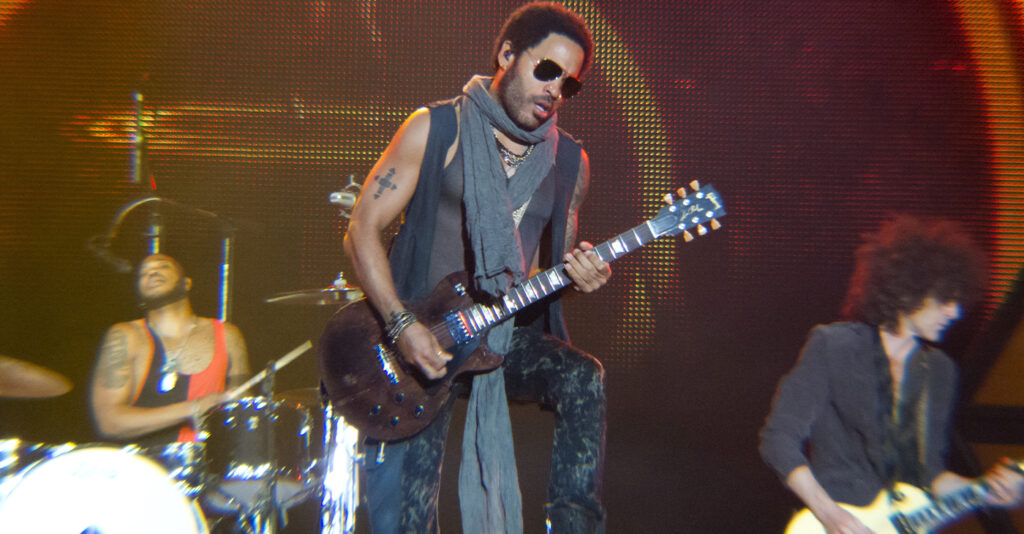
Lenny Kravitz Sets the Record Straight on Black Awards Controversy

December 28, 2023 By MKE Community Journal Leave a Comment

Lenny Kravitz

By Stacy M. Brown
NNPA Newswire Senior National Correspondent
@StacyBrownMedia

Iconic rock star Lenny Kravitz has clarified his comments regarding his absence from Black Awards programs, emphasizing that his concerns were not directed at Black-owned media companies. In response to his comments to Esquire, the National Newspaper Publishers Association’s Let It Be Known digital news broadcast had taken Kravitz to task, questioning whether Kravitz or his publicists and handlers were ignoring Black media. The National Newspaper Publishers Association is the trade association of over 230 African-American-owned newspapers and media companies comprising the 197-year-old Black Press of America. The show also tweeted at Kravitz on X, inviting him to explain why he chose to take his beef to mainstream media if he had been concerned about the Black Press.

In a statement, Kravitz expressed the importance of setting the record straight. “It is important to me to set the record straight on recent media reports based on an interview I did,” Kravitz asserted. “My Black musical heritage means a lot to me, and I owe my success to my supporters who have taken this journey with me over the span of my career.” He went on to clarify the specific nature of his comments, stating, “The comment I made was not about ‘Black media’ or the ‘Black community.’ I was specifically referring to black award shows in particular.” Kravitz, whose biggest hits include “American Woman,” and “It Ain’t Over Til It’s Over,” insisted that his comments were meant to express concern about ensuring that Black artists are recognized for their work in what is now being called ‘non-traditional’ Black music. “Rock and Roll is the music we were instrumental in creating and is a part of our history,” he stated. “We must retain our heritage and celebrate that together.”

In his comments to Esquire that initially raised comments, Kravitz, a four-time Grammy winner, questioned why Black entertainment publications didn’t celebrate his success and expressed disappointment at never receiving invitations to events like the BET or Source Awards. “Here is a Black artist who has reintroduced many Black art forms, who has broken down barriers—just like those that came before me broke down. That is positive. And they don’t have anything to say about it?” he stated in the interview. Kravitz later acknowledged the contributions of networks like BET and others. “BET and countless others have paved the way for this type of recognition,” Kravitz asserted. “I hope that by sharing my concern, a spotlight will be shone on this issue. Love and peace.”

Filed Under: Arts & Entertainment Tagged With: 230 African American-owned newspapers, American Woman, Black art forms, Black Artists, black award, Black Awards programs, black community, Black Entertainment, Black media, Black musical, Black-owned media companies, career, celebrate, digital news broadcast, Esquire, events, Featured, four-time Grammy winner, handlers, heritage, history, Iconic rock star, instrumental, interview, invitations, Lenny Kravitz, Let It Be Known, Love and peace, mainstream, media companies, media reports, nature, non-traditional, publications, publicists, Rock and Roll, Source Awards, statement, supporters, the 197-year-old Black Press of America, the BET, The Black Press, the music, the National Newspaper Publishers Association, trade association, x

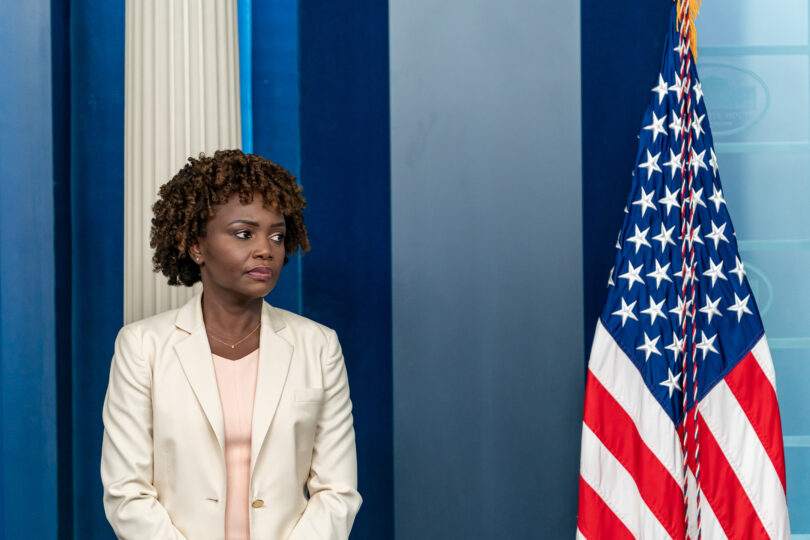
White House Press Secretary Karine Jean-Pierre Highlights President’s Commitment to Black Community in Exclusive Interview

December 15, 2023 By MKE Community Journal Leave a Comment

Press Secretary Karine Jean-Pierre looks on as actor Matthew McConaughey, a native of Uvalde, Texas, makes an emotional appeal for greater gun control measures after the mass shooting at Robb Elementary School in Uvalde during the daily press briefing Tuesday, June 7, 2022, in the James S. Brady Press Briefing Room at the White House. (Official White House Photo by Carlos Fyfe)

By Stacy M. Brown
NNPA Newswire Senior National Correspondent
@StacyBrownMedia

In an exclusive telephone interview, White House Press Secretary Karine Jean-Pierre underscored President Biden’s unwavering commitment to addressing the Black community’s critical issues. Reflecting on promises made during the 2020 campaign, Jean-Pierre outlined key achievements and ongoing initiatives directly impacting African Americans and other historically underserved communities.
“At the onset of President Biden’s term, the country faced economic turmoil and the devastating effects of the COVID-19 pandemic. The President, true to his campaign commitment, prioritized equity, ensuring the Black community received fair access to COVID-19 vaccines,” remarked Jean-Pierre.
“He made sure that small businesses got back on their feet, our schools reopened, and the child tax credit put money into people’s pockets. All those things were important to our community.”
The more than 10-minute discussion also delved into the significance of the American Rescue Plan, which was pivotal in supporting various facets of the Black community. The first Black woman to serve as White House Press Secretary, Jean-Pierre, highlighted the impact of the Biden-Harris administration’s policies on economic recovery, small business revival, and other measures that directly provided essential financial relief to individuals.
“Economic indicators demonstrate significant progress since President Biden took office. Black unemployment, which stood at 9.2 percent, has notably declined to 5.9 percent as of October,” said Jean-Pierre, emphasizing the administration’s commitment to economic revitalization.
Jean-Pierre also noted the importance of net worth, noting a remarkable 60 percent increase for African Americans. She highlighted the historic investment of $7 billion in historically Black colleges and universities (HBCUs) and the doubling of Black business ownership since the onset of the pandemic.
“The President has consistently prioritized equity across various policy areas, including healthcare, education, and police reform,” said Jean-Pierre, also the first openly gay person to helm the White House briefing room. “Executive orders were issued to ban chokeholds and implement strong use-of-force policies when congressional action stalled,” Jean-Pierre stated.
She noted that Biden and Vice President Kamala Harris have regularly worked to uplift Black and Brown communities, including their fight for voting rights, police reform, and cutting prices at the cash register.
“Lowering prices is what the president works on every day,” the press secretary asserted. “The prices of eggs, milk, and [other items] are lower than last year. Used cars and truck prices are down, and we will do everything we can to continue to lower prices. The work continues.” The conversation extended to Biden’s recognition of the Black Press’s significance, with Jean-Pierre assuring ongoing access to the president for regular engagement and discussions.
“The President understands the credibility and importance of the Black Press in conveying messages directly to the community. We are committed to ensuring continuous access and engagement,” affirmed Jean-Pierre. “We’re going to ensure [The Black Press] has access to the president. That’s what he wants—he wants to speak directly to you. This president understands the importance of speaking to the Black Press, and he wants to have regular engagement with all of you, and we’re going to make sure that happens.”

Filed Under: Latest News, National News, Political Tagged With: African Americans, American Rescue Plan, black community, cash register, child tax credit, economic recovery, Education, executive orders, financial relief, first black woman, HBCUs, Healthcare, Karine Jean-Pierre, lower prices, openly gay, pandemic, Police Reform, President Biden, Press Secretary, small business revival, telephone interview, The Black Press, truck prices, underserved communities, used cars, Vice President Kamala Harris, White House

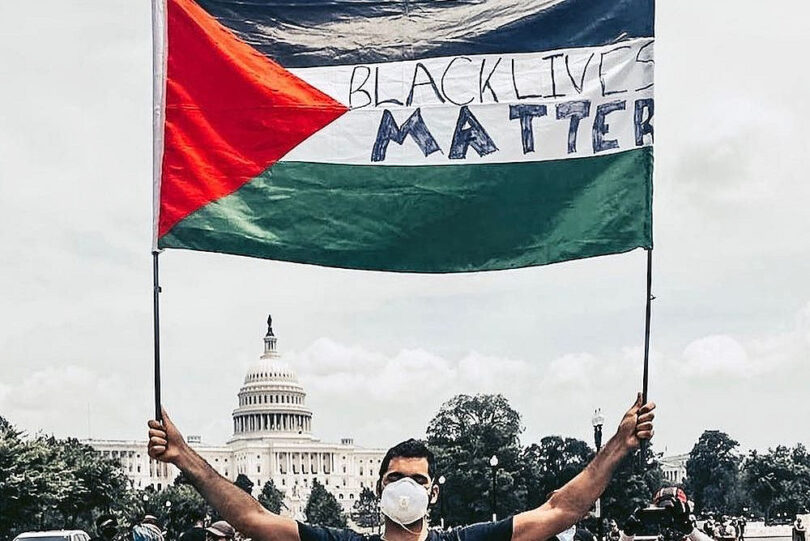
The Interconnected Struggles: Black American and Palestinian Solidarity

November 8, 2023 By MKE Community Journal Leave a Comment

Historians said the connection between the Black American and Palestinian struggles has been evident for many years.

By Stacy M. Brown
NNPA Newswire Senior National Correspondent
@StacyBrownMedia

Writer, speaker, and author Leron L. Barton recently encapsulated the essence of solidarity between Black Americans and Palestinians, comments that offer one potential reason America continues to see pro-Palestine demonstrations at the White House and in locations throughout the nation. Importantly, Barton’s op-ed in Newsweek is a reminder of why President Joe Biden will continue to struggle to obtain the type of support from the Black community that helped propel him into office in 2020.
“Black American and Palestinian solidarity is not only rooted in struggle but hope, fighting, resilience, laughter, endless battling, sadness, and doing it all over again the next day,” Barton observed. “This is what I see for my Palestinian brothers and sisters trying to hold on to a land that does everything it can to make them let go.”
Barton’s words resonate with many, capturing the indomitable spirit that defines both communities’ quests for justice and self-determination. His sentiment extends to his sorrow for the lives lost on all sides of the conflict. He stressed the importance of seeing the situation not just as “The Conflict,” but as “The Occupation,” recognizing the power dynamics involved.
The author underscored his belief that the struggles faced by Black Americans and Palestinians are intertwined. “This is why I cry for the deaths of Palestinian and Israeli people,” he declared. “This is why I do not refer to it as ‘The Conflict,’ but as ‘The Occupation.’ This why I have hope for and will continue to support Palestine as they fight to be recognized as people, human beings that deserve freedom and equal treatment as their Israeli neighbors, just as I, a Black man, will continue to fight for the freedom of my people in America. Our struggle is intertwined. When they win, we win.”
The 2018 book “Black Power and Palestine: Transnational Countries of Color” by Michael Fishbach echoes the sentiments put forth by Barton. Fishbach delves into how conflicts in the Middle East significantly influenced the American Civil Rights Movement. He asserts, “Much about how American peoples of color create political strategies, a sense of self, and a place within U.S. and global communities.”
According to Fishbach, the events of the 1960s and 1970s continue to have a profound, structural impact on the United States. This historical perspective underscores the enduring influence of these interconnected struggles.
Recent controversies have illuminated the complexities of solidarity movements. Black Lives Matter Chicago received criticism for posting a graphic that appeared to celebrate Hamas’ violent attack on civilians at a concert. The graphic has since been deleted. The image featured a paraglider with the Palestinian flag and the words “I stand with Palestine.” The incident prompted a nuanced conversation about the expression of support for a cause. The group later clarified, stating, “We stand with Palestine and the people who will do what they must to live free.”
Historians said the connection between the Black American and Palestinian struggles has been evident for many years. The proximity of protests over the Gaza war and the shooting of Michael Brown in Ferguson, Missouri, led to a cross-cultural exchange of advice on dealing with tear gas that included Bassem Masri, a prominent activist in Ferguson and a Palestinian American. In 2015, Black activists and Palestinian advocates displayed their support for each other by visiting occupied territories and making public statements of solidarity.
In 2020, George Floyd’s murder by the police led to protests across the U.S., with comparisons made to the situation faced by Palestinians. Sam Klug, an expert in African American History, highlighted the resonance of the phrase “I can’t breathe” in both contexts. “People were painting George Floyd murals in Palestine,” Klug explained. “Palestinians were being attacked by Israeli security services, and saying, ‘I can’t breathe.’ Over time, African Americans have looked at Palestine, and Palestinians have also looked at what is going on in the United States.”
Against this backdrop, Democrats have grown increasingly attuned to the challenges facing Biden’s reelection campaign. Concerns, and even alarms, have sounded regarding Biden’s support among Black voters, a pivotal demographic in his 2020 victory. Cliff Albright, co-founder of the Black Voters Matter Fund, said that supporting Biden for practical reasons might not mean being equally enthusiastic. Disillusionment over policies and stances, including Biden’s stance on Israel, may influence voter engagement in the upcoming 2024 election, Albright told the Washington Post.
“People fundamentally misunderstood what Black voters said in 2020,” Albright said. “The depth of support was never there. The enthusiasm was never there for Biden. We were very pragmatic. We knew he was the best chance to beat Trump.”

Filed Under: World News Tagged With: america, Black Americans, black community, Black Power and Palestine, Blm, chicago, dynamics, Freedom, Leron Barton, Michael Fishbach, Palestinians, President Joe Biden, solidarity, The Conflict, The Occupation, Transnational Countries of Color

  • Page 1
  • Page 2
  • Go to Next Page »

Primary Sidebar

MCJ WEEKLY

PREVIOUS EDITIONS

Go HERE for the Digital Archives

DR. TNT SCHOLARSHIP SPECIAL EDITION

CLICK THE IMAGE THE FULL EDITION

Newsletter Signup

The Milwaukee Community Journal (MCJ) and the Weekend Edition are distributed at a number of community churches; as is the current issue of Healthy Start. With many area churches closed for the next few weeks due to the coronavirus, your MCJ suggests you pick up your edition of the newspaper, Weekend Edition and Healthy Start at our offices, located at 3612 N. Martin Luther King Drive. We’re open from 10 a.m. to 4:30 p.m., Monday through Friday. You can still pick up the MCJ at several Walgreens and Pick n’ Save stores throughout the community, as well as city hall and the county courthouse.

Recent Posts

  • Oakland Protesters Rally to Defend Haitian Immigrants and TPS
  • OPINION: 57,000 Empty Apartments and Not a Word of Apology – City Limits
  • ‘Choppin’ it up’ with a brotha about Crowley’s win, and why Black folks aren’t down with the Democratic Socialists!
  • Identifying Opportunities to Strengthen Wisconsin’s Emergency Response
  • Present Music Highlights Women Composers in Woman’s Club of Wisconsin’s 150th Celebration

CLASSIFIEDS

CLASSIFIEDS

Place your notice of divorce, name change, etc. in the Milwaukee Community Journal's Classifieds! Contact is at 414-265-5300

Follow Us

  • Facebook
  • Instagram
  • Twitter
  • YouTube

Tags

2016 election African Americans Alderman Khalif J. Rainey ALDERWOMAN CHANTIA LEWIS Alderwoman Milele A. Coggs annual Baylor College of Medicine Biden Black History Month Black press Boko Haram civil rights community coronavirus COVID-19 Dating Advice day Democrats diversity Donald Trump Education event Featured free George Floyd HuffPost Live Joe Biden Love & Sex Love and Relationships Mayor Tom Barrett mental health Milwaukee Repertory Theater naacp national NNPA pandemic racism report Republicans Reuters social media Trump Trump Administration What Is Working: Small Businesses White House

Categories

H5_WEDC1027_AA_300x250

Copyright © 2026 Milwaukee Community Journal