• Skip to primary navigation
  • Skip to main content
  • Skip to primary sidebar
  • About
  • Contact
  • Advertise

Milwaukee Community Journal

  • News
    • Local News
    • National
    • World
    • Political
  • Men Building Men
  • Lifestyle
    • Arts & Entertainment
    • Fashion
    • Culture
    • Religion
  • Economy
    • Small Business
    • Money
    • Entrepreneurship
  • Health
    • Family
    • Relationships
  • Education
  • Jobs
    • Housing
  • Scholarship Fund
You are here: Home / Archives for higher education

higher education

MacKenzie Scott: A Philanthropy of the Spirit in an Age of Abandonment

October 29, 2025 By MKE Community Journal Leave a Comment

The 1st AACTA Awards were presented at the Sydney Opera House on 31 January 2012. The ceremony was preceded by a luncheon at the Westin Hotel in Sydney on 15 January 2012. (Wikimedia Commons / Photo by Eva Rinaldi)

By Stacy M. Brown
Black Press USA Senior National Correspondent

There are moments in history when a single act of generosity reveals the moral decay of an entire nation. MacKenzie Scott’s $38 million gift to Alabama State University, the largest in its 158-year history, is such a moment. It is not merely a financial transaction, nor the casual benevolence of the wealthy. It is a moral indictment against a society that has grown indifferent to the suffering of its Black citizens, against a government that starves their schools, and against a class of newly rich who have forgotten the communal obligations of success.

Dr. Quinton T. Ross Jr., the university’s president, called it a defining moment for Alabama State, and indeed it is. His words ring with the gratitude of those who have built excellence in the face of deprivation. “Ms. Scott’s generosity affirms Alabama State University’s reputation as a catalyst for excellence and innovation in higher education,” he said. But her act is more than affirmation. It is a resurrection, and a call to remember that Black institutions remain the crucibles of America’s moral and intellectual power. In recent weeks, Scott has dispersed her fortune with quiet conviction. Seventy million to the United Negro College Fund to strengthen endowments across thirty-seven member schools; sixty-three million to Morgan State University, her second gift to that campus in less than five years; and one hundred and one million combined to Morgan State and the University of Maryland Eastern Shore in a span of days.

Her giving, unshackled by stipulations or vanity, stands in luminous contrast to an era defined by greed and indifference. The plutocracy that dominates modern life often extracts from the many to enrich the few. Scott reverses that equation. She does not donate to dominate. She gives to repair. Her wealth, born of corporate conquest, has become the instrument of restoration. It stands as a redemption, perhaps, of what that very system has broken. One cannot ignore the symbolism of her actions. At a time when the federal government withholds support from historically Black institutions, when affirmative action has been dismantled, and when diversity programs are vilified, a white woman from the highest ranks of privilege has become the single most consistent benefactor of Black education in the nation. It is as though she has seen, from her rarefied vantage point, what America refuses to see: that the progress of its Black citizens is not a charity, but the measure of its own civilization.

Yet even as she gives, others remain silent. The silence of Black wealth resounds across the land. It is a silence that mocks the very principles of uplift once preached from our pulpits and classrooms. Attorney Benjamin Crump’s call to the wealthy—“If you’ve been blessed, you got to pass the blessing on”—echoes unanswered. The great sons and daughters of our race who have ascended to fortune, those who built empires on the faith of our people, turn their eyes away from the institutions that birthed them. They forget the hands that lifted them from obscurity. They forget that their wealth is not solely their own, but part of the moral economy of a people who have suffered together and triumphed together. The Black Press, like the HBCUs, stands as an unbroken monument to endurance. It has spoken truth through lynchings, wars, and betrayals. Yet it now faces extinction not from white suppression alone, but from the neglect of its own. “If the Black Press falls,” Crump warned, “so does the record of our struggle, our triumph, and our faith.”

Scott’s philanthropy, then, is not simply about money. It is about memory. The moral memory of a nation that has forgotten the debt it owes to those it once enslaved and now ignores. In her giving, she restores something elemental, the belief that one’s prosperity is meaningless if it does not lift others. W.E.B. Du Bois wrote of the “double consciousness” that afflicts the Negro in America, the struggle to see oneself through the eyes of a world that despises you. Today, the irony is reversed. America must learn to see itself through the eyes of those it has wronged. MacKenzie Scott, for all her privilege, seems to have glimpsed that truth. She gives the impression that she has looked into the soul of the republic and found it wanting.

Her actions do not absolve the sins of this nation. They reveal them. And in revealing them, they offer a path, not of atonement, but of accountability. For every dollar she gives to rebuild a school, there are a thousand more that others with power might give but will not. One woman has chosen conscience over complacency. The question that remains is whether the rest of America—Black and white alike—will choose to follow her example or remain comfortable in the quiet decay of its own moral poverty.

Filed Under: Economy, Education Tagged With: Affirmative Action, African American community, Alabama State University, American History, Benjamin Crump, Black education, Black excellence, Black institutions, Black press, Black wealth, community empowerment, corporate wealth, diversity, double consciousness, economic disparity, Economic Justice, education funding, Education Reform, ethical giving, Featured, federal government, generosity, HBCU, higher education, historically Black colleges, inequality in America, MacKenzie Scott, modern philanthropy, moral accountability, moral conscience, moral decay, moral indictment, moral responsibility, Morgan State University, Philanthropy, Quinton T. Ross Jr., racial equity, racial inequality, Racial Justice, Racial Progress, Social Justice, social progress, social responsibility, social uplift, systemic racism, United Negro College Fund, university endowment, University of Maryland Eastern Shore, W.E.B. Du Bois, wealth inequality, White Privilege

HBCUs Face New Wave of Bomb Threats as Morgan State and Towson Universities Targeted

October 1, 2025 By MKE Community Journal Leave a Comment

Terrorism and bomb threat concept with dynamite or TNT stick, alarm clock, black wires and a red duffle bag with dark dramatic lighting

By Stacy M. Brown
Black Press USA Senior National Correspondent

Another wave of bomb threats has shaken historically Black colleges and universities, with Morgan State University and Towson University in Maryland the latest to be forced into emergency measures on Tuesday.

Towson University evacuated its student union after receiving a threat before 11:30 a.m., while Morgan State cleared its Earl S. Richardson Library as police searched the building floor by floor. The University Union at Towson reopened just before 1 p.m. after investigators determined there was no danger. The threats come as part of a disturbing pattern. In September, Bethune-Cookman University, Southern University, Clark Atlanta University, Alabama State University, Hampton University, Virginia State University, and Spelman College were all targeted. At Spelman, students were ordered to shelter in place, and Morehouse College also issued a similar directive.

Law enforcement officials confirmed the threats against multiple institutions were hoaxes but said they treat each call as credible until investigations are complete. The United Negro College Fund earlier condemned the repeated targeting of HBCUs, noting that more than 75 institutions have faced such threats since 2022, disrupting at least 77 days of classes across 18 states and the District of Columbia. “HBCUs are being targeted at a rate higher than any other category of higher education institutions,” Lodriguez V. Murray, senior vice president for public policy and government affairs at UNCF, stated. Murray urged Congress to dedicate security funding to protect campuses. “No student should ever fear for their life on a college campus,” he stressed.

Members of the Congressional Black Caucus have called on the Justice Department and the FBI to launch a full investigation. Rep. Yvette Clarke of New York, chair of the caucus, called the threats “vile” and “a chilling reminder” of the racism and extremism that continue to target Black communities. Though the all-clear has been given at Towson and Morgan State, the threats represent yet another chapter in a campaign of intimidation against historically Black colleges. “Protecting our children, who represent the future of this nation, is not optional. It is a moral obligation,” Murray argued.

Filed Under: Education, National News Tagged With: Alabama State University, Bethune-Cookman University, Black communities, bomb threats, campus protection, campus safety, Clark Atlanta University, Congress, Congressional Black Caucus, disruption, Earl S. Richardson Library, evacuation, extremism, FBI, Featured, Hampton University, HBCUs, higher education, Historically Black Colleges and Universities, hoax threats, intimidation, Justice Department, law enforcement, Lodriguez V. Murray, Maryland, moral obligation, Morehouse College, Morgan State University, racism, Rep. Yvette Clarke, security funding, Southern University, Spelman College, student safety, student union, Towson University, UNCF, United Negro College Fund, Virginia State University

After Plunge, Black Students Enroll in Harvard

September 18, 2025 By MKE Community Journal Leave a Comment

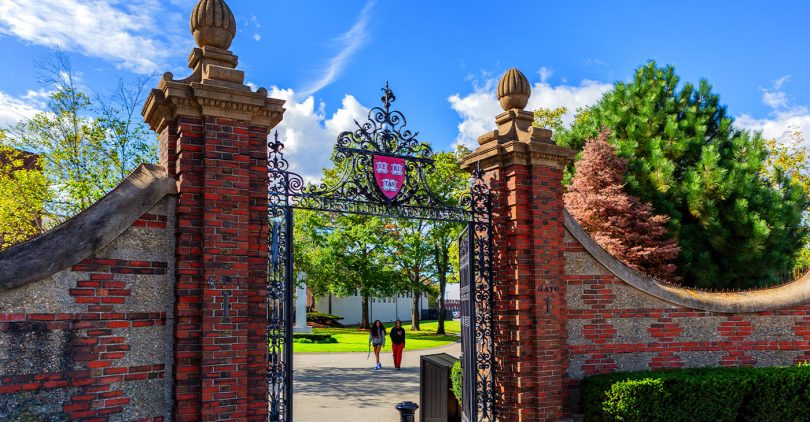
Boston, Massachusetts, USA – October 9, 2023: Gate 1, the Newell Gate pedestrian entrance to Harvard University’s Soldiers Field Athletic Area. Atop the gate is the Harvard crest, logo, with three books and the word VERITAS (Truth). Two student pedestrians.

By Stacy M. Brown

Black Press USA Senior National Correspondent

Black student enrollment at Harvard Law School has rebounded. The incoming J.D. Class of 2028 includes 46 Black students, nearly returning to the averages seen between 2020 and 2023. That recovery comes only one year after the number collapsed to 19, the lowest since the 1960s.

The collapse of 2024 was severe. Harvard law professor David B. Wilkins told The New York Times, “This is the lowest number of Black entering first-year students since 1965.” He added, “This obviously has a lot to do with the chilling effect created by that decision.” In a statement, Sean Wynn, president of the Harvard Black Law Students Association, said the enrollment decline was a “crushing loss” and that “with this marked decline, the (Supreme Court’s Affirmative Action) ruling has broken something fundamental about the experience of attending this law school.” The chilling effect extended across higher education. Harvard College’s freshman class saw the share of Black students drop from 18 percent in 2023 to 14 percent in 2024. At the University of North Carolina, Black enrollment fell from 10.5 percent to 7.8 percent. The Massachusetts Institute of Technology reported a drop from 16 percent to 6 percent. Princeton’s Class of 2029 enrolled only 5 percent Black students, the lowest since 1968.

The source of these declines was the Supreme Court’s decision in 2023 to end race-conscious admissions. In his majority opinion, Chief Justice John Roberts wrote, “Eliminating racial discrimination means eliminating all of it.” The ruling overturned decades of precedent, closing a door that had offered Black students a measure of access to the nation’s most selective institutions. Harvard’s rebound this fall was driven not by structural change but by extraordinary efforts within its community. Black alumni and the Harvard Black Law Students Association launched new outreach and recruitment programs, according to The Harvard Crimson. Still, the rebound came even as Harvard shuttered diversity offices and ended a minority recruitment initiative for undergraduates. The numbers at Harvard show a fragile recovery. They are part of a larger struggle that continues in classrooms and courthouses across the country, where the future of access and opportunity for Black students is contested each year.

Filed Under: Education Tagged With: 1960s, 1965, 1968, Access, Affirmative Action, Black student enrollment, Black Students, Chief Justice John Roberts, chilling effect, civil rights, David B. Wilkins, diversity offices, Education Policy, enrollment decline, enrollment rebound, Harvard Black Law Students Association, Harvard College, Harvard Crimson, Harvard Law School, higher education, J.D. Class of 2028, minority recruitment, MIT, opportunity, outreach, precedent, Princeton, race-conscious admissions, Racial Discrimination, recruitment programs, Sean Wynn, selective institutions, Supreme Court decision, University of North Carolina

Bill Cosby: The Fight, The Legacy, The Flowers He’s Earned

September 17, 2025 By MKE Community Journal Leave a Comment

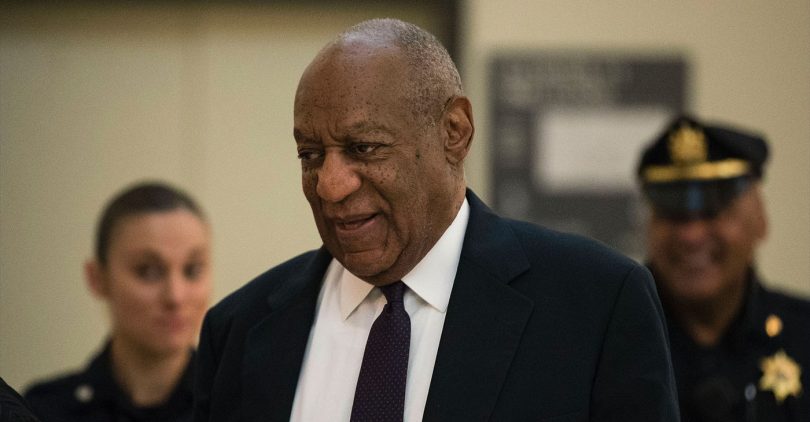
Bill Crosby

By Stacy M. Brown
Black Press USA Senior National Correspondent

Six years ago this month, Bill Cosby was sentenced to prison. For some, it was the spectacle of a fallen idol. For others, it was the raw proof that this nation, still drunk on its own lies, can summon racism from the judge’s bench, let it seep into the prosecutor’s chair, and finally stain the jury box. What was lost, what was deliberately hidden, is that Cosby—blind, wealthy, eighty years old—could have walked out untouched if he had only bent his back, signed a paper, confessed to a sin he swore he did not commit. He refused. He chose prison over surrender, isolation over capitulation. That act alone, in a country that has always demanded Black men bow their heads, ought to have been recognized as a radical declaration of dignity.

Refusing the Easy Way Out

Cosby remembered, on Let It Be Known, how they dangled freedom like meat before a starving man. “My lawyer came to me and said, the district attorney is offering you to sign a paper saying you did it… and that you wouldn’t have to do prison time,” he said. “I told my lawyer to continue with the trial… I wasn’t signing any papers or anything.” Even when caged, blind, and stripped of freedom, they offered him release if only he would renounce himself. “Sign the paper and go to these classes, and then we will let you go. Well, my signature would be in a sealed envelope, and nobody could open it.” Again, he refused. He could have chosen the coward’s path. He could have lived out his days in comfort. Instead, he chose to carry innocence as a burden, fully believing that he might never walk free again.

A Courtroom Steeped in Racism

Bill and Camille Cosby, at right, arrive at the Montgomery County Courthouse in Norristown, Pa., on June 12, 2017. Cosby is on trial for sexual assault. (POOL PHOTO)

And in those courtrooms, the poison was naked. Black jurors were denied with cynical ease. A Black woman police officer was struck from service, not because she was unfit, but because she had once beaten back a false charge laid against her. At the retrial, when one Black juror was finally seated, a prosecutor spat, “You got your one.” Another juror declared Cosby guilty before hearing a single word and was still allowed to sit in judgment. And the judge—who should have been the steward of justice—was said to have whistled the theme from Kill Bill outside the jury room before the verdict in the retrial was returned.

The first trial ended in a mistrial, the jury grinding nearly 60 hours before breaking. They had leaned toward acquittal, but the judge forced them back. After the second trial ended in conviction, and when prosecutors argued he might flee because “he has a plane,” Cosby exploded once jurors left the room: “He doesn’t have a plane, you a–hole! I’m sick of him!” Never forget that prosecutors across jurisdictions passed on every other accusation. Only one case was carried forward—and even that was not about rape. The alleged victim admitted to bitterness when Valentine’s Day passed without a call. She later dialed Cosby to ask for tickets to his show for her parents. But facts were never the point. The performance of guilt was the only script the court was willing to stage.

With the Media, The Lie had No Rival.

Camille Cosby walked through those halls like a prophetess, entering a place fouled with racial contempt. She smiled, spoke softly to her husband, and left. That smile, quiet yet defiant, seemed to say: I know exactly what is happening here. And the media, hungry and complicit, huddled with the prosecutor’s mouthpiece to make certain every headline sang the same hymn of untruth. With no cameras in the room, the lie had no rival. The mention of Quaaludes covered newspapers and flooded television news, but the case was about Benadryl, 1 and a half tablets. Fiction and made-up lies were the norm at Cosby’s trials. Mainstream media pushed the narrative that Cosby “slipped” drugs into an unsuspecting woman’s beverage. However, no evidence of such was presented at trial.

Not discussed was how prevalent Quaalude use was among both sexes. The pill they called a disco biscuit was never just a drug but a mirror of America’s hunger for escape, a hunger dressed in sequins and sweat beneath the lights of Studio 54. Hugh Hefner reportedly handed them out like candy in his mansion; a promise wrapped in velvet but steeped in surrender. Andy Warhol scribbled about them in his diaries; the artist turned witness to a culture stumbling between decadence and decay. Later, Jordan Belfort made them infamous in a Wall Street gone wild, his intoxication filmed and sold as entertainment. Notably, during the second trial, when the judge stunningly allowed as many as 20 women to testify, an accuser swore she had already ingested a Quaalude before she visited Cosby with a friend in the 1970s. Another witness testified that she left her boyfriend on an exotic island after Cosby called with a job offer in Nevada, only to be miffed about Cosby’s indifference.

Still another wrote glowing words about Cosby in her autobiography, yet completely changed the story on the witness stand. When Cosby’s team wanted to put forth a witness who allegedly was with the primary accuser when the woman had come up with a ruse to “set Cosby up,” the judge refused to allow her to tell the jury. Striking was the one person who seemed, by far, the most credible witness. A chef who worked for Cosby was present on the night of the alleged incident. That chef, a meticulous older man, testified that the visit by the accuser for which Cosby was on trial occurred on his last night in Cosby’s employ. Significantly, it proved that even if something nefarious took place, which Cosby vehemently denied, it happened well outside the statute of limitations. Among other things, the state Supreme Court agreed. The justices said the trial was illegal, should never have taken place, and the verdict was wrong. The justices ordered that prosecutors refrain from going after Cosby again.

Inside Prison Walls

Behind walls meant to break him, Cosby spoke to men the world had abandoned. At SCI–Phoenix, he joined Man Up, blind, in a wheelchair, addressing those whose bodies bore chains. After speaking of his heroes, one inmate told him, “I will be your hero, Mr. Cosby.” He spoke to Men of Valor, too. “I noticed that in the Bible, the parts about Jesus, Jesus never smiled. And I want you, if you are going to do what you say you are going to do in your turnaround, make Jesus smile.”

Pound Cake Then and Now

In 2004, Cosby thundered about a boy shot dead for stealing pound cake. “And then we all run out and are outraged, the cops shouldn’t have shot him. What the hell was he doing with the pound cake in his hand?” He called out the rot of absent parenting. Now, with years and prison behind him, he said again: “They are putting us under siege.” At Phoenix, sagging pants and untied laces were forbidden. To him, these were not fashion, but chains disguised as choice. “They would rather have a picture of a youth doing nothing, not studying, and have his pants lowered.”

Camille’s Strength

It was Camille who preserved him. “My wife, Camille, is not only a very intelligent woman, but she is a woman who saved my mother’s life, and she has saved my life by continuously saying, it’s what you put in your mouth,” he said. “She makes sure that we eat like that, and that’s why, at age 88, I’m cancer-free, and I don’t have any ailments of forgetting things.” From prison, when he phoned, Camille silenced his weakness. “Whenever I called her, I just badly wanted to tell her how I felt,” Cosby said. “And she would say, ‘Just be quiet.’” He had called her strength “love and the strength of womanhood. And you could reverse it, the strength of womanhood and love.”

Giving Back

Cosby and Camille poured more than $200 million into higher education, including $20 million to Spelman College, at that time the largest gift ever given to an HBCU. Those gifts were not simply donations. They were lifelines—scholarships, endowments, futures carved from generosity.

Television and Film Legacy

Cosby broke into I Spy, the first Black co-lead in a drama. He created Fat Albert, a mirror for Black children. He built The Cosby Show, which for five years reigned supreme, showing Cliff and Clair Huxtable as what America insisted could not exist: a Black family whole, professional, and loving. A Different World sent young people surging toward HBCUs. And with Sidney Poitier, he made Uptown Saturday Night, Let’s Do It Again, A Piece of the Action—comedies still treasured in Black homes, still testaments to resilience and wit when Hollywood offered little but caricature. Cosby demanded truth on screen. When told to strip a poster from Theo’s wall—one that read “Abolish Apartheid”—he warned them: “If you do, you can take the show with it.”

The Black Press

Unlike so many others who rose to fame, Cosby never turned his back on the Black Press. His only prison interview was with the Black Press. His first long interview after release was again with the Black Press. In 2014, he said, “I only expect the black media to uphold the standards of excellence in journalism, and when you do that, you have to go in with a neutral mind.”

Deserving a Parade

Cosby’s path has been strewn with glory, grief, and betrayal. Yet what remains is a record that cannot be erased. He shattered television’s barriers, poured hundreds of millions into education, gave film and television back to his people, and stood on innocence when it would have been so easy to surrender. Through it all, he was held by Camille, and he never abandoned the Black Press. We say, give flowers to the living. Bill Cosby has earned more than flowers. For what he has given Black culture, he deserves a parade. And somewhere, the ticker tape waits.

Filed Under: Arts & Entertainment, National News Tagged With: A Different World, A Piece of the Action, accuser, acquittal, Andy Warhol, autobiography, Benadryl, betrayal, bible, Bill Cosby, Black Culture, Black jurors, Black press, Black woman police officer, Camille Cosby, cancer-free, Clair Huxtable, Cliff Huxtable, confession, conviction, dignity, district attorney, drugs, Endowments, fallen idol, Fat Albert, film, generosity, HBCU, Headlines, higher education, Hollywood, Hugh Hefner, I Spy, innocence, Jesus, Jordan Belfort, Journalism, judge, jury, lawyer, legacy, Let It Be Known, Let’s Do It Again, Man Up, Media, Men of Valor, mistrial, parade, parenting, pound cake, prison, prosecutor, Quaaludes, racism, resilience, retrial, sagging pants, scholarships, SCI–Phoenix, sentencing, Sidney Poitier, Spelman College, statute of limitations, Studio 54, Supreme Court, surrender, television, The Cosby Show, trial, Uptown Saturday Night, witness

Mother and Son, United in Purpose: How Regina and Judah Are Changing the Future of Early Childhood Education—Together

May 9, 2025 By MKE Community Journal Leave a Comment

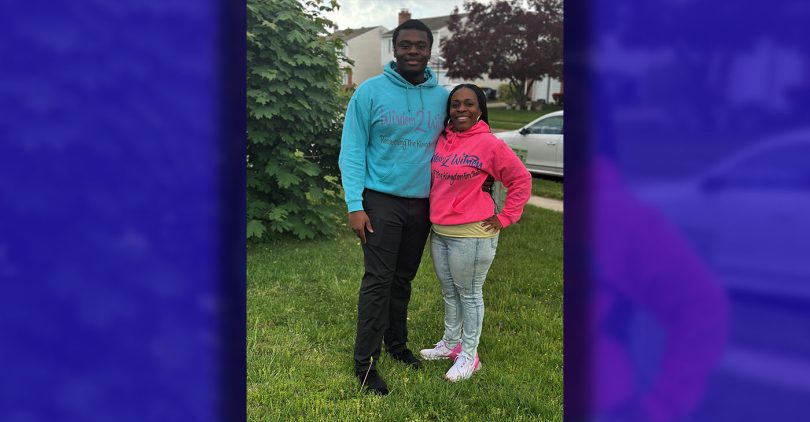
udah and his mom, Regina, are both pursuing early childhood education-related degree programs through the Early Childhood Innovation Center, located at Delaware State University.

By Stacey Finkel

This Mother’s Day, we honor not just the love between a mother and her child, but the shared dreams, grit, and determination that can make those dreams a reality. Regina, 44, and her son Judah, 18, are proof that purpose has no age limit—and that it’s never too late or too early to answer a calling. Regina knows what perseverance looks like. It took her ten years to earn her first college degree, an Associate Degree in Early Childhood from Ashworth College. Life, as it so often does, had other plans—plans that called her away from school and into the real world. But she never let go of her goals or her belief in the power of education. That steadfast commitment planted a seed not only for herself but for her son. Now, Regina and Judah are both enrolled in a scholarship program at theEarly Childhood Innovation Center (ECIC), housed at Delaware State University (DSU) in Wilmington, Delaware’s only Historically Black College and University. This program allows them to study in any early childhood education-related degree program across the entire state of Delaware.  Regina attends Wilmington University, where she is pursuing her bachelor’s degree in Education Studies with a concentration in Early Childhood Education. Judah attends DSU and is pursuing his bachelor’s degree in Early Childhood Education. They are shoulder to shoulder, heart to heart—committed to equity, access, and the transformational power of teaching.

There’s something uniquely beautiful about a mother and son learning at the same time, not just in life, but in the classroom. They study together, encourage each other, and even bring their academic lessons to life while working at Chosen Children’s Child Care in Wilmington, where they support the development of the next generation of learners. Their shared experiences, both as students and as educators, deepen their bond and strengthen their shared commitment to the children they serve. But what truly sets their story apart is the community surrounding them. The Early Childhood Innovation Center is more than a scholarship program. It’s a lifeline, a launchpad, and a promise: You can do this. The faculty and staff meet students where they are—whether they’re returning to school after a decade or stepping into college for the first time. Regina and Judah both credit ECIC with giving them the resources, mentorship, and belief they need to succeed. For Black families, and especially Black mothers, the road to higher education can be long and often filled with obstacles. But what Regina and Judah show us is that when one person refuses to give up, they can inspire an entire legacy. Education becomes not just a goal, but a family value passed down. “I used to feel like I was falling behind because it took me so long to finish,” Regina says. “But now I see that every step was preparing me for this moment—alongside my son, showing him and others that no matter how long it takes, you can finish. You just can’t give up.” This Mother’s Day, let’s celebrate mothers like Regina, who never stop striving, and sons like Judah, who walk beside them with pride. Let’s celebrate the power of Black institutions like DSU and innovative spaces like the Early Childhood Innovation Center that don’t just educate—they uplift.

Filed Under: Education Tagged With: academic success, Access, Ashworth College, Associate Degree, bachelor’s degree, black families, Black institutions, Black mothers, Chosen Children’s Child Care, community support, Delaware, Delaware State University, DSU, Early Childhood, early childhood education, Early Childhood Innovation Center, ECIC, Education, Education Studies, equity, family legacy, Featured, HBCU, higher education, Historically Black College and University, inspiration, Judah, lifelong learning, mentorship, mother and son, Mother's Day, never give up, next generation learners, perseverance, Regina, resources, Scholarship Program, shared dreams, transformational teaching, uplifting education, Wilmington, Wilmington University

Reaction to The Education EO

March 21, 2025 By MKE Community Journal Leave a Comment

By Lauren Burke

There are plenty of negative reactions to President Donald Trump’s latest Executive Order abolishing the Department of Education. As Democrats call yesterday’s action performative, it would take an act of Congress for the Education Department to close permanently. “This blatantly unconstitutional executive order is just another piece of evidence that Trump has absolutely no respect for the Constitution,” said Rep. Maxine Waters (D-CA) who is the ranking member on the House Financial Services Committee. “By dismantling ED, President Trump is implementing his own philosophy on education, which can be summed up in his own words, ‘I love the poorly educated.’ I am adamantly opposed to this reckless action, said Rep. Bobby Scott who is the most senior Democrat on the House Education and Workforce Committee.

Morgan State University President Dr. David Wilson chimed in saying “I’m deeply concerned about efforts to shift federal oversight in education back to the states, particularly regarding equity, justice, and fairness. History has shown us what happens when states are left unchecked—Black and poor children are too often denied access to the high-quality education they deserve. In 1979 then President Jimmy Carter signed a law creating the Department of Education. Arne Duncan, former Obama Education Secretary, reminds us that both Democratic and Republican presidents have kept education a non-political issue until now. However, Duncan stressed Republican presidents have contributed greatly to moving education forward in this country.

During a CNN interview this week Duncan said during the Civil War President Abraham “Lincoln created the land grant system” for colleges like Tennessee State University. “President Ford brought in IDEA.” And “Nixon signed Pell Grants into law.” In 2001, the No Child Left Behind Act was signed into law by President George W. Bush which increased federal oversight of schools through standardized testing. Meanwhile, the new Education EO jeopardizes funding for students seeking higher education. Duncan states, PellGrants are in jeopardy after servicing “6.5 million people” giving them a chance to go to college. Wilson details, “that 40 percent of all college students rely on Pell Grants and student loans.”

Rep. Alma Adams (D-NC) says this Trump action “impacts students pursuing higher education and threatens 26 million students across the country, taking billions away from their educational futures. Meanwhile, During the president’s speech in the East Room of the White House Thursday, Trump criticized Baltimore City, and its math test scores with critical words. Governor West Moore, who is opposed to the EO action, said about dismantling the Department of Education, “Leadership means lifting people up, not punching them down.”

Filed Under: Education, National News Tagged With: abolish, Abraham Lincoln, Alma Adams, Arne Duncan, Baltimore schools, Bobby Scott, David Wilson, Democratic education policy, Department Of Education, education funding, Education Policy, Education Reform, equity in education, Executive Order, Featured, federal education policy, federal oversight, Governor Wes Moore, higher education, IDEA, Jimmy Carter, land grant colleges, Maxine Waters, Morgan State University, No Child Left Behind, Pell Grants, Republican education policy, school funding, standardized testing, student loans, Trump

GAO Study Reveals Persistent Underrepresentation of Black and Hispanic Faculty in Higher Education

April 12, 2024 By MKE Community Journal Leave a Comment

African American professor and her students using laptop during lecture in the classroom.

By Stacy M. Brown
NNPA Newswire Senior National Correspondent

@StacyBrownMedia

 A new study conducted by the Government Accountability Office (GAO), commissioned by Congressman Bobby Scott (D-Virginia), has unveiled concerning trends regarding the representation of Black and Hispanic faculty members in higher education institutions. Despite modest increases in their numbers over the past two decades, Black and Hispanic individuals remain significantly underrepresented among college faculty.

The study, which examined data spanning from fiscal years 2003 to 2021, found that while the proportions of Black and Hispanic faculty members have seen slight upticks, they continue to lag behind their representation in the broader workforce, particularly among workers with advanced degrees and professionals. Further, the study highlighted a stark disparity between the racial and ethnic composition of faculty and that of the student body, indicating a systemic issue within higher education.

“Addressing the underrepresentation of Black and Hispanic faculty is not only a matter of diversity but also impacts the overall quality of education and student outcomes,” study authors wrote. “It’s imperative that we hold institutions accountable for fostering inclusive environments that reflect the diversity of our society.”

The study identified the processing of employment discrimination complaints as one significant barrier. Both current and prospective faculty members have the option to file complaints with either the Equal Employment Opportunity Commission (EEOC) or the Department of Education. However, the study revealed persistent delays in the referral of complaints from the Department of Education to the EEOC.

In fiscal year 2022 alone, the Department of Education processed and referred 99 complaints alleging employment discrimination at colleges, with an average referral time of 71 days—well beyond the mandated 30-day period. Such delays not only prolong the resolution process but also perpetuate instances of discrimination and inequity within academia.

Additionally, the study uncovered deficiencies in the EEOC’s tracking and processing of complaint referrals. Despite receiving complaints referred to by the Department of Education, the study concluded that the EEOC needs a consistent protocol to ensure the timely receipt and processing of these referrals. The lack of accountability poses risks of oversight and further delays in addressing discrimination complaints, the authors stated.

In response to the findings, the GAO has issued recommendations aimed at enhancing accountability and efficiency in the processing of discrimination complaints. Scott has urged swift action from both the Department of Education and the EEOC to address the systemic disparities and processing delays highlighted in the study.

“The good news is that faculty diversity has improved over the last twenty years. The bad news is that faculty diversity is still not representative of the students they teach,” Scott stated.

According to the study authors, historically Black colleges, and universities, among other minority-serving establishments, have had success in nurturing and advancing academic members of color into tenure-track jobs, which offer greater security than adjunct or part-time employment. The authors noted that these schools frequently prioritize the education of students of color in the recruiting and professional development of their professors.

The GAO research suggests that enhancing mentorship, conducting retention studies, and providing leadership opportunities are effective strategies to enhance the retention of faculty members who are of color. The survey also discovered that a positive campus environment affected teachers’ decision to remain at their schools.

The Equal Employment Opportunity Commission and the Department of Education both handle allegations of discrimination at colleges and universities inefficiently, according to the GAO study. The Education Department’s regulation mandates that complaints be sent to the EEOC within 30 days; however, the average time it took to get a referral was more like 71 days.

“As we strive to create more equitable educational environments, it is incumbent upon federal agencies to prioritize the timely and thorough investigation of discrimination complaints,” the authors concluded. “Our nation’s colleges and universities must be bastions of diversity and inclusion, and addressing the underrepresentation of minority faculty is a critical step towards achieving that goal.”

Filed Under: Economy, Jobs Tagged With: diversity, educators, GAO, higher education, professors, representation, workforce

In Celebration of Black History Month, PGA of America Golf Professional Ira Molayo Leads by Example

February 28, 2024 By MKE Community Journal Leave a Comment

Ira Molayo PGA (at left), with I AM a Golfer Foundation participants

Newly elected Vice President of Northern Texas PGA Section is first Black Officer of the Section

FRISCO, Texas — Ira Molayo was introduced to golf at seven by his mother at Cedar Crest Golf Course in Dallas, Texas. Today, 40 years later, he is a PGA of America Golf Professional, Director of Golf at Cedar Crest and the newly elected Vice President of the Northern Texas PGA Section (NTPGA).

He’s the first Black PGA of America Golf Professional to serve as an Officer (Secretary, Vice President, President) for the NTPGA. He’s in line to become President in 2026.

His focus on and off the course is based upon inclusion.

Molayo started getting more involved in the NTPGA in 2013. He joined the teaching & coaching committee, which led to his involvement in the junior golf, education, awards and PGA HOPE (Helping Our Patriots Everywhere) committees.

“When I got on committees and started working with other PGA of America Members, it made the sport bigger in my head,” Molayo said. “It wasn’t just me and my facility, it was other talented people trying to do the same thing, all because we love golf.”

When he ran for NTPGA Secretary in 2016, he lost.

“I was shocked I lost, because I don’t like losing,” he explained. “When I lost, it was really a good thing because it made me realize that I do love it. I wasn’t doing it because I wanted notoriety, I really enjoyed serving and felt like I had something to contribute.”

After serving three terms as an At-Large Director and working on various committees, Molayo ran again in 2022 and won. After two years as Secretary, he was elected Vice President on February 5, 2024, during the NTPGA Annual Meeting.

“You don’t get elected Secretary, honestly, if your peers don’t see you as President. Those are telling moments in my life. The membership electing me means they see me as an equal, they see me, period. In golf, that hasn’t always been the case. To elect me and give me the opportunity to be a steward in this position, makes me feel included.”

On the course, he’s helping youth in South Dallas learn to play golf, work in golf and earn scholarships to receive higher education.

Molayo’s I AM a Golfer Foundation, was established out of necessity in 2018 to be a catalyst for community renewal and transformation in South Dallas.

In 2015, Cedar Crest had the largest First Tee program in Dallas, working with junior golfers six days a week. Then the First Tee program was moved to nearby Trinity Forest Golf Club, leaving juniors wanting to stay at Cedar Crest in need of help.

“I had kids who could afford to pay for golf instruction and I had a group of kids who couldn’t. I would always use the First Tee program to introduce golf to them. When that didn’t exist, I did not have a way to engage those youth.”

Molayo took action to create his Foundation to provide lessons, clubs and access for those who couldn’t afford golf. It’s grown exponentially ever since.

The Foundation additionally helps preserve Cedar Crest and promotes the game through events like the Dallas Amateur Championship and the Southwest Airlines Showcase at Cedar Crest—a Black collegiate tournament televised on Golf Channel.

The Foundation’s youth programs have three pillars: I AM a Golfer, I AM an Intern and I AM a Scholar.

Since the Foundation’s inception, over 900 juniors have participated, 115 paid internships have been provided, $300,000 college scholarships have been awarded and over $1 million has been invested in Cedar Crest.

To learn more about Molayo’s career and inclusion efforts, click here.

To learn more about the I Am a Golfer Foundation, click here.

About the PGA of America

The PGA of America is one of the world’s largest sports organizations, composed of more than 30,000 PGA of America Golf Professionals who love the game, are expert coaches, operators and business leaders, and work daily to drive interest, inclusion and participation in the sport. The PGA of America owns and operates numerous championships and events, including major championships for men, women, seniors and the Ryder Cup, one of the world’s foremost sporting events. For more information, visit PGA.com and follow us on X, formerly known as Twitter, Instagram and Facebook.

Filed Under: Black History Month, National News, Sports Tagged With: $1 million has been invested in Cedar Crest, $300000 college scholarships, 115 paid internships, 900 juniors, Access, At-Large Director, awards, Black collegiate tournament, catalyst for community renewal and transformation, Cedar Crest Golf Course, clubs, Dallas Amateur Championship, Dallas Texas, earn scholarships, Education, enjoyed serving, first Black PGA of America Golf Professional, FRISCO Texas, golf, Golf Channel, golf instruction, helping youth, higher education, I AM a Golfer, I AM a Scholar, I AM an Intern, Inclusion, Ira Molayo, junior golf, junior golfers, largest First Tee program in Dallas, learn to play golf, lessons, Molayo’s I AM a Golfer Foundation, Northern Texas PGA Section (NTPGA), notoriety, NTPGA, NTPGA Annual Meeting, NTPGA Secretary, officer, PGA HOPE (Helping Our Patriots Everywhere), PGA of America Golf Professional, PGA of America Members, president, secretary, something to contribute, South Dallas, Southwest Airlines Showcase at Cedar Crest, teaching & coaching committee, The Foundation’s youth programs, three pillars, Trinity Forest Golf Club, vice president, work in golf

Understanding the Nation’s Ticking Fiscal Time Clock

October 12, 2023 By MKE Community Journal Leave a Comment

By mid-November, the nation will again face a shutdown at a time when families typically and excitedly finalize preparations for annual Thanksgiving gatherings. (Photo: iStock photo / NNPA)

Federal Funding to Expire by Mid-November 

By Charlene Crowell, NNPA Newswire Contributor

For the second time this year, Congress’ inability to reach consensus on essential fiscal legislation has devolved into largely partisan bickering and literal, last-minute temporary financial band-aids. On September 30, the last day of the 2022-2023 federal fiscal year, a continuing resolution (CR) provided a 45-day reprieve, just in time to meet a midnight deadline that would have resulted in a federal government shutdown.

In signing the stop-gap appropriations measure, President Joe Biden acknowledged its benefit and also reminded the nation of how unnecessary it really was.

“This bill ensures that active-duty troops will continue to get paid, travelers will be spared airport delays, millions of women and children will continue to have access to vital nutrition assistance, and so much more,” said President Biden. “But I want to be clear: we should never have been in this position in the first place. Just a few months ago, Speaker McCarthy and I reached a budget agreement to avoid precisely this type of manufactured crisis.”

Readers may recall that in late spring and facing a first-ever national debt default, another piece of compromise legislation led to the Fiscal Accountability Act.

That eleventh hour maneuver provided a two-year window for the Treasury Department to borrow – as needed – funds to pay the nation’s more than $31 trillion of debt.  In return, according to the Congressional Budget Office (CBO), cutbacks on discretionary spending would result in a drop in projected budget deficits of about $4.8 trillion over the next decade, and a savings of $0.5 trillion in interest. But this fiscal compromise requires Congress to return to that deferred problem in January 2025.

Neither of these developments have been well-received by the public. Only days before the September 30 fiscal rescue, a consumer poll taken September 19-24 by Monmouth University echoed President Biden’s concerns:

  • 74 percent of respondents disapproved of the job Congress is doing;
  • 68 percent believed the government is on the wrong track; and
  • 64 percent supported compromise to enact a new budget.

“The vast majority of Americans want to avoid a shutdown. The faction who does not want any compromise may represent a small proportion of the public, but they hold outsized influence in the U.S. Capitol,” said Patrick Murray, director of the independent Monmouth University Polling Institute.

By mid-November, the nation will again face a shutdown at a time when families typically and excitedly finalize preparations for annual Thanksgiving gatherings. If a full federal spending plan for the new 2023-2024 fiscal year that began October 1 is not approved, many will also await learning whether the federal government will be able to function during a season dedicated to blessings.

As with most budget cut decisions, potentially-affected personnel are understandably anxious. Currently, there are 4.5 million people who are either military or civilian federal employees, according to the CBO.

Similarly, agencies that administer programs that respond to vital needs are in a similar dilemma.

For example, the stark rise in requests for disaster relief from flooding, hurricanes, and wildfires caused the Federal Emergency Management Agency (FEMA) to recently appeal to Congress for an additional $16 billion to serve communities in distress. On September 19, Deanne Criswell, FEMA Administrator testified before a House subcommittee, alerted lawmakers to the agency’s shrinking ability to keep pace with surging requests.

“On average, we are seeing a disaster declaration every three days,” testified Criswell. “We strive to be vigilant stewards of taxpayer dollars, and we are careful in our projections of how much funding will be required for the Disaster Relief Fund. However, there are times when the number and intensity of disasters outpaces appropriated funds, and we find ourselves in such a moment today.”

Funding for these and other needs now have been added to the traditional conservative calls to cut entitlement programs like the Supplemental Nutrition Assistance Program (SNAP) more commonly known as food stamps. As of this spring, 41.9 million people who comprise 22.2 million households were enrolled in SNAP, according to Pew Research.

According to the Department of Education, an estimated 26 million students would be affected by a proposed $4 billion cut in funding schools serving low-income children. In higher education, Pell Grants that provide a critical source of financial aid for low-to-moderate income college students would be cut by 22 percent, and the maximum award would be lowered to $1,000 – at a time when the cost to attend college continues to soar.

Time will tell whether this Congress will face and respond to America’s real needs. But tens of millions of Americans potentially could be impacted by a federal government closure while the nation is on a ticking fiscal time clock.

Filed Under: Economy, Latest News, National News Tagged With: $4.8 trillion, 22.2 million households, 26 million students, 4.5 million people, 45-day reprieve, access to vital nutrition assistance, active-duty troops, additional $16 billion, administer programs, agency’s shrinking ability, America’s real needs, appeal to Congress, appropriated funds, avoid a shutdown, borrow – as needed – funds, budget agreement, budget cut decisions, Charlene Crowell, communities in distress, compromise, compromise legislation, Congress, Congressional Budget Office (CBO), consumer poll, continue to get paid, continuing resolution (CR), cost to attend college, critical source of financial aid, cut by 22 percent, cut entitlement programs, cutbacks on discretionary spending, Deanne Criswell, deferred problem, Department Of Education, disaster declaration, Disaster Relief Fund, drop in projected budget deficits, eleventh hour maneuver, enrolled in SNAP, essential fiscal legislation, Federal Emergency Management Agency (FEMA), federal government closure, Federal Government Shutdown, federal spending plan, first-ever national debt default, Fiscal Accountability Act, flooding, food stamps, government is on the wrong track, higher education, House subcommittee, hurricanes, keep pace with surging requests, largely partisan bickering, last day of the 2022-2023 federal fiscal year, last-minute temporary financial band-aids, late spring, lawmakers, low-to-moderate income college students, lowered to $1000, manufactured crisis, maximum award, midnight deadline, military or civilian federal employees, millions of women and children, Monmouth University, Monmouth University Polling Institute, nation’s more than $31 trillion of debt, new 2023-2024 fiscal year, new budget, NNPA Newswire, number and intensity of disasters, outsized influence, Patrick Murray, Pell Grants, Pew Research, potentially-affected personnel, preparations for annual Thanksgiving gatherings, President Biden, President Joe Biden, projections, proposed $4 billion cut in funding schools serving low-income children, reach consensus, reminded the nation, savings of $0.5 trillion in interest, season dedicated to blessings, second time this year, September 30 fiscal rescue, shutdown, similar dilemma, small proportion of the public, spared airport delays, Speaker McCarthy, stark rise in requests for disaster relief, stop-gap appropriations measure, Supplemental Nutrition Assistance Program (SNAP), tens of millions of Americans, traditional conservative calls, travelers, Treasury Department, two-year window, U.S. Capitol, vast majority of Americans, vigilant stewards of taxpayer dollars, vital needs, wildfires

10 Things to Know Before You Take Out Student Loans

July 21, 2020 By MKE Community Journal Leave a Comment

905513 / Pixabay

Taking student loans can be an effective way to pay for some of your college education—but they do come with some pretty big responsibilities. Personal finance guru Eric Tyson, MBA, shares some tips students (and parents) should keep firmly in mind.

Hoboken, NJ (July 2020)—Student loans seem like a financial necessity at first glance. But personal finance expert and best-selling author Eric Tyson warns they can be tricky, especially if you don’t fully understand what you’re getting into.

“Student loans aren’t inherently ‘bad,’” says Tyson, author of Paying For College For Dummies® (Wiley, April 2020, ISBN: 978-1-119-65147-5, $22.99). “They make sense for many people. But college is expensive, and using loans to pay for it means debt—sometimes a lot of it. Students and parents need to understand what they’re agreeing to before they sign on the bottom line.”

A few facts:

  • The total amount of student loans outstanding in the U.S. has surpassed $1.5 trillion, making it the second largest form of debt outstanding by consumers, exceeded only by mortgage debt.
  • More than one million student loan borrowers default annually on their loans, and only 57 percent are current on their payments.
  • According to LendEDU’s analysis of student loan debt figures at nearly 1,000 four-year private and public higher education institutions across the U.S., the average graduating borrower received their diploma and left campus with $28,565 in student loan debt.

Those are some hefty numbers, and they underscore exactly why you need to know some important facts and instructions about the payment process. Here are a few tips to remember before taking out a loan and when you’re ready to begin making payments.

Keep close track of your loans. They can get lost (and you can get behind) in the shuffle. “Especially if you’ve taken loans from numerous sources, total up the amount of debt accumulated,” says Tyson. “Debt surprises are rarely good! And be sure you are tracking all of your student loans as they may well be represented by multiple lenders and/or servicers by the time that college degree is earned.”

Have a frank discussion about cosigner responsibilities. If parents have cosigned student loans with their son or daughter, everyone who has cosigned is legally responsible for the repayment of those loans. Of course, different families will have different expectations as to who actually will make the repayments.

“Putting an agreement in writing is a fine idea to ensure that everyone is clear on the plan and so there’s some accountability,” says Tyson. “That’s not to say that a written plan can never change; with discussion and agreement, your plan can be modified.”

Know the loan terms (and when payments begin) up front. Whenever you take out a federal government student loan, you will sign a federal student loan promissory note that spells out the terms and conditions of the loan. You can see an example here. Generally, six months after graduation, federal student loan payments begin, says Tyson. You will definitely be hearing from the loan processor(s) for your loans around and continuously after that time. Private loans work differently and have different terms and conditions; if you are considering taking out a private loan, take time to understand the terms before committing.

Save money (and make on-time payments) with your loan’s auto-pay feature. “When your student loan repayments begin, I recommend setting them up for automatic payment,” says Tyson. “This feature drafts the money from your bank account monthly on or before the payment due date. In addition to ensuring that you don’t have late payments or missed payments, most loan servicers or lenders will knock 0.25 percent or so off of the effective interest rate you’re paying for using auto payment. Some private lenders may reduce the rate a tad more than that.

“One potential downside to putting your student loan repayments on auto payment would be if it ever leads to your bank checking account being overdrawn,” he adds. “So, be sure you’re keeping a close eye on your account balance so that nasty surprise doesn’t occur.”

Understand loan forgiveness conditions. There are a number of conditions under which a portion or all of government student loans can be discharged or forgiven. Most commonly this occurs because the student-borrower is working in a field of public service. However, this may also occur when the student-borrower suffers adverse health conditions.

Borrowers who are working in education, government, military, certain nonprofit organizations (not labor unions or partisan political organizations), law enforcement, or public health may be eligible for the Public Service Loan Forgiveness program. To be eligible, borrowers must have completed 120 monthly (that’s 10 years’ worth) on-time payments. Borrowers must also be working full-time in public service and be paying their loans back under an income-driven repayment plan. For more information, click here. Unfortunately, the other conditions under which student loan balances can be discharged are less pleasant to consider. This can happen if the student-borrower suffers a long-term disability or passes away. To learn more, click here.

Know your federal loan repayment options. There are eight different repayment plans/options for your federal student loans. A number of these plans are sensitive to and based upon the student’s income relative to the amount of student loans he has outstanding. The repayment schedule, however, is not tailored to the local cost of living (strangely, there’s an adjustment only for students in Alaska and Hawaii). So, students-turned-workers who are living in high-cost urban areas like New York City, Chicago, Boston, Washington, San Francisco, and so on don’t get any special breaks. Your salary may be a bit higher working for employers in those high-cost areas, which actually undermines your chances and ability to qualify for income-based repayment plans.

Click here to view the repayment plan options for so-called direct and federal family education student loans.

Stay open to the possibility of refinancing. By the time a student graduates and begins loan repayment, interest rates on new, comparable loans may be lower. When that occurs, it may be possible to refinance some of your student loans with a private lender at a lower interest rate than you are currently paying.

“When contemplating a refinance, compare the interest rate being offered on a new loan to the rate you are paying on your existing student loans,” says Tyson. “If the rate is lower on a new loan that would provide you with funds to pay off some of your existing loans, then consider refinancing. Just be aware that lenders can make a refinance appear attractive by showing you how it can lower your monthly payments—but that can always be done by offering you longer-term loans. Your total payments and total interest paid will be higher if you fall for this trick.”

Ask for relief if you need it. Hard times can happen, and as a result, you may struggle to make your required monthly loan payments. The good news is, you may qualify for some relief from making your federal student loan payments until you can afford to do so again. There are two ways in which you may qualify for what is called “forbearance” of your federal student loans.

You can request general forbearance if you are temporarily unable to make your scheduled monthly loan due to financial difficulties, medical expenses, change in employment, or other reasons acceptable to your loan servicer. General forbearance is granted for no more than 12 months at a time. Under other circumstances (for example, you are serving in a medical or dental internship or residency program, and you meet specific requirements), you may be eligible for mandatory forbearance, in which your loan servicer is required to grant the forbearance. For more details, click here.

Make use of the student loan interest deduction. You may take up to a $2,500 federal income tax deduction for each tax (calendar) year for student loan interests that you pay on IRS Form 1040 for college costs as long as your modified adjusted gross income (AGI) is less than or equal to $70,000 for single taxpayers and $140,000 for married couples filing jointly. This tax deduction is phased out if your AGI is between $70,000 and $85,000 for single taxpayers and between $140,000 and $170,000 for married couples filing jointly. (These AGI amounts are for tax year 2020.)

“This deduction is not an itemized deduction, so anyone can take it on her Form 1040 as an ‘adjustment to income,’” says Tyson. “Each of your lenders should be able to provide you with a yearly summary that shows how much you paid in interest for the tax year. If you paid $600 or more in interest to a single lender, that lender is required to provide you with Form 1098-E, which documents the interest you paid for the year. Otherwise, ask your lender or loan servicer what you paid in interest for the year in question.”

You can pause your loans if you return to higher education. Getting a college degree may not be the end of a person’s higher education. Returning to school at least half-time enables those who have subsidized federal government student loans to hit the pause button on those loans. Remember that with subsidized federal student loans, interest does not accumulate, and no loan payments are due while the student is in school. However, private student loans and nonsubsidized federal student loans are, of course, a different matter. The interest keeps accumulating on those even if a former college graduate returns to school at least half-time. And, with some private student loans, you won’t be able to defer making payments and will need to make payments regardless of your student status.

“If you take out student loans for college, they will be a part of your life for years to come, and you should approach them with eyes wide open,” concludes Tyson. “But if you handle them with responsibility, they can be a smart investment in your future.”

# # #

About the Author: 
Eric Tyson is the author of Paying For College For Dummies®. He is a syndicated personal finance writer, lecturer, and counselor. He is dedicated to teaching people to manage their personal finances better. Eric is a former management consultant at Bain & Company to Fortune 500 financial service firms. Over the past three decades, he has successfully invested in securities as well as in real estate, started and managed several growing businesses, and earned a bachelor’s degree in economics at Yale and an MBA at the Stanford Graduate School of Business.

An accomplished freelance personal finance writer, Eric is the author of four other national bestsellers in the For Dummies® series, including Personal Finance For Dummies, Investing For Dummies, Home Buying For Dummies, and Real Estate Investing For Dummies (which he coauthored). Eric was an award-winning journalist for the San Francisco Chronicle/Examiner. His work has been featured and praised in hundreds of national and local publications, including Kiplinger’s, the Wall Street Journal, Money, the Los Angeles Times, the Chicago Tribune, and on NBC’s Today show, Fox News, PBS’s Nightly Business Report, Fox Business, CNBC, CNN, the Oprah Winfrey Show, ABC, Bloomberg Business Radio, CBS National Radio, and National Public Radio.

Eric has counseled thousands of clients on a variety of personal finance, investment, and real estate quandaries and questions and is a much-sought-after speaker.

You can visit him on the web at www.erictyson.com.

About the Book: 
Paying For College For Dummies® (Wiley, April 2020, ISBN: 978-1-119-65147-5, $22.99) is available at bookstores nationwide, from major online booksellers, and direct from the publisher by calling 800-225-5945. In Canada, call 800-567-4797. For more information, please visit the book’s page on www.wiley.com.

Filed Under: Economy, Education Tagged With: debt relief, higher education, Student Debt

Primary Sidebar

MCJ WEEKLY

PREVIOUS EDITIONS

Go HERE for the Digital Archives

DR. TNT SCHOLARSHIP SPECIAL EDITION

CLICK THE IMAGE THE FULL EDITION

Newsletter Signup

The Milwaukee Community Journal (MCJ) and the Weekend Edition are distributed at a number of community churches; as is the current issue of Healthy Start. With many area churches closed for the next few weeks due to the coronavirus, your MCJ suggests you pick up your edition of the newspaper, Weekend Edition and Healthy Start at our offices, located at 3612 N. Martin Luther King Drive. We’re open from 10 a.m. to 4:30 p.m., Monday through Friday. You can still pick up the MCJ at several Walgreens and Pick n’ Save stores throughout the community, as well as city hall and the county courthouse.

Recent Posts

  • American Men Have Been In Crisis for Generations. A Remedy from 1879 Offers Hope
  • Online registration now open for 2026 Back to School Festival
  • Oakland Protesters Rally to Defend Haitian Immigrants and TPS
  • OPINION: 57,000 Empty Apartments and Not a Word of Apology – City Limits
  • ‘Choppin’ it up’ with a brotha about Crowley’s win, and why Black folks aren’t down with the Democratic Socialists!

CLASSIFIEDS

CLASSIFIEDS

Place your notice of divorce, name change, etc. in the Milwaukee Community Journal's Classifieds! Contact is at 414-265-5300

Follow Us

  • Facebook
  • Instagram
  • Twitter
  • YouTube

Tags

2016 election African Americans Alderman Khalif J. Rainey ALDERWOMAN CHANTIA LEWIS Alderwoman Milele A. Coggs annual Baylor College of Medicine Biden Black History Month Black press Boko Haram civil rights community coronavirus COVID-19 Dating Advice day Democrats diversity Donald Trump Education event Featured free George Floyd HuffPost Live Joe Biden Love & Sex Love and Relationships Mayor Tom Barrett mental health Milwaukee Repertory Theater naacp national NNPA pandemic racism report Republicans Reuters social media Trump Trump Administration What Is Working: Small Businesses White House

Categories

H5_WEDC1027_AA_300x250

Copyright © 2026 Milwaukee Community Journal