• Skip to primary navigation
  • Skip to main content
  • Skip to primary sidebar
  • About
  • Contact
  • Advertise

Milwaukee Community Journal

  • News
    • Local News
    • National
    • World
    • Political
  • Men Building Men
  • Lifestyle
    • Arts & Entertainment
    • Fashion
    • Culture
    • Religion
  • Economy
    • Small Business
    • Money
    • Entrepreneurship
  • Health
    • Family
    • Relationships
  • Education
  • Jobs
    • Housing
  • Scholarship Fund
You are here: Home / Archives for Journalism

Journalism

The Silence of Black Wealth: When the Billionaires Turned Their Backs on the Black Press

October 29, 2025 By MKE Community Journal Leave a Comment

A detailed close-up of tightly rolled bundles of US dollar banknotes, suggesting accumulated wealth or savings. However, in the context of inflation, this image subtly conveys the idea that even significant amounts of money can lose their real value over time. It represents the quiet erosion of purchasing power, making it a compelling visual for discussions on long-term financial planning, investment strategies, the impact of rising prices on accumulated capital, and the challenge of preserving wealth in an inflationary economy.

By Stacy M. Brown
Black Press USA Senior National Correspondent

Two months ago, famed civil rights attorney Benjamin Crump stood before a ballroom filled with the echoes of history. He did not whisper. He thundered. “If you’ve been blessed,” he said, “you got to pass the blessing on. You just can’t keep it to yourself.” Then he pledged fifty thousand dollars to the Black Press of America. It was not an act of charity. It was an act of faith. A declaration that the oldest voice of Black truth must live to speak again. Crump said he made his gift public because he wanted others to follow. He said he hoped those who had been lifted by the love and loyalty of Black people would remember who gave them their first breath of recognition. He hoped they would remember that the Black Press was not a charity case but a lifeline. Two months later, the silence has been deafening.

Magic Johnson’s people said “no.” David Steward, founder of World Wide Technology, said “no.” Jay-Z’s team didn’t bother to return calls. Janice Bryant Howroyd of the Act-One Group did not respond. Richelieu Dennis of Sundial Brands did not respond. Daymond John, Thomas Moorehead, and Tristan Walker did not respond. Tyler Perry, Robert Smith, and Oprah Winfrey did not respond. Dr. Dre, Spike Lee, and Michael Jordan each have also ignored multiple attempts to have conversations. Even across the ocean, Africa’s wealthiest men—Aliko Dangote, Mike Adenuga, Patrice Motsepe, Strive Masiyiwa, and Abdulsamad Rabiu—have people working for them who won’t acknowledge the Black Press with a simple response. Let the record show what was asked of them. The Black Press did not beg for charity. The Black Press asked to advertise their companies, their products, and their services. We asked to build relationships that honor the communities they came from. Many of them, like Magic, Oprah, and Jordan, have foundations that could have given grants if their hearts were so moved. The Black Press only asked that they see its worth.

Even the Democratic Party, carried to power by Black faith and Black votes, has turned away. The same party that claims to speak for equality now walks quietly in step with Trump’s anti-diversity crusade. They have shut the Black Press out of advertising dollars while funneling millions into white-owned mainstream media. It is hypocrisy dressed in progress to preach inclusion while starving the very storytellers who gave them the language of struggle.

This abandonment comes at a time when Trump has declared war on the lives and livelihoods of Black people. His administration has terminated more than three hundred thousand Black women from federal jobs that once sustained families. His policies against diversity have closed doors for hundreds of thousands of other Black men and women. Companies, emboldened by his rhetoric, continue to lay off and fire workers, many of them Black. And in the middle of this storm stands the Black Press — the last institution that still employs and uplifts hundreds of Black men and women who have families to support. Each of the more than two hundred newspapers and media companies in the Black Press represents not only truth on paper, but food on a table, tuition paid, rent covered, and the dignity of work preserved. The Black Press has been here before. It has stood when Frederick Douglass told a nation built on lies that truth would not die. It stood when Ida B. Wells printed the names of the lynched. It stood when Mamie Till demanded that the world look at her child. It stood when Dr. King wrote from Birmingham Jail. It stood when Malcolm X spoke the raw truth America refused to face. It stood when the white press would not. And it still stands today, two centuries strong, built by two brave souls – John B. Russwurm and Samuel Cornish during slavery – and, now, carried mostly on the backs of Black women. The Chicago Defender. The New Pittsburgh Courier. EBONY. The Amsterdam News. The Philadelphia Tribune. The Afro American. The St. Louis American. The Los Angeles Sentinel. The Michigan Chronicle. The Washington Informer. These are not relics of a fading past. They are the pulse of a people who refuse to vanish.

Many of these newspapers live in the same cities that raised the icons now silent. Chicago, where Jordan and Oprah became legends. Los Angeles, where Magic Johnson built his empire. Brooklyn, where Spike Lee found his voice. Philadelphia and New York, where Jay-Z and Will Smith found theirs. The irony is sharp. These newspapers gave many of them their first headlines, their first interviews, their first measure of respect. Remember EBONY? JET? How about Right On! Yet now, as the Black Press struggles for air, those it once lifted act as if they never knew its name. So it is that in this moment of trial, a civil rights attorney and a white businessman stand nearly alone. Mark Cuban, through his Cost-Plus Drugs company, reached into his own pocket and gave one hundred thousand dollars to the Black Press without hesitation. He did not wait to be convinced. He saw the need and answered it. Two hundred years of truth are hanging by a thread. The presses still turn. The ink still flows. But for how long? If the Black Press falls, so does the record of our struggle, our triumph, and our faith.

And when that day comes, history will not say the Black Press was destroyed by white supremacy. It will say it was abandoned by its own.

“We are going to save ourselves,” Crump declared. “We are all we need.” His words were not sentimental. They were a warning. Because a people without storytellers are a people without memory.
Filed Under: Economy Tagged With: abandonment, Abdulsamad Rabiu, Act-One Group, African billionaires, African-American media, Aliko Dangote, America’s history, Amsterdam News, anti-diversity policies, Benjamin Crump, Black economic power, Black Entrepreneurs, Black History, Black journalism, Black media, Black media legacy, Black newspapers, black owned businesses, Black press, Black Press of America, Black storytellers, Black Voices, Black wealth, black women, celebrity donations, Chicago Defender, civil rights attorney, community empowerment, Cost Plus Drugs, cultural memory, David Steward, Daymond John, Democratic Party, Dr Martin Luther King Jr, Ebony, equality, faith, Featured, federal job cuts, Frederick Douglass, freedom of the press, historical preservation, Ida B. Wells, Janice Bryant Howroyd, jay-Z, jet, John B. Russwurm, Journalism, Los Angeles Sentinel, Magic Johnson, Malcolm X, Mamie Till, Mark Cuban, media diversity, media funding, media representation, Michael Jordan, Michigan Chronicle, Mike Adenuga, New Pittsburgh Courier, Oprah Winfrey, Patrice Motsepe, Philadelphia tribune, Philanthropy, philanthropy in Black community, political hypocrisy, racial inequality, Racial Justice, representation, responsibility, Richelieu Dennis, Robert Smith, Samuel Cornish, Spike Lee, St. Louis American, storytelling, Strive Masiyiwa, Sundial Brands, survival, systemic racism, The Afro American, Thomas Moorehead, Tristan Walker, Trump Administration, truth and justice, truth-telling, Tyler Perry, unemployment, unity, Washington Informer, World Wide Technology

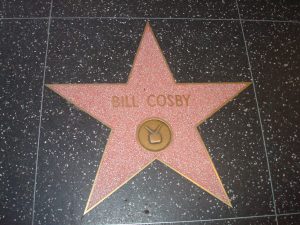
Bill Cosby: The Fight, The Legacy, The Flowers He’s Earned

September 17, 2025 By MKE Community Journal Leave a Comment

Bill Crosby

By Stacy M. Brown
Black Press USA Senior National Correspondent

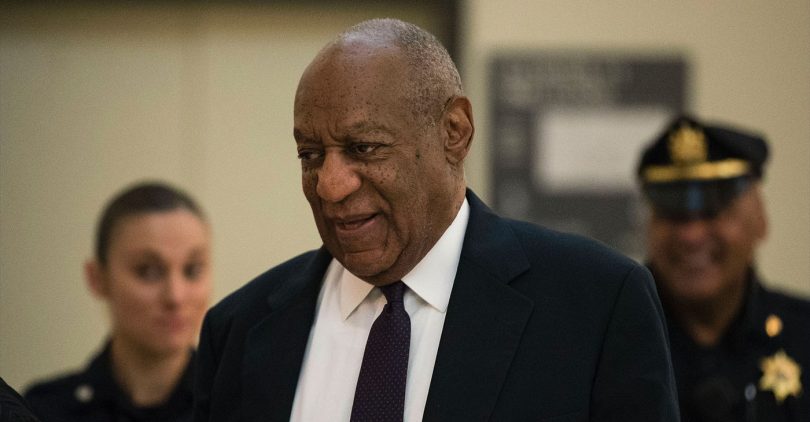
Six years ago this month, Bill Cosby was sentenced to prison. For some, it was the spectacle of a fallen idol. For others, it was the raw proof that this nation, still drunk on its own lies, can summon racism from the judge’s bench, let it seep into the prosecutor’s chair, and finally stain the jury box. What was lost, what was deliberately hidden, is that Cosby—blind, wealthy, eighty years old—could have walked out untouched if he had only bent his back, signed a paper, confessed to a sin he swore he did not commit. He refused. He chose prison over surrender, isolation over capitulation. That act alone, in a country that has always demanded Black men bow their heads, ought to have been recognized as a radical declaration of dignity.

Refusing the Easy Way Out

Cosby remembered, on Let It Be Known, how they dangled freedom like meat before a starving man. “My lawyer came to me and said, the district attorney is offering you to sign a paper saying you did it… and that you wouldn’t have to do prison time,” he said. “I told my lawyer to continue with the trial… I wasn’t signing any papers or anything.” Even when caged, blind, and stripped of freedom, they offered him release if only he would renounce himself. “Sign the paper and go to these classes, and then we will let you go. Well, my signature would be in a sealed envelope, and nobody could open it.” Again, he refused. He could have chosen the coward’s path. He could have lived out his days in comfort. Instead, he chose to carry innocence as a burden, fully believing that he might never walk free again.

A Courtroom Steeped in Racism

Bill and Camille Cosby, at right, arrive at the Montgomery County Courthouse in Norristown, Pa., on June 12, 2017. Cosby is on trial for sexual assault. (POOL PHOTO)

And in those courtrooms, the poison was naked. Black jurors were denied with cynical ease. A Black woman police officer was struck from service, not because she was unfit, but because she had once beaten back a false charge laid against her. At the retrial, when one Black juror was finally seated, a prosecutor spat, “You got your one.” Another juror declared Cosby guilty before hearing a single word and was still allowed to sit in judgment. And the judge—who should have been the steward of justice—was said to have whistled the theme from Kill Bill outside the jury room before the verdict in the retrial was returned.

The first trial ended in a mistrial, the jury grinding nearly 60 hours before breaking. They had leaned toward acquittal, but the judge forced them back. After the second trial ended in conviction, and when prosecutors argued he might flee because “he has a plane,” Cosby exploded once jurors left the room: “He doesn’t have a plane, you a–hole! I’m sick of him!” Never forget that prosecutors across jurisdictions passed on every other accusation. Only one case was carried forward—and even that was not about rape. The alleged victim admitted to bitterness when Valentine’s Day passed without a call. She later dialed Cosby to ask for tickets to his show for her parents. But facts were never the point. The performance of guilt was the only script the court was willing to stage.

With the Media, The Lie had No Rival.

Camille Cosby walked through those halls like a prophetess, entering a place fouled with racial contempt. She smiled, spoke softly to her husband, and left. That smile, quiet yet defiant, seemed to say: I know exactly what is happening here. And the media, hungry and complicit, huddled with the prosecutor’s mouthpiece to make certain every headline sang the same hymn of untruth. With no cameras in the room, the lie had no rival. The mention of Quaaludes covered newspapers and flooded television news, but the case was about Benadryl, 1 and a half tablets. Fiction and made-up lies were the norm at Cosby’s trials. Mainstream media pushed the narrative that Cosby “slipped” drugs into an unsuspecting woman’s beverage. However, no evidence of such was presented at trial.

Not discussed was how prevalent Quaalude use was among both sexes. The pill they called a disco biscuit was never just a drug but a mirror of America’s hunger for escape, a hunger dressed in sequins and sweat beneath the lights of Studio 54. Hugh Hefner reportedly handed them out like candy in his mansion; a promise wrapped in velvet but steeped in surrender. Andy Warhol scribbled about them in his diaries; the artist turned witness to a culture stumbling between decadence and decay. Later, Jordan Belfort made them infamous in a Wall Street gone wild, his intoxication filmed and sold as entertainment. Notably, during the second trial, when the judge stunningly allowed as many as 20 women to testify, an accuser swore she had already ingested a Quaalude before she visited Cosby with a friend in the 1970s. Another witness testified that she left her boyfriend on an exotic island after Cosby called with a job offer in Nevada, only to be miffed about Cosby’s indifference.

Still another wrote glowing words about Cosby in her autobiography, yet completely changed the story on the witness stand. When Cosby’s team wanted to put forth a witness who allegedly was with the primary accuser when the woman had come up with a ruse to “set Cosby up,” the judge refused to allow her to tell the jury. Striking was the one person who seemed, by far, the most credible witness. A chef who worked for Cosby was present on the night of the alleged incident. That chef, a meticulous older man, testified that the visit by the accuser for which Cosby was on trial occurred on his last night in Cosby’s employ. Significantly, it proved that even if something nefarious took place, which Cosby vehemently denied, it happened well outside the statute of limitations. Among other things, the state Supreme Court agreed. The justices said the trial was illegal, should never have taken place, and the verdict was wrong. The justices ordered that prosecutors refrain from going after Cosby again.

Inside Prison Walls

Behind walls meant to break him, Cosby spoke to men the world had abandoned. At SCI–Phoenix, he joined Man Up, blind, in a wheelchair, addressing those whose bodies bore chains. After speaking of his heroes, one inmate told him, “I will be your hero, Mr. Cosby.” He spoke to Men of Valor, too. “I noticed that in the Bible, the parts about Jesus, Jesus never smiled. And I want you, if you are going to do what you say you are going to do in your turnaround, make Jesus smile.”

Pound Cake Then and Now

In 2004, Cosby thundered about a boy shot dead for stealing pound cake. “And then we all run out and are outraged, the cops shouldn’t have shot him. What the hell was he doing with the pound cake in his hand?” He called out the rot of absent parenting. Now, with years and prison behind him, he said again: “They are putting us under siege.” At Phoenix, sagging pants and untied laces were forbidden. To him, these were not fashion, but chains disguised as choice. “They would rather have a picture of a youth doing nothing, not studying, and have his pants lowered.”

Camille’s Strength

It was Camille who preserved him. “My wife, Camille, is not only a very intelligent woman, but she is a woman who saved my mother’s life, and she has saved my life by continuously saying, it’s what you put in your mouth,” he said. “She makes sure that we eat like that, and that’s why, at age 88, I’m cancer-free, and I don’t have any ailments of forgetting things.” From prison, when he phoned, Camille silenced his weakness. “Whenever I called her, I just badly wanted to tell her how I felt,” Cosby said. “And she would say, ‘Just be quiet.’” He had called her strength “love and the strength of womanhood. And you could reverse it, the strength of womanhood and love.”

Giving Back

Cosby and Camille poured more than $200 million into higher education, including $20 million to Spelman College, at that time the largest gift ever given to an HBCU. Those gifts were not simply donations. They were lifelines—scholarships, endowments, futures carved from generosity.

Television and Film Legacy

Cosby broke into I Spy, the first Black co-lead in a drama. He created Fat Albert, a mirror for Black children. He built The Cosby Show, which for five years reigned supreme, showing Cliff and Clair Huxtable as what America insisted could not exist: a Black family whole, professional, and loving. A Different World sent young people surging toward HBCUs. And with Sidney Poitier, he made Uptown Saturday Night, Let’s Do It Again, A Piece of the Action—comedies still treasured in Black homes, still testaments to resilience and wit when Hollywood offered little but caricature. Cosby demanded truth on screen. When told to strip a poster from Theo’s wall—one that read “Abolish Apartheid”—he warned them: “If you do, you can take the show with it.”

The Black Press

Unlike so many others who rose to fame, Cosby never turned his back on the Black Press. His only prison interview was with the Black Press. His first long interview after release was again with the Black Press. In 2014, he said, “I only expect the black media to uphold the standards of excellence in journalism, and when you do that, you have to go in with a neutral mind.”

Deserving a Parade

Cosby’s path has been strewn with glory, grief, and betrayal. Yet what remains is a record that cannot be erased. He shattered television’s barriers, poured hundreds of millions into education, gave film and television back to his people, and stood on innocence when it would have been so easy to surrender. Through it all, he was held by Camille, and he never abandoned the Black Press. We say, give flowers to the living. Bill Cosby has earned more than flowers. For what he has given Black culture, he deserves a parade. And somewhere, the ticker tape waits.

Filed Under: Arts & Entertainment, National News Tagged With: A Different World, A Piece of the Action, accuser, acquittal, Andy Warhol, autobiography, Benadryl, betrayal, bible, Bill Cosby, Black Culture, Black jurors, Black press, Black woman police officer, Camille Cosby, cancer-free, Clair Huxtable, Cliff Huxtable, confession, conviction, dignity, district attorney, drugs, Endowments, fallen idol, Fat Albert, film, generosity, HBCU, Headlines, higher education, Hollywood, Hugh Hefner, I Spy, innocence, Jesus, Jordan Belfort, Journalism, judge, jury, lawyer, legacy, Let It Be Known, Let’s Do It Again, Man Up, Media, Men of Valor, mistrial, parade, parenting, pound cake, prison, prosecutor, Quaaludes, racism, resilience, retrial, sagging pants, scholarships, SCI–Phoenix, sentencing, Sidney Poitier, Spelman College, statute of limitations, Studio 54, Supreme Court, surrender, television, The Cosby Show, trial, Uptown Saturday Night, witness

IN MEMORIAM: ‘Godfather of Hip-Hop Journalism’ Greg Tate Dies at 64

December 14, 2021 By MKE Community Journal Leave a Comment

An active member of the Black Rock Coalition and the leader of the Burnt Sugar ensemble, Greg Tate leaves an astounding legacy.

By Stacy M. Brown, NNPA Newswire Senior National Correspondent
@StacyBrownMedia

Greg Tate, the renowned godfather of hip-hop journalism, has died.

The music and culture writer, who excelled as a musician, was 64.

“This hurts,” radio host and music journalist Errol Nazareth exclaimed on Twitter. “I worshipped his writing. His book, ‘Flyboy in The Buttermilk,’ hugely impacted how I approached writing about music. And ‘Everything but the Burden: What White People Are Taking from Black Culture’ is essential,” Nazareth wrote.

Public Enemy founder Chuck D retweeted Nazareth’s post.

“Hurts indeed,” Chuck wrote in response. “Greg Tate, a giant just like you, Errol.”

In Tate’s widely popular “Flyboy in The Buttermilk,” he wrote about Ice-T, Miles Davis, Public Enemy, and others. In one of his many prolific pieces, Tate dissected the power of Chuck D.

“Those who dismiss Chuck D as a bull [crap] artist because he’s loud, pro-black, and proud will likely miss out on gifts for blues pathos and black comedy,” wrote in a 1988 piece on Public Enemy’s “It Takes a Nation of Millions to Hold Us Back.”

“When he’s on, his rhymes can stun-gun your heart and militarize your funny bone,” Tate proclaimed.

Born in Dayton, Ohio, Tate wrote for The Village Voice from 1987 to 2003.

He received global acclaim for his writings on culture and politics, featured in the New York Times, Washington Post, Rolling Stone, VIBE, and many other publications.

He interviewed a who’s who of celebrities including Richard Pryor, Erykah Badu, Ice Cube, Jill Scott, and Chuck D.

His pen went beyond politics and music, writing for prominent museums like The Whitney and the Museum of Modern Art.

Of course, Tate also proved himself as a great author.

His books included “What White People Are Taking from Black Culture,” “Flyboy In The Buttermilk,” and “The 100 Best Hip Hop Lyrics.”

An active member of the Black Rock Coalition and the leader of the Burnt Sugar ensemble, Tate leaves an astounding legacy.

“Impossible to mimic, though we all tried,” Hua Hsu, author of “A Floating Chinaman” and “Stay True.”

“A giant, a good and big-hearted person, the realest one,” Hsu continued.

Added Columbia Journalism Professor and New Yorker writer Jelani Cobb: “Hard to explain the impact that ‘Flyboy in the Buttermilk had on a whole generation of young writers and critics who read every page of it like scripture. It’s still a clinic on literary brilliance.”

Filed Under: Arts & Entertainment Tagged With: chuck D, Greg Tate, hip-hop, Journalism, radio host

Primary Sidebar

MCJ WEEKLY

PREVIOUS EDITIONS

Go HERE for the Digital Archives

DR. TNT SCHOLARSHIP SPECIAL EDITION

CLICK THE IMAGE THE FULL EDITION

Newsletter Signup

The Milwaukee Community Journal (MCJ) and the Weekend Edition are distributed at a number of community churches; as is the current issue of Healthy Start. With many area churches closed for the next few weeks due to the coronavirus, your MCJ suggests you pick up your edition of the newspaper, Weekend Edition and Healthy Start at our offices, located at 3612 N. Martin Luther King Drive. We’re open from 10 a.m. to 4:30 p.m., Monday through Friday. You can still pick up the MCJ at several Walgreens and Pick n’ Save stores throughout the community, as well as city hall and the county courthouse.

Recent Posts

  • American Men Have Been In Crisis for Generations. A Remedy from 1879 Offers Hope
  • Online registration now open for 2026 Back to School Festival
  • Oakland Protesters Rally to Defend Haitian Immigrants and TPS
  • OPINION: 57,000 Empty Apartments and Not a Word of Apology – City Limits
  • ‘Choppin’ it up’ with a brotha about Crowley’s win, and why Black folks aren’t down with the Democratic Socialists!

CLASSIFIEDS

CLASSIFIEDS

Place your notice of divorce, name change, etc. in the Milwaukee Community Journal's Classifieds! Contact is at 414-265-5300

Follow Us

  • Facebook
  • Instagram
  • Twitter
  • YouTube

Tags

2016 election African Americans Alderman Khalif J. Rainey ALDERWOMAN CHANTIA LEWIS Alderwoman Milele A. Coggs annual Baylor College of Medicine Biden Black History Month Black press Boko Haram civil rights community coronavirus COVID-19 Dating Advice day Democrats diversity Donald Trump Education event Featured free George Floyd HuffPost Live Joe Biden Love & Sex Love and Relationships Mayor Tom Barrett mental health Milwaukee Repertory Theater naacp national NNPA pandemic racism report Republicans Reuters social media Trump Trump Administration What Is Working: Small Businesses White House

Categories

H5_WEDC1027_AA_300x250

Copyright © 2026 Milwaukee Community Journal