• Skip to primary navigation
  • Skip to main content
  • Skip to primary sidebar
  • About
  • Contact
  • Advertise

Milwaukee Community Journal

  • News
    • Local News
    • National
    • World
    • Political
  • Men Building Men
  • Lifestyle
    • Arts & Entertainment
    • Fashion
    • Culture
    • Religion
  • Economy
    • Small Business
    • Money
    • Entrepreneurship
  • Health
    • Family
    • Relationships
  • Education
  • Jobs
    • Housing
  • Scholarship Fund
You are here: Home / Archives for Michael Jordan

Michael Jordan

The Silence of Black Wealth: When the Billionaires Turned Their Backs on the Black Press

October 29, 2025 By MKE Community Journal Leave a Comment

A detailed close-up of tightly rolled bundles of US dollar banknotes, suggesting accumulated wealth or savings. However, in the context of inflation, this image subtly conveys the idea that even significant amounts of money can lose their real value over time. It represents the quiet erosion of purchasing power, making it a compelling visual for discussions on long-term financial planning, investment strategies, the impact of rising prices on accumulated capital, and the challenge of preserving wealth in an inflationary economy.

By Stacy M. Brown
Black Press USA Senior National Correspondent

Two months ago, famed civil rights attorney Benjamin Crump stood before a ballroom filled with the echoes of history. He did not whisper. He thundered. “If you’ve been blessed,” he said, “you got to pass the blessing on. You just can’t keep it to yourself.” Then he pledged fifty thousand dollars to the Black Press of America. It was not an act of charity. It was an act of faith. A declaration that the oldest voice of Black truth must live to speak again. Crump said he made his gift public because he wanted others to follow. He said he hoped those who had been lifted by the love and loyalty of Black people would remember who gave them their first breath of recognition. He hoped they would remember that the Black Press was not a charity case but a lifeline. Two months later, the silence has been deafening.

Magic Johnson’s people said “no.” David Steward, founder of World Wide Technology, said “no.” Jay-Z’s team didn’t bother to return calls. Janice Bryant Howroyd of the Act-One Group did not respond. Richelieu Dennis of Sundial Brands did not respond. Daymond John, Thomas Moorehead, and Tristan Walker did not respond. Tyler Perry, Robert Smith, and Oprah Winfrey did not respond. Dr. Dre, Spike Lee, and Michael Jordan each have also ignored multiple attempts to have conversations. Even across the ocean, Africa’s wealthiest men—Aliko Dangote, Mike Adenuga, Patrice Motsepe, Strive Masiyiwa, and Abdulsamad Rabiu—have people working for them who won’t acknowledge the Black Press with a simple response. Let the record show what was asked of them. The Black Press did not beg for charity. The Black Press asked to advertise their companies, their products, and their services. We asked to build relationships that honor the communities they came from. Many of them, like Magic, Oprah, and Jordan, have foundations that could have given grants if their hearts were so moved. The Black Press only asked that they see its worth.

Even the Democratic Party, carried to power by Black faith and Black votes, has turned away. The same party that claims to speak for equality now walks quietly in step with Trump’s anti-diversity crusade. They have shut the Black Press out of advertising dollars while funneling millions into white-owned mainstream media. It is hypocrisy dressed in progress to preach inclusion while starving the very storytellers who gave them the language of struggle.

This abandonment comes at a time when Trump has declared war on the lives and livelihoods of Black people. His administration has terminated more than three hundred thousand Black women from federal jobs that once sustained families. His policies against diversity have closed doors for hundreds of thousands of other Black men and women. Companies, emboldened by his rhetoric, continue to lay off and fire workers, many of them Black. And in the middle of this storm stands the Black Press — the last institution that still employs and uplifts hundreds of Black men and women who have families to support. Each of the more than two hundred newspapers and media companies in the Black Press represents not only truth on paper, but food on a table, tuition paid, rent covered, and the dignity of work preserved. The Black Press has been here before. It has stood when Frederick Douglass told a nation built on lies that truth would not die. It stood when Ida B. Wells printed the names of the lynched. It stood when Mamie Till demanded that the world look at her child. It stood when Dr. King wrote from Birmingham Jail. It stood when Malcolm X spoke the raw truth America refused to face. It stood when the white press would not. And it still stands today, two centuries strong, built by two brave souls – John B. Russwurm and Samuel Cornish during slavery – and, now, carried mostly on the backs of Black women. The Chicago Defender. The New Pittsburgh Courier. EBONY. The Amsterdam News. The Philadelphia Tribune. The Afro American. The St. Louis American. The Los Angeles Sentinel. The Michigan Chronicle. The Washington Informer. These are not relics of a fading past. They are the pulse of a people who refuse to vanish.

Many of these newspapers live in the same cities that raised the icons now silent. Chicago, where Jordan and Oprah became legends. Los Angeles, where Magic Johnson built his empire. Brooklyn, where Spike Lee found his voice. Philadelphia and New York, where Jay-Z and Will Smith found theirs. The irony is sharp. These newspapers gave many of them their first headlines, their first interviews, their first measure of respect. Remember EBONY? JET? How about Right On! Yet now, as the Black Press struggles for air, those it once lifted act as if they never knew its name. So it is that in this moment of trial, a civil rights attorney and a white businessman stand nearly alone. Mark Cuban, through his Cost-Plus Drugs company, reached into his own pocket and gave one hundred thousand dollars to the Black Press without hesitation. He did not wait to be convinced. He saw the need and answered it. Two hundred years of truth are hanging by a thread. The presses still turn. The ink still flows. But for how long? If the Black Press falls, so does the record of our struggle, our triumph, and our faith.

And when that day comes, history will not say the Black Press was destroyed by white supremacy. It will say it was abandoned by its own.

“We are going to save ourselves,” Crump declared. “We are all we need.” His words were not sentimental. They were a warning. Because a people without storytellers are a people without memory.

Filed Under: Economy Tagged With: abandonment, Abdulsamad Rabiu, Act-One Group, African billionaires, African-American media, Aliko Dangote, America’s history, Amsterdam News, anti-diversity policies, Benjamin Crump, Black economic power, Black Entrepreneurs, Black History, Black journalism, Black media, Black media legacy, Black newspapers, black owned businesses, Black press, Black Press of America, Black storytellers, Black Voices, Black wealth, black women, celebrity donations, Chicago Defender, civil rights attorney, community empowerment, Cost Plus Drugs, cultural memory, David Steward, Daymond John, Democratic Party, Dr Martin Luther King Jr, Ebony, equality, faith, Featured, federal job cuts, Frederick Douglass, freedom of the press, historical preservation, Ida B. Wells, Janice Bryant Howroyd, jay-Z, jet, John B. Russwurm, Journalism, Los Angeles Sentinel, Magic Johnson, Malcolm X, Mamie Till, Mark Cuban, media diversity, media funding, media representation, Michael Jordan, Michigan Chronicle, Mike Adenuga, New Pittsburgh Courier, Oprah Winfrey, Patrice Motsepe, Philadelphia tribune, Philanthropy, philanthropy in Black community, political hypocrisy, racial inequality, Racial Justice, representation, responsibility, Richelieu Dennis, Robert Smith, Samuel Cornish, Spike Lee, St. Louis American, storytelling, Strive Masiyiwa, Sundial Brands, survival, systemic racism, The Afro American, Thomas Moorehead, Tristan Walker, Trump Administration, truth and justice, truth-telling, Tyler Perry, unemployment, unity, Washington Informer, World Wide Technology

Trust in Mainstream Media at a New Low, But the Black Press Stands as the Trusted Voice

October 7, 2025 By MKE Community Journal Leave a Comment

digital data

By Stacy M. Brown
Black Press USA Senior National Correspondent

Trust in America’s mainstream media has fallen to its lowest level on record. Gallup reports that only 28 percent of adults say they have a great deal or fair amount of confidence in newspapers, television, and radio to report the news fully, accurately, and fairly. That is down from 31 percent last year and 40 percent five years ago. Seven in ten adults now say they have little or no confidence at all. Republicans show the deepest distrust, with only 8 percent expressing confidence in the media. Independents stand at 27 percent. Democrats, though still higher, have slipped to 51 percent, a figure that matches their previous low in 2016. Generational divides are also clear. Forty-three percent of adults aged 65 and older trust the media, but no younger age group rises above 28 percent.

For Black America, this collapse of trust in mainstream outlets is not a new story. The Black Press has been the institution that carried the truth when no one else would. It published Frederick Douglass when white newspapers tried to silence him. It carried Ida B. Wells’ anti-lynching reports when others dismissed them. It printed the images of Emmett Till when the mainstream turned away. It gave voice to Dr. King and Malcolm X when they were branded agitators. Now, as the mainstream loses credibility, the Black Press faces its own struggle to survive. Two years before its bicentennial, more than 200 family-owned Black newspapers remain, many led by women. They battle economic starvation while carrying the weight of history. Corporate America has cut advertising. Washington has withdrawn support. Even as white billionaires like Mark Cuban have reached into their pockets, many of the wealthiest Black Americans have not stepped forward. Oprah Winfrey, Michael Jordan, Robert F. Smith, Jay-Z, Rihanna, LeBron James, Magic Johnson, Tyler Perry, and others together command nearly $100 billion in wealth. Yet the institution that once defended its very humanity now fights to keep its doors open, as they’ve remained on the sidelines.

“Right now in America, we’re under attack like we’ve never been in our lifetime,” Ben Crump said at the Black Press’ Annual National Leadership Awards in Washington. “So now more than ever, we have to make sure that we have institutions that are disseminating information to our people, being the clarion call for us to be ready to stand up for our children and our communities. And nobody carries the Black narrative and the Black information to Black communities more passionately than the Black Press.” Crump pledged $50,000 to support the Black Press, structured as $10,000 a year over five years. “Everybody got to give a little more when they can. If you’ve been blessed, you got to pass the blessing on. You just can’t keep it to yourself,” Crump stated. “Because right now the Black Press is needed more than ever before.”

The institution he spoke of has never been an abstraction. In Tulsa in 1921, white mobs torched Black-owned newspapers to silence the truth. During Jim Crow, the Black Press guided families through terror and carried the voices of leaders who would shape the nation. Today, in a quieter but no less dangerous way, the Black Press is again under assault. It is being starved of the resources needed to survive, while Black women publishers carry the dual burden of keeping their papers alive under policies that have driven their unemployment to historic highs. The Gallup survey shows how far the nation has fallen. “Confidence in the mass media is historically low,” the authors wrote. “With fewer than three in ten Americans now placing trust in newspapers, television, and radio to report the news fully, fairly, and accurately.”

Filed Under: Arts & Entertainment, National News Tagged With: Ben Crump, Black America, black community, Black narrative, Black newspapers, Black press, Black Press Annual National Leadership Awards, Black wealth, corporate advertising cuts, Democrats trust, Dr Martin Luther King Jr, Emmett Till, family-owned newspapers, Featured, Frederick Douglass, Gallup Poll, generational divide, historical role of Black Press, Ida B. Wells, Independents trust, jay-Z, Jim Crow, LeBron James, Magic Johnson, Malcolm X, Mark Cuban, media confidence, media credibility decline, Michael Jordan, newspapers, Oprah Winfrey, radio, Republicans distrust media, Rihanna, Robert F. Smith, television, trust in media, Tulsa 1921 massacre, Tyler Perry, unemployment crisis, Washington funding withdrawal, women publishers

Celebrating Financial Literacy Month: Lendistry CEO Everett Sands Pioneers with Scientific Brilliance

April 20, 2023 By MKE Community Journal Leave a Comment

By Kenneth Miller, Inglewood Today

“Bringing the gifts that my ancestors gave,

I am the dream and the hope of the slave.

I rise”—I Rise (last verse) Maya Angelou

Everett K. Sands, the Chief Executive Officer of Lendistry, life began as a small child with a brain that imagined a lot of what ifs.

What if his grandfather had the money to keep his tailor shop open? What if his parents did not start college at Howard University in Washington, DC when they were older?

And so, when a young Everett set off on a path to solve complicated financial puzzles that drive most people crazy, it tuned his competitive mind similar to the way a Michael Jordan or a LeBron James trained their body to become the greatest basketball players in history.

The wisdom he accumulated would lead this son of a doctor to earn a scholarship to a prestigious boarding school in the Washington DC area where he met the heir twin granddaughters of the Walmart Family, the richest family in America. The by chance meeting was enough for him to realize that he belonged.

His mother prayed for him to become a trailblazer and while he admitted that he does sometimes think about what causes him to think the way he does, he has not fully embraced pioneer status.

On Zoom, he sat isolated on a multicolored striped couch, wearing a purple polo with Lendistry stitched across his heart and a white Nike check on the left sleeve, expanding on how he became arguably one of the most impactful men in finance and lending for 58 minutes.

His laser eyes adjusted the computer for better concentration and his mind races to perfect his illustration of the next question.

Where does the foundation of Everett K. Sands begin?

“I don’t think there is a single thing. Like anybody else. We are all a series of events. The way I best describe it which is probably not perfect, but is what’s in my mind. I grew up as a kid with a lot of what ifs. I have parents that went to Howard, but they went late. They went to undergrad on time and went to graduate school kind of late. But you see your parents go late and you say oh that’s interesting, and then we drive past buildings and my mom would say that was your grandfather’s shop. The question is why isn’t it the shop now. And then you start to kind of just put the pieces together.”

He started to assemble the puzzle when he attended that boarding school and met really affluent people which also included the Walton granddaughters with whom he had a casual acquaintance.

They came to school in a limo, Sands did not show up in a limousine. When his friend asked if he knew who the twins were, he did not. He wasn’t poor, but certainly not as wealthy as his classmates. It didn’t take long for him to discover their grandfather is the founder of Walmart.

Sands got close enough to the twins to ask questions and discovered their grandfather got a loan for $30,000, but his grandfather did not gain access to capital and theirs did.

“I then started to put the pieces together. My parents went to school late because the money wasn’t there. We don’t have that building anymore because something happened with the business. Those moments and thoughts led me to ponder what if they had the access to capital?”

Sands contemplated what if he was there and what could he have done, his competitive juices flowing.

Lendistry, which he founded in 2015, is a byproduct of Sands looking at every business as if it was his grandfather’s, and it didn’t matter whether you were Black or white.

“I am a scientist by nature. I grew up Premed, my dad’s a doctor and so in science what you learn is A B testing. You learn how to look at a problem with multiple solutions because most scientist are trying to discover a cure for something, but I brought that into lending and that’s my process policy conversation,” he elaborated

Sands genius is a rare combination of renown scientist George Washington Carver and historical financier Maggie Lena Walker who was the first Black woman to establish and serve as president of a bank in the United States in 1903.

“I am a scientist and I am an individual who is extremely competitive and when you push all three of those together and you have me focus on underserved and undercapitalized communities that’s what you get. You get this guy that’s extremely determined to figure it out.” he said.

From the boarding school, Sands went on to University of Pennsylvania where he served as a board member for the Penn Institute for Urban Research and the Center for Strategic Economic Studies and Institutional Development.

While at Penn he met a mentor who tasked him to create a mortgage company. He was the person who did all of the research and did all of the things to figure it out. Although he and his mentor went their separate ways, Sands joined forces with a fraternity brother and the two of them developed one of the top 10 mortgage companies in America. Eventually, they earned a board seat on the first Black-owned bank in Maryland, Ideal Federal Savings.

That’s was at just 26-years of age and the two frat brothers have remained business partners since 1999.

The Ideal Federal Savings experience sparked something in him. He understood financing and subsequently sold the mortgage company and went to another Black bank as a leader.

“Those two experiences of sitting on the board of the bank are real life experiences that teach you things you don’t learn at Penn.”

By the time he went to Wells Fargo he was like an outlier because he could do almost everything.

“I ended up becoming the top one percent at Wells in terms of revenue and you name the stat from profitability which matters most to all of the other stuff.”

Although he was in the top one percent, he was just a token. Nonetheless what he managed to obtain levels of knowledge at Wells that he could not at the community bank.

The light bulb went on when he was introduced Corresponding banking which is the group that lends money to community banks.

He defined National Financial Literacy Month by merely prescribing solutions to the community it plagues.

“I think it means a couple of things. How do we think about deploying education and resources out to those who are looking to either expand their future, somewhat get a hold of their future and our lay the foundation,” he stated eloquently.

Sands is motivated to do more than just get the word out; “One of the things that’s been part of my career is thinking about access to capital as skill and thinking about access to capital that for underserved communities. I think about it in three different ways. I think about it as Product, a process and a policy question, and those are the three things that I am typically working on.”

When he thinks about financial literacy as a whole, process is the one that comes up.

“We’ve all said, hey… I wish would have learned more about credit in high school or how to balance my check book when I was a kid. I think where we have a challenge is we don’t always meet the user where they are at. The average kid is spending about two hours on Tic Toc right now, so are we creating a financial literacy that’s on Tic Toc? or, are we saying hey you should read this book? I am not saying there is anything wrong with reading, I am a reader, but I am also saying you have to have multiple ways to reach an audience and you have find ways to reach an audience where they are at.”

Sands admits that there are some structural issues, particularly legislatively, that seems to be stacked against Blacks and minorities.

“I think the first thing we need to look at is, have there been a higher number of Black politicians, and I think the answer to that question is yes. Are we, people on the ground helping them execute. At an eye level it’s about voting, but on a secondary level it’s about having conversations no different than if you were as going to address your neighborhood,” Sands added.

He educates politicians when he meets with them, and ask what the goal is from a legislative stand point and then he shares with them what’s happening from the street to bring about a resolution that benefits both the public servant and the community they serve.

Sands believes reason that Black communities suffer is because we are behind in the steps; “That doesn’t mean you don’t go through the evolution of the steps, that means you’re behind in the race, those are two separate things.”

The first step was to get our voices heard, then to elect officials who served our best interest and now, the responsibility of this generation is execution, which is what Lendistry did during the COVID pandemic.

“When it came time for the pandemic, we raised our hand and said let us be in the ball game of programming so that we could be the deployers of capital.”

That wasn’t easy because Lendistry had to assemble themselves very quickly and do all of the things the government required.

Lendistry became a one of the stars for the SBA during the pandemic, granting loans up to $10 million nationwide, and then because of determination and client focus, Lendistry lent upwards of $8 billion to more than half a million businesses across all 50 states.

Additionally, he was instrumental in the State of California non-profits receiving funding, the only state to do so.

Family is super important for Sands, most of them are here in Southern California but his mother is still in D.C.

“I work hard for them so that they don’t have to work as hard as I have to work,” he concluded.

Sands is very sensitive and protective of his family, especially his twin daughters.

“Like any parent I feel most helpless when they are sick or not feeling well.”

At his core he is a revolutionary teacher who has the uncanny ability to elucidate complicated financial widgets so the everyday consumer can comprehend.

Lendistry has mega clients as Amazon on its roster in addition to the myriad of banks and other financial institutions that relies on their services.

Everett K. Sands is a renaissance man, a revolutionary responsible for billions of dollars, also lives and futures of people like his grandfather.

Paving the way for perhaps another likeminded genius to evolve.

Filed Under: Economy Tagged With: Center for Strategic Economic Studies and Institutional Development, community banks, competitive mind, complicated financial puzzles, Corresponding banking, Everett K. Sands, George Washington Carver, graduate school, Howard University, Ideal Federal Savings, LeBron James, Lendistry, Maggie Lena Walker, Michael Jordan, multicolored striped couch, National Financial Literacy Month, Penn Institute for Urban Research, prestigious boarding school, scholarship, Scientist, son of a doctor, tailor shop, That’s was at just 26-years of age and the two frat brothers have remained business partners since 1999.Wells Fargo, trailblazer, Undergrad, University of Pennsylvania, Walmart Family, Washington DC, wisdom, zoom

Michael Jordan Donates $2 Million to Hurricane Florence Relief and Recovery

September 20, 2018 By MKE Community Journal Leave a Comment

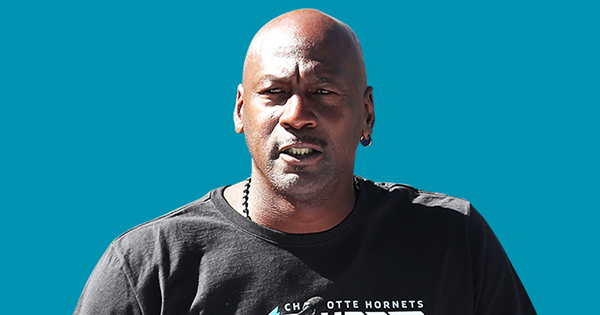
Michael Jordan, Chairman of the Charlotte Hornets

Charlotte, NC — As part of the Charlotte Hornets’ continued effort to assist residents of the Carolinas who have suffered due to the devastation caused by Hurricane Florence, Hornets Chairman Michael Jordan is donating $2 million to organizations aiding in the relief and recovery efforts.

Jordan is contributing $1 million each to the American Red Cross and the Foundation For The Carolinas’ Hurricane Florence Response Fund. The American Red Cross is providing food and shelter to thousands of people who have been displaced by the hurricane, while the Foundation For The Carolinas’ Hurricane Florence Response Fund directs funds to nonprofits in North and South Carolina providing relief to victims of the storm.

On Friday, Sept. 21, in partnership with Food Lion, more than 100 members of the Hornets organization, including both business and basketball staff, will help pack disaster food boxes at Second Harvest Food Bank of Metrolina. The disaster food boxes, which provide individual meals, will be shipped to Wilmington, N.C., Fayetteville, N.C., and Myrtle Beach, S.C., and distributed to those who have been directly impacted by the hurricane. The organization’s goal is to pack 5,000 boxes. The Charlotte Hornets Foundation will also be making a donation to Second Harvest Food Bank of Metrolina. Food Lion, the team’s Official Hunger Relief Partner, will be donating the food that will be packed for the boxes.

Additionally, Hornets and NBA merchandising partner Fanatics has designed a special T-shirt featuring the Hornets logo in the middle of the states of North and South Carolina surrounded by the words “Carolina Strong.” The NBA, the Hornets and Fanatics will donate 100% of the net proceeds of the “Carolina Strong” T-shirt to the Foundation For The Carolinas’ Hurricane Florence Response Fund. The T-shirts are now available online at NBAstore.com, Fanatics.com and HornetsFanShop.com for $24.99.

Last week in an effort to encourage donations, the Hornets and the NBA launched a platform with verified local organizations focusing on immediate relief and support of those affected by Hurricane Florence. Fans are encouraged to visit hornets.com or the following microsite to make a donation: http://cares.nba.com/charlotte-hurricane-relief-efforts/. The organizations identified on the microsite include: American Red Cross, Direct Relief, Foundation For The Carolinas, Second Harvest Food Bank and the United Way of Central Carolinas.

Filed Under: National News, Sports Tagged With: Charlotte Hornets, Hurricane Florence, Michael Jordan

Primary Sidebar

MCJ WEEKLY

PREVIOUS EDITIONS

Go HERE for the Digital Archives

DR. TNT SCHOLARSHIP SPECIAL EDITION

CLICK THE IMAGE THE FULL EDITION

Newsletter Signup

The Milwaukee Community Journal (MCJ) and the Weekend Edition are distributed at a number of community churches; as is the current issue of Healthy Start. With many area churches closed for the next few weeks due to the coronavirus, your MCJ suggests you pick up your edition of the newspaper, Weekend Edition and Healthy Start at our offices, located at 3612 N. Martin Luther King Drive. We’re open from 10 a.m. to 4:30 p.m., Monday through Friday. You can still pick up the MCJ at several Walgreens and Pick n’ Save stores throughout the community, as well as city hall and the county courthouse.

Recent Posts

  • American Men Have Been In Crisis for Generations. A Remedy from 1879 Offers Hope
  • Online registration now open for 2026 Back to School Festival
  • Oakland Protesters Rally to Defend Haitian Immigrants and TPS
  • OPINION: 57,000 Empty Apartments and Not a Word of Apology – City Limits
  • ‘Choppin’ it up’ with a brotha about Crowley’s win, and why Black folks aren’t down with the Democratic Socialists!

CLASSIFIEDS

CLASSIFIEDS

Place your notice of divorce, name change, etc. in the Milwaukee Community Journal's Classifieds! Contact is at 414-265-5300

Follow Us

  • Facebook
  • Instagram
  • Twitter
  • YouTube

Tags

2016 election African Americans Alderman Khalif J. Rainey ALDERWOMAN CHANTIA LEWIS Alderwoman Milele A. Coggs annual Baylor College of Medicine Biden Black History Month Black press Boko Haram civil rights community coronavirus COVID-19 Dating Advice day Democrats diversity Donald Trump Education event Featured free George Floyd HuffPost Live Joe Biden Love & Sex Love and Relationships Mayor Tom Barrett mental health Milwaukee Repertory Theater naacp national NNPA pandemic racism report Republicans Reuters social media Trump Trump Administration What Is Working: Small Businesses White House

Categories

H5_WEDC1027_AA_300x250

Copyright © 2026 Milwaukee Community Journal