• Skip to primary navigation
  • Skip to main content
  • Skip to primary sidebar
  • About
  • Contact
  • Advertise

Milwaukee Community Journal

  • News
    • Local News
    • National
    • World
    • Political
  • Men Building Men
  • Lifestyle
    • Arts & Entertainment
    • Fashion
    • Culture
    • Religion
  • Economy
    • Small Business
    • Money
    • Entrepreneurship
  • Health
    • Family
    • Relationships
  • Education
  • Jobs
    • Housing
  • Scholarship Fund
You are here: Home / Archives for learning

learning

From Head Start to HBCU to Harvard: One Man’s Story

January 14, 2025 By MKE Community Journal Leave a Comment

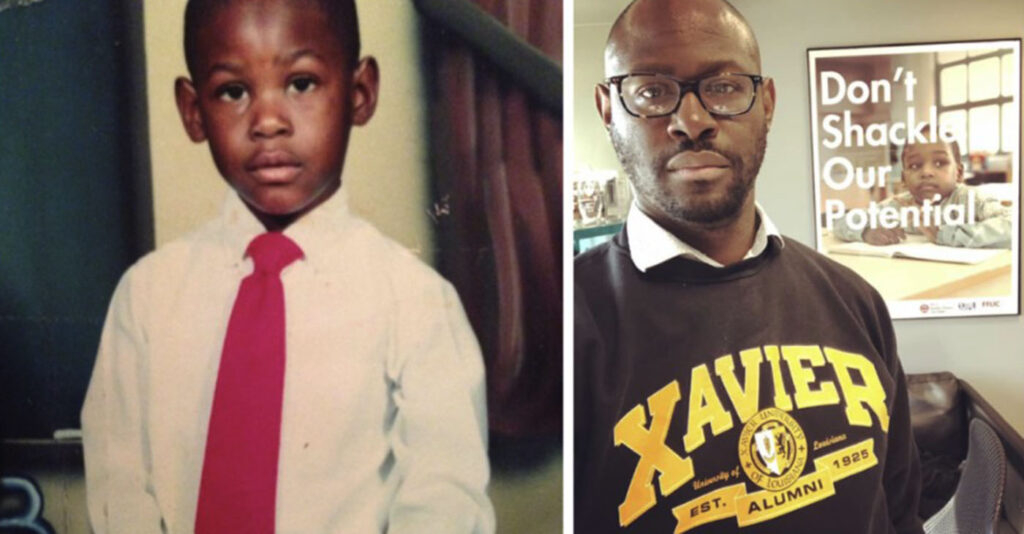
Victor Jones as a student (left) and a recent photo (right)

By National Head Start Association

Victor Jones graduated from Head Start over 30 years ago. Since then, Victor has built a career around his dedication to fighting for children, a passion he credits to his early education in Head Start. He has translated the Head Start mission into his work, first as a kindergarten teacher and today as an accomplished social justice attorney. Victor’s commitment to lifelong learning and his everyday efforts to make the world a more equitable place for children make him a true inspiration for the Head Start community. Victor shared his story with the National Head Start Association.

We are excited to learn about your Head Start story, Victor! When and where did you attend Head Start?

I’m a 1989 graduate of West Tampa Head Start, located in Tampa, Florida. My mother and I only lived in Tampa for two years, and these were the two years I attended Head Start. Thereafter, we returned to where I was born and raised, in Pascagoula, Mississippi.

Do you have any memories from your time in Head Start? Favorite activities, classmates, teachers?

I remember my class was always out and about — going on field trips to Busch Gardens to see the animals, going to the park, taking trips to the grocery store, and learning about fruits and vegetables. I also remember the times when doctors would visit us and check our eyes, ears and hearts, and I’ll never forget the day a giant toothbrush walked into our classroom, and we learned about the importance of dental hygiene. I still remember a few of my classmates’ names, though this was 30 years ago.

I can also still picture the uniform we had to wear on field trip days — it was a red shirt with an image of a panda bear hugging a bamboo tree, with black shorts or pants, and a black visor. And for the strangest reason, I remember that my classmates and I had to learn the song “Shower Me With Your Love” by an R&B group named “Surface,” as part of our graduation ceremony. The few times I’ve heard that song, I immediately think of my time in Head Start. Head Start was also one of the very, very few instances from my pre-K to 12th-grade journey in which I was taught by teachers who looked like me. I think having such vivid memories of my experiences in Head Start is a testament to just how positively impactful the program was for me.

How do you think Head Start impacted your later school years? Or even your goals and career accomplishments beyond school?

Head Start directly impacted my professional trajectory. Because of the program, I’ve always wanted to serve children in some capacity. Before practicing children’s rights and disability law, I was a public-school kindergarten teacher!

What did your educational and career journey that led to your current position look like?
After graduating from high school in Mississippi, I attended Xavier University of Louisiana, a historically Black college located in New Orleans, where I majored in literature and double minored in history and political science. I then received a master’s degree in education from Harvard University. I then taught kindergarten, and, thereafter, returned to New Orleans to attend law school at Loyola University. While in law school, I took courses in civil rights and child advocacy. I spent six years as a private practice attorney at multidisciplinary law firms in New Orleans, and then, in 2018, I returned to my original passion for serving children as an attorney representing their interests.

Victor, what advice do you have for current Head Start children and families?
Know that your child’s involvement in Head Start will be the best investment in their educational experience that you can offer them. The holistic approach to learning — physical care for self, care for your peers, and learning how to exist in the world around you, is an approach that I, as a former early childhood educator, can say is unique. I’m now the father of two daughters and I always say that I wish that they were able to have received a Head Start education like I did.

Anything else you would like to share with the Head Start community?

I always say that I went from “Head Start to HBCU to Harvard.” I’m eternally grateful for Head Start because it shaped me into someone who aspires to be a fierce advocate for marginalized children.

Filed Under: Education Tagged With: 1989 graduate, 30 years ago, a black visor, a former early childhood educator, a historically Black college, a master’s degree, a passion, a private practice attorney, a testament, advocate for marginalized children, an accomplished social justice attorney, an image, an R&B group, aspires to be, attend, Before practicing, beyond school, black shorts, born and raised, built a career, Busch Gardens, care for your peers, career accomplishments, career journey, child advocacy, child’s involvement, children’s rights, classmates, classmates names, courses in civil rights, credits, current Head Start children, current position, dedication, dental hygiene, disability law, doctors, double minored, early education, educational, educational experience, equitable place, eternally grateful, everyday efforts, eyes and ears, families, father, favorite activities, Featured, field trip days, field trips, fighting for children, for children, fruits and vegetables, giant toothbrush, goals, going to the park, graduated from Head Start, Graduation Ceremony, Harvard University, head start, Head Start story, Head Start to HBCU, hearts, high school in Mississippi, history and political science, how to exist in the world, impactful the program, in education, in Head Start, in some capacity, into his work, journey, kindergarten teacher, Law School, learned, learning, learning about, lifelong learning, located in New Orleans, looked like me, Louisiana, Loyola University, majored in literature, memories, mother, multidisciplinary law firms, my class, my experiences, my professional trajectory, my time in Head Start, New Orleans, original passion, panda bear hugging a bamboo tree, pants, Pascagoula Mississippi, physical care for self, picture the uniform, pre-K to 12th-grade, public school kindergarten teacher, received a Head Start education, red shirt, representing their interests, school years, serve children, serving children as an attorney, share with the Head Start community, Shower Me With Your Love, six years, song, surface, taking trips, Tampa Florida, taught by teachers, teachers, the animals, the best investment, the day, the grocery store, the Head Start community, The holistic approach, the National Head Start Association, the program, the song, to Harvard, to learning, translated the Head Start mission, true inspiration, two daughters, two years, unique, Victor, Victor Jones, visit us, vivid memories, walked into our classroom, West Tampa Head Start, While in law school, world, Xavier University, years ago

Early Literacy is an Educational Priority

August 20, 2024 By MKE Community Journal Leave a Comment

Dr. Herb Turner Founder, President and Principal Scientist Analytica Inc
Dr. Marina Merrill Director of Research & Strategy Children’s Institute

In 2023, the Oregon legislature launched the Early Literacy Success Initiative to help all students learn to read, as only 46% of students read proficiently by the end of grade 3. To support the initiative, the Children’s Institute (CI) partnered with the Regional Educational Laboratory Northwest (REL Northwest) to compile accessible, evidence-based resources to support this effort and strengthen literacy practices for young children.

Preschool students at the Preschool Promise program at the Center for African Immigrants and Refugees in Portland, Oregon.

Why early literacy matters

Why focus on birth to grade 3? Early experiences shape the foundation for all future learning, with critical brain development occurring before age five. When young children develop strong language skills early on, they are better equipped to engage in learning and succeed academically. Children who fail to achieve reading proficiency by grade 3 are four times more likely to drop out of high school. Thus, early literacy is an educational priority and an equity issue, as it can help mitigate the effects of poverty and systemic inequities.

Evidence-based early literacy resources

REL Northwest compiled vetted resources to support early literacy from ages 0–3 and preschool to grade 3. For children ages 0–3, these resources include interactive reading apps, early literacy games, and parent-child reading guides. Educators and parents can integrate these strategies into home visiting programs, early intervention services, and community-based programs. For older children in preschool and elementary school settings, the resources include guided reading materials, phonics-based learning tools, and literacy assessment guides.

For example, How Parents and Families Support Oral Language and Vocabulary provides research-based strategies, example texts, and real-life vignettes that parents and families can use to develop oral language skills in infants, toddlers, and preschoolers, including those from diverse linguistic backgrounds. Another resource, A Kindergarten Teacher’s Guide to Supporting Family Involvement in Foundational Reading Skills, helps teachers support families in practicing foundational reading skills at home as a companion to the recommendations for classroom instruction. These resources address the unique needs and challenges faced by students, including students from low-income families, English learner students, and students with disabilities.

Children’s Institute published these resources on a custom web page designed for families, caregivers, practitioners, and policymakers to access and use practices linked to improving student outcomes. The resources are presented in a user-friendly format with clear instructions and explanations.

Policy context and future directions

The shift toward identifying literacy skills on the zero-to-grade-3 continuum reflects a growing recognition of the importance of early childhood education. This approach aligns with national trends and funding opportunities, emphasizing the need for comprehensive early literacy strategies. By thinking beyond the traditional PreK–3 continuum, Oregon is positioning itself as a leader in early childhood education reform.

The infusion of state funding into early literacy initiatives, particularly the Early Literacy Success Initiative, opens new possibilities. By leveraging this funding, educators and policymakers can adopt and integrate these tools and strategies into their existing frameworks, ensuring that every child in Oregon can develop strong literacy skills from the earliest age.

By creating a more equitable education system that empowers all children to reach their full potential, this initiative aims to improve early literacy and foster a sense of shared responsibility and commitment to the future of our children and our communities. Lessons learned can or should inform efforts throughout the country and inspire action on early literacy.

The role of REL Northwest and Children’s Institute

REL Northwest plays a crucial role in building the capacity of education stakeholders across Alaska, Idaho, Montana, Oregon, and Washington and helping state and district leaders use data and evidence for informed decision-making. REL Northwest conducts applied research and provides training and technical support to state and local education agencies and community organization partners in the region.

Children’s Institute, a nonprofit organization, focuses on improving the lives of children from prenatal to fifth grade in Oregon, especially those facing systemic barriers like poverty, racial inequities, disabilities, or rural areas. CI’s work focuses on shaping state early childhood policy related to early learning and healthy development and working with schools and districts to strengthen teaching practices in preschool through fifth grade with its Early School Success initiative. They collaborate with various stakeholders, including families, educators, regional leaders, policymakers, and health organizations, to ensure a comprehensive approach to early childhood education.

Filed Under: Education Tagged With: A Kindergarten Teacher's Guide to Supporting Family Involvement in Foundational Reading Skills, a nonprofit organization, age five, ages 0–3, Alaska, all children, an equity issue, at home, better equipped, birth to grade 3, building the capacity of education stakeholders, challenges, child, children, children ages 0–3, Children's Institute, classroom instruction, clear instructions, collaborate, commitment, communities, community organization partners, community-based programs, companion, compile accessible, comprehensive approach, comprehensive early literacy strategies, conducts applied research, critical brain development, develop oral language skills, develop strong, develop strong literacy skills, disabilities, district leaders, districts, diverse linguistic backgrounds, drop out of high school, early childhood education, early childhood education reform, Early experiences, early intervention services, early learning, early literacy, early literacy games, early literacy initiatives, early literacy resources, early on, Early School Success initiative, education system, educational priority, educators, educators and policymakers, effort, English learner students, evidence, Evidence-based, evidence-based resources, example texts, existing frameworks, explanations, faced by students, facing systemic barriers, fail to achieve reading proficiency, Featured, fifth grade, for all future learning, foster a sense of shared responsibility, foundational reading skills, funding opportunities, future directions, future of our children, grade 3, growing recognition, health organizations, healthy development, help all students, helping state, helps teachers, home visiting programs, Idaho, identifying literacy skills, improve early literacy, improving the lives of children, in Oregon, in practicing, in the region, including families, infants, inform efforts, informed decision-making, inspire action, integrate, interactive reading apps, language skills, launched, learn to read, learning, Lessons learned, linked to improving student outcomes, literacy assessment guides, low income families, mitigate the effects, Montana, national trends, older children, opens new possibilities, Oregon, parent-child reading guides, parents, Parents and Families, partnered with, phonics-based learning tools, Policy context, policymakers, poverty, poverty and systemic inequities, practitioners, prenatal to fifth grade, preschool, preschool and elementary school settings, preschool to grade 3, preschoolers, provides research, provides training, racial inequities, reach their full potential, read proficiently, reading materials, real-life vignettes, regional leaders, resources, rural areas, shape the foundation, shaping state early childhood policy, state and local education agencies, state funding, strategies, strengthen literacy practices, students, students with disabilities, succeed academically, support families, Support Oral Language, teaching practices, technical support, the country, the earliest age, the Early Literacy Success Initiative, the initiative, the Oregon legislature, the recommendations, the Regional Educational Laboratory Northwest, The role of REL Northwest, The shift, to access, To support, toddlers, tools, use data, use practices, user-friendly format, vocabulary, Washington, with various stakeholders, working with schools, young children

The Game Changing Power of Love

May 29, 2024 By MKE Community Journal Leave a Comment

Kali Thorne Ladd, Chief Executive Officer, Children’s Institute

For many working in the early childhood field, we understand the need to offer our youngest children nurturing and caring environments that stimulate learning and healthy development. The neuroscience of brain development helps us understand why.

In the first year of life, 1 million neural connections are made in the brain every minute. The first 1,000 days of a child’s life are most critical to brain development and social-emotional well-being. Ninety-five percent of brain development happens in the first five years of a child’s life.

Neuroplasticity is greatest in our younger years, so our ability to scaffold our brain toward resiliency starts early and has lasting impact.

But many things can get in the way of optimal development for young children. Abuse, racism and poverty can cause stress and trauma. Being bullied in school or elsewhere can create significant challenges and undermine a sense of belonging. The lack of caring adults in these circumstances can leave children feeling unsafe and insecure. Living through a global pandemic or under the constant threat of racial or school violence can compound the stress response in children.

When a child experiences stressful things, especially over a prolonged period, there is great danger that the stress can register in the brain and body as trauma. When this happens, it has an extremely negative impact.

The trauma scars reshape a child’s brain. It disrupts the foundations of memory, decision-making and emotional stability. Later in life, these traumatic wounds can fuel the fires of addiction and mental illness and cast shadows over the path of learning and growth. Trauma disrupts everything.

But there is one important research and data point that offers hope. When children experience hard things, the one thing that can help them overcome trauma and develop resiliency is love.

Loving, caring relationships are the most important factor in building sturdy brain architecture and turning stress into resiliency. This is game changing. It’s something we can all understand. Each one of us is wired for love. We all need it, and children have the greatest opportunity to thrive when they are immersed in it.

But what does this mean for people and organizations in the early childhood field? For teachers, policymakers and advocates? For leaders of organizations or our local, state and federal government? It means we have a moral imperative to create the best possible conditions for learning, love and growth for our youngest children.

The good news is that we have plenty of examples and efforts to build from. Now we simply need the commitment to act in the best interest of our children.

Here are some next steps:

  • Visualize an ecosystem of love, care and learning for children that begins before they are born and is designed to help them grow and thrive.
  • Prioritize giving all children access to loving, caring adults inside and outside of the home, understanding that love is not just nice to have, it’s an essential need.
  • Create dedicated funding streams for expansion of early childhood programs and services at local, state and federal levels.
  • Ensure public access to quality preschool programs that promote early learning and health development while simultaneously strengthening the supply of childcare and the needs of working parents and families.
  • Ensure that policymaking at all levels centers young children and their families, including housing, healthcare, behavioral health, law enforcement, economic development and education.

Now, it can be overwhelming to think about changing these complex systems. But there is a way to simplify things and for each of us to make a commitment to doing what’s right for children in our world today, right now.

Reach into your soul and heart and imagine your power to give the gift of love and resiliency to a child. Maybe it’s a child you know, a classroom you’re familiar with, a community or church that is part of your life. When you look inside, know that you can be an ambassador for love, an ambassador for helping children thrive in a community of love.

It takes a lot of love to heal the world, but only takes a little to help a child know they belong, that they are cared for and safe, that they are loved and that they can heal. When we do that, we can change the world with one act of love followed by another, and another.

Kali Thorne Ladd leads the Children’s Institute, which leverages research, practice, policy and advocacy to shift systems toward justice for families so that all of Oregon’s children, prenatal to grade 5, have access to opportunity.


Filed Under: Latest News, National News Tagged With: 000 days, 1 million neural connections, a child experiences, a child’s brain, a classroom, a community, a global pandemic, a prolonged period, a sense of belonging, abuse, addiction and mental illness, advocates, all levels, an ambassador, an ecosystem of love, behavioral health, being bullied, best possible conditions, body, brain development, building sturdy brain architecture, care and learning for children, cared for and safe, caring environments, caring relationships, cast shadows, cause stress and trauma, change the world, child’s life, children, children in our world, church, commitment, complex systems, create, decision-making, dedicated funding streams, develop resiliency, early childhood field, economic development, Education, efforts, emotional stability, Ensure public access, essential need, expansion of early childhood programs, families, Featured, federal government, feeling unsafe and insecure, five years of a child’s life, for love, fuel the fires, game changing, give the gift of love, giving all children access, have access to opportunity, heal, health development, Healthcare, help them grow and thrive, help them overcome trauma, helping children, housing, immersed in it, justice for families, Kali Thorne Ladd, law enforcement, leaders of organizations, learning, learning and growth, learning and healthy development, local, love, love and growth, love to heal the world, loving, minute, moral imperative, most critical, most important factor, negative impact, Neuroplasticity, nurturing, one act of love, optimal development, Oregon’s children, organizations, overwhelming, part of your life, people, plenty of examples, policy and advocacy, policymakers, Policymaking, poverty, power, practice, prenatal to grade 5, Prioritize, promote early learning, quality preschool programs, racism, register in the brain, research, research and data point, resiliency to a child, school, school violence, services at local, shift systems, significant challenges, simplify things, social-emotional, soul and heart, state, state and federal levels, stimulate, strengthening the supply of childcare, stressful things, teachers, the best interest of our children, the brain, the Children’s Institute, the commitment to act, the early childhood field, The first 1, the first year of life, the foundations of memory, The good news, the greatest opportunity, the home, The lack of caring adults, the needs of working parents, The neuroscience, the path of, the stress, the stress response, The trauma scars, they are born, threat of racial, thrive in a community of love, trauma, Trauma disrupts everything, traumatic wounds, turning stress into resiliency, Visualize, Well-being, young children and their families, younger years, youngest children

What Do Kindergarten Teachers Mean By “Ready for School?”

May 7, 2024 By MKE Community Journal Leave a Comment

81 Questions for Parents by Kristen J. Amundson Book cover

By Kristen J. Amundson

At this time of year, many preschool parents are worrying about whether their child will be ready for kindergarten. What are the things their child should learn? Do they need to make alphabet flash cards? Invest in worksheets so kids can practice math. I talked with kindergarten teachers to find out what they think kids need to know to be kindergarten-ready. You may be surprised: Readiness for school, teachers say, does not mean that your child will have mastered all the kindergarten skills on Day One. Instead, it means that your child will take pleasure in learning how to do things on their own.

One kindergarten teacher said to me, “I can teach kids their ABCs. I can’t teach them —at least not very efficiently—to help them get along with others and to understand that they aren’t going to get their own way all the time in school.” If you always do things for your child, and always tell them what to do, they will not be able to make their own decisions and learn how to be independent. One good rule of thumb for parents of toddlers: whenever possible, avoid doing things for your child that they can do on their own.

Kindergarteners are expected to take responsibility for their belongings. They put their lunch box in the right place. They hang up their coat. During the day, they use the restroom and wash their hands by themselves. In the cafeteria, children must put the straw in their juice box or open the milk carton. They must get the foil on top of the applesauce. “The whole first month in the cafeteria, we’re helping children learn to open things,” one teacher said. “They’re always surprised that ketchup packages have a little line that shows you where to tear to get the ketchup out.” So, teach your child how to do those things before the first day of school.

Let your toddler eat (and accept that mealtime will be messy and s-l-o-w, at least at first). Let young children choose what they want to wear—and relax if they choose to wear the polka-dot shirt with the checked pants. Encourage them to use the crayons they want to use in their coloring book and do not be surprised if you see a purple horse or a red elephant.

Follow the rule that teachers use when they are teaching a new skill:

First, I do.

Then we do.

Then you do.

Whether it’s shoe tying or making a sandwich, start by showing your child what to do. Then practice the same skill together, working side by side. Finally, let your child do it alone, first while you watch and then independently. And let me just say one word here about shoes—the bane of every kindergarten teacher. Shoelaces do not stay tied. “They drag on the floor. They drag across the restroom floor. They go into kids’ mouths,” a kindergarten teacher told me. “They need my help retying them. If I have 25 students, that’s 50 feet. And at 30 seconds per shoe tie, that’s 25 minutes a day I’m not teaching them letters or numbers or how to get along with others,” she said. That doesn’t mean children have to be able to tie their shoes before they start kindergarten. “Just put them in different shoes,” the teacher wisely advised. And really, just reread that part about shoelaces that have dragged on the kindergarten restroom floor ending up in the child’s mouth. You’ll probably keep your kid in Velcro shoes until they’re 20.

Kristen J. Amundson is a former teacher, school board chair, state legislator, and CEO of a national education organization. This column is excerpted from her book 81 Questions for Parents: Helping Your Kids Succeed in School, published by Rowman & Littlefield. It is also available on Amazon.


Filed Under: Education Tagged With: 81 Questions for Parents: Helping Your Kids Succeed in School, a new skill, a sandwich, ABCs, alphabet flash cards, Amazon, belongings, book, CEO of a national education organization, child, child do it alone, coloring book, Featured, first month, Follow the rule, former teacher, good rule of thumb, help them, helping children, independent, independently, invest, juice box, ketchup packages, kids, kids’ mouths, kindergarten, kindergarten skills, kindergarten teachers, Kristen J. Amundson, learn, learning, lunch box, mealtime, numbers, open the milk carton, own decisions, parents, practice, practice math, preschool, published, purple horse, Readiness for school, red elephant, responsibility, Rowman & Littlefield, school, school board chair, shoe, Shoelaces, state legislator, students, teach kids, teaching them letters, the applesauce, the cafeteria, the checked pants, the crayons, the first day of school, the polka-dot shirt, the restroom, the restroom floor, toddlers, Velcro shoes, wash their hands, what to do, working side by side, worksheets, year, young children

Part Profound’Part Two: More ‘Profound’ Questions for the year 2023!

January 12, 2024 By MKE Community Journal Leave a Comment

My Herculean task in life has been to research pressing questions facing our nation within a nation, America, and the world. Questions that, in totality, would hopefully move our community forward—or at least distract us from the PTSD that comes from being ‘hue-men’ in a black-and-white world. 

A decade ago, I started compartmentalizing, which helped reduce stress, anxiety, and my workload. As a result, I ended 2023 with only 1,321 unanswered questions, 42.6% of which had nothing to do with Black empowerment but were nonetheless ingredients in our cultural gumbo. Here, I continue with part two: 

• When did the cross become a fashion item versus a declaration of faith? Is it plausibly acceptable or hypocritical for gangsters, urban terrorists, and drug dealers to sport crosses? But then again, as Tony Soprano said in the HBO series of the same name, even Mafia murderers have souls—and by contributing 10% of their ill-gotten gains to the Catholic church in the form of tithes, they should be able to buy their way into heaven. 

• Would you support mandatory parenting classes for the parent(s) of wayward children? 

• What did Juneteenth mean to the 451,021 African slaves in union states like Maryland, Delaware, Kentucky, and Missouri? 

Despite what you’ve been told, the proclamation was limited to slaves in the Confederate ‘states.’ (President) Abe Lincoln’s executive order was, in fact, a military tactic, as he had previously proclaimed he would leave slavery in place if the Confederacy remained in the union. 

If I had my way, we would celebrate December 18, 1865—the day the 13th amendment was ratified– as Jubilee Day instead of June 19. 

• What did our nine-year-old children do before they had cell phones to babysit and socialize them? Without a cell phone, they may be enticed to read books! 

• How long can a ‘decent’ brother look at a sister’s behind before it’s considered obscene or an intrusion on her privacy– their invisible space? 

That may sound like a phantastic (my new word of the week) question, but in today’s PC and ‘Me Too’ landscape, it’s an issue that if incorrectly answered can land an innocent brother—even a minister or politician—in jail…or worse. 

I answered that question in a Signifyin’ column a year or so ago when a brother who joined a central city fitness center was verbally attacked for ‘staring’ at a sister’s ‘behind.’ 

The brother had no choice, given that the sister was positioned directly in front of him on a treadmill. 

For the record, in my initial column, I suggested you can look for approximately 97 seconds if you’re a male and twice that long if you’re a lesbian. 

But, I’ve reconsidered my answer in light of the article in last week’s WEEKEND edition, titled ‘We need to stop exploiting Black women through the ‘Booty Paradox!’ 

• Have you stopped ‘learning?’ According to the vocabulary website I subscribe to, I used 58 new words in 2023. 

• My latest is ‘timorous,’ which prompts the question of why I was never taught its meaning in high school. One of my grandsons attended the prestigious Brookfield Academy. His vocabulary is twice as large as mine. Can you see where I’m going? 

• Would the world come to an end if you cut off service to cell phones for three hours? 

• Do you support term limits? 

• Speaking of political accountability, when was the last time you talked with your alderperson, county supervisor, or state representative? Do you know who your school board representative is? Ninety-four percent of you can’t answer that question because you didn’t vote. 

• Do you know the lyrics of the Black National Anthem? That’s probably not a fair question. Can you get away with lip-syncing the lyrics along with half the other brothers and sisters in the room? 

• Who the hell came up with the Juneteenth Day Flag? Check that. I know who created it, so my real question is, why wasn’t the Black public provided an opportunity to vote on it? I would have been happy with Marcus Garvey’s Black Liberation flag—with a broken chain and welfare checks representing stars. 

• By the way, you know the emancipation proclamation probably would not have survived court scrutiny? Some constitutional attorneys believe the union could not take ‘contraband’ from a non-foreign nation. 

• Also, there are those in legal circles who posit the Confederacy had a right to succeed and thus keep slavery alive—until a slave revolt, which would no doubt have destroyed the country. I can envision a screenplay under that scenario in which that slave revolt would have led to a Black independent nation. 

• Let’s assume God made a perfect mate for you somewhere on this planet of five billion people. What are the odds that you will meet them? And since that’s obscenely low, do you settle for second best? 

• Will you vote in the presidential election with the expectation of systemic change or personal benefit? Or will you vote—if you vote—to stop Donald Trump (assuming you vote Democrat)? 

• Since I’m on that subject, are you an actual member of the Democratic Party, or simply vote for its candidates? There’s a difference, you know. If you are not a card-carrying, dues-paying member, you don’t have any say or input in the party’s platform. 

• Is a fetus a human being, or merely the yolk of the (visualize a chicken) egg? 

• Why do most Black folks vote for political incumbents without knowing their records, political positions, or who may be ‘secretly’ funding their campaigns?’ 

• Who created that disingenuous motto of ‘happy wife, happy life?’ Doesn’t it imply that a brother’s happiness is secondary in a marriage, if not completely ignored? 

• Do your Black Democratic Party representatives work for you or for the party? Consider, for example, over 80% of Black constituents support school choice, but 80% of Black Democrats oppose it because that is the party’s platform (as dictated by the teachers union). 

• What is the Black agenda? I keep hearing radio pundits and social advocates lambasting Black politicians for not facilitating the Black agenda. But I haven’t listened to any of them explain what ‘agenda’ item they are speaking of. 

• What the hell is a ‘Black card’? Does not adhering to its principles mean you can’t eat collard greens, use hot sauce, or say ‘dis’ instead of ‘this’? Does losing your ‘black card’ mean you lose melanin? Does that explain what happened to Michael Jackson? 

• Brothers, is your ideal woman someone who defines themselves by wigs, six-inch eyelashes, and the ability to ‘twerk’ on demand? Does she proudly proclaim herself a bitch (b-word)? 

• Sisters, is your ideal man a sperm donor—male ‘Neckbone’—who doesn’t take care of his child(ren), calls himself a ‘pimp’ and refers to you as his ‘bitch’ (b-word)? If a sister is not insulted by that declaration, something is amiss. 

• I’m not trying to be salacious, but why is a woman’s nipples considered a sexual item, but not the rest of the breast? Put a band-aid on the nipple or go to jail. A sister can’t even breastfeed for fear of being charged with a crime, even though that’s what the nipple was created for. 

• What happened to the ‘hoes’ (aka: ‘ho,’ ‘slut,’ ‘tramp’) and the ‘dogs’ (aka: ‘male hoes,’ ‘slingers,’ ‘sperm donors’)? During my upbringing’, we made distinctions based on what we considered terrible or immoral behavior. Yes, by today’s standards, we were conservative, but that culture did help to facilitate what was considered ‘community standards’ based on both religious and Africentric paradigms. Today, there are no longer distinctions, and what we view as ‘bad conduct’ is the acceptable norm. And with it, a dysfunctional community. I’m not a prude, but even as a reformed ‘hoe’ myself, I understood the benefits of a sustainable culture. 

• Why do 71.3% of our tribal members believe white ice gets colder? 

• Is Christianity politically incorrect today? What does it say when Christians are afraid to speak ‘their’ truth? 

• Will the abortion issue be enough to swing the country Democratic? 

• What would Black America look like 10 years from today if we all embraced the tenets (principles) of Kwanzaa? 

• Better yet, what would the country look like in 2034 if the concept/construct of race were outlawed and forbidden by media, schools, or churches? 

Only a handful of opportunists reject the common sense proposition that there is but one race. Nonetheless, most don’t see the harm the invented concept has brought. 

We could start the campaign by stopping the government from using race for identification purposes. I just checked a government form last week that asked if I was white, Asian, Hispanic, or African American/Black? 

• I don’t recall a day I haven’t witnessed some foolish ‘Neckbone’ or urban terrorist driving recklessly down Fond du Lac Avenue, between Hampton and Capitol Drive. I’m not alone in asking when police will focus on ending the insanity that puts innocent lives in danger. Even an decoy car with a blow-up doll would have some positive effect. 

• Is Black marriage—nuclear family paradigm—on the’ endangered species’ list? Or will it be restricted to the middle class, Christians, and Muslims? 

• Walgreens has closed three central city stores. Walmart closed one in 2023 and is looking at possibly closing another this year. It’s not because they have been underutilized, but because of excessive theft, primarily by us (or ‘y’all’). Should we be mad or accepting? 

• Do you really believe carrying a gun (legally) will save you from an ‘urban terrorist’? Are you prepared to walk around with a gun in your hand 24/7? This is not Dodge City in the classic cowboy drama, ‘Gunsmoke’…(even though it seems like it). 

• Are pigs feet and chitterlings still on your holiday menu? Before his death two years ago, my father—who was blind and suffered from heart disease—asked me to cook him some pig feet. My siblings refused to honor his request, so he turned to me. He explained that pigs feet were among his few comforts besides ‘listening’ to old westerns on television. Pops knew he was close to death and wanted to go out with what he considered a familiar taste on his palate (he was from the deep, deep south). 

Who were we to dictate his needs? Was our decision for his benefit or ours? 

So I purchased a couple and asked my ‘bonus mother’ to cook them. My father smiled. And I facilitated his ‘desire’ two other times in his final year. I suspect an occasional pigs foot may have extended his life and, at the very least, brought back fond memories. 

• Have you ever voted in a school board election? Do you realize the board elections are the most important and impactful of any election? Why do you complain about educational apartheid when you don’t vote? Does that make you ignorant or stupid? 

• Would you have voted for Barack Obama if he ran as a Republican? What about as an independent? In other words, are our political leaders viable only if they are screened and approved by the Democratic Party? 

• Are Black people genetically superior to all other ethnicities? Without stereotyping too much, one study suggested Asians (particularly Japanese) have superior lower body strength, while Europeans have more muscular upper bodies. Africans are perfectly balanced. Hmmm. 

• Why do sisters believe brothers are swayed by false eyelashes, long ‘European’ wigs, and padded bras? 

• Why do sisters believe the garbage ‘Neckbone men’ are espousing? Do they really believe their Neckbone (sex mate) will marry them and stay with her for the baby’s sake? Be faithful? What is it about ‘bad boys’ that is attractive to young sisters? 

• What is the first step toward ending racism? Maybe the answer lies in recognizing or acknowledging there is but one race. There is no white race, nor is there a black, yellow, or brown race. Ethnicity and race are two totally separate concepts. Race, and thus racism, is a construct, an invention (by Europeans) to divide and conquer. 

• How do you know if a ‘preacher/minister/pastor has been ‘called’? How can you differentiate between a preacher and an entertainer? Is ‘you gotta have faith’ an acceptable answer to questions that challenge scripture? 

• Is serial polygamy the new norm? Can our village prosper with fatherless households under the ‘Culture of Poverty’ paradigm? 

• Is Jesus (aka Emmanuel, Yeshua) a nigger (n-word)? I’m not being facetious. Nor am I being sacrilegious. 

Mine is a question rooted in the asinine belief that nigger (n-word) is a term of affection for SOME Black (aka Negro, African American, Colored) people. The last person I asked that question of, an intelligent Black sister, answered ‘yes.’ Without hesitation or a hint of sarcasm. 

• Have we gone overboard with this idiocy? Are we the only ethnicity on planet earth with disregard for the impact of self-hatred? 

• Would you date someone with dirty fingernails? I’m a hands man; it’s the first thing I look at. Clipped nail polish, dirty nails, or burnt fingertips tell a story. 

• Sisters, do you know one of the chambers in a man’s brain is a ‘nothing box?’ It’s true; I read it in a book—albeit I can’t remember the Canadian psychologist author’s name). The book focused on why women are better at multitasking. 

In any event, sisters should realize that when you ask a brother what he is thinking about, and he says ‘nothing,’ he’s actually telling the truth. 

And in the void of nothingness, we find safety, peace, and escape from reality. 

Hotep. 

Filed Under: Latest News, Mike Holt - Signifyin', Signifyin' Tagged With: •Brookfield Academy, juneteenth, learning, parenting

Motivated Mondays: Practice Humility

March 27, 2023 By MKE Community Journal Leave a Comment

Humility is such a major word to reflect on often. Its soft demeanor speaks so much value when expressed. Being humble means to have or show a modest or low estimate of one’s own importance. In other words, it’s getting YOU out the way, for something greater. It’s lowing your ego and high thoughts of yourself.

It’s so easy to come across people have feel like because they “have more” or “make more “ or “do more” than others that they are superior. This is in fact arrogance, the opposite of humility. It’s easy to spot this type of behavior in a work setting maybe with a supervisor or a seasoned coworker. Sometimes people like this operate out of ego while in these positions. They lead with nasty attitudes to prove points.

There’s nothing like a humble person. Not the kind of “humble” that walks around screaming “I’m humble”. No, I’m talking about the humble that leads with care and respect. A fair person that sees themself no higher than the next but certainly will still play their part. This person is not a doormat. This person chooses kindness and gentleness. The humble get so far rather than those that stop to puff up their own chest.

Which one are you? Do you live your life with humility? Are you considerate of others or do you put you first at all times. Do you brag on yourself always or are you a listener?

Practicing humility has many benefits:

  • It Allows You To Learn.
  • It Proves You Don’t Know It All.
  • It Creates Endless Possibilities.
  • It Magnifies Your Strengths.
  • It Helps Others Connect With And Relate To You.
  • It Keeps Power In Check.
  • Humility Empowers Others To Lead.
  • It Leads To Curiosity.

Ways to practice humility:

  • Spend time listening to others.
  • Practice mindfulness, and focus on the present.
  • Be grateful for what you have.
  • Ask for help when you need it.
  • Seek feedback from others on a regular basis.
  • Review your actions against the language of pride.

Try it. You’ll see just how great it is for your self.

-LaShawnda S. Wilkins (@speaklifeshawnie)

Filed Under: Latest News, MKE Monday Juice Tagged With: curiosity, feedback, focus, hulility, learning, Mindfulness, review

Biden-Harris Administration Announces Two New Actions to Address Youth Mental Health Crisis

August 19, 2022 By MKE Community Journal Leave a Comment

Courtesy of the U.S. Dept. of Education

Our nation’s young people are facing an unprecedented mental health crisis.

Even before the pandemic, rates of depression, anxiety and suicidal thoughts among youth were on the rise. The pandemic exacerbated those issues, disrupting learning, relationships, and routines and increasing isolation—especially among our nation’s young people.

More than 40% of teenagers state that they struggle with persistent feelings of sadness or hopelessness, and more than half of parents and caregivers express concern over their children’s mental well-being.

To address this crisis, President Joe Biden put forward in his first State of the Union address a comprehensive national strategy to tackle our mental health crisis, and called for a major transformation in how mental health is understood, accessed, treated, and integrated—in and out of health care settings.

On July 29, the Biden-Harris Administration announced two new actions to strengthen school-based mental health services and address the youth mental health crisis.

Awarding the first of nearly $300 million the President secured through the FY2022 bipartisan omnibus agreement to expand access to mental health services in schools.

Next week, the Department of Education will begin the process to disburse almost $300 million Congress appropriated in FY22 through both the Bipartisan Safer Communities Act and the FY22 Omnibus to help schools hire more mental health professionals and build a strong pipeline into the profession for the upcoming school year.

In total, the Bipartisan Safer Communities Act will invest $1 billion over the next five years in mental health supports in our schools, making progress towards the President’s goal to double the number of school counselors, social workers, and other mental health professionals. This funding is allocated to two critical programs:

  • The Mental Health Service Professional (MHSP) Demonstration Grant Program. In FY22, this program will provide over $140 million in competitive grants to support a strong pipeline into the mental health profession, including innovative partnerships to prepare qualified school-based mental health services providers for employment in schools.
  • School-Based Mental Health (SBMH) Services Grant Program. In FY22, this program will provide over $140 million in competitive grants to states and school districts to increase the number of qualified mental health services providers delivering school-based mental health services to students in local educational agencies with demonstrated need. This will increase the number of school psychologists, counselors, and other mental health professionals serving our students. Some schools will gain mental health staff for the first time. Others will see this critical workforce expand. By increasing the number of qualified mental health professionals in our schools, and thereby reducing the number of students each provider serves, this program will meaningfully improve access to mental health services for vulnerable students.

In the following months, the Biden Administration will deliver the following additional FY22 funding that can be used to expand access to mental health services and supports in schools:

  • Fostering Trauma-Informed Services in Schools. Young people have been especially impacted by the trauma of COVID. Over the next several weeks, the Department of Health and Human Services (HHS) will begin evaluating applications to award nearly $7 million to education activities designed to help students access evidence-based and culturally relevant trauma support services and mental health care. Applications were submitted on July 25, 2022, and award announcements will be made this fall. The grant funds will help create partnerships that link school systems with local trauma-informed support and mental health systems to provide services to students in need.
  • Expanding Mental Health Services Through Full-Service Community Schools. The Biden-Harris Administration has proposed expanding funding for community schools, which play a critical role in providing comprehensive services to students and families to improve academic outcomes and student well-being.

Earlier this month, the Department announced plans to award $68 million in funds for 40 new grantees. All grantees are required to provide integrated student services, which can include mental health services and supports.

  • Responding to Childhood Trauma Associated with Community Violence. The FY22 omnibus included $5 million for the Department of Education’s Project Prevent, a program that provides grants to help school districts increase their capacity to implement community- and school-based strategies to mitigate community violence and the impacts on students.

Experiencing or witnessing violence in the community is an adverse childhood experience linked to chronic health issues, including mental health. Project Prevent seeks to build a bridge between schools and community-based organizations to provide students with the tools to break cycles of generational violence and trauma, including through the use of mental health services and supports.

Encouraging Governors to Invest More in School-Based Mental Health Services.
In a letter sent on July 29, 2022, to governors across the country, the Departments of Education and Health and Human Services highlight federal resources available to states and schools to invest in mental health services for students.

The joint letter from Secretaries Becerra and Cardona highlights actions by the Biden-Harris Administration to improve the delivery of health care in schools and make sure children enrolled in Medicaid have access to comprehensive health care services, as required by law.

The letter also previews forthcoming Medicaid guidance on how states can leverage Medicaid funding to deliver critical mental health care services to more students, including ways to make it easier to bill Medicaid for these services.

Building on Progress

These actions build upon earlier investments and announcements designed to expand access to mental health services for youth and further President Biden’s Unity Agenda. In just 18 months, President Biden has invested unprecedented resources in addressing the mental health crisis and providing young people the supports, resources, and care they need.

Through the American Rescue Plan (ARP), the Biden-Harris Administration has invested over $5 billion in funding through HHS to expand access to mental health and substance use services, and school districts are estimated to use an additional $2 billion in Department of Education ARP Elementary and Secondary School Emergency Relief (ESSER) funds to hire more school psychologists, counselors, and other mental health professionals in K-12 schools.

And the President’s FY23 budget proposes over $27 billion in discretionary funding and another $100 billion in mandatory funding over 10 years to implement his national mental health strategy.

The post Biden-Harris Administration Announces Two New Actions to Address Youth Mental Health Crisis first appeared on Post News Group. This article originally appeared in Post News Group.

Filed Under: Health Tagged With: anxiety, Biden-Harris Administration, depression, hopelessness, isolation, learning, mental well-being, pandemic, relationships, routines, sadness, suicidal thoughts

Motivated Monday: Learning is Earning

March 14, 2022 By MKE Community Journal Leave a Comment

Happy Monday! Yep we made it another week. It’s a new day. A new week; one that will be blessed. It’s time to push, press, rise, and grind. It’s go time; time to get it! And don’t stop!

It’s a new week. And a new week means new obstacles; New issues and so on. No matter the situation, every situation is an opportunity for learning. Learning is a part of life for those who choose to grow. It’s very important to a person who wants to get somewhere.

No matter who we are we should always leave room for learning.

One reason being that if we don’t do it, we’ll lose out. We never know what kind of things we can lose out on but we know losses will be taken if we don’t choose to learn or learn from situations at hand. Learning changes things. It makes things make sense. It gives perspective and helps with principles.

It leads to new opportunities. Once your eyes are open, you can see opportunity a bit better. Things you’ve always seen, begin to look different with insight and knowledge. Wisdom can take you places you’ve never been. It has the power to make you happier once applied. It may not always feel the best but learning and application has the ability to take you places, literally.

Crazy part is that learners can inspire and teach others. If you’re a person who’s always learning you can be a person who teaches. Gaining new wisdom and principles can put you in a position you never thought you’d be in.  Plus, it makes you more valuable. With knowledge, you could be unstoppable. When you know what you’re doing, you don’t have to worry. So in essence, it reduces stress.

Commit yourself to learning something new. Whether it’s weekly or daily, make learning about of your calendar. Remember, learning is ultimately earning. So, keep going, no matter the age.

-LaShawnda S. Wilkins (@speaklifeshawnie)

Filed Under: MKE Monday Juice Tagged With: inspire, learning, Monday, new week, teach

Black History Month: A Learning Bonanza at izzit.org

February 10, 2021 By MKE Community Journal Leave a Comment

Special online Black History course available at no cost to educators

izzit.org makes learning about Black history more thought-provoking and engaging with its video-centric The U.S. Constitution & Black History course. Developed from the PBS series A More or Less Perfect Union, the course is available online at no cost to educators at izzit.org.

The online course is appropriate for grade levels 6-12 and examines how the laws of the United States, starting with the Constitution itself, have impacted the history of Black Americans. The six-part course covers the landmark Supreme Court cases of Dred Scott, Plessy v. Ferguson, and Brown v. Board of Education, compromises, The Civil War, Reconstruction, Segregation and contemporary issues.

“Educators have been searching for good educational materials about civics and Black History for years and this course is one of the finest available,” said Dean Graziano, vice president of izzit.org.

Additional izzit.org videos that may be of interest for Black History Month include Becoming Equal Under the Law, The Civil War, and the Teachable Moment: Thurgood Marshall – First African-American Supreme Court Justice.

About izzit.org:
izzit.org specializes in creating free, standards-aligned content for teachers that fosters critical thinking and respectful debate among students. It is estimated izzit.org videos generate over 11.3 million impressions annually. In addition to its library of almost 70 video-centered teaching units, Teachable Moments and online courses. izzit.org also offers a Current Events service, with two daily articles, discussion questions, and vocabulary, all at no cost to educators. Each school year, U.S. educators can receive one free DVD from izzit.org’s library as well as unlimited downloads and streaming. For more information, visit the website, www.izzit.org.

Filed Under: Black History Month, Education Tagged With: Black History, Brown v Board of Education, constitution, Dred Scott, izzit, learning, Plessy v. Ferguson, Reconstruction, segregation, The Civil War, Thurgood Marshall

How Lifelong Learning Is Becoming A New Version Of The MBA

January 5, 2021 By MKE Community Journal Leave a Comment

When higher education looks back on 2020 in decades to come, the year of the pandemic could be viewed as a turning point for MBAs and other advanced degrees.
COVID-19 forced a nationwide experiment in online learning, and one lesson stemming from that experiment may be that furthering your education doesn’t necessarily need to mean paying high tuition to earn a formal post-graduate degree.
“We all need to be lifelong learners if we hope to achieve our goals and lead a fulfilling life,” says Kimberly Roush, founder of All-Star Executive Coaching (www.allstarexecutivecoaching.com) and co-author of Who Are You… When You Are Big?
“But that can mean many things, and because of the pandemic I think it’s become even more clear that the ways we approach educating ourselves don’t need to be stuck in the notions from the past of how learning takes place.”
Harvard’s and Columbia’s business schools are already adding certificates and lifelong learning to their programs. Instead of immersing themselves into a degree program for a compact period of time, students have the option to stretch their learning out over years, latching on to what meets their current needs.
That kind of approach fits well with the goals and lifestyles of many business leaders, says Roush. She offers a three-month group-coaching program for executives in transition called “Back In the Game,” which provides business leaders with a chance to continue learning and honing skills to help reignite careers thrown off track by the pandemic.
Roush has advice for those who want to keep adding to their knowledge base throughout their careers, whether that’s done through a certificate program, a one-time online class, coaching sessions, or a more formal degree:
  • Think deeply about yourself and your goals. Allow yourself the time and space to reflect and get off autopilot so you can be deliberate and intentional as you move forward, Roush says. “We tend to be all about drive and action,” she says. “Reflecting about ourselves is something that often gets overlooked. In some cases, people don’t have the tools to do it effectively.”
  • Strive to be a learner, not a knower. Some people are “knowers” and others are “learners,“ Roush says. “Knowers feel compelled to know the answer, a sign of an insecure ego,” she says. “In today’s world, of course, it’s impossible for any one person, or any one leader, to know it all. Knowers operate more out of control than out of curiosity. They do not really lead so much as they manage.” Lifelong learners, on the other hand, have a predisposition to be curious. “They have a healthy ego,” she says, “so they have no problem saying, ‘I don’t know the answer, but let’s figure it out.’ ”
  • Recognize that your joy for learning can impact others. When business leaders are learners, this creates more of a partnership approach with employees, who feel empowered as a result. “The focus is on working together,” Roush says. “It all stems from that natural curiosity. By asking ‘what’ and ‘how,’ leaders encourage more conversation—and more learning by everyone.”
  • Understand that self improvement doesn’t always involve major change. Roush has worked with many executives who made adjustments in their careers, but those adjustments need not be dramatic.  “Often, people have been deliberate about their career choice and love their field; they just have gotten caught up in a part of it that they don’t like,” she says. “Sometimes, it’s just a matter of getting back to their roots and remembering what they love about their job and allowing themselves to focus far more on that. You don’t necessarily have to make the big right turn and completely change what you’re doing. You’re not necessarily on the wrong path; you may just have hit a rough stretch or don’t know exactly where you are.”
“Great coaches are always still learning too,” Roush says. “I’m constantly looking for new opportunities to learn and grow and I get to learn from every person I coach – we learn together.  One thing I always want to do is spread the word about the power that resides within each of us if we reach for our potential.”
About Kimberly Roush
Kimberly Roush is the founder of All-Star Executive Coaching (www.allstarexecutivecoaching.com), which specializes in coaching C-level and VP-level executives from Fortune 100 companies to solo entrepreneurs. She also is co-author of Who Are You… When You Are Big? Roush, a former national partner with a “Big 4” public accounting firm, brings more than 30 years of business experience to her coaching including extensive work with C-suite executives, boards of directors, and audit committees. She offers a program called Back In the Game (BIG), which is a three-month group coaching program for executives in transition. Roush also is a keynote speaker and leadership facilitator, and is a Charter Member of ForbesSpeakers.

Filed Under: Education Tagged With: Columbia, harvard, learning, MBA, pandemic

Primary Sidebar

MCJ WEEKLY

PREVIOUS EDITIONS

Go HERE for the Digital Archives

DR. TNT SCHOLARSHIP SPECIAL EDITION

CLICK THE IMAGE THE FULL EDITION

Newsletter Signup

The Milwaukee Community Journal (MCJ) and the Weekend Edition are distributed at a number of community churches; as is the current issue of Healthy Start. With many area churches closed for the next few weeks due to the coronavirus, your MCJ suggests you pick up your edition of the newspaper, Weekend Edition and Healthy Start at our offices, located at 3612 N. Martin Luther King Drive. We’re open from 10 a.m. to 4:30 p.m., Monday through Friday. You can still pick up the MCJ at several Walgreens and Pick n’ Save stores throughout the community, as well as city hall and the county courthouse.

Recent Posts

  • Oakland Protesters Rally to Defend Haitian Immigrants and TPS
  • OPINION: 57,000 Empty Apartments and Not a Word of Apology – City Limits
  • ‘Choppin’ it up’ with a brotha about Crowley’s win, and why Black folks aren’t down with the Democratic Socialists!
  • Identifying Opportunities to Strengthen Wisconsin’s Emergency Response
  • Present Music Highlights Women Composers in Woman’s Club of Wisconsin’s 150th Celebration

CLASSIFIEDS

CLASSIFIEDS

Place your notice of divorce, name change, etc. in the Milwaukee Community Journal's Classifieds! Contact is at 414-265-5300

Follow Us

  • Facebook
  • Instagram
  • Twitter
  • YouTube

Tags

2016 election African Americans Alderman Khalif J. Rainey ALDERWOMAN CHANTIA LEWIS Alderwoman Milele A. Coggs annual Baylor College of Medicine Biden Black History Month Black press Boko Haram civil rights community coronavirus COVID-19 Dating Advice day Democrats diversity Donald Trump Education event Featured free George Floyd HuffPost Live Joe Biden Love & Sex Love and Relationships Mayor Tom Barrett mental health Milwaukee Repertory Theater naacp national NNPA pandemic racism report Republicans Reuters social media Trump Trump Administration What Is Working: Small Businesses White House

Categories

H5_WEDC1027_AA_300x250

Copyright © 2026 Milwaukee Community Journal