• Skip to primary navigation
  • Skip to main content
  • Skip to primary sidebar
  • About
  • Contact
  • Advertise

Milwaukee Community Journal

  • News
    • Local News
    • National
    • World
    • Political
  • Men Building Men
  • Lifestyle
    • Arts & Entertainment
    • Fashion
    • Culture
    • Religion
  • Economy
    • Small Business
    • Money
    • Entrepreneurship
  • Health
    • Family
    • Relationships
  • Education
  • Jobs
    • Housing
  • Scholarship Fund
You are here: Home / Archives for Haiti

Haiti

A Week Later: A Dire Need in Jamaica

November 7, 2025 By MKE Community Journal Leave a Comment

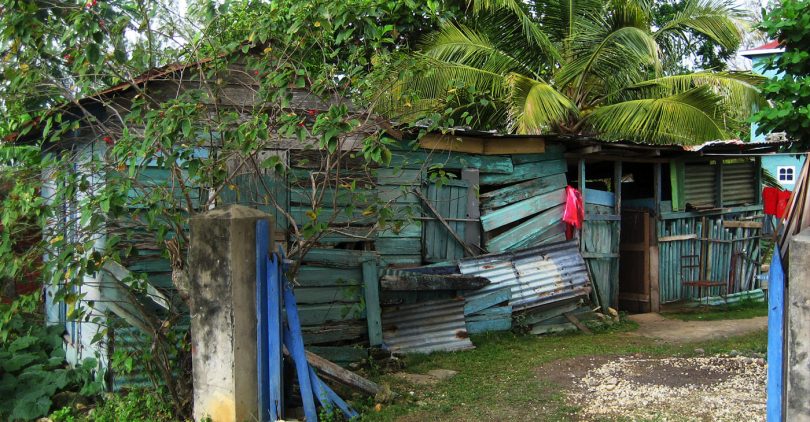
“wooden houses in negril, jamaica”

By April Ryan

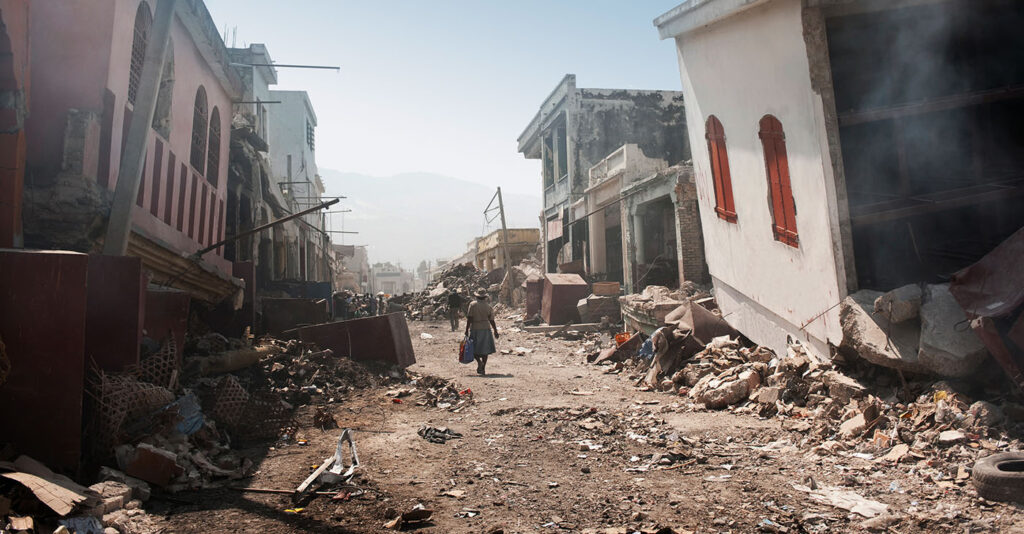
The United Nations reports that Hurricane Melissa has scattered nearly 5 million tons of debris across Western Jamaica, hindering crews from delivering aid and restoring critical services promptly.

According to reports, crews are still working to clear roads, attempting to reach 27 communities cut off by landslides and flooding. Many of those communities are still without power and Wi-Fi. The category five storm killed at least 32 people in Jamaica and another 43 in nearby Haiti, where 13 people remain missing. Here in the United States, the head of the Congressional Black Caucus, New York Congresswoman Yvette Clarke, is working feverishly with the State Department to ensure help is coming from the United States to the affected Caribbean nations, particularly Jamaica.

Both of the New York Congresswoman’s parents immigrated to the United States from Jamaica. Clarke has been a strong advocate for Caribbean issues and serves as co-chair of the Congressional Caribbean Caucus. According to a State Department website, “Within hours, Secretary [Marco] Rubio deployed a regional Disaster Assistance Response Team, including urban search-and-rescue teams, to assess needs and provide search and recovery assistance.

The State Department also indicates it “is collaborating with UN agencies, NGOs, and host governments to deliver food, water, medical supplies, hygiene kits, temporary shelter, and search and rescue support.” Iconic and award-winning actress, activist, and Jamaican native Sherly Lee Ralph said on The Tea with April, “It is exactly one week later, and there are some people who have not had anybody come to help them, nobody!”

Ralph emoted,” It’s rough. We need help there now.” She is calling on all the people who have “enjoyed the beaches in Jamaica” to help by finding trusted places you know and making a donation, as the storm’s destruction has halted the normalcy of life on the island.” Ralph provided an update on some areas that hold personal significance for her. “The school that my parents helped build lost their roof.  They’re trying to figure out where we’re gonna put these kids, how we’re gonna get them back into school, all of these things, and it’s like I can see where we’re going afterwards, but how do we start to get the help there now?”

The actresses’ children have also started a donation center at their facility, Walk Good LA, to help address some of the dire needs in Jamaica. Her family used the same space for donations to help the victims of the L.A. fires earlier this year.
Filed Under: World News Tagged With: Caribbean Caucus, Caribbean nations, Caribbean relief efforts, climate disaster, community rebuilding, Congressional Black Caucus, DART, debris, Disaster Assistance Response Team, disaster recovery, disaster relief, donation center, education recovery, emergency response, Featured, flooding, food and water aid, global solidarity, grassroots aid, Haiti, humanitarian aid, hurricane aftermath, Hurricane Melissa, hygiene kits, international relief, Jamaica, Jamaican actress, Jamaican diaspora, L.A. fires, landslides, local donations, Marco Rubio, medical supplies, missing persons, natural disaster, New York Congresswoman, NGOs, Philanthropy, power outage, rebuilding efforts, school roof damage, Sherly Lee Ralph, State Department, storm victims, temporary shelter, The Tea with April, U.S. foreign aid, U.S.–Jamaica relations, UN report, United Nations, urban search and rescue, Walk Good LA, Western Jamaica, Wi-Fi outage, Yvette Clarke

UN Observes International Remembrance of Slave Trade

August 27, 2025 By MKE Community Journal Leave a Comment

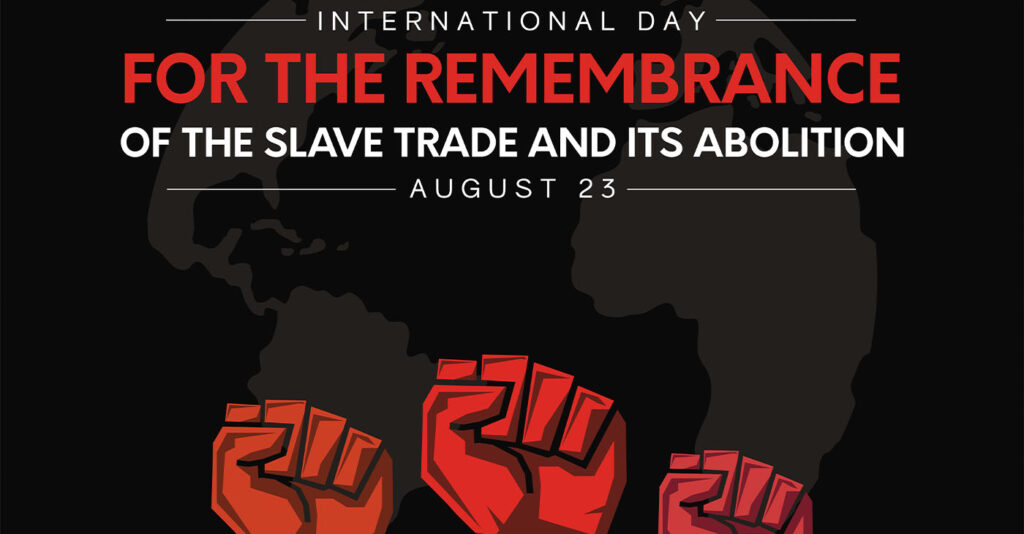
International Day for the Remembrance of the Slave Trade and its Abolition poster, card, August 23. Vector illustration.

The Transatlantic Slave Trade is not just Black history—it is American history, and Black Americans lived it. Their ancestors were violently torn from their homes, forced into brutal labor, and stripped of basic humanity. That legacy of injustice echoes loudly in every aspect of our society—because the slave trade wasn’t just cruel, it was foundational.

Yet today, that truth itself is under attack. President Donald Trump denounced the Smithsonian Institution as allegedly “out of control” for telling the unvarnished history of slavery—claiming museums focus too much on how bad slavery was and not enough on “brightness” or success, even as his administration reviews exhibits and threatens funding cuts to sanitize the narrative. He dismissed honest reflection as “woke,” arguing it undermines national pride.

We are re-rerunning this series, which we originally published in 2019, each day because confronting our painful past is urgent—and because critics who erase suffering do so to keep oppression alive.

A people without the knowledge of their history, origin, and culture is like a tree without roots — Marcus Garvey.

By Stacy M. Brown
Black Press USA Senior National Correspondent

The night of Aug. 22 to Aug. 23, 1791, in Santo Domingo – today Haiti and the Dominican Republic – saw the beginning of the uprising that would play a crucial role in the abolition of the transatlantic slave trade.

The slave rebellion in the area weakened the Caribbean colonial system, sparking an uprising that led to the abolition of slavery and gave the island its independence. It also marked the beginning of the destruction of the slavery system, the slave trade, and colonialism. Each year, on Aug. 23, the United Nations hosts an International Day for the Remembrance of the Slave Trade and its Abolition to remind the world of the tragedy of the transatlantic slave trade.

U.N. officials said it provides an opportunity to think about the historic causes, the methods, and the consequences of the slave trade. Experts said it’s important to never forget. And, with the approaching 500th anniversary of the date Africans were first forced into slavery in America, many like Felicia M. Davis, the director of the HBCU Green Fund, which invests in sustainable campus solutions for historically black colleges and universities, said she believes African enslavement demands reexamination.

“The fact that slavery was underway for a century in South America before its introduction in North America is not widely taught nor commonly understood,” Davis said. “It is a powerful historical fact missing from our understanding of slavery, its magnitude, and global impact. Knowledge that slavery was underway for a century provides deep insight into how enslaved Africans adapted,” she said. Far beyond the horrific “seasoning” description that others have provided, clearly generations had been born into slavery long before the introduction in North America, Davis argued. “It deepens the understanding of how vast majorities could be oppressed in such an extreme manner for such a long period of time.  It is also a testament to the strength and drive among people of African descent to live free,” she said.

The history of the United States has often been described as the history of oppression and resistance to that oppression, said David B. Allison, the editor of the book, “Controversial Monuments and Memorials: A Guide for Community Leaders.” Slavery and the resulting touchstones stemming from slavery throughout the history of the United States run as a consistent thread that illuminates the soul and essence of America, said Allison, a historian with a master’s degree in U.S. History from Indiana University-Purdue University at Indianapolis.’ “From the compromises and moral equivocation in the founding documents during the Revolutionary Era – statements like ‘All men are created equal’ were written by a man who kept Black men and women as decidedly unequal as slaves – to the Civil War and Civil Rights Movement, the tragedy and terror of slavery are fundamental to the history of the United States,” Allison said.

Today, the fallout from the events of Aug. 2017 in Charlottesville – brought about by a white supremacist rally and touched off the debate around the potential removal of a statue to a leader of the Confederacy – continues to weigh down the collective psyche of this nation, Allison continued. “Moreover, the rise in police profiling and brutality of Black men and the resulting rates of incarceration for African Americans highlight the ongoing oppression that was initially born in the crucible of slavery,” he said. Allison added that it’s “absolutely essential to understand and remember that 2019 is the 500th anniversary of slavery in the United States so that we can understand both how our country became how it is now and how we might envision a more just future for all citizens.”

Each year, the UN invites people all over the world, including educators, students, and artists, to organize events that center on the theme of the International Day of Remembrance. Theatre companies, cultural organizations, musicians, and artists take part in this day by expressing their resistance against slavery through performances that involve music, dance, and drama. Educators promote the day by informing people about the historical events associated with the slave trade, the consequences of the slave trade, and promoting tolerance and human rights. Many organizations, including youth associations, government agencies, and non-governmental organizations, actively take part in the event to educate society about the negative consequences of the slave trade.

Here in America, many organizations, activists, and scholars are focused on 2019 as the anniversary of the arrival of the first Africans to be enslaved in Jamestown and 160 years since the last slave ship arrived, Davis said. Also, there’s a growing list of apologies for slavery from colleges and universities, local governments, and corporations. Efforts are underway by the HBCU Green Fund to organize a national convening under the theme “Sankofa Remix” with three tracks: past, present, and future. The goal is to examine history from an African American perspective, explore current impacts, including backlash from the election of the first Black president, and craft a vision that extends at least 100 years into the future that features presentations from artists, activists, technology, scholars, and other creative energy. “It is encouraging to know that BlackPressUSA is focused on this topic.  It is our hope that plans are underway to cover activities throughout the entire year,” Davis said, noting that 2019 also marks the 100th anniversary of the Red Summer Race Riots.

“The UN Decade of African Descent 2015-2024 should also be highlighted as the BlackPressUSA leads this important examination of history,” she said. “Interestingly, the first and last slave ships to arrive in the U.S. both arrived in August. The HBCU Green Fund is working to put together a calendar of dates and observances. “We would love to work with Black Press USA to promote a year-long observance that helps to reinvigorate and support the important role that the Black press plays in the liberation of Black people across the globe. “We would be honored to have Black Press USA as a Sankofa Remix partner organization and look forward to collaboration opportunities,” Davis said.

Up Next: The Catholic Church Played a Major Role in Slavery

Filed Under: Black History, World News Tagged With: 500th anniversary of slavery, abolition, adaptation, African American perspective, American History, apologies for slavery, Black History, Black Press USA, Catholic Church, Charlottesville, civil rights movement, Civil War, colleges, colonialism, Controversial Monuments and Memorials, corporations, cultural organizations, dance, David B. Allison, Dominican Republic, Donald Trump, drama, Education, Felicia M. Davis, Haiti, HBCU Green Fund, Human Rights, incarceration, International Day for the Remembrance of the Slave Trade and its Abolition, Jamestown, last slave ship, Liberation, local governments, Marcus Garvey, museum funding cuts, music, national pride, North America slavery, oppression, past present future, police profiling, Red Summer, remembrance events, resistance, Revolutionary Era, Sankofa Remix, Santo Domingo, slave rebellion, slavery, Smithsonian Institution, South America slavery, theatre, Transatlantic Slave Trade, U.S. history, UN Decade of African Descent, United Nations, universities, white supremacy, Woke

Black America Celebrates African Descent Heritage of Pope Leo XIV

May 9, 2025 By MKE Community Journal Leave a Comment

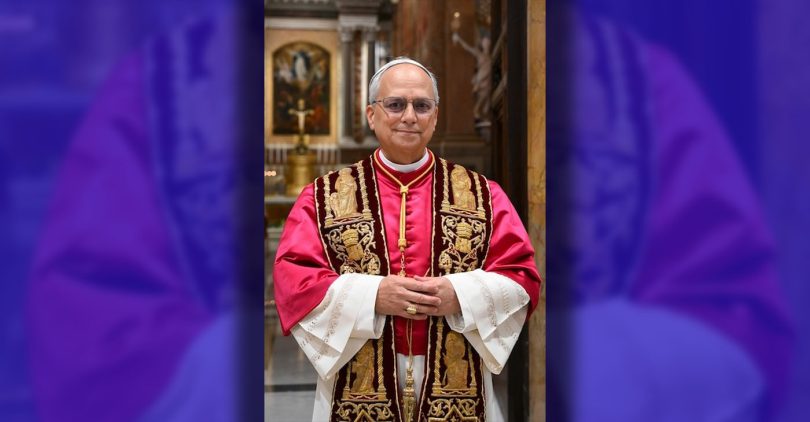
Pope Leo XIV (Wikimedia Commons / Photo by Vatican Media)

By Stacy M. Brown
Black Press USA Senior National Correspondent

Black America is taking pride in a truth shaking up the Vatican and resonating through the streets of New Orleans: Pope Leo XIV—formerly Cardinal Robert Prevost of Chicago—has Black and Creole roots. The Pope’s factual anthropological roots are not just symbolic. According to genealogist Jari Honora, his maternal lineage traces directly to the Black community of New Orleans’ 7th Ward, with family ties to Haiti, and census records identifying his ancestors as “Black” or “Mulatto.” “By the Europeans’ own ‘1/8th’ rules, we have a Black Pope,” noted author Elie Mystal declared. “Anyway, Pope’s grandfather is Haitian. We kind of got a Black Pope. ‘End Woke’ is not gonna be happy about this.” Further, New Orleans historian Jari Christopher Honora also speaking to the National Catholic Reporter and Black Catholic Messenger, detailed how the pope’s grandparents married in 1887 at Our Lady of the Sacred Heart Church on Annette Street in New Orleans before migrating north. His mother, Mildred Martínez, was the first child in the family born in Chicago. “The Holy Father’s ancestors are identified as either Black or Mulatto,” Honora said.

The Chicago Tribune and New York Times also reported on Pope Leo’s mixed-race background and Creole lineage, noting that his election marks a defining moment in the Church’s evolving identity. “As a Black man, a proud son of New Orleans, and the U.S. Congressman representing the very 7th Ward neighborhood where our new Pope’s family hails from, I am bursting with pride today,” said Rep. Troy Carter. “This is history! The first American Pope, with Creole and Haitian roots, rising from the streets of New Orleans to the Vatican. As a Xavier University alum, I know how deeply faith and resilience run in our community. We celebrate this moment—with joy, with prayers, and with pride.” Former New Orleans Mayor Marc Morial called Leo XIV’s background “universal,” saying, “Here’s an American whose ministry was in Peru, who has roots in the American South and also ancestry in the American Black community.” Leo XIV is a member of the Augustinian Order, named after the African theologian St. Augustine of Hippo. His election came from a conclave in which two other leading contenders—Cardinal Peter Turkson of Ghana and Cardinal Fridolin Ambongo Besungu of the Democratic Republic of Congo—were also men of African descent.

But Leo XIV stood apart—not just as the first pope from the U.S. but as one known for his outspokenness on racial justice, immigrant rights, gun reform, and the abolition of the death penalty. TIME Magazine reported that his selection represented a Vatican rebuke of efforts by wealthy Americans and political operatives aligned with Donald Trump to influence the papal outcome. Known in Rome as “The Latin Yankee,” Leo XIV used his verified X account (@drprevost) to amplify criticism of Trump-era immigration policies, often reposting commentary from respected Catholic figures. The New York Post reported that his last post before his election was a retweet of Catholic journalist Rocco Palmo slamming Trump’s alliance with El Salvador’s President Nayib Bukele over migrant deportations. Back in 2017, the Roman Catholic leader also reposted a message quoting Chicago Archbishop Blase Cupich, calling Trump’s refugee bans “a dark hour of US history.”

Though Trump offered lukewarm congratulations from the White House driveway, his far-right allies were quick to lash out. Laura Loomer tweeted, “WOKE MARXIST POPE,” calling Pope Leo “just another Marxist puppet in the Vatican.”But outside the MAGA echo chamber, in Black communities across the globe, the emotion is pride. “The pope is Black,” journalist Clarence Hill Jr. said bluntly. And that means something in the Black neighborhoods of Chicago and the Creole corridors of New Orleans. Many said it means representation, resilience, and the reshaping of history at the highest level of the Catholic Church. “We celebrate this moment—not because it erases the struggles of our past, but because it affirms that our faith, our heritage, and our presence matter,” Rep. Carter said. “This is history, and it belongs to all of us.” The. Reverend Dr. Benjamin F. Chavis, Jr. affirmed, “On behalf of the Black Press of America as the authentic voice of 50 million African Americans and millions more throughout the African diaspora, we join to celebrate Pope Leo XVI, a world leader of African descent who speaks truth to power with courage and grace.”

Filed Under: Latest News, Religion, World News Tagged With: @drprevost, 7th Ward, African Americans, African descent, African diaspora, American South, Annette Street, Augustinian Order, Black America, Black Catholic Messenger, black community, Black Pope, Black Press of America, Black roots, Cardinal Fridolin Ambongo Besungu, Cardinal Peter Turkson, Cardinal Robert Prevost, Catholic Church, Catholic journalist Rocco Palmo, chicago, Chicago Archbishop Blase Cupich, Chicago Tribune, Church identity, Clarence Hill Jr., conclave, courage, Creole lineage, Creole roots, death penalty abolition, Democratic Republic of Congo, Donald Trump, Elie Mystal, faith, Featured, genealogist Jari Honora, grace, gun reform, Haiti, immigrant rights, Laura Loomer, MAGA, Marc Morial, Mildred Martínez, mixed-race background, Mulatto, National Catholic Reporter, New Orleans, New York Times, Our Lady of the Sacred Heart Church, Pope Leo XIV, Pope Leo XVI, Racial Justice, refugee bans, Rep. Troy Carter, representation, resilience, Reverend Dr. Benjamin F. Chavis Jr., St. Augustine of Hippo, The Latin Yankee, Time Magazine, truth to power, Vatican, Vatican rebuke, woke Marxist pope, world leader, X account, Xavier University

Though Haiti is a Black problem that needs to be solved by Black people, America, France, and Spain should pay (literally) for their crimes against the island nation!

March 22, 2024 By MKE Community Journal Leave a Comment

“Every night, our kids say their prayers to the sound of gunfire in the background—” 

—Mitch Albom, Haitian orphanage director 

Even so faith, if it hath not works, is dead, being alone. Yea, a man may say, Thou hast faith, and I have works: shew me thy faith without thy works, and I will shew thee my faith by my works. Thou believes that there is one God; thou doest well: the devils also believe, and tremble.— 

James 2:17-26 

“What is occurring in Haiti is beyond tragedy. Total chaos reigns; dozens of citizens are murdered on its streets every day. No one is safe. And the police and military are ineffective. Gangs–some young thugs not old enough to vote–have taken over the government, and the capitol city of Port au Prince.” Photo courtesy of the Unitarian
Universalist Service Committee

The House of Grace Ministries congregation prayed for peace for the island nation of Haitian Sunday, but I’m not among those who believe prayer will stop the killing. I believe God allows mankind to ‘do as they do.’ 

He/She does not intervene in the affairs of man and womenkind. Historical evidence proves me correct. 

As such, we, somebody—Superman, Wonder Woman Marvel Girl, or the Union of African Nations—should intervene in what has become history’s most dangerous and fragmented nation. 

What is occurring in Haiti is beyond tragedy. Total chaos reigns; dozens of citizens are murdered on its streets every day. No one is safe. And the police and military are ineffective. 

Gangs–some young thugs not old enough to vote–have taken over the government, and the capitol city of Port au Prince. 

It’s like some bizarre reality show. People are being killed for the thrill of it. It’s like the ‘Purge’ movies, but in Blackface. 

The collateral damage is reaching the thousands, which explains why hundreds have sought sanctuary in America in recent years. Subtract from that number the dozens who died on rafts en route. Their bodies line the ocean floor, marrying with the million ‘disposed’ of during the Middle Passages. A large percentage of their ancestors were initially earmarked for Haiti and other Caribbean islands to fill slave quotas. Those who survived were used to enrich French and Spanish colonists. 

I would suggest the U.S. intervene—beyond rhetoric and political speeches—partly because Haitians would not be facing the chaos had this intervened on several occasions to advance democracy. 

A quick history (make that ‘His-story’) lesson: 

Haiti was among the first countries earmarked for exploitation, and the introduction of African slavery in that country dates back to 1492. 

The tiny island was initially called ‘Ayiti’ by the Arawak people, who were essentially replaced (because they all almost died out due to disease, courtesy of Christopher Columbus and his fellow pedophiles) with African slaves who needed to pick cotton and plant sugar. 

By 1700, one-third of the inhabitants were slaves of the Spanish Empire (which introduced slavery to America) and later the French. 

The French occupation was disrupted when one of its ‘colored’ generals, Toussaint L’ouverture, led a revolt in 1791, 

At this point, the United States could have changed the destiny of the island. L’ouverture asked American President Thomas Jefferson for assistance in overthrowing the French. 

Fearful that American involvement might spark a similar revolution among American slaves, Jefferson refused. 

At stake was not just the freedom, but the democratic future of Haiti. 

To add insult to injury, America sent troops to occupy Haiti in 1915. It didn’t shame itself into leaving until it put in motion a corrupt government led by the infamous Pappa Doc—Francois Duvalier. 

Pappa Doc destroyed all semblance of democracy. When he died, his son, ‘Baby Doc,’ succeeded him. Baby Doc was forced to flee amid a coup in 1987. 

Haiti never recovered. 

The current chaos has left the nation in scrambles. Gangs have stormed the capitol, attacking officials and finally forcing its current head, Ariel Henry, to resign last week. The country is now in the hands of thugs and urban terrorists. And no one, from infants to seniors, is safe. 

Extreme poverty, government corruption, and social chaos have bred violence and upheaval. 

Someone must come to the rescue. At least one African country, Kenya, has pledged to intervene, although what that means is up for interpretation. 

What isn’t debatable is America’s complicity and its failure to provide aid and military (versus guns) to set things right. 

If one-tenth of the money spent in Ukraine or Israel were sent to the war-torn and impoverished nation, things could be set anew. 

But this is a Black country. It is the first Black Western nation to gain independence from colonialists. It is a model of what could have been, what it should have been, turned corrupt. 

One report from a third-world media source described a Haitian American senior who asked if God had abandoned Haiti. 

I assume she posed a rhetorical question. If not, I would lament ‘no,’ He/She has not abandoned her country. But prayer by itself will not stop the gunshots the children in the orphanage hear every day. If I had my way, I’d send a detachment of Black U.S. military to reestablish sanity. 

Or maybe the Nation of Islam’s ‘Fruit of Islam.’ 

This is a Black problem, where people of African descent should be at the vanguard of reform. 

And those nations—Spain, France, and the U.S—which contributed to this insanity, should fund the operation and pray the seeds of this Haitian ‘revolution’ don’t spread to our shores. 

Hotep.

Filed Under: Mike Holt - Signifyin', Signifyin' Tagged With: government corruption, Haiti, poverty, social chaos, upheaval, violence

Utterly Sickening: Treatment of Haitians at Mexican Border Sparks Outrage

September 28, 2021 By MKE Community Journal Leave a Comment

Haiti has recently experienced an earthquake and a presidential assassination. Many are asking why Haitians at the Mexican border aren’t eligible for political asylum. (Photo: iStockphoto / NNPA)

By Lauren Victoria Burke, NNPA Newswire Contributor

After over 12,000 Haitian migrants gathered at the Mexican border, shocking footage of them being herded like cattle, whipped with horse lariats and treated in a way unlike any other immigrants entering the U.S. in recent memory became public.

U.S. Border Control Agents on horseback were widely criticized as were the policies behind their actions after video first broadcast by Al Jazeera went viral for all the wrong reasons.

“If we were to close our eyes and this was occurring under the Trump administration, what would we do? The inhumane treatment of the Haitian refugees seeking help is utterly sickening,” wrote NAACP President Derrick Johnson on September 21.

“Our nation claims to be better than this… SHOW IT!” Johnson demanded the day before.

“Whips and horses? That’s what we do? To people that are vulnerable? Do we see any Haitians with guns and knives? No! We see them with the clothes on their back and the babies in their arms,” said Patrice Lawrence, co-Director of the UndocuBlack Network, during a September 20 appearance on Roland Martin Unfiltered. UndocuBlack Network assists currently and formerly undocumented Black people to find community and access to resources.

“This is cruelty. It’s evil… What I saw today was slave patrol — it is shameful and absolutely disgraceful,” she added.

Members of the Congressional Black Caucus gathered at a reception on the night of September 20 at the National Observatory to celebrate the CBC’s 50th anniversary. Though the reception took place at the Vice President’s residence, there wasn’t a lengthy discussion on the crisis at the border. But members are asking for an investigation into what they saw on video.

America has accepted other refugees from around the world from Syria, Afghanistan and Central America. Policy regarding Haiti appears to be different.

The scenes were reminiscent of illustrations from the early 1800s during slavery in the U.S. when runaway slaves were tracked down by bounty hunters and overseers on horseback. When the footage was shown widely on social media the outrage was quick to follow.

Haiti has recently experienced an earthquake and a presidential assassination. Many are asking why Haitians at the Mexican border aren’t eligible for political asylum.

On September 21, the Vice President responded to the controversy.

“What I saw depicting and treating human beings the way they were was horrible. I fully support what is happening right now which is a thorough investigation into what is going on here — but human beings should never be treated that way,” said Vice President Harris during a trip to Maryland.

“These are human rights abuses, plain and simple. Cruel, inhumane, and a violation of domestic and international law,” Rep. Ilan Omar (D-Minn.) tweeted. “There needs to be a course correction and the issuance of a clear directive on how to humanely process asylum seekers at our border.”

Though Mayorkas appeared before a Senate committee last week, he is likely to have to answer many more questions in the weeks to come.

Lauren Victoria Burke is an independent journalist and the host of the podcast BURKEFILE. She is a political analyst who appears regularly on #RolandMartinUnfiltered. She may be contacted at [email protected] and on twitter at @LVBurke

Filed Under: Latest News, National News Tagged With: Haiti, Haitian migrants, Mexican border, slave patrol, U.S. Border Control

Tropical Storm Now Threatens Earthquake Ravaged Haiti

August 19, 2021 By MKE Community Journal Leave a Comment

Scientists reportedly noted that the quake possessed a seven-mile depth and residents 200 miles away in Jamaica felt the trembles.

By Stacy M. Brown, NNPA Newswire Senior National Correspondent
@StacyBrownMedia

The National Hurricane Center issued a most unwelcomed forecast for earthquake-ravaged Haiti on Monday, Aug. 16.

Tropical Storm Grace, which has gained strength over the nearby Dominican Republic and Cuba, has set its sights on Haiti.

The island nation continues to assess the death toll and wreckage of a destructive 7.2 magnitude earthquake.

Weather forecasters warned that large parts of Haiti could see 10 inches of rain, leading to flooding and deadly mudslides because of the earthquake.

At least 1,300 people died during the earthquake in western Haiti.

Multi-story buildings immediately collapsed while rescuers pulled many survivors from under heaps of rubble in the country’s southern peninsula.

“In what is already a challenging time for the people of Haiti, I am saddened by the devastating earthquake that occurred in Saint-Louis du Sud, Haiti,” President Joe Biden said in a statement.

“We send our deepest condolences to all those who lost a loved one or saw their homes and businesses destroyed. I have authorized an immediate US response and named USAID Administrator Samantha Power as the senior US official to coordinate this effort.”

Through USAID, President Biden said America supports efforts to assess the damage and assist efforts to recover those injured and those who must now rebuild.

Haiti has suffered near-unprecedented damage from previous earthquakes, hurricanes, and other natural disasters in recent years.

Earlier this summer, Haitian President Jovenel Moïse was assassinated in his home.

The president’s murder touched off a wild manhunt for his assassins and threw the country into political chaos.

Many in the nation suffer from poverty, and reportedly gang violence is rampant.

The earthquake struck near the town of Petit Trou de Nippes, which isn’t far from the nation’s capital, Port-au-Prince.

The cities of Les Cayes and Jeremie bore the brunt of the quake’s fury.

Scientists reportedly noted that the quake possessed a seven-mile depth and residents 200 miles away in Jamaica felt the trembles.

The 7.2 magnitude topped the devastating 2010 quake in Haiti that measured 7.0.

“The United States remains a close and enduring friend to the people of Haiti, and we will be there in the aftermath of this tragedy,” President Biden declared.

Filed Under: World News Tagged With: Haiti, National Hurricane Center, Tropical Storm Grace, USAID

Haiti: 7.2 Magnitude Earthquake Hits; 1,297+ Dead

August 17, 2021 By MKE Community Journal Leave a Comment

Newly appointed Haitian Prime Minister Ariel Henry said there is “extensive damage” and has declared a state of emergency through the end of the month. (Photo shows devastation following the catastrophic 2010 earthquake in Haiti. The nation was still in the throes of recovery when last week’s 7.2 magnitude earthquake struck. /iStockphoto / NNPA)

UPDATE: As of today, the death toll has climbed to 1,297 people as the search continues for survivors. Rescue workers continue to search feverishly as the Caribbean nation braces for a quickly approaching tropical storm. 

By Nsenga K. Burton, Ph.D., NNPA Newswire Culture and Entertainment Editor

A major 7.2 magnitude earthquake has struck the western side of the Caribbean nation of Haiti. Haiti is still recovering from a 2010 catastrophic earthquake which killed 250,000 and left more than 3 million people impacted by the fallout.

Seismologists said the epicenter of the quake was 78 miles west of the capital of Port-au-Prince (Saint-Louis du Sud) and the effects were felt as far away as 200 miles in Jamaica.

Multiple news outlets are reporting more than 1200 people are dead and some like the BBC are expecting that number to climb as search and recovery efforts continue.

Check out a report by CBSN News correspondent Vladimir Duthiers, who is Haitian-American, and has reported extensively from Haiti:

A little more than one month ago, Haiti’s President Jovenel Moise was assassinated at his home, leaving the country reeling. On July 20, 2021, Ariel Henry was appointed prime minister of Haiti. Henry said there is “extensive damage” and has declared a state of emergency through the end of the month. Elections for the new president will be held next month.

This story is developing. Follow The Burton Wire on Twitter @TheBurtonWire for updates. 

This news brief was written by Nsenga K. Burton, Ph.D., founder & editor-in-chief of The Burton Wire. Follow Nsenga on Twitter @Ntellectual. 

Filed Under: Latest News, World News Tagged With: Ariel Henry, earthquake, Haiti

Primary Sidebar

MCJ WEEKLY

PREVIOUS EDITIONS

Go HERE for the Digital Archives

DR. TNT SCHOLARSHIP SPECIAL EDITION

CLICK THE IMAGE THE FULL EDITION

Newsletter Signup

The Milwaukee Community Journal (MCJ) and the Weekend Edition are distributed at a number of community churches; as is the current issue of Healthy Start. With many area churches closed for the next few weeks due to the coronavirus, your MCJ suggests you pick up your edition of the newspaper, Weekend Edition and Healthy Start at our offices, located at 3612 N. Martin Luther King Drive. We’re open from 10 a.m. to 4:30 p.m., Monday through Friday. You can still pick up the MCJ at several Walgreens and Pick n’ Save stores throughout the community, as well as city hall and the county courthouse.

Recent Posts

  • Oakland Protesters Rally to Defend Haitian Immigrants and TPS
  • OPINION: 57,000 Empty Apartments and Not a Word of Apology – City Limits
  • ‘Choppin’ it up’ with a brotha about Crowley’s win, and why Black folks aren’t down with the Democratic Socialists!
  • Identifying Opportunities to Strengthen Wisconsin’s Emergency Response
  • Present Music Highlights Women Composers in Woman’s Club of Wisconsin’s 150th Celebration

CLASSIFIEDS

CLASSIFIEDS

Place your notice of divorce, name change, etc. in the Milwaukee Community Journal's Classifieds! Contact is at 414-265-5300

Follow Us

  • Facebook
  • Instagram
  • Twitter
  • YouTube

Tags

2016 election African Americans Alderman Khalif J. Rainey ALDERWOMAN CHANTIA LEWIS Alderwoman Milele A. Coggs annual Baylor College of Medicine Biden Black History Month Black press Boko Haram civil rights community coronavirus COVID-19 Dating Advice day Democrats diversity Donald Trump Education event Featured free George Floyd HuffPost Live Joe Biden Love & Sex Love and Relationships Mayor Tom Barrett mental health Milwaukee Repertory Theater naacp national NNPA pandemic racism report Republicans Reuters social media Trump Trump Administration What Is Working: Small Businesses White House

Categories

H5_WEDC1027_AA_300x250

Copyright © 2026 Milwaukee Community Journal